
Understanding Gender-Based Education Systems and Educational Equality
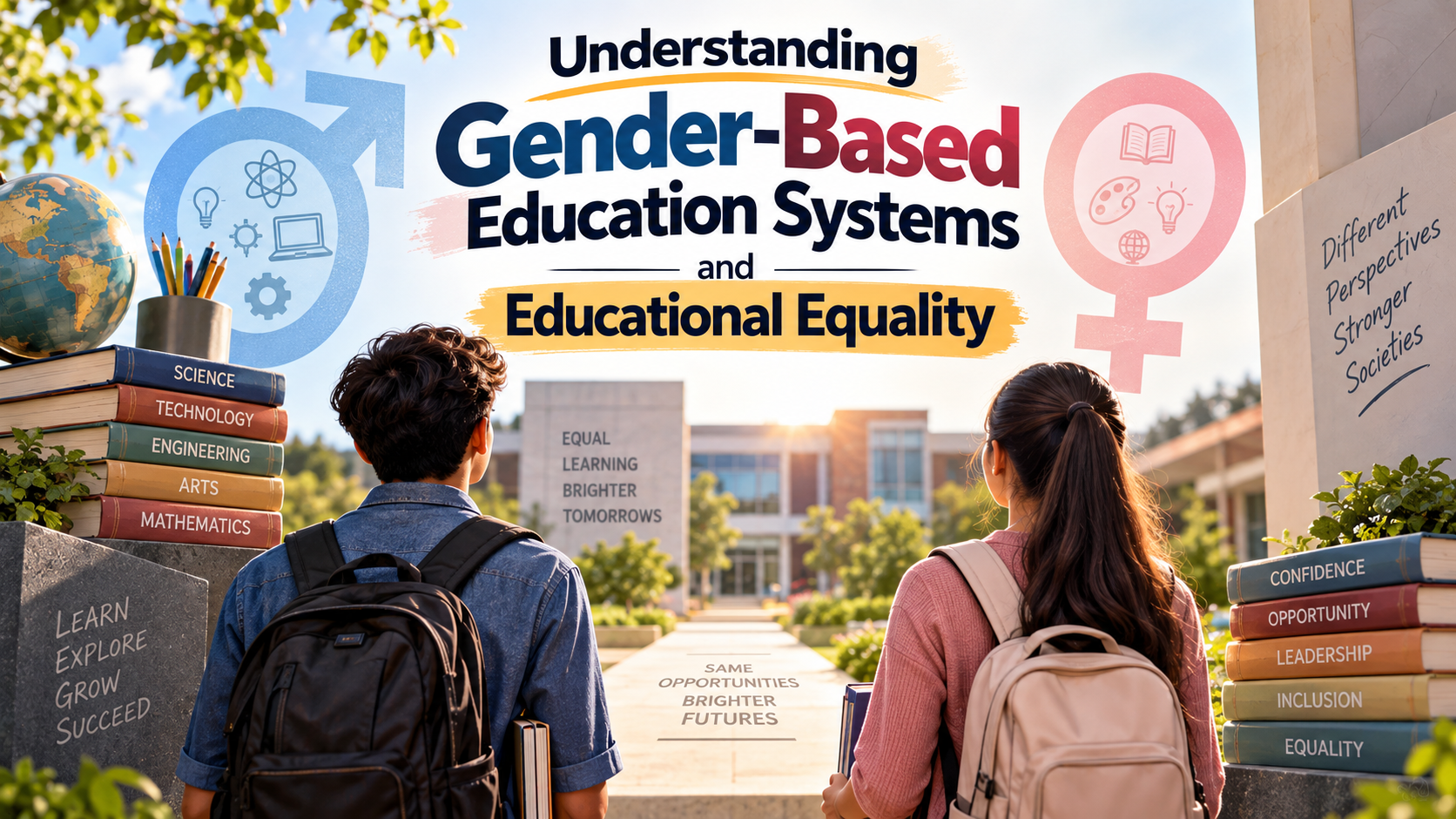
Schools influence how people understand themselves, their abilities, and their future opportunities. Examining gender-based education systems reveals structural factors that can shape how different genders learn, participate, and succeed. Organizations such as UNESCO study gender disparities in education to support more equitable learning environments. However, barriers can still appear through curricula, cultural expectations, and teaching practices.
Understanding educational inequality requires more than comparing test scores. Classroom interactions, subject choices, school policies, and social expectations can all affect educational experiences. When schools reinforce outdated gender roles, students may face limits on their interests and opportunities.
This guide examines the main ideas behind gender and education. It explores the scope of gender studies, explains how gendered systems operate, and discusses why equality matters in education. It also examines gender mainstreaming, common gender-based issues, and the ways gender can influence educational attainment. Understanding these connections can help educators, students, and policymakers identify barriers and support more inclusive educational environments.

What is the scope of gender studies?
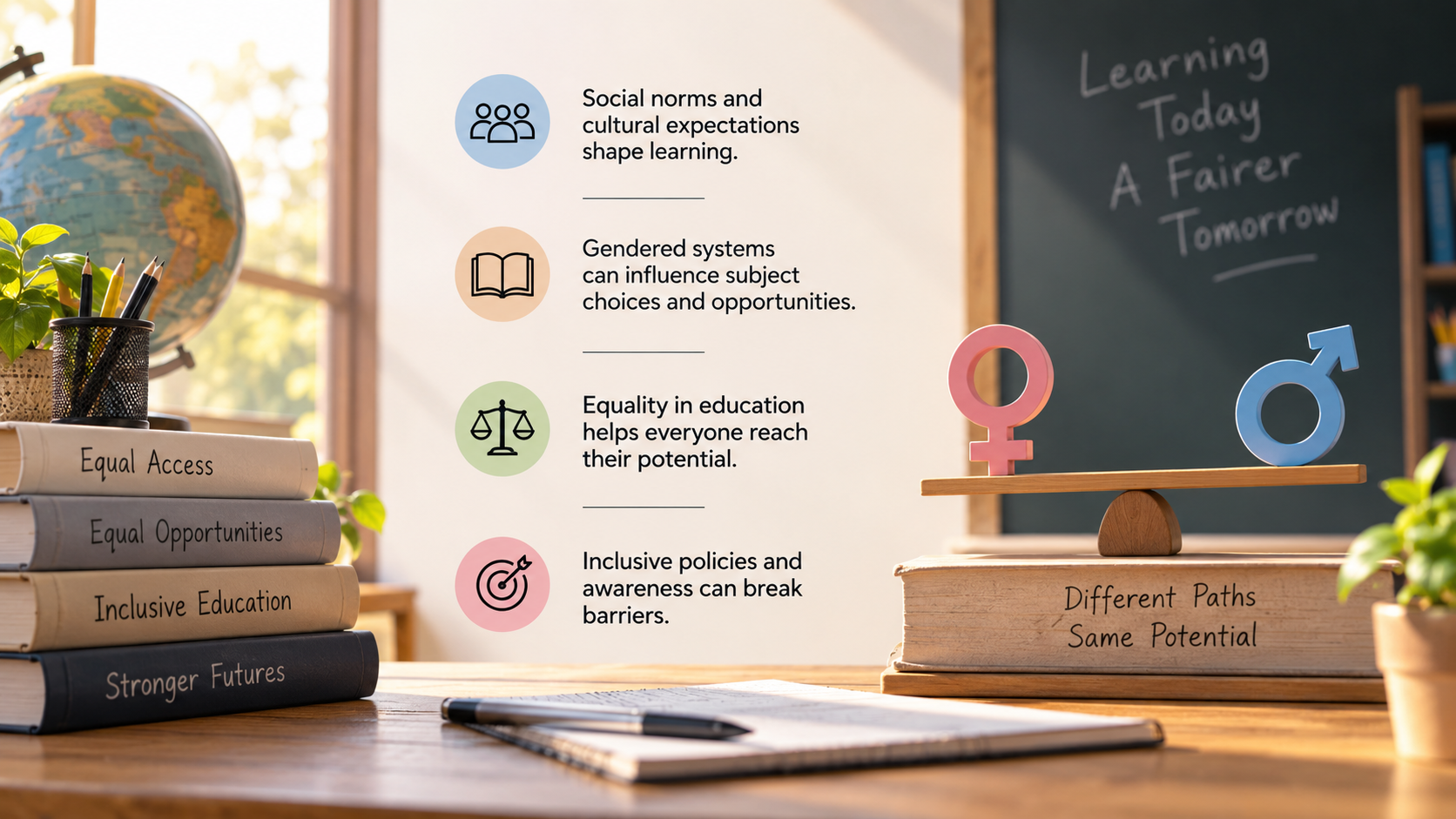
Gender studies examines how social norms, cultural expectations, and power structures influence ideas about gender. The field explores concepts related to femininity, masculinity, gender identity, and social roles. It does not focus only on biological differences. Instead, it studies how societies construct and reinforce expectations around gender.
Gender studies draws knowledge from several academic fields. These include sociology, history, literature, politics, economics, psychology, and cultural studies. Researchers may examine language, laws, media, workplaces, families, and educational institutions.
The field also investigates how institutions can create or reinforce unequal outcomes. For example, researchers may examine differences in educational access, workplace opportunities, political representation, or social treatment.
Gender studies can therefore provide useful frameworks for understanding gender inequality and discrimination. It can also help policymakers and institutions identify barriers that affect different groups. However, gender does not operate independently from other social factors. This makes intersectional analysis an important part of modern gender research.
Intersectional Frameworks Across Human Experiences
Intersectionality examines how multiple aspects of identity can interact and influence a person’s experiences. Legal scholar Kimberlé Crenshaw developed the concept to explain how overlapping forms of discrimination can create experiences that are not fully captured by examining one factor alone.
In gender studies, intersectionality can involve gender alongside race, social class, disability, age, sexual orientation, or other social characteristics. These factors may interact differently across communities and circumstances.
For example, two students may experience gender-related barriers differently because they also have different economic resources or disabilities. A single policy may therefore fail to address every student’s circumstances.
An intersectional approach encourages researchers and educators to examine these overlapping influences rather than treating all students as one group. It can help identify barriers that might otherwise remain hidden.
This framework is particularly relevant to gender-based education systems because access, participation, subject selection, safety, and academic outcomes can vary across different student populations. Recognizing these differences can support more targeted and inclusive educational policies.
What are gendered systems?
Gendered systems are institutional structures, policies, practices, and social expectations that can distribute roles, opportunities, authority, or resources according to gender. These systems can exist in workplaces, legal institutions, governments, families, and gender-based education systems.
A gendered system does not always require explicit discrimination. Routine practices and long-standing expectations can produce different outcomes for different groups. For example, cultural assumptions may influence which subjects students are encouraged to study or which careers they consider suitable.
Gendered expectations can also affect how particular behaviors are interpreted. Assertiveness, competition, collaboration, and caregiving may be associated with different gender roles in some cultures. These associations can influence classroom participation and career expectations.
In education, such patterns may appear through curriculum choices, teacher expectations, student interactions, leadership opportunities, or access to particular resources. However, these patterns vary considerably between countries, communities, and institutions.
Understanding gendered systems requires examining the specific policies and practices involved. It also requires distinguishing documented institutional patterns from assumptions about individual students or teachers.
What is the importance of gender equality in education?
Gender equality in education means that students should have fair opportunities to access learning, participate in school life, develop their abilities, and pursue future opportunities. Equality does not necessarily mean that every student has identical circumstances or needs.
Removing gender-based barriers can help students participate more fully in education. Access to safe schools, appropriate learning resources, qualified teachers, and supportive environments can influence attendance and academic persistence.
Education also has effects beyond the classroom. Learning can improve access to employment, strengthen economic participation, and support informed decision-making. For communities, broader educational participation can contribute to social and economic development. Education provides important benefits throughout life by supporting personal, social, and economic opportunities.
Gender equality can also challenge stereotypes that influence students from an early age. When students can explore subjects without restrictive gender expectations, they may have greater freedom to develop their interests.
However, educational inequality is influenced by many factors beyond gender. Poverty, geography, disability, conflict, family circumstances, and language can also affect educational access. Systemic barriers in education can therefore interact with gender-related barriers, making access and outcomes more complex. Effective policies need to consider gender alongside these broader barriers.
What are the 5 principles of gender mainstreaming?
Gender mainstreaming involves considering gender-related effects when governments and institutions design policies, programs, budgets, and services. It aims to ensure that gender perspectives are included throughout decision-making rather than addressed only through separate initiatives.
Five commonly discussed elements can help explain this approach:
- Gender-sensitive language: Communication should avoid language that unnecessarily excludes or stereotypes people.
- Sex-disaggregated data: Data can be separated by sex where appropriate to identify differences in access, participation, and outcomes.
- Gender analysis: Policies should examine how proposed decisions may affect different groups.
- Gender-responsive budgeting: Financial resources should reflect identified needs and inequalities.
- Balanced participation: Different genders should have meaningful opportunities to participate in decision-making.
These principles can apply to education, employment, healthcare, and public policy. Their implementation depends on local laws, institutions, available data, and social conditions.
Gender mainstreaming is not simply about increasing representation. It also requires examining how policies and resources affect people in practice.
What are some gender-based issues?
Gender-based issues include unequal access to education, gender-based violence, unequal unpaid care responsibilities, discrimination, and differences in economic opportunities. The specific issues vary across countries, communities, and social groups.
Women and girls can face barriers linked to household responsibilities, safety concerns, early marriage, or cultural expectations. In some settings, these barriers can affect school attendance and educational continuity. Men and boys can also face gender-related pressures, including expectations around behavior, emotional expression, and career choices.
Gender-based discrimination can also affect professional opportunities. Women remain underrepresented in some leadership and technical fields in many countries, although the size and causes of these gaps vary.
Students may also encounter gender stereotypes through textbooks, classroom interactions, media, or expectations from families and communities. These influences can shape perceptions of which subjects or careers are appropriate.
Addressing gender-based issues requires evidence-based policies that consider local conditions. Solutions may involve improving school safety, reducing financial barriers, supporting families, challenging stereotypes, and ensuring fair access to educational and professional opportunities.
Pervasive Underrepresentation in STEM Disciplines
Gender differences in STEM education remain an important issue in many countries. Science, technology, engineering, and mathematics fields can offer strong educational and employment opportunities, yet participation is not always evenly distributed across genders.
Several factors can influence these differences. Students may encounter stereotypes about who is naturally suited to technical subjects. Family expectations, teacher encouragement, access to role models, peer influence, and workplace perceptions can also affect subject choices.
These patterns can begin early in education. If students receive different messages about mathematics, computing, or engineering, those messages may influence later academic decisions.
However, STEM participation is not identical across countries or disciplines. Some fields have narrower gender gaps than others, and participation patterns can change over time.
Improving access therefore requires more than encouraging one group to enter STEM. Schools can provide equal access to resources, expose students to diverse career examples, and reduce stereotypes around technical ability.
A more diverse STEM pipeline can also broaden the range of perspectives represented in scientific and technological work.
How does gender affect educational attainment?
Gender can influence educational attainment through social expectations, household responsibilities, school environments, and access to opportunities. However, the effects differ substantially across countries and populations.
In some lower-income settings, girls may face barriers involving household work, school safety, poverty, or early marriage. These factors can interrupt secondary education and reduce opportunities for further study.
In some higher-income countries, boys have experienced lower educational attainment than girls in certain measures, including school completion or university participation. The reasons are complex and can include socioeconomic conditions, engagement with school, local labor markets, and differences between education systems.
Classroom expectations can also influence students. Research has examined whether teachers, parents, or peers hold different expectations about students’ abilities and suitable subjects. Such expectations may affect confidence and educational choices.
Gender can therefore interact with educational attainment in multiple ways. It is inaccurate to assume that one gender consistently experiences greater educational disadvantage everywhere.
A useful analysis considers gender alongside socioeconomic status, location, disability, family circumstances, and other factors. This broader approach aligns with the principles of equality and equity in education and provides a more complete picture of educational inequality.
Frequently Asked Questions
How do single-sex schools compare to co-educational institutions?
Single-sex schools can reduce immediate social pressures and mitigate classroom gender stereotyping, particularly for girls pursuing scientific fields. However, co-educational settings better mirror real-world social environments, fostering natural collaboration and communication among diverse peer groups. Academic outcomes vary considerably depending on teaching quality, curriculum design, socioeconomic backgrounds, and institutional funding rather than gender separation alone.
What role do teachers play in reinforcing gender bias?
Teachers often reinforce gender bias unconsciously through casual language, discipline disparities, and subtle questioning styles. Studies show instructors frequently give boys more time to formulate answers to complex technical questions while steering girls toward administrative tasks. Comprehensive gender-sensitivity training helps educators recognize these hidden patterns, adjust teaching methodologies, and create equitable classroom discussions.
Why does the global gender gap in literacy persist?
The global literacy gap persists due to rural poverty, unsafe transit to schools, cultural traditions favoring male investment, and inadequate sanitation facilities for adolescent girls. When family financial resources are scarce, parents often invest in a son’s schooling while keeping daughters home for unpaid caregiving, permanently curtailing female literacy rates.
What is gender budgeting in public education?
Gender budgeting evaluates how government education funds affect distinct genders differently. Rather than dividing finances equally down the middle, this strategic fiscal approach directs specific resources toward closing documented structural gaps. Examples include funding secure campus transportation, subsidizing menstrual hygiene products, or financing targeted technical apprenticeships for historically underrepresented demographics.
Conclusion
Addressing the complex realities within gender-based education systems is essential for building an equitable, productive, and just society. Educational systems do not exist in isolation; they actively reflect, reinforce, or challenge the prevailing values of the cultures surrounding them. The role of culture in education helps explain why educational experiences and expectations can differ across communities. When schools fail to address systemic disparities, they perpetuate historical inequities, limit individual intellectual growth, and dampen global socioeconomic potential.
Creating truly inclusive educational environments requires deliberate, sustained intervention at every level. Policymakers must champion the core principles of gender mainstreaming, overhaul biased instructional materials, and invest in equitable public infrastructure. Simultaneously, educators need proper training to recognize subtle classroom biases and encourage students across all disciplines equally. By actively dismantling structural and social barriers, we transform schools from passive sorting mechanisms into engines of authentic opportunity. Every learner deserves the freedom to pursue their academic passions unconstrained by outdated assumptions, and realizing this vision demands our collective commitment to educational equity.