Gas or Electric Fireplace: Which Is Better for Your Home?
Adding warmth and a focal point to your living space can transform your home during colder months. However, choosing between a gas or electric fireplace can be challenging. Both options offer convenience, but they differ in heating performance, installation requirements, and operating costs.
According to the U.S. Department of Energy, space heating accounts for a significant share of residential energy consumption. Therefore, your fireplace choice can influence household energy expenses.
Both fireplace types eliminate the need for firewood storage, ash removal, and regular wood-burning chimney cleaning. However, gas fireplaces use combustible fuel, while electric models operate through electrical heating elements.
In this guide, we answer five important questions homeowners ask before buying. You’ll discover which fireplace provides better heating, which offers cleaner indoor air, and which costs less to operate. We’ll also explore installation expenses and help you choose the right fireplace for your home.
Is It Better to Have a Gas or Electric Fireplace?
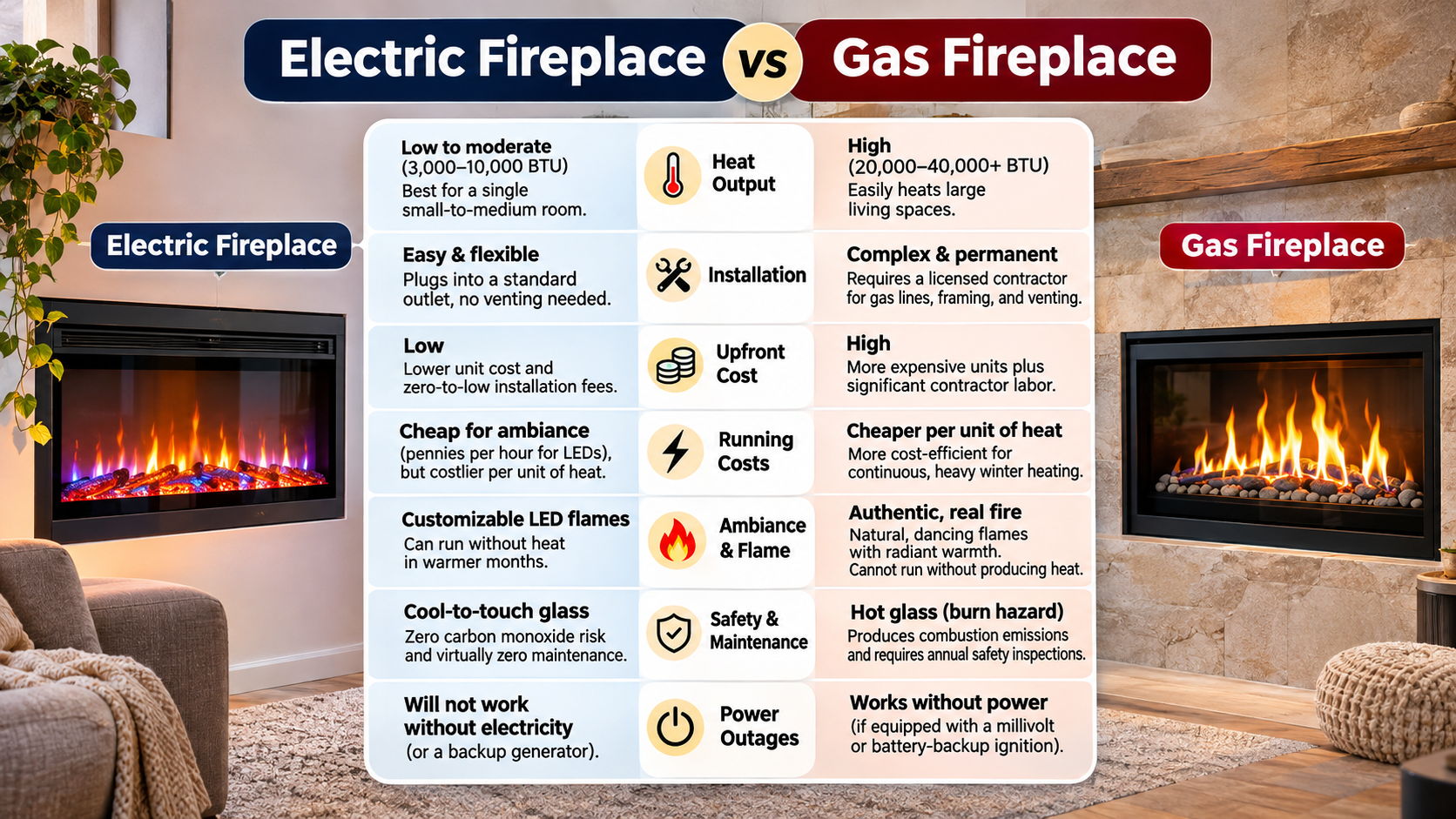
Choosing between a gas or electric fireplace depends on your heating requirements, budget, and installation preferences. Gas fireplaces generally produce between 20,000 and 40,000 BTUs per hour, depending on the model. They can provide substantial heat for larger living spaces. Some models can also operate during power outages, provided they have a suitable battery backup or standing-pilot ignition system.
Electric fireplaces typically deliver around 5,000 BTUs per hour when using a standard 1,500-watt heater. They work best for supplemental heating rather than heating an entire house. However, they offer convenient operation and realistic flame effects without combustion.
For homeowners prioritizing stronger heating performance, gas is often the better choice. Electric models suit people who value simple installation, lower upfront expenses, and cleaner indoor air.
Installation Complexity and Upfront Budget
Installation requirements significantly affect the total cost of owning either fireplace. Gas models often require professional installation, especially when adding a new fuel line or exterior vent. Depending on the home and installation complexity, total expenses can range from $3,000 to $7,000.
Electric fireplaces are generally easier and cheaper to install. Many models simply plug into a suitable electrical outlet. Wall-mounted units and electric fireplace inserts can also fit different interior layouts. Some installations may require dedicated electrical circuits or professional electrical work. If you’re planning a connected heating setup, explore the advantages and disadvantages of smart home heaters before choosing your equipment.
Consider these differences before choosing:
- Gas fireplaces: Require appropriate fuel connections, ventilation, and professional installation.
- Electric fireplaces: Usually require only a suitable electrical connection and adequate clearance.
- Renters and condo owners: Electric models often offer greater flexibility, subject to building rules.
Ultimately, electric fireplaces are generally more affordable to install. Gas fireplaces require a larger initial investment but offer stronger heating capabilities.
What Is the Healthiest Type of Fireplace?
An electric fireplace is generally the healthier choice for indoor air quality. It produces heat without burning natural gas, propane, or wood. Therefore, it does not release combustion pollutants into your living space during normal operation. However, maintaining a healthy home environment also involves addressing potential fire hazards and following practical home fireproofing tips.
Gas fireplaces produce combustion byproducts, including carbon dioxide, water vapor, and nitrogen dioxide. However, properly installed direct-vent models send exhaust outdoors through a sealed ventilation system. This design significantly reduces indoor exposure when the equipment operates correctly.
Vent-free gas fireplaces require additional consideration. They release combustion byproducts and moisture directly into the room. This can affect indoor air quality, particularly in poorly ventilated spaces.
For households concerned about respiratory irritation, an electric fireplace offers a clear advantage. It eliminates indoor combustion and the associated carbon monoxide risks from fireplace fuel. However, proper electrical installation and routine cleaning remain important for safe operation.
Avoiding Combustion Byproducts Indoors
Combustion produces byproducts that can affect indoor air quality. Natural gas and propane fireplaces release water vapor and other emissions while operating. Their impact depends on ventilation, equipment condition, and installation quality.
Direct-vent gas fireplaces use sealed combustion systems. They draw combustion air from outdoors and send exhaust outside. This arrangement helps prevent combustion gases from entering the living space.
However, damaged seals, blocked vents, or faulty equipment can create safety problems. Improper installation may also increase the risk of exhaust entering your home. Regular inspections help identify these issues before they become serious.
Electric fireplaces avoid these combustion-related concerns entirely. They do not require gas connections, exhaust pipes, or combustion ventilation.
To maintain a healthier indoor environment:
- Choose properly certified fireplace equipment.
- Schedule professional inspections for gas fireplaces.
- Keep ventilation openings clear.
- Install carbon monoxide alarms where fuel-burning appliances are present.
- Follow the manufacturer’s maintenance and safety instructions.
For households prioritizing indoor air quality, electric fireplaces offer the simplest solution.
Why Are People Getting Rid of Fireplaces?
Many homeowners are removing older fireplaces to improve energy efficiency, modernize their interiors, and reduce maintenance expenses. Traditional wood-burning fireplaces can lose considerable indoor heat through their chimneys. Warm air escapes through the flue, sometimes even when the fireplace is not operating. Homeowners exploring other ways to improve residential energy efficiency may also consider how rainwater harvesting systems work for homes as part of a broader sustainable home improvement plan.
Older gas fireplaces can also become expensive to maintain. Aging components, damaged ventilation systems, and outdated designs may require costly repairs. Some homeowners prefer replacing these units rather than continuing to invest in older equipment.
Interior design preferences also influence this trend. Modern homes often feature minimalist layouts, larger entertainment areas, and open living spaces. Removing an unused fireplace can create additional room for furniture, televisions, or storage.
However, removing a fireplace isn’t always the most economical decision. Homeowners should compare renovation expenses, energy savings, and potential property value before proceeding.
Strict Building Codes and Environmental Shifts
Building regulations and environmental concerns are influencing how homeowners approach residential heating. Some municipalities and states have introduced restrictions on new natural gas connections in certain buildings. These policies vary by location and building type.
Indoor air quality is another important consideration. Gas appliances produce combustion emissions, which can contribute to indoor pollution when ventilation is inadequate. Consequently, some homeowners prefer electric alternatives that eliminate indoor fuel combustion.
Older fireplaces may also require regular inspections and maintenance. Gas lines, ventilation systems, and aging chimney structures can increase long-term ownership expenses.
Before removing an existing fireplace, homeowners should consider several factors:
- Local building codes: Check whether natural gas installation restrictions apply.
- Maintenance expenses: Compare inspection and repair costs with replacement expenses.
- Energy efficiency: Evaluate whether the existing fireplace provides useful supplemental heating.
- Property requirements: Check whether removal requires permits or professional assistance.
Electric fireplaces offer a convenient alternative. However, removing a functional gas fireplace solely because of environmental trends may not deliver immediate financial savings.
Which Is More Expensive to Run, a Gas or an Electric Fireplace?
The running cost of a gas or electric fireplace depends on local energy prices, heating capacity, and daily usage. At full heating output, a standard 1,500-watt electric fireplace typically costs around $0.20 to $0.30 per hour under the electricity rates assumed in this example.
However, electric fireplaces often include flame-only settings. These settings use LED lighting without activating the heating element. Consequently, operating costs can fall to less than a penny per hour, depending on the model.
Natural gas fireplaces may cost approximately $0.15 to $0.25 per hour to operate under the assumed fuel prices. They can also deliver considerably more heat than standard electric models.
Propane fireplaces generally cost more to operate than natural gas alternatives. However, actual expenses depend on propane prices and appliance efficiency.
Efficiency Ratings and Zone Heating Impact
Efficiency ratings help explain how gas and electric fireplaces convert energy into usable heat. Electric fireplaces convert nearly all the electricity they consume into heat at the point of use. They also avoid the exhaust-related heat losses associated with vented gas fireplaces.
However, this doesn’t automatically make electric heating cheaper. Electricity prices and heating capacity determine your actual operating expenses. Gas fireplaces may deliver more heat for each dollar spent, depending on local fuel rates.
Zone heating can make electric fireplaces more economical. Instead of heating your entire house, you warm the room you’re currently using. You can then lower your central heating thermostat to reduce unnecessary energy consumption. Choosing efficient lighting can further support household energy savings, especially when you consider energy-efficient LED bulbs for your home.
Consider these efficiency differences:
- Electric fireplaces: Convert nearly all consumed electricity into room heat.
- Direct-vent gas fireplaces: Lose some heat through their exhaust systems.
- Vent-free gas fireplaces: Retain more heat indoors but introduce combustion byproducts and moisture.
- Zone heating: Helps reduce energy consumption when you heat occupied rooms selectively.
Compare local utility rates before deciding which option offers better long-term savings.
Which Is Better for My Home, an Electric Fire or a Gas Fire?
The best fireplace for your home depends on available utilities, room size, heating requirements, and installation restrictions. Electric fireplaces work particularly well in apartments, condos, bedrooms, and home offices. They require no gas connection or chimney, making installation relatively straightforward.
Gas fireplaces are often better suited to single-family homes with existing natural gas connections. They provide stronger heating output and realistic flames. Some models can also provide heat during power outages when equipped with suitable backup systems.
Your property’s layout also matters. An electric fireplace can create an attractive focal point without requiring major structural modifications. A gas fireplace may require more planning, especially when installing new ventilation or fuel connections.
Consider your long-term heating needs before purchasing either option. If you primarily want decorative flames and occasional supplemental warmth, electric is usually sufficient. For stronger supplemental heating, a properly sized gas fireplace may be more suitable.
Matching Your Fireplace to Room Size
Room size is an important factor when selecting a fireplace. An electric model with a 1,500-watt heater produces approximately 5,100 BTUs of heat. This output can provide supplemental warmth in smaller rooms, depending on insulation, ceiling height, and outdoor temperatures.
Some electric fireplaces are marketed for spaces measuring up to 400 square feet. However, actual performance varies between models and home conditions. Poor insulation and large windows can reduce heating effectiveness.
Gas fireplaces generally offer higher heating capacities. Certain models produce 20,000 to 40,000 BTUs per hour or more. They can therefore provide stronger supplemental heating for larger living spaces.
Before purchasing, consider these factors:
- Small rooms: A standard electric fireplace may provide sufficient supplemental warmth.
- Medium-sized rooms: Compare the fireplace’s heating capacity with the room’s insulation and layout.
- Large living rooms: Consider a higher-output gas fireplace or another appropriately sized heating system.
- Vaulted ceilings: Account for additional room volume when selecting heating equipment.
Always check the manufacturer’s recommended heating area rather than relying on BTU output alone. Proper sizing helps maintain comfort without unnecessary energy consumption.
Conclusion: Should You Choose a Gas or Electric Fireplace?
Choosing between a gas or electric fireplace ultimately comes down to your heating needs, budget, and lifestyle. Gas fireplaces deliver stronger heat output, realistic flames, and dependable supplemental heating. They are particularly suitable for larger living spaces and homes with existing gas connections. However, higher installation costs, ventilation requirements, and regular maintenance can increase long-term expenses.
Electric fireplaces offer a more affordable and convenient alternative. They require minimal installation, produce no indoor combustion emissions, and provide attractive flame effects throughout the year. Although their heating capacity is generally lower, they work well in bedrooms, apartments, and smaller living spaces.
If you prioritize heating performance, choose gas. If you value convenience, affordability, and cleaner indoor air, choose electric. Compare installation expenses, local energy rates, and room requirements before making your final decision. The right fireplace should complement your home, provide comfortable warmth, and fit your budget for years to come.