
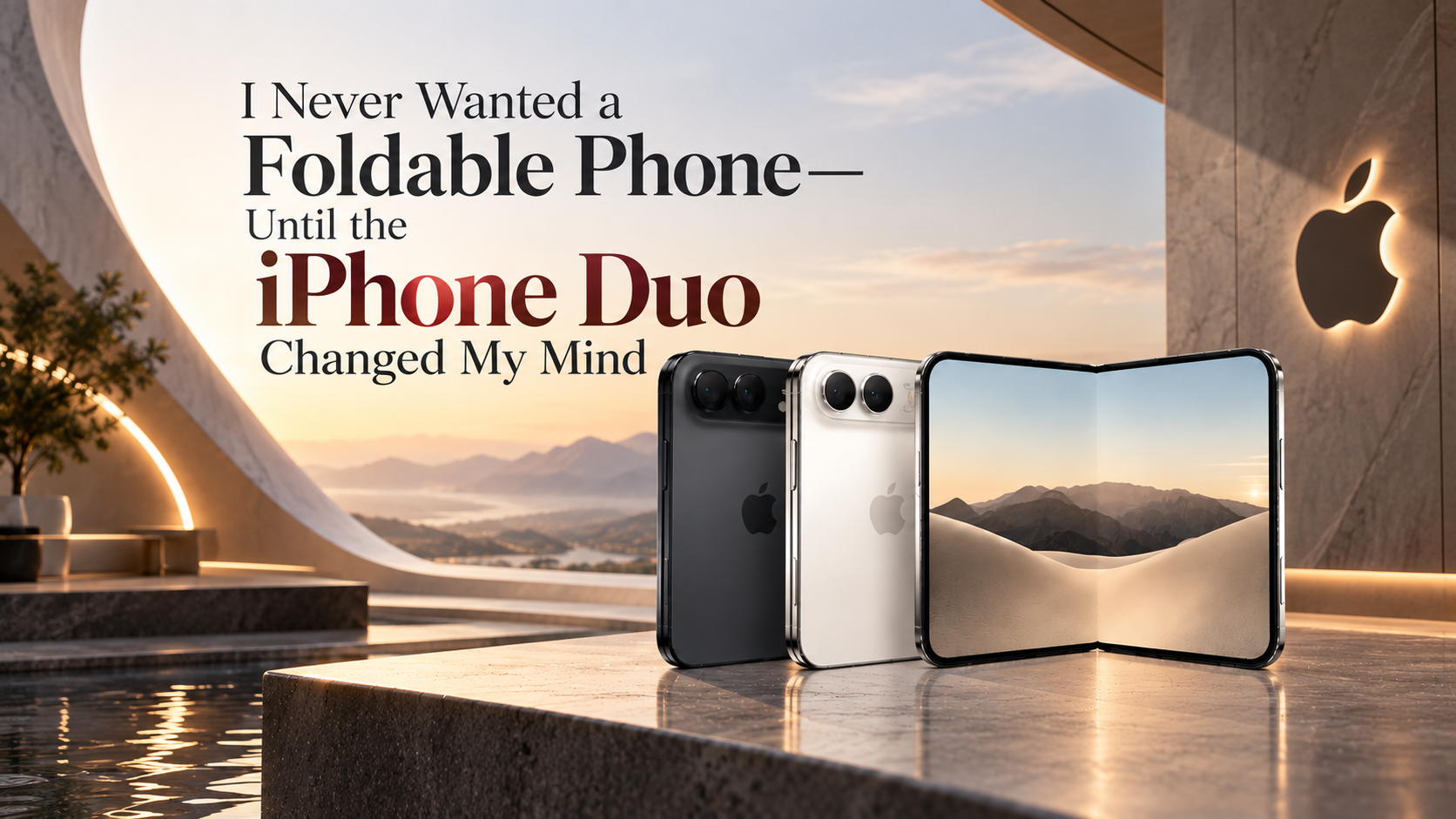
I Never Wanted a Foldable Phone—Until the iPhone Duo Changed My Mind
I never thought a foldable iPhone would be the device that changed my opinion about folding phones. Yet after years of ignoring the category, I’m seriously considering pre-ordering the iPhone Duo.
The biggest issue was never the technology itself. I simply didn’t use the larger display often enough to make the higher price worthwhile. The Galaxy Z Fold 8 made that screen more appealing because its wider design works particularly well for watching content.
My other concern was Apple’s ecosystem. Moving to an Android foldable would mean giving up some of the seamless connection between my iPhone, MacBook, Apple Watch, and AirPods.
Device thickness has also become far less concerning. Recent foldables have become impressively slim. The iPhone Duo finally tackles the two things that kept me from making the switch: practical screen expansion and Apple’s ecosystem.
Everything You Need to Know About the iPhone Duo
The iPhone Duo takes a different approach to the typical folding phone. Its passport-style body opens sideways, creating a large inner display without requiring users to carry a separate tablet. For buyers comparing smartphone platforms, this also raises the familiar question of iPhone or Android for students and how much the choice of ecosystem matters.
Apple has fitted the phone with a 5.4-inch cover screen and a 7.6-inch folding display. Their proportions are designed to keep the transition between screens relatively consistent.
The outer display works like a conventional smartphone screen when the device is closed. Opening the phone provides a much larger workspace for reading, entertainment, browsing, and multitasking.
The chassis uses titanium and features a polished exterior. Apple has also developed a 3D-printed cover for the hinge. When unfolded, the Duo measures 5.2mm thick and reaches 11.3mm when closed.
The battery is divided between the two halves of the device. Apple claims up to 31 hours of video playback with the internal display and up to 44 hours with the cover screen. As with any new iPhone, buyers may also want to consider AppleCare coverage, cost, and plans in India when calculating the overall cost of ownership.
Apple has changed its biometric approach as well. Instead of Face ID, the Duo uses Touch ID integrated into the side button. Apple Watch-based unlocking is another supported option.
The camera system includes a 48MP Fusion Main sensor and a 48MP Fusion Ultrawide. Two front cameras are also included, with one positioned beneath the inner display.
Apple retained the Camera Control button but dropped both the Action button and traditional mute switch. Those omissions are notable given the phone’s premium positioning.
Despite those compromises, I’m still planning to pre-order the Duo.
Apple May Have Finally Solved Foldable Phone Design
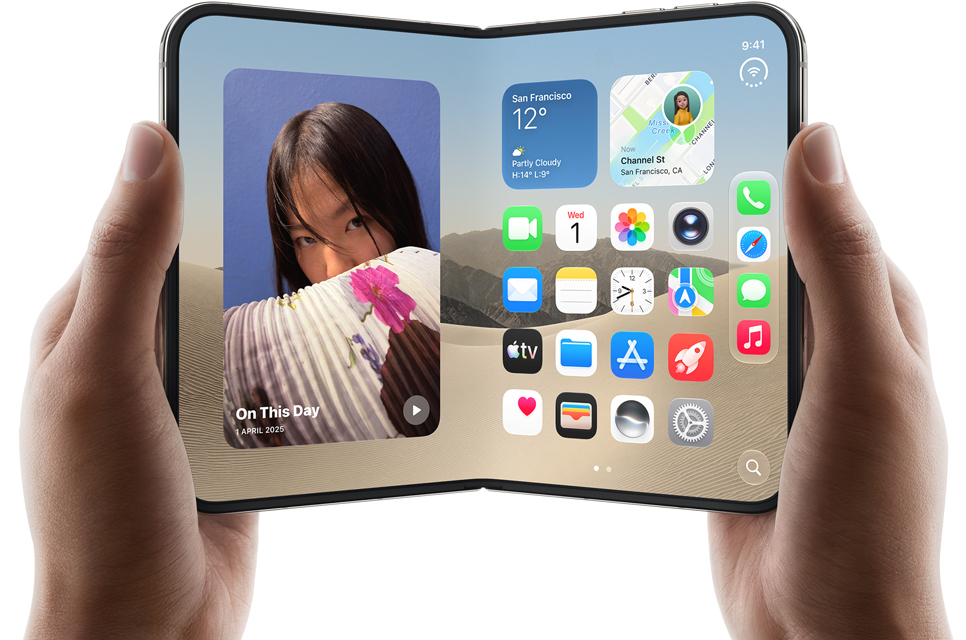

Foldable displays have improved dramatically, but the crease remains one of the category’s most obvious drawbacks. Even when it is barely visible, the indentation can often be detected by touch.
I notice it most when scrolling. My finger naturally passes over the center of the display, making the fold difficult to ignore once I’ve felt it.
The iPhone Duo could represent a meaningful improvement. Apple has used a nano-texture treatment across the inner screen to reduce reflections and glare. That should also make the central fold less noticeable under different lighting conditions.
The screen itself relies on multiple supporting layers. High-strength glass surrounds the folding panel, while specialized adhesives allow those layers to shift as the device opens and closes.
A titanium support plate sits beneath the display structure. Meanwhile, the hinge is designed to provide support across the center and keep the screen properly aligned when fully unfolded.
Initial impressions indicate that the crease is relatively difficult to see once the phone is open. It may become noticeable during the folding motion, but the effect appears less obvious when the panel is completely flat.
That does not mean the crease has disappeared. Certain angles and lighting conditions can still expose it, which is normal for current folding displays.
What matters more to me is the tactile experience. If the center of the screen feels smoother while scrolling, Apple may have eliminated one of the most distracting parts of using a foldable.
I’ll need much more time with the device before reaching a firm conclusion. For now, however, the Duo’s display design gives me considerably more confidence.
The Passport-Style Shape Is More Useful
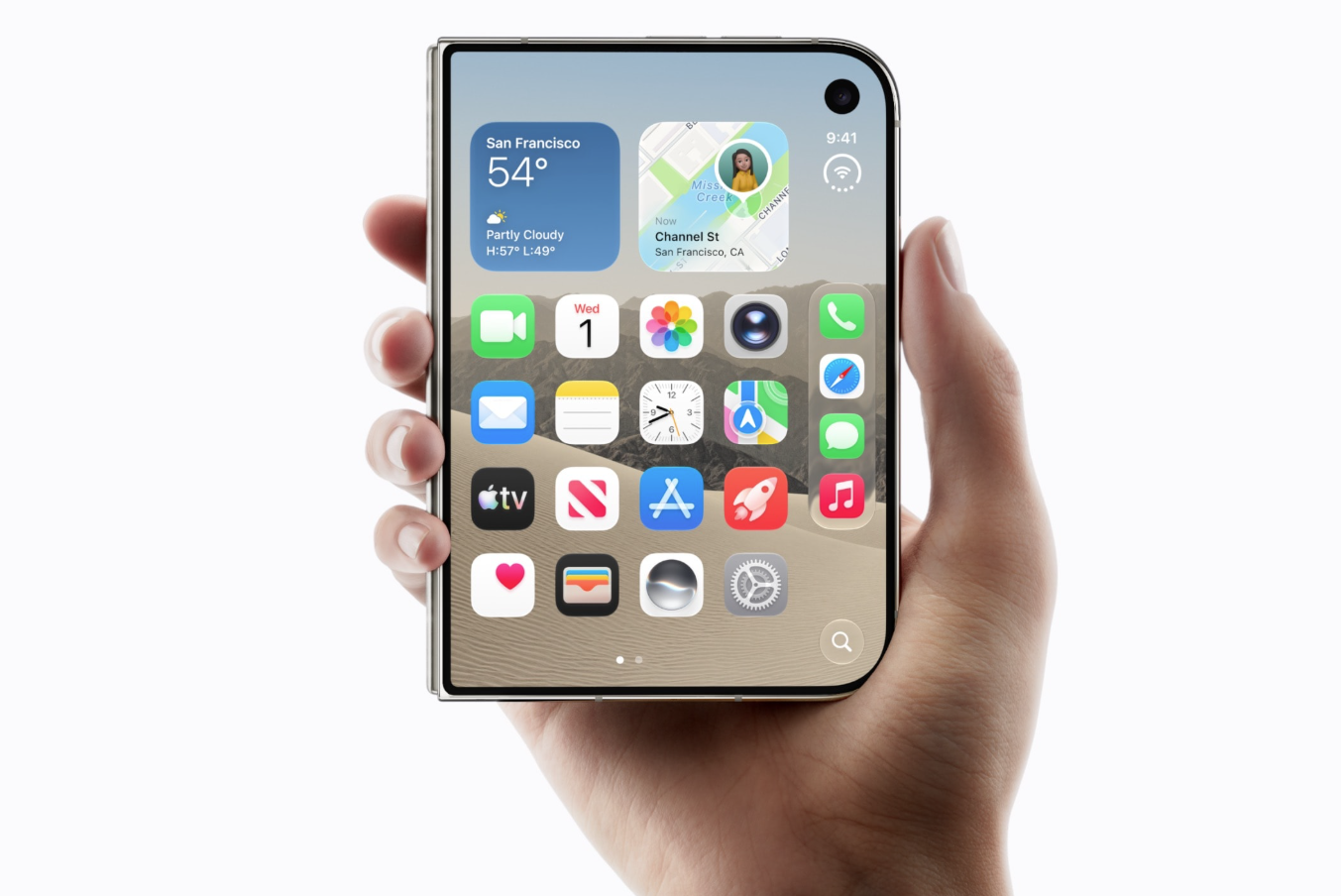

The Duo’s passport-style construction may be the biggest reason I’m interested in Apple’s approach. Traditional book-style foldables offer more screen space, but their narrow outer displays and squarer interiors do not always make that extra space useful.
The Galaxy Z Fold 8 helped change my perspective. Its wider proportions make the internal screen much better for watching videos and handling landscape content.
Samsung combines a 5.5-inch external display with a 7.6-inch inner panel. The broader layout provides more horizontal room when the device is unfolded.
That matters for movies and television shows. Nearly square folding displays can leave substantial unused areas around widescreen content. A wider panel can make the same video feel larger and more immersive.
The iPhone Duo appears to follow that same principle. Its internal display should work well for entertainment, reading, web browsing, and other activities that benefit from additional width.
Reading could be particularly comfortable. More horizontal space allows pages and articles to use a wider layout instead of forcing everything into a narrow column.
The closed dimensions are another advantage. The Duo is shorter and wider than a standard smartphone, giving it a more compact shape in your pocket.
That is exactly what I want from foldable technology. The phone should become smaller when
Is the iPhone Duo Worth It?
The iPhone Duo makes the most sense for users who value multitasking and extra screen space. Its 7.6-inch inner display creates a larger canvas than a standard iPhone. You can also use two apps side by side with Split View.
The premium comes with a significant price. In India, the iPhone Duo starts at ₹299,900 for 256GB. Higher-capacity versions cost more. That places it firmly in the premium enthusiast category.
The value depends on how often you use the larger display. Professionals may benefit from reading documents while communicating in another app. Frequent travelers may also appreciate having a tablet-like screen without carrying another device.
However, a conventional iPhone remains better value for simpler needs. The Duo is most compelling when its folding design solves a real daily problem.
Why Would Anyone Want a Foldable Phone?
People choose a foldable phone because standard smartphone screens have physical limits. A traditional handset stays compact, but its display remains relatively small. A tablet offers more space, yet carrying one everywhere is inconvenient.
The iPhone Duo approaches that problem differently. Its 5.4-inch outer display keeps the device compact when closed. Opening it reveals a 7.6-inch display for reading, entertainment, and multitasking.
That flexibility creates several practical advantages:
- More screen space for documents and websites.
- Side-by-side apps for multitasking.
- Hands-free viewing at different angles.
- Larger entertainment area for videos and games.
- Portable design when the phone is closed.
The Duo also supports different positions, including standing and seated viewing. Its flexible design allows hands-free FaceTime and convenient viewing angles.
For many buyers, that versatility is the main reason to consider a foldable iPhone.
Will the iPhone Duo Have a Crease?
The iPhone Duo uses a folding OLED display, so buyers should not assume the center will behave exactly like conventional flat glass. Apple has focused heavily on the hinge and display design, but long-term real-world experience will ultimately determine how the screen ages.
Apple says the Duo uses a precision hinge that supports the center of the display when opened. Its inner screen also has a nano-texture finish designed to reduce glare and reflections. That finish can help make visual imperfections less distracting.
However, Apple does not claim that the display is completely crease-free. A physical folding mechanism still introduces a bend point. The visible effect can vary with lighting, viewing angle, and usage.
For potential buyers, the sensible expectation is simple: the crease may be subtle, but it should not be assumed invisible in every situation. Real-world durability testing will provide a better picture after the device reaches consumers.
When Is the Foldable iPhone Releasing?
The foldable iPhone is no longer just a rumor. Apple officially introduced the iPhone Duo on September 9, 2026. The company has confirmed both preorder and availability dates.
In India, preorders begin at 5:30 PM IST on October 16, 2026. The iPhone Duo becomes available from October 23. It will be sold through Apple and selected partner stores.
The starting price in India is ₹299,900 for 256GB. Storage options include 256GB, 512GB, 1TB, and 2TB.
The launch represents a major change in Apple’s smartphone strategy. Apple waited until foldable hardware could fit its broader design and software approach.
That timing also gives consumers a clearer choice. Buyers who want a conventional flagship can choose an iPhone 18 Pro. Those seeking a larger, flexible screen can now consider the Duo.
Is a Foldable iPhone Worth It?
A foldable iPhone can be worth the price if you regularly need more screen space. The Duo combines a pocketable outer display with a 7.6-inch inner display. That combination gives users flexibility without carrying a separate tablet.
The device also offers features designed around the folding format. These include side-by-side apps, hands-free FaceTime, flexible viewing positions, and Apple Pencil support.
However, the starting price makes this a luxury purchase. At ₹299,900 in India, the Duo costs substantially more than conventional flagship phones.
The best candidates are therefore people who will use its unique hardware frequently. That includes professionals, frequent travelers, content consumers, and creative users.
If your phone mainly handles calls, messaging, social media, and occasional photos, a standard iPhone may offer better value. If you’re already weighing the cost of Apple’s next flagship generation, whether the iPhone 18 will cost more could also influence which model makes the most sense.