
Dopamine and Studying: What You Need to Know
Understanding Dopamine and Studying to Unlock Better Focus
Have you ever wondered why scrolling social media feels effortless while reading a textbook feels like climbing a mountain? The secret lies in your brain chemistry, specifically the link between dopamine and studying.
Dopamine is often misunderstood as a simple pleasure chemical. However, neuroscientists at the National Institutes of Health explain that it acts as a primary neurotransmitter for motivation and anticipation.
When you understand how dopamine regulates attention, you can stop relying on fleeting willpower. Instead, learning how dopamine and studying interact helps you design routines that work with your natural biology.
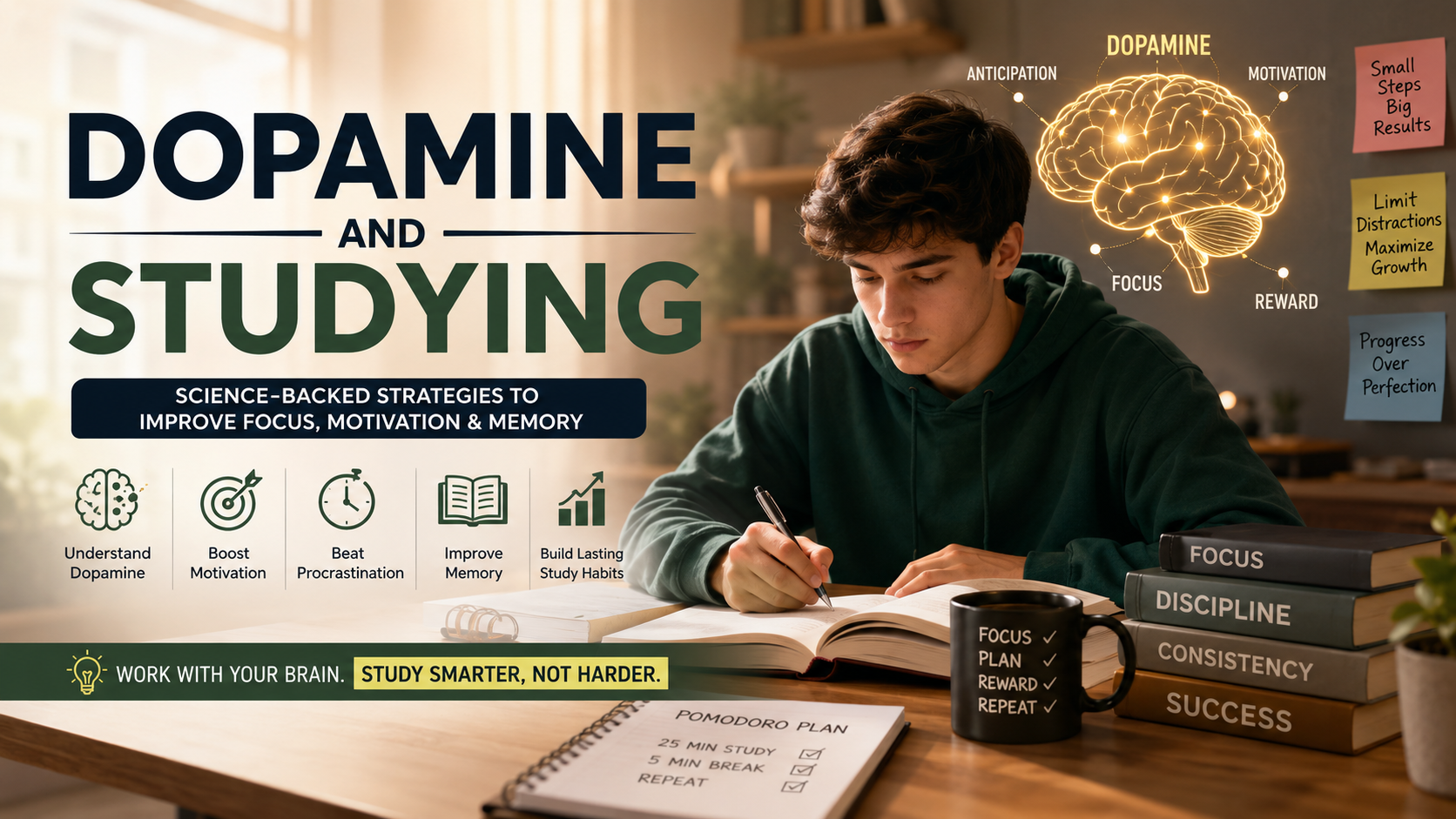
Anticipation leads to a dopamine surge, which drives sharp focus and ultimately results in long-term memory retention.
The Role of Dopamine in Learning and Memory
Dopamine plays an essential role in how we process and retain information. It does not just reward you after you finish a task. Instead, it spikes in anticipation of a reward, supplying the mental drive required to start working.
When your brain anticipates a positive outcome, dopamine levels rise throughout your neural pathways. This neurochemical boost strengthens synaptic connections, which is vital for long-term memory consolidation and mental clarity.
Motivation vs. Pleasure in Cognitive Focus
It is important to separate motivation from simple pleasure when reviewing your study habits.
-
Pleasure: You experience pleasure during or after an activity via endorphins.
-
Motivation: Dopamine creates the underlying drive that compels you to start.
Without proper dopamine activation, reading even a single page feels exhausting. Conversely, balanced neurochemistry makes deep concentration feel natural and manageable.
How Digital Distractions Hijack Your Focus System
Modern digital devices create major hurdles for students building consistent study habits. Platforms like TikTok, short videos, and video games offer instant rewards with zero mental effort.
When you swap high-dopamine activities for low-dopamine tasks like reading, your brain experiences a sudden chemical drop. This rapid decline causes immediate boredom, restlessness, and the urge to check your phone.
| Activity Type | Stimulus Level | Effort Required | Impact on Study Focus |
| Social Media / Gaming | High | Minimal | Rapid attention fatigue |
| Video Streaming | Moderate | Low | Reduced deep engagement |
| Reading & Problem Solving | Balanced | High | Long-term mental stamina |
To counteract this imbalance, you must reduce quick-reward distractions before studying. Cutting out digital noise allows your brain to reset, making traditional learning far more engaging over time.
Practical Strategies to Hack Dopamine and Studying Habits

You do not need grueling discipline to excel academically or maintain top grades. By restructuring your environment, you can train your brain to find deep concentration genuinely rewarding.
1. Implement the Pomodoro Technique with Micro-Rewards
Breaking study time into small blocks keeps your reward system engaged without causing fatigue. Work uninterrupted for 25 minutes, then take a 5-minute break.
Reward yourself during this brief pause with a quick stretch, a healthy snack, or fresh air. Repeat this four times before taking a longer 20-minute break. Frequent finish lines trigger small chemical rewards that keep your momentum going for hours.
2. Practice “Dopamine Menu” Planning
Before working, list healthy, low-stimulation breaks you enjoy. A pre-planned menu prevents your brain from defaulting to social media when taking a breather.
Pro Tip: Keep your smartphone in another room while studying. Research proves that the physical presence of a phone drains cognitive capacity, even when powered off.
Overcoming Procrastination by Lowering the Friction Barrier
Procrastination is rarely a sign of laziness. It is an emotional regulation issue. When a task feels overwhelming, your brain anticipates discomfort rather than reward, causing dopamine levels to drop.
To reverse this drop, lower your entry barrier using the Five-Minute Rule:
-
Tell yourself you only have to study for five minutes.
-
If you want to quit after five minutes, you have full permission to stop.
-
In most cases, crossing the starting line removes friction, letting focus take over naturally.
Tricking your brain into taking tiny first steps turns intimidating tasks into manageable actions, clearing the path for uninterrupted flow states.
Long-Term Habits for Sustainable Dopamine and Studying Performance
Achieving sustained mental performance requires a solid foundation built on healthy lifestyle choices. You can optimize baseline dopamine production and improve receptor sensitivity through simple, daily habits:
-
Prioritize Sleep: Quality sleep restores receptor sensitivity, allowing you to focus with less effort the next day.
-
Get Direct Sunlight: Morning sunlight exposure boosts baseline dopamine levels and regulates circadian rhythms.
-
Eat Protein-Rich Foods: Amino acids like tyrosine serve as essential building blocks for neurotransmitter synthesis.
-
Exercise Daily: Moderate aerobic activity increases brain-derived neurotrophic factor (BDNF) and elevates neurotransmitters.
Supporting your physical health gives your brain the biological resources required to maintain sharp attention every single day.
Frequently Asked Questions
What is the connection between dopamine and studying?
Dopamine is the primary neurotransmitter responsible for driving motivation, sharp focus, and goal-directed behavior in students. When you sit down to study, dopamine helps sustain your attention span by anticipating the satisfaction of completing a challenging assignment. Balanced baseline dopamine levels make it significantly easier to initiate difficult academic tasks, resist environmental distractions, and maintain deep concentration over extended periods without experiencing rapid exhaustion or cognitive fatigue. Furthermore, dopamine optimizes neural communication within the prefrontal cortex, which governs executive functions like planning and impulse control. When balanced, academic work transitions from a painful chore into an engaging process where small milestones provide steady mental momentum to keep moving forward.
Can a dopamine detox help improve my study focus?
Yes, a structured dopamine detox can effectively reset your brain’s desensitized reward pathways. By temporarily eliminating or drastically reducing high-stimulation activities—such as video games, social media scrolling, and constant smartphone notifications—your dopamine receptors gradually regain their natural sensitivity. Consequently, low-stimulation activities like reading textbooks, writing essays, and working through complex practice problems become far more engaging and far easier to focus on for prolonged periods. When your brain is bombarded with hyper-rewarding digital stimuli, standard educational materials feel unbearable by comparison. Stepping away from instant gratification allows your neurological baseline to reset, helping you sit quietly with complex books or mathematical problems without experiencing intense mental resistance.
How does dopamine affect memory retention while studying?
Dopamine serves as a critical chemical signal that indicates to your brain that a specific experience or piece of information is valuable enough to store long-term. When dopamine is actively released during a study session, it strengthens the synaptic connections formed between neurons. This physiological process directly enhances memory consolidation, enabling you to recall intricate concepts, formulas, and facts accurately during exams. Beyond simple encoding, dopamine facilitates neuroplasticity—the brain’s structural capacity to reorganize itself and build robust new neural pathways in response to fresh information. When you feel curious or rewarded while absorbing material, your brain tags that data as high-priority, preventing memory decay so details remain accessible when needed later.
Why does studying feel so boring compared to scrolling on my phone?
Scrolling on a smartphone delivers unpredictable, instant dopamine hits with virtually zero physical or cognitive effort required on your part. Studying, by contrast, requires intense mental energy and offers delayed rewards that take time to realize. Because the human brain naturally seeks out the path of least cognitive resistance to conserve energy, it actively signals boredom during low-dopamine tasks to push you toward effortless, high-reward digital activities. Algorithms on modern apps are specifically engineered to exploit your brain’s seeking mechanism by providing variable reward schedules that mirror slot machines. When you contrast that constant, low-effort spike with the deliberate processing required to comprehend dense texts, your brain interprets studying as unprofitable until you deliberately manage environmental inputs.
How can I trigger dopamine naturally before I start studying?
You can naturally trigger an early dopamine release by breaking massive, intimidating study projects down into micro-tasks that offer quick, achievable wins. Cleansing your workspace, performing a brief five-minute exercise routine, or committing to work for just five minutes using a timer can also trigger an initial chemical boost. This simple burst of motivation provides the momentum required to overcome initial friction and enter a productive state of deep concentration. Additionally, spending ten minutes visualizing the successful completion of your session or drinking a glass of cold water can activate your nervous system. By consciously structuring your environment to celebrate small checkpoints, you trick your brain into releasing a steady stream of dopamine right from the start.
Conclusion
Understanding the biological relationship between dopamine and studying completely transforms how you approach your academic workload. Rather than viewing focus as a fixed talent, you can recognize it as a dynamic neurochemical state you can actively optimize.
By cutting out hyper-stimulating digital distractions, breaking assignments into small steps, and supporting your health through sleep and nutrition, you create the ultimate environment for cognitive performance.
Aligning your habits with your biology ensures productivity stops feeling like an exhausting battle. If you are struggling to maintain your momentum over long academic periods, learning how to stay motivated while studying will help keep your brain engaged and consistent. Start small today by picking a single strategy—like the five-minute rule or Pomodoro blocks—to build sustainable academic success without burning out.