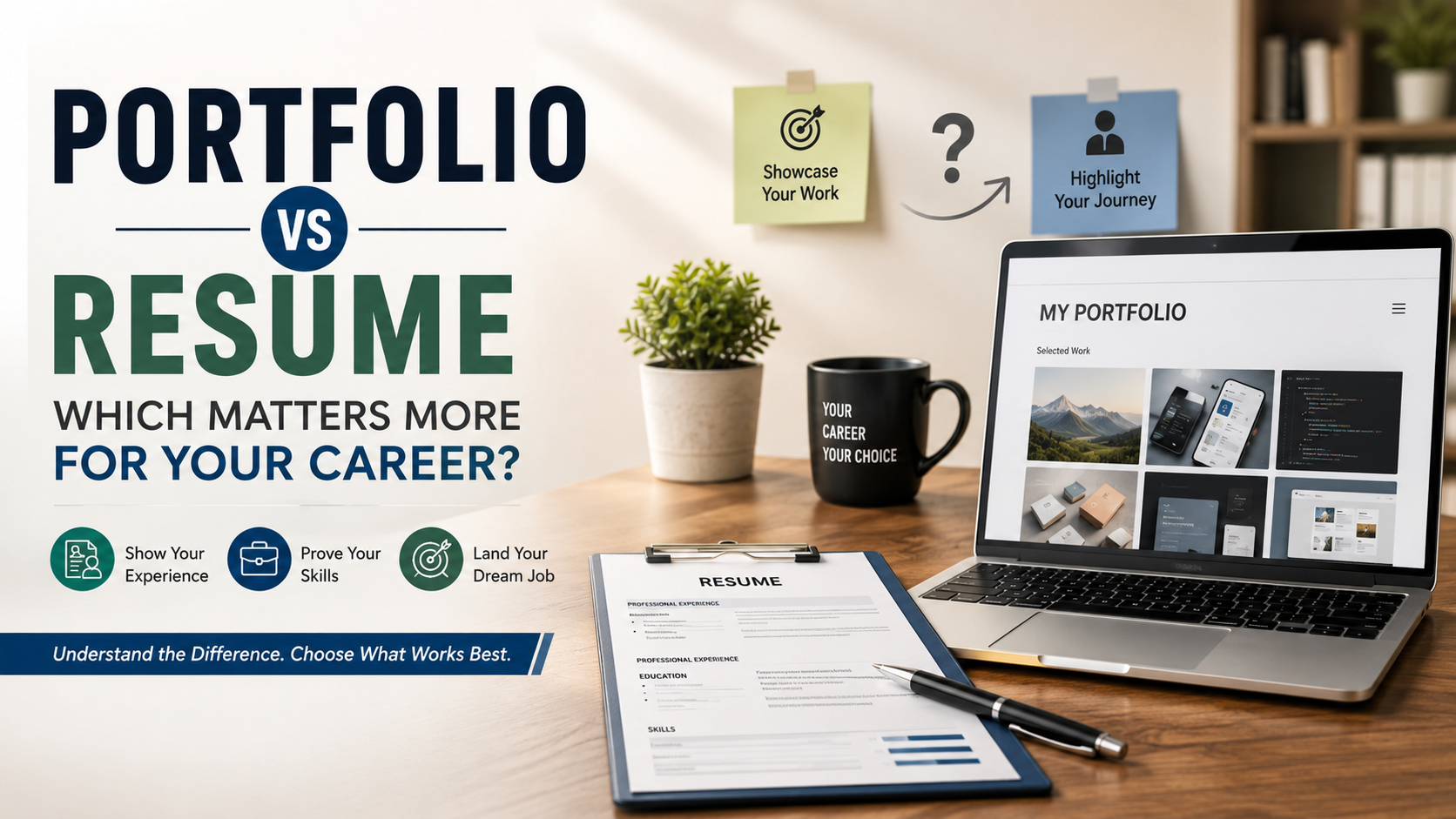
Portfolio vs Resume: Which Matters More for Your Career?
When you apply for a new job, proving your skills to a hiring team is your main objective. Deciding between a portfolio vs resume can determine how effectively you showcase your career qualifications. While job seekers historically relied solely on a standard work history document, modern recruiters often want tangible proof of your past achievements. According to career guidance resources from the U.S. Department of Labor, tailoring your application materials directly to industry expectations significantly increases your interview callbacks.
Understanding how these two job search tools differ is crucial for every professional. Weighing a portfolio vs resume allows you to highlight your best achievements appropriately. A standard career summary outlines your past responsibilities, whereas a visual showcase offers direct evidence of your actual work capabilities. Neither tool is completely obsolete, but their individual importance shifts drastically depending on your specific field and target role. In this article, we will examine the unique strengths of each document, analyze industry demands, and explain how you can leverage both assets to land your dream job faster.
Understanding the Role of a Portfolio vs Resume in Hiring
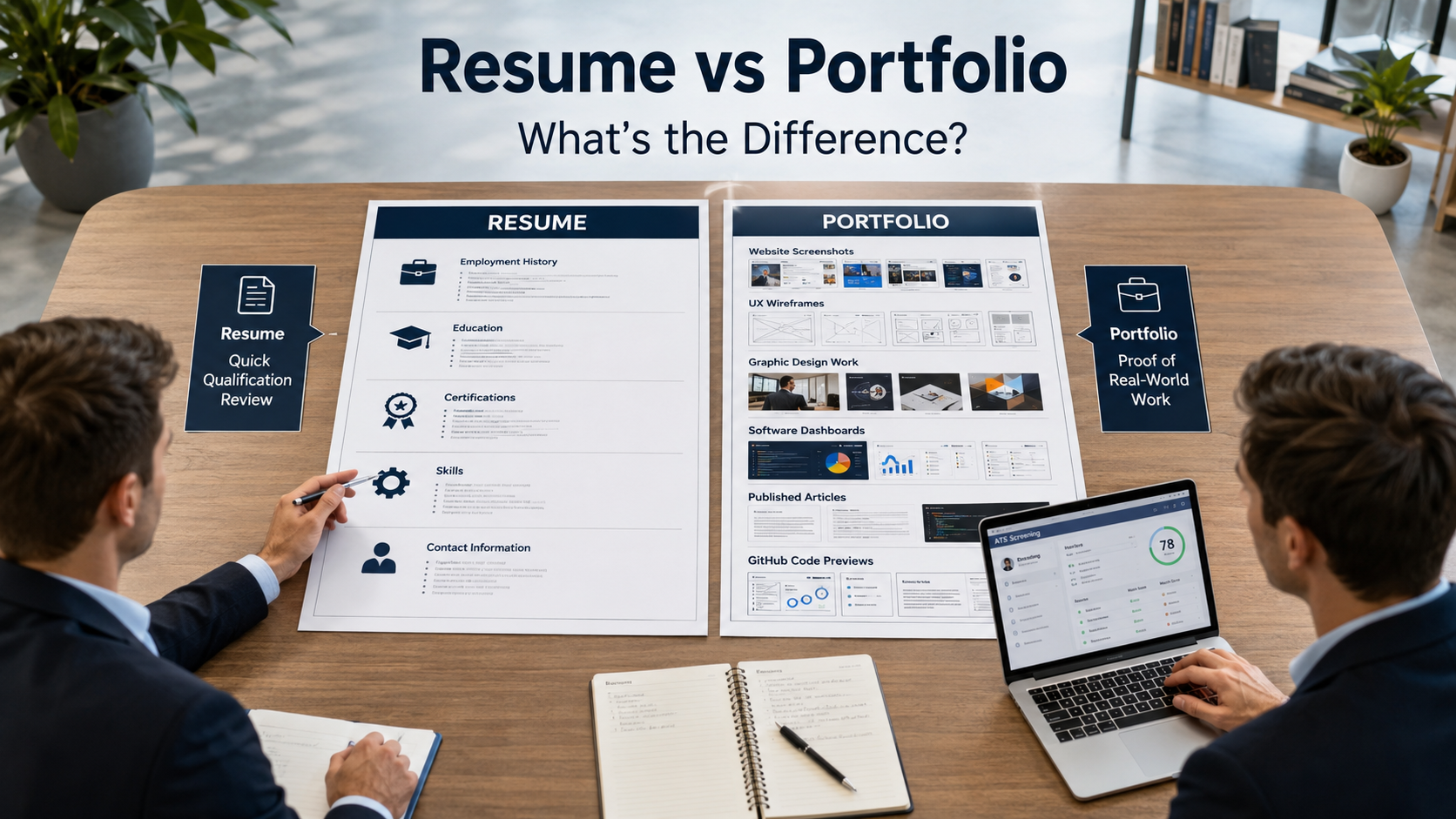
To make the right choice during your job hunt, you must understand what each document accomplishes. Evaluating a portfolio vs resume helps you present your qualifications effectively. A traditional work history summary offers a quick, chronological snapshot of your professional life. It lists your past job titles, employer names, education, certifications, and high-level accomplishments. Hiring managers use it to verify your background quickly and ensure you meet the basic qualifications for an open position. It acts as an overview of your career progression over time.
Conversely, a visual project showcase presents concrete examples of your work. Instead of simply stating that you know how to design websites or write software, you display the actual finished products. This visual or practical evidence allows recruiters to evaluate your personal style, technical skill level, and problem-solving process directly. Consequently, employers gain a much clearer picture of what you can produce on day one. Understanding this dynamic ensures you prepare the exact materials hiring teams expect to see.
| Feature | Resume | Portfolio |
| Primary Focus | Employment history and credentials | Concrete proof of work and outcomes |
| Format | 1–2 page written document | Digital website, PDF, or code repository |
| Best For | Traditional industries (Finance, HR, Law) | Creative and technical fields (Design, Writing, Tech) |
| Review Time | 6 to 10 seconds initially | 2 to 5 minutes detailed review |
Key Differences Between a Portfolio vs Resume
-
Scope and Depth: A standard career summary stays brief and high-level. A project archive dives deep into specific case studies and working methods.
-
Format Flexibility: Traditional career papers follow rigid formatting rules. Creative showcases allow for personalized layout designs, interactive elements, and media.
-
Evaluation Speed: Employers scan written job histories in seconds to check baseline qualifications. They spend more time exploring project galleries when assessing creative fit.
Understanding these structural differences helps you allocate your time wisely during a job search. A standard document summarizes your entire career timeline into concise bullet points, whereas a project gallery selectively highlights your absolute best work. Moreover, while a written history relies heavily on text descriptions, a visual gallery uses images, live links, and interactive elements to create an engaging experience. Therefore, balancing both formats gives you a versatile toolkit that satisfies different types of evaluators throughout the hiring process.
When a Traditional Resume or Career Summary Matters Most
In many corporate sectors, a clean and structured job history document remains the gold standard. Traditional fields value linear career growth, formal education, and verifiable employment titles above personal projects. Evaluators in these fields want to see a reliable track record that demonstrates long-term commitment and professional growth. They rely on standardized formats because they allow fast comparisons between dozens of applicants competing for the same position.
Corporate environments rely heavily on Applicant Tracking Systems (ATS) to filter job applications before a human recruiter ever sees them. These software programs scan text documents for specific keywords, education levels, and experience thresholds. Standard application documents integrate seamlessly with ATS software, ensuring your credentials pass automated screening checks smoothly. However, if you submit an unconventional visual file or an unsupported layout, the system might misread your data and reject your application automatically.
Industries That Prefer Standard Application Resumes
-
Corporate Finance and Banking: Prioritizes verified institution history and certifications over visual work.
-
Legal and Compliance: Focuses strictly on accredited degrees, bar admissions, and firm experience.
-
Human Resources and Operations: Evaluates administrative background, organizational metrics, and team management roles.
-
Healthcare and Medical Fields: Demands official licensing, academic credentials, and clinical practice records.
For professionals entering these structured industries, spending weeks polishing a fancy personal website yields very little return. Instead, your energy is better spent tailoring your written job history to match specific job descriptions. Furthermore, keeping your formatting simple, clean, and scannable ensures that both automated parsers and busy human recruiters can locate your key qualifications instantly. Mastering the standard application layout remains the most effective way to secure interviews in traditional corporate environments.
When a Visual Portfolio or Work Showcase Takes Precedence
For creative, technical, and digital professions, showing your actual work is far more impactful than telling an employer what you did. A candidate can easily list design tools or programming languages on a document, but a project archive reveals true skill execution. In these fast-moving industries, hiring managers care far less about where you went to school and far more about what you can build today.
Employers in fast-paced creative fields want immediate confidence in your output. Seeing completed projects reduces the hiring risk for managers because they can gauge your creative standards immediately. Furthermore, a detailed case study reveals how you overcome project obstacles, collaborate with team members, and handle feedback. Therefore, presenting real-world results helps you stand out far more than a simple list of past job titles ever could.
Key Fields Driven by Portfolio Proof of Work
-
Graphic and UI/UX Design: Hiring managers must evaluate visual aesthetics, design systems, and user flow decisions.
-
Software Engineering and Web Development: Technical recruiters review live code repositories, system architecture, and functional applications.
-
Copywriting and Content Marketing: Content leads examine writing tone, voice versatility, and published articles.
-
Architecture and Interior Design: Visual renderings, spatial planning drawings, and finished build photographs prove real-world expertise.
If you are pursuing a career in these industries, your proof of work serves as your primary sales tool. A well-organized gallery demonstrates your passion, craftsmanship, and attention to detail before an interviewer even asks a question. Moreover, it allows you to direct the interview conversation toward your strongest projects. Investing effort into building a compelling visual display guarantees that prospective employers instantly recognize your true value as a practitioner.
How to Combine a Portfolio vs Resume Strategy for Success

You do not always have to choose between a portfolio vs resume when applying for top positions. In fact, combining the strengths of both assets creates a compelling candidate profile that satisfies both automated filters and human evaluators. Understanding the balance between a portfolio vs resume allows you to target every stage of the hiring pipeline. While your written document passes the initial ATS screening, your digital work gallery captures the attention of the hiring manager during the final review stage. Utilizing both assets together maximizes your chances of converting an application into a formal job offer.
Start by optimizing your text summary for keyword readability and standard metrics. Then, embed direct links to your online project showcase within your header and relevant job entries. This strategy guides recruiters from your high-level overview directly into your best work examples. Consequently, you satisfy the administrative need for structured data while simultaneously providing rich, proof-driven evidence of your abilities.
Best Practices for Combining Portfolio and Resume Assets
-
Include Live Links: Place a clean hyperlink to your personal website or GitHub profile at the top of your standard application document.
-
Connect Context to Examples: Beneath a specific job description, mention a specific project and link directly to its case study.
-
Keep Formatting Clean: Ensure both your written summary and digital gallery share consistent branding, fonts, and contact information.
To make this hybrid strategy successful, ensure that your messaging remains consistent across all platforms. The job titles, dates, and project descriptions listed on your written history must align perfectly with the case studies on your website. Discrepancies between your application materials can raise red flags for meticulous recruiters. Therefore, reviewing both assets regularly keeps your professional narrative cohesive, authoritative, and completely trustworthy across every channel.
FAQ SECTION
Which is more important, a portfolio or a resume?
Determining which document is more important in the portfolio vs resume debate depends entirely on your specific industry and job function. For creative and technical roles like software engineering, graphic design, copywriting, or web development, a work gallery carries significantly more weight because it provides direct, undeniable proof of your hands-on skills. Hiring managers in these fields want to see what you can create today rather than simply reading about your past responsibilities. Conversely, for traditional corporate roles such as accounting, legal services, human resources, or healthcare, a traditional career summary is far more essential. These fields prioritize official degrees, accredited certifications, verified employment history, and linear career growth over visual projects. Therefore, understanding your industry norms allows you to focus your energy on the application asset that matters most to prospective employers.
Should I link my work showcase inside my job application document?
Yes, you should always include a direct hyperlink to your digital work gallery near your contact information at the top of your document. Additionally, adding specific links within your professional experience section next to relevant projects allows recruiters to jump directly from a brief bullet point to a detailed case study. This seamless connectivity makes it incredibly easy for hiring managers to verify your accomplishments without searching for your website separately. However, ensure that all URLs are clean, fully functional, and hyperlinked using short text rather than long, messy web addresses. Furthermore, double-check that your destination website is completely mobile-friendly, as many recruiters and hiring executives initially review candidate profiles on their smartphones or tablets during busy workdays.
Can a strong project gallery replace a traditional application document?
In almost all corporate hiring environments, a project gallery cannot completely replace a standard work summary. Many companies rely on automated Applicant Tracking Systems (ATS) that require a structured, text-based document to extract your job titles, employment dates, contact details, and education history into their candidate databases. Without a standard document, your application might fail automated processing entirely, preventing human recruiters from ever seeing your impressive work examples. Furthermore, human resource departments need standardized summaries to conduct background checks, compare salary expectations, and archive candidate profiles systematically. Even creative directors who are thoroughly impressed by your visual portfolio will usually request a clean, standard resume to submit to their administrative and HR teams for final corporate approval and onboarding.
What should I include if I am an entry-level applicant with no formal experience?
Entry-level applicants without formal work history should build personal projects, redesign existing products, perform mock client assignments, or showcase relevant academic coursework. Focus heavily on demonstrating your practical problem-solving process rather than worrying about well-known client names. Highlighting self-directed projects in a clean digital gallery shows immense initiative, enthusiasm, and practical skill to potential employers. You can also include open-source contributions, volunteer work, or freelance gigs to demonstrate real-world collaboration. When documenting these early projects, clearly explain the problem you set out to solve, the tools you used, and the final results you achieved. Demonstrating a clear analytical mindset and hands-on ability reassures employers that you possess practical value despite lacking years of traditional corporate experience.
How often should I update my professional application assets?
You should update your professional application materials every three to six months, or immediately after completing a major project at work. Regularly adding fresh achievements, new technical skills, updated metrics, and recent work samples ensures you are always prepared for unexpected career opportunities. If you wait until you are actively looking for a new job, recalling specific metrics, project details, and key accomplishments becomes much harder and leads to rushed, lower-quality application materials. Keeping these assets current prevents the stressful scramble of rebuilding your entire professional presence from scratch when an exciting job opens up suddenly. Furthermore, maintaining up-to-date online profiles improves your passive visibility to recruiters and executive headhunters who actively search for top talent year-round.
CONCLUSION
Navigating the choice between a portfolio vs resume comes down to understanding what your specific industry values most. While corporate and administrative fields lean heavily on traditional text summaries, modern creative and technical roles prioritize direct proof of your capabilities. Neither asset completely replaces the other; instead, they serve complementary purposes in a modern job search strategy. Understanding how to use both effectively positions you ahead of candidates who rely on a single approach.
Your standard document opens the door by passing automated screening systems and detailing your professional trajectory clearly. Meanwhile, your project showcase seals the deal by giving hiring managers absolute confidence in your practical abilities and creative thinking. Evaluating your portfolio vs resume strategy ensures your job search remains highly targeted and effective.
By following our resume and interview tips beginners guide and maintaining an up-to-date work gallery alongside a well-formatted background document, you create a complete application strategy that appeals to both recruiters and automated tracking tools. Take time today to review your current career assets, update your latest achievements, and position yourself for maximum hiring success.