Does Jewelry Affect Hormones? Understanding How Your Accessories Impact Your Body
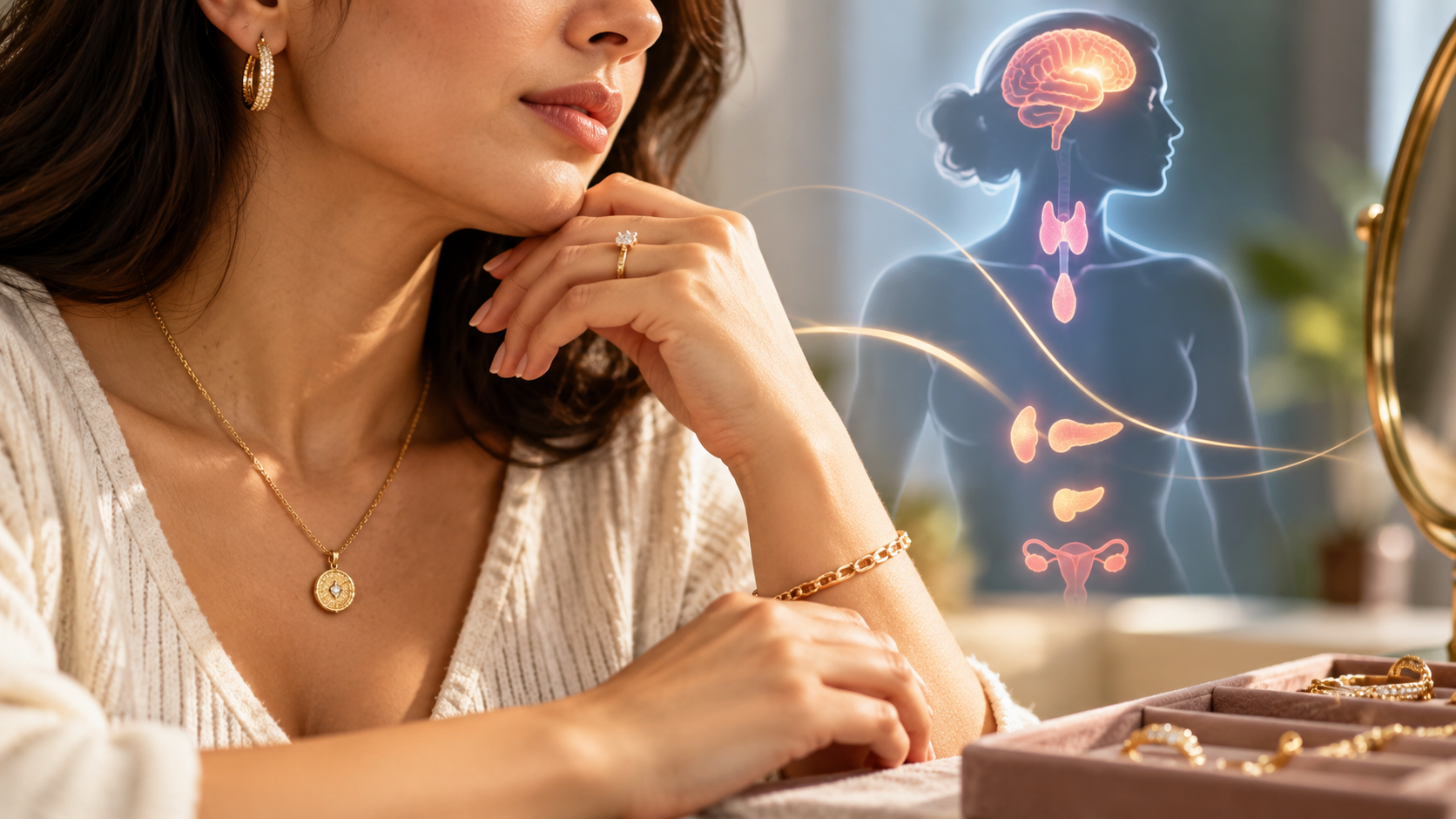
Does jewelry affect hormones? Many people wonder whether wearing gold, silver, or fashion accessories daily can influence their hormonal health. Jewelry materials can interact with the skin, but these interactions do not automatically mean they affect the endocrine system. The material, metal purity, and individual sensitivity all matter when choosing accessories. Learn about the endocrine system.
Certain metals, particularly nickel, can cause allergic reactions in sensitive individuals. However, there is no strong evidence that wearing ordinary jewelry directly disrupts hormone levels in healthy people. Understanding the difference between skin irritation and hormonal changes helps you make informed decisions about everyday accessories. If you are asking, “Does jewelry affect hormones?”, the key distinction is between a documented skin reaction and an actual change in hormone levels. Read about nickel allergy.
This guide explores how gold purity, hypoallergenic metals, and jewelry choices relate to skin health. It also covers daily gold earrings, attractiveness, Gen Z fashion trends, traditional rashi beliefs, and the idea of negative energy. By separating scientific evidence from cultural traditions, you can choose jewelry that suits your personal style and comfort.
Does gold jewelry affect hormones?
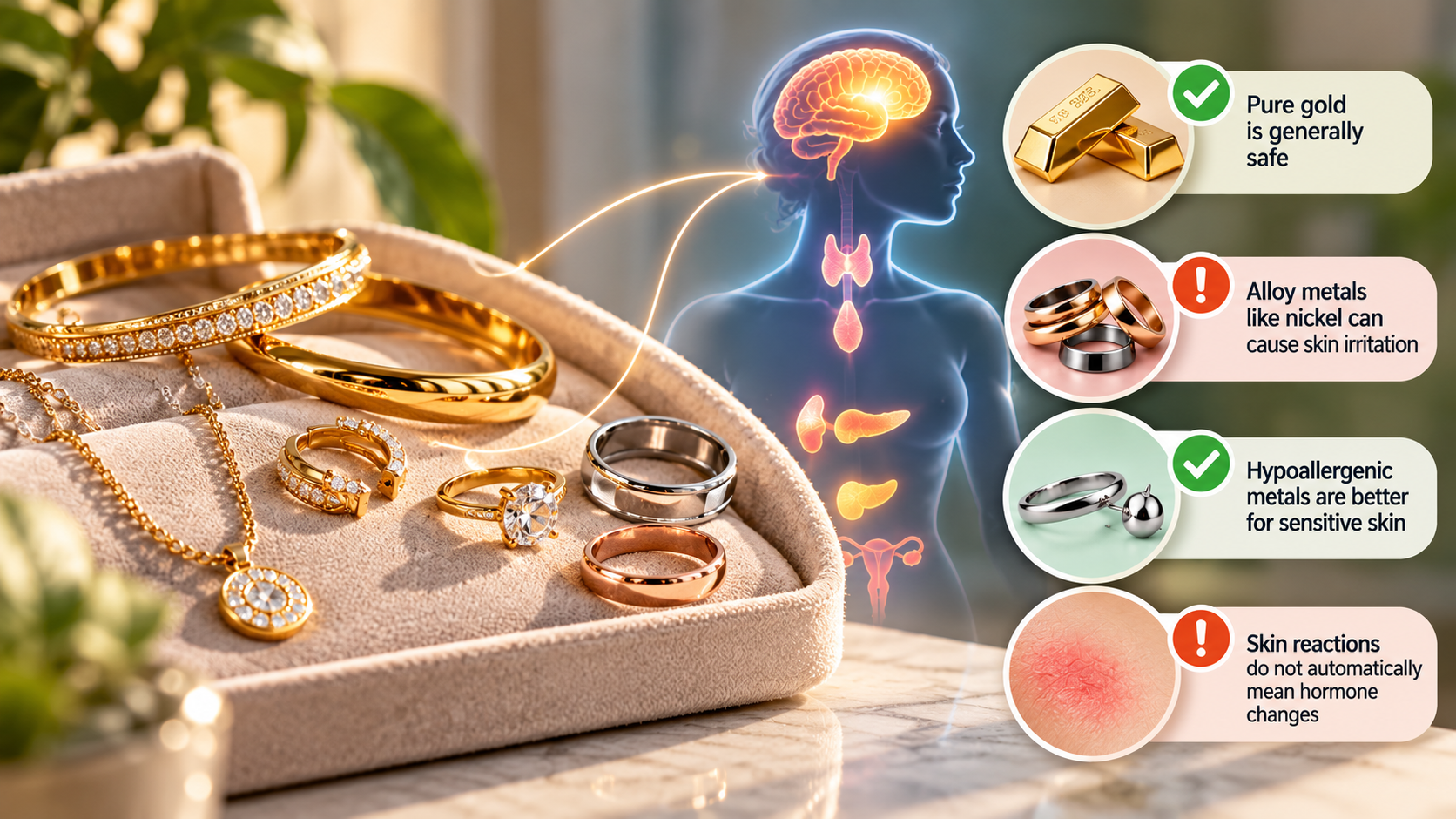
Pure gold jewelry does not appear to directly disrupt hormone levels under normal wearing conditions. Gold is a relatively unreactive metal that resists corrosion, making high-purity gold suitable for many people with sensitive skin. However, this does not mean every gold-plated or gold-alloy accessory is equally suitable for everyone.
Lower-karat gold contains other metals that improve its strength and durability. These alloys may include copper, silver, zinc, or nickel, depending on the jewelry’s composition. Some of these metals can trigger contact dermatitis in susceptible individuals. If you notice other unexplained physical changes, understanding the signs and causes of hormonal imbalance can help you distinguish potential hormonal symptoms from skin reactions.
Contact dermatitis may cause redness, itching, swelling, or a rash where jewelry touches the skin. Although these symptoms can cause discomfort, they do not establish that your hormones have changed. Understanding the main parts and systems of the human body can help clarify how the skin, immune system, and endocrine system perform different functions.
If you are concerned about whether jewelry affects hormones, focus on the available evidence rather than assumptions about metal purity alone. There is no convincing evidence that routinely wearing gold jewelry causes hormonal imbalances. Choose well-made pieces, check their metal composition, and seek medical advice for persistent skin reactions.
The Impact of Alloy Metals on Skin Sensitivity
Alloy metals help make gold jewelry stronger, but certain ingredients can cause skin reactions. Nickel is a particularly common cause of allergic contact dermatitis. Copper and other metals may also irritate some people, although nickel allergy is better established.
When jewelry comes into contact with sweat, friction, and moisture, susceptible individuals may develop redness, itching, or a rash. These symptoms usually appear where the jewelry touches the skin. They reflect a local skin reaction rather than proof of a hormonal problem.
Skin irritation and hormonal disruption are different issues. An allergic reaction involves the immune system, while the endocrine system regulates hormones through organs and glands. Persistent discomfort may affect sleep or well-being, but there is insufficient evidence that ordinary jewelry-related dermatitis directly changes hormone levels.
If a necklace, ring, or pair of earrings repeatedly causes irritation, stop wearing it until your skin recovers. Consider nickel-free alternatives and consult a dermatologist if symptoms persist. Identifying the specific allergen can help you avoid future reactions without unnecessarily giving up jewelry.
What is the healthiest jewelry to wear?
The healthiest jewelry to wear is generally made from materials that suit your skin sensitivity, resist corrosion, and have a clearly identified composition. For most people, choosing appropriate jewelry is more important than following claims about particular metals improving hormonal balance.
High-purity gold, platinum, titanium, and niobium are common options for people who need to avoid certain metal allergens. Their suitability still depends on the exact alloy, surface coating, and any additional components. Some stainless-steel jewelry also works well, but certain grades contain nickel that may cause problems for people with nickel allergies.
Jewelry labeled hypoallergenic can be helpful, but the label does not guarantee that a product contains no potential allergens. Check the manufacturer’s material specifications before purchasing accessories, especially earrings and body jewelry that remain in contact with sensitive skin.
Keep jewelry clean and dry, remove it when it causes discomfort, and avoid wearing damaged pieces that expose unknown materials. These simple precautions help reduce irritation. No jewelry material has been proven to balance hormones simply because it is considered biocompatible.
When considering whether does jewelry affect hormones is a genuine health concern, remember that material safety and hormonal health are separate issues. Choosing skin-friendly metals can help prevent irritation, but there is no established evidence that they improve hormone balance.
Choosing Hypoallergenic Metals for Everyday Safety
Hypoallergenic jewelry can help reduce exposure to metals that trigger allergic reactions. This is particularly important for earrings, rings, necklaces, and bracelets worn for extended periods. However, you should check the actual material rather than relying on marketing descriptions alone.
This is particularly important for earrings, rings, necklaces, and bracelets worn for extended periods. However, you should check the actual material rather than relying on marketing descriptions alone.
Consider these options when shopping for everyday accessories:
- Titanium: A lightweight, corrosion-resistant option often suitable for sensitive skin.
- Niobium: A metal commonly used in body jewelry because of its favorable compatibility with skin.
- Platinum: A durable precious metal that is generally well tolerated, depending on its alloy composition.
- High-purity gold: Often suitable for sensitive skin, although individual reactions and alloy ingredients still matter.
- Suitable stainless steel: Can be practical and durable, but its nickel content may be unsuitable for some people.
Avoid jewelry containing undisclosed metals, especially if you have a known allergy. Cheap accessories with poorly documented coatings may also expose your skin to unwanted materials as the finish wears away.
If you frequently experience itching or redness, consult a dermatologist about allergy testing. Identifying the specific cause is more reliable than switching randomly between different jewelry materials. If you need professional guidance, learning about the types of doctors and their specialties can help you understand which medical professional to consult for different concerns.
Can I wear 22k gold earrings every day?
Yes, many people can wear 22k gold earrings every day without experiencing skin problems. However, suitability depends on your individual sensitivity, the earrings’ construction, and how well you care for them. The high gold content makes 22k jewelry a popular choice for traditional accessories.
22k gold contains approximately 91.6% pure gold, with the remaining portion consisting of other metals. Its exact alloy composition varies by manufacturer and design. Although high-purity gold may reduce exposure to certain potential allergens, it does not guarantee that every pair will suit every wearer.
Gold is relatively soft, so 22k earrings can bend or become damaged more easily than lower-karat alternatives. Inspect clasps, posts, and other fittings regularly, particularly if you wear your earrings frequently.
Clean your earrings gently according to the manufacturer’s instructions. Remove them if you notice itching, swelling, or persistent redness around the piercing.
If you wonder, “Does jewelry affect hormones?”, current evidence does not establish a direct link between wearing 22k gold earrings and hormonal disruption. For most people, everyday use is not known to affect hormone levels. However, skin allergies and irritation remain possible, depending on the metals used in the earrings.
Does jewelry increase attractiveness?
Jewelry can influence perceived attractiveness by drawing attention to facial features, complementing clothing, and expressing personal style. However, its effect varies with individual preferences, cultural expectations, the occasion, and the way accessories are styled.
Gold necklaces, silver earrings, rings, and bracelets can create visual contrast and add detail to an outfit. Some pieces highlight the neckline, while others draw attention toward the face or hands. Choosing accessories that complement your clothing and personal style can create a more coordinated appearance.
Jewelry can also influence how people feel about themselves. Wearing a favorite necklace or meaningful ring may increase confidence and encourage more comfortable self-expression. Confidence can affect posture, facial expressions, and social interactions, which may influence how others perceive you. Regular physical activity can also support emotional well-being, and learning how exercise boosts your mood offers another perspective on the connection between feeling good and self-confidence.
However, jewelry does not automatically make everyone more attractive. Oversized accessories may suit one person’s style but feel uncomfortable or distracting to another. Personal taste matters more than following a single fashion rule.
To choose flattering jewelry, consider your outfit, preferred colors, and the setting. You can experiment with different lengths, textures, and metals to discover what feels natural. Ultimately, attractiveness depends on more than accessories; confidence, grooming, and personal expression also contribute to the overall impression.
What is the Gen Z trend in jewelry?
Gen Z jewelry trends emphasize personal expression, playful styling, sustainability, and designs that work across different outfits. Younger consumers have helped popularize chunky silver pieces, colorful accessories, layered necklaces, charm bracelets, and gender-inclusive designs.
Personalization is another recognizable trend. Initial pendants, meaningful charms, birthstone rings, and customized pieces allow wearers to express their interests and identities. Nostalgic Y2K-inspired accessories, colorful resin rings, and beaded necklaces also appear in contemporary streetwear and social media styling.
Many younger shoppers are interested in recycled metals, traceable gemstones, and lab-grown diamonds. However, preferences vary widely, and ethical sourcing does not automatically guarantee that every product is environmentally friendly. Buyers should examine specific sourcing claims and product details.
Mixing metals has also become a popular styling approach. Gold and silver can be worn together to create contrast, while delicate chains can be layered with heavier statement pieces. The goal is often a more individual look rather than strict matching.
Gen Z consumers also frequently combine fine jewelry with affordable fashion accessories. This makes everyday styling more flexible and accessible. When choosing pieces, prioritize comfort, material quality, and personal preference instead of assuming every trending accessory suits your skin or lifestyle.
Sustainable and Ethical Choices in Modern Fashion
Sustainable jewelry focuses on reducing environmental harm, improving sourcing transparency, and encouraging responsible production. Recycled gold, responsibly sourced gemstones, and lab-grown diamonds are among the options shoppers may consider when evaluating a purchase.
However, sustainability claims deserve careful examination. Recycled metals can reduce demand for newly mined materials, but their overall environmental impact depends on processing, manufacturing, transportation, and other factors. Similarly, lab-grown diamonds avoid some mining-related impacts but still require energy to produce.
When shopping for ethical jewelry, consider the following:
- Material transparency: Look for clear information about metal purity, gemstone origins, and manufacturing.
- Durability: Well-made jewelry can last longer and reduce the need for frequent replacement.
- Recycled materials: Check whether the seller provides credible information about recycled content.
- Repairability: Replaceable clasps and repairable settings can extend a piece’s useful life.
- Responsible sourcing: Seek specific evidence supporting claims about labor standards and gemstone origins.
You do not need to replace your entire jewelry collection to make more responsible choices. Wearing existing pieces longer, repairing damaged accessories, and buying fewer, better-made items can also help reduce waste.
Ethical jewelry can align with personal values, but responsible purchasing requires more than attractive packaging or broad sustainability labels.
Which rashi cannot wear gold?
According to some traditions of Vedic astrology, gold is associated with the Sun and particular planetary influences. Certain astrologers may advise people with specific rashi signs to avoid gold or choose other metals based on their birth charts. These recommendations vary across astrological traditions and individual interpretations.
Kumbha (Aquarius) and Makara (Capricorn), for example, are sometimes discussed in connection with Saturn’s influence and traditional restrictions on gold. However, there is no single universal rule that applies to every person born under either sign.
These recommendations belong to astrological and cultural belief systems, not established medical science. Scientific evidence does not show that wearing gold according to a particular rashi causes hormonal imbalance, disrupts the endocrine system, or produces measurable physiological harm.
If astrology is important to you, you may choose to consult a practitioner who explains the tradition behind a recommendation. You can also consider personal preference, budget, and practical comfort when selecting jewelry.
From a health perspective, your skin’s response to a metal is more relevant than your zodiac sign. If a piece causes irritation, investigate its composition and consider alternatives. If it causes no problems, there is no established medical reason to avoid gold solely because of your rashi.
Can jewelry carry negative energy?
Some spiritual and metaphysical traditions hold that jewelry can retain emotional or energetic associations from previous owners. Crystals, heirlooms, and gifted accessories may be viewed as carrying memories, intentions, or symbolic meanings connected to the people who wore them.
These ideas can have personal or cultural significance, but there is no reliable scientific evidence that jewelry absorbs negative energy or transfers it into a person’s body. Researchers have not established a measurable mechanism through which ordinary accessories store emotional experiences or alter a wearer’s biological energy field.
Nevertheless, jewelry can influence emotions through personal associations. An inherited ring may provide comfort, while an object connected to an unpleasant memory may cause unease. If you wonder, does jewelry affect hormones, these emotional responses do not establish that wearing jewelry causes hormonal changes.
Some people choose to cleanse jewelry through rituals such as moonlight exposure, prayer, or smudging. Such practices may offer a sense of renewal when they align with personal beliefs. However, cleaning methods should also protect the material itself. Salt water, harsh chemicals, and prolonged moisture can damage certain metals, gemstones, and finishes.
For physical hygiene, use a cleaning method appropriate for your jewelry. If a piece makes you uncomfortable, you can stop wearing it. Your personal associations and preferences are valid considerations, even when supernatural explanations remain unproven.
Conclusion
Does jewelry affect hormones? While pure precious metals like gold and platinum remain biologically inert and safe, lower quality alloys and skin sensitivities can trigger minor physical stress. Throughout this article, we explored how metal purity, daily wear, skin chemistry, astrological beliefs, and energetic practices intersect with your well-being. By choosing high-quality, hypoallergenic materials and practicing mindful hygiene, you protect your body from unnecessary inflammation and endocrine disruption. We encourage you to evaluate your current jewelry collection and prioritize safe, sustainable pieces that elevate both your style and your health. Embrace mindful accessorizing to look radiant, feel confident, and maintain total physiological harmony every single day.