
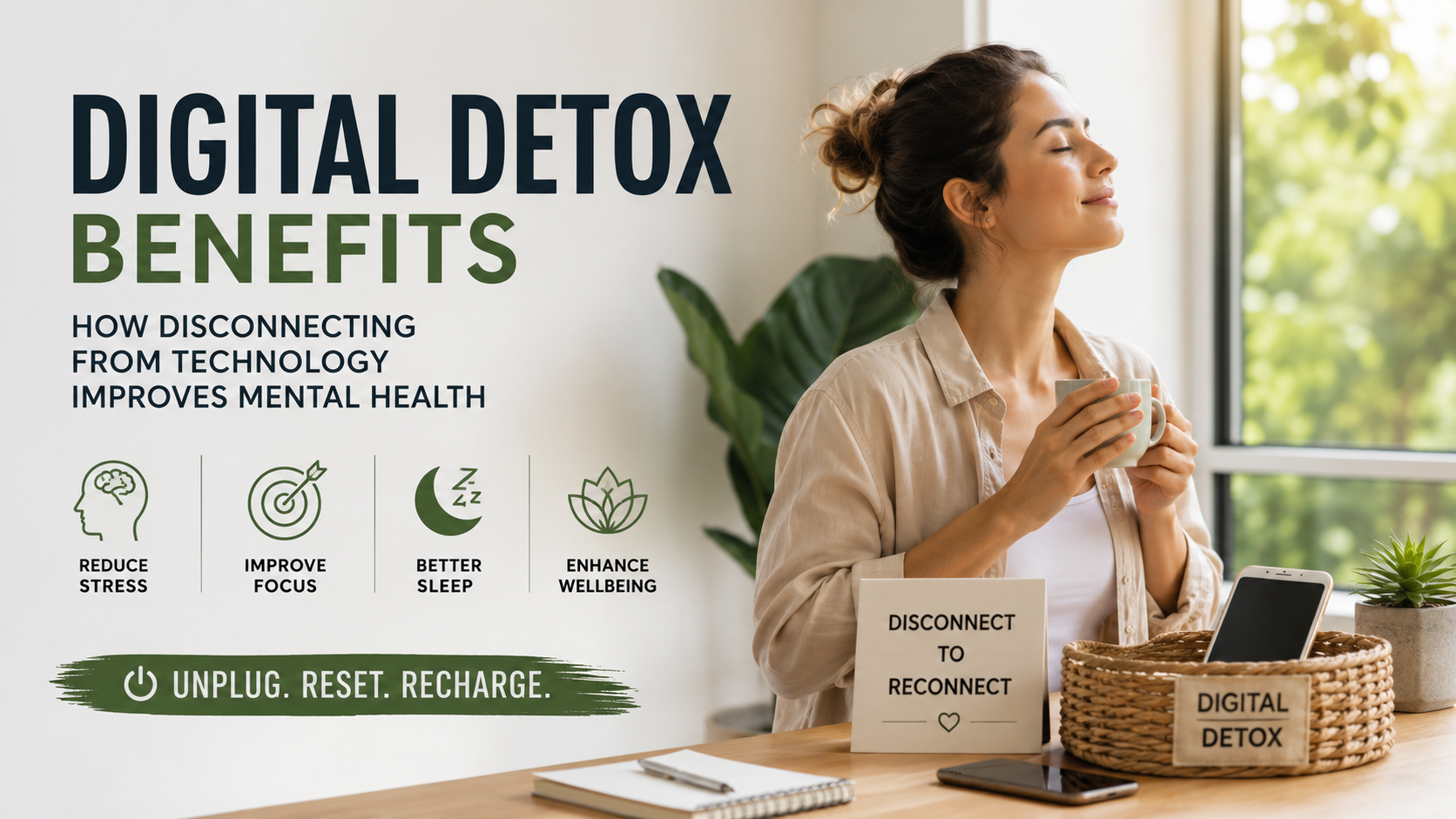
Digital Detox Benefits: How Disconnecting from Technology Improves Mental Health
In today’s hyper-connected world, our attention is constantly fragmented by endless notifications, social media feeds, and work emails. Consequently, the average person checks their phone dozens of times every single day. Most people, however, do not realize the heavy psychological toll this habit takes on their overall wellbeing. For instance, research published by the American Psychological Association highlights how constant screen exposure and continuous connectivity contribute significantly to chronic stress, anxiety, and digital burnout. Therefore, understanding the primary digital detox benefits can help you reclaim control over your time, focus, and emotional equilibrium in a world that demands continuous availability.
Taking a deliberate break from electronic devices is no longer an optional luxury. Instead, it has become an essential practice for maintaining long-term wellness. When you unplug, you create the necessary physical and mental space required for genuine relaxation. Furthermore, a structured pause from screens allows your nervous system to settle. As a result, this breaks the continuous cycle of sensory overload that modern technology induces.
This guide explores how stepping away from screens directly improves your mood, sharpens your focus, and restores peace to your daily life. Specifically, we will cover the psychological science behind technology breaks, actionable ways to unplug, and practical strategies to build a healthier relationship with your digital devices.

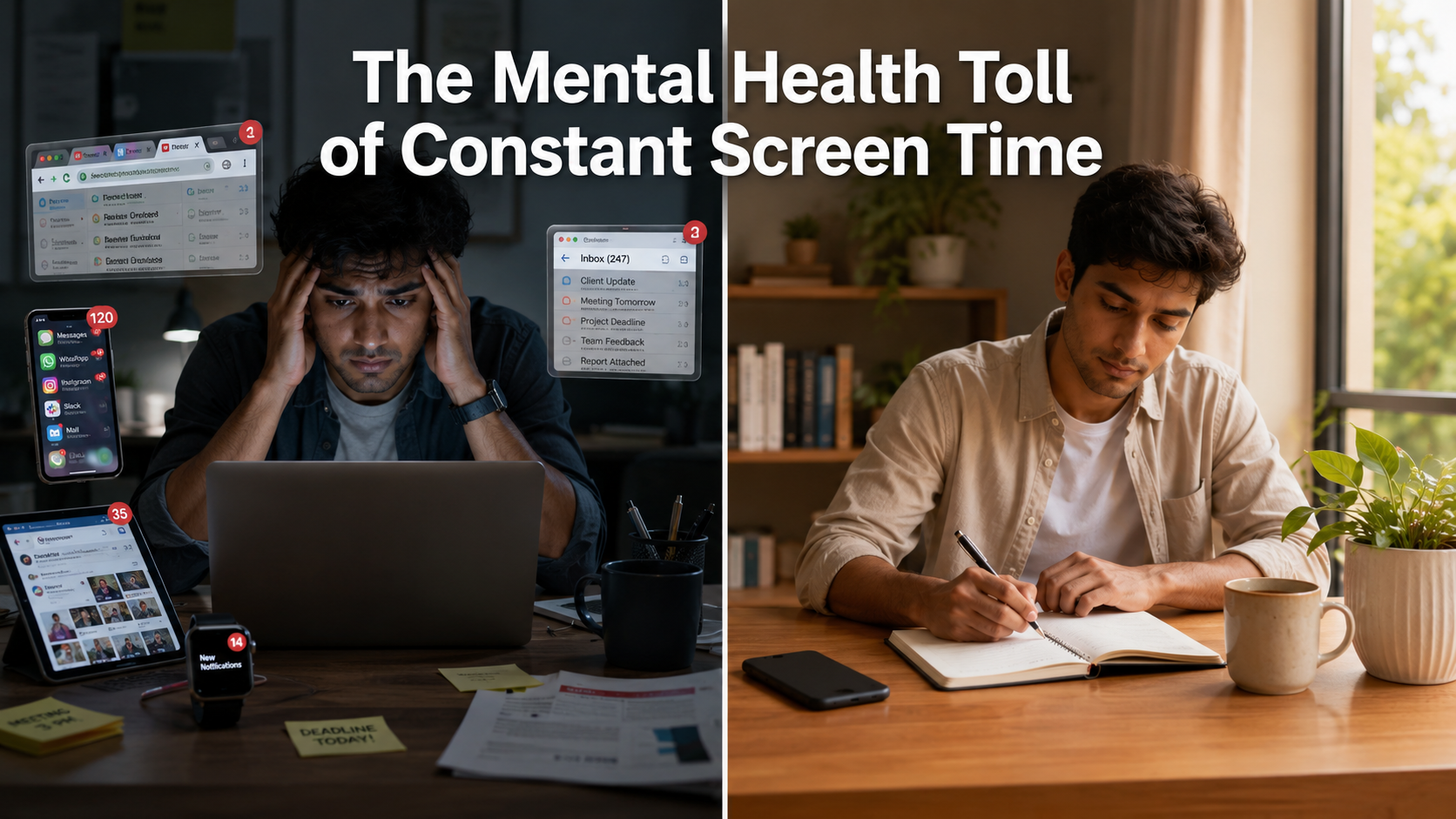
The Mental Health Toll of Constant Screen Time
Our brains were simply not designed to process a continuous stream of digital information. Every ping, buzz, and alert triggers a small release of dopamine. Consequently, this keeps us locked in a state of hyper-alertness. Over time, however, this constant stimulation drains our mental reserves. It leads directly to heightened anxiety, shortened attention spans, and persistent brain fog. Therefore, when we never truly disconnect, our minds remain on high alert. This leaves very little room for rest, reflection, or emotional balance.
Phantom Vibration Syndrome and Digital Anxiety Symptoms
Many smartphone users frequently experience phantom vibration syndrome. This is the false sensation that a phone is vibrating in your pocket when it is not. In fact, this phenomenon highlights how hyper-vigilant our brains become when tied to mobile devices. Expecting new alerts at any second keeps the body in a continuous fight-or-flight state. Consequently, this state spikes stress hormones unnecessarily throughout the day. Sustained chemical stress ultimately wears down emotional resilience. As a result, it leaves you feeling chronically exhausted, jumpy, and on edge during quiet moments.
Social Media Fatigue and Virtual Comparison Effects
Social media platforms present curated highlights of other people’s lives. Therefore, this frequently leads users down a path of unhealthy comparison. Constant exposure to these idealized images fuels feelings of inadequacy, isolation, and self-doubt. When you scroll through highlight reels, you subconsciously measure your internal struggles against everyone else’s polished moments. Stepping back, however, allows you to reconnect with your real-world achievements. Furthermore, it grounds your expectations in reality and helps you appreciate daily life without comparing it to artificial online benchmarks.
Top Digital Detox Benefits for Psychological Wellbeing
Disconnecting from digital devices yields immediate improvements in emotional stability and focus. By removing constant digital noise, you give your mind the space it needs to reset, process backlogged emotions, and heal from cognitive strain.
Lower Stress Levels and Decreased Cortisol via Screen Breaks
One of the most noticeable digital detox benefits is a sharp drop in felt stress and physical tension. Without constant incoming alerts demanding your urgent attention, your nervous system naturally settles into a rest state. Thus, you shift away from reactive modes of thinking. In addition, your brain gets the time it needs to unwind deeply. Consequently, your body produces less cortisol. As a result, your heart rate normalizes, muscle tension melts away, and your overall mood stabilizes into a state of sustained calm.
Sharper Cognitive Focus and Uninterrupted Attention Span
Multitasking across multiple web tabs and smartphone apps severely degrades your ability to concentrate. However, when you disconnect from digital temptations, your brain recovers its natural capacity for deep focus.
-
Improved memory retention: You process and retain complex information far more thoroughly without frequent digital interruptions breaking your train of thought.
-
Enhanced creative thinking: Mind-wandering is essential for innovative problem-solving. Therefore, it occurs naturally when screens are put completely away.
-
Higher overall productivity: Completing tasks single-mindedly takes less time and produces much higher quality work compared to constant task-switching.
Higher Quality Sleep and Restorative Rest from Unplugging
Screen exposure immediately before bedtime severely disrupts your natural circadian rhythm. For example, blue light emitted by smartphones, tablets, and laptops suppresses natural melatonin production. Consequently, this makes it difficult to drift off into deep sleep.
Screen exposure (blue light) leads to melatonin suppression, which disrupts the circadian rhythm, resulting in poor sleep quality.
However, by establishing a strict digital curfew an hour before bed, you allow your body to naturally produce melatonin. As a result, you fall asleep faster, enjoy deeper restorative sleep phases, and wake up feeling genuinely recharged and energized for the day ahead.
Key Offline Advantages of Reduced Screen Time
Beyond immediate stress relief, spending time away from screens offers lasting physical and mental advantages. Moreover, stepping away from digital screens opens up substantial time for meaningful offline activities that nourish your physical health, mental health, and personal spirit.
Stronger Real-World Relationships and Presence Without Devices
Social networks claim to connect us globally. Nevertheless, they often weaken our face-to-face interactions with the people right in front of us. Experiencing the practical digital detox benefits in social settings means engaging fully with family, friends, and colleagues without screen distractions. For instance, active listening, genuine eye contact, and undivided presence build deeper emotional bonds and mutual trust that digital messaging simply cannot replicate. Therefore, investing time in real-world human connection provides a powerful buffer against loneliness and depression.
Greater Mindfulness and Present-Moment Awareness Offline
When you are glued to a screen, you inevitably miss out on the rich, sensory details of your immediate physical environment. Disconnecting, however, forces you to anchor your attention firmly in the present moment. As a result, you stop living in a virtual space. Whether you are enjoying a home-cooked meal, taking a walk through a local park, or chatting with a neighbor, practicing mindfulness enhances your capacity to experience genuine joy, gratitude, and emotional richness in everyday life situations.
How to Unplug and Experience Digital Detox Benefits
You do not need to abandon modern technology entirely or live off the grid to unplug successfully. Instead, a practical strategy focuses on creating realistic, intentional boundaries that fit smoothly into your existing lifestyle.
1. Set Clear Tech-Free Boundaries in Your Home
Designate specific physical areas in your home where screens are completely off-limits. For example, the bedroom and the dining table are ideal starting points for establishing these healthy boundaries. Keeping mobile phones out of the bedroom prevents late-night scrolling habits. Similarly, keeping screens away from the dining area encourages meaningful family conversations and conscious, mindful eating habits during meals.
2. Schedule Regular Screen Breaks Throughout the Day
Start small by setting aside dedicated, recurring times each day to step away from all electronic devices without exception.
-
The First Hour: Avoid checking your phone for the first 60 minutes after waking up to start your day with intention.
-
Mealtime Unplugging: Turn off screens completely during breakfast, lunch, and dinner to focus on your food and companions.
-
Evening Shutdown: Turn off all work and social media devices at least two hours before going to sleep to prepare your mind for rest.
3. Replace Screen Time with Fulfilling Offline Activities
Simply removing your phone without a replacement plan can leave an uncomfortable emotional vacuum. That vacuum, consequently, tempts you to pick the device right back up. Therefore, fill that freed-up time with engaging offline activities that bring you genuine joy and satisfaction. Creative pursuits like reading physical books, keeping a daily journal, participating in outdoor exercise, cooking new meals, or practicing a hands-on hobby make the transition away from screens feel rewarding rather than restrictive.
FAQ SECTION
What are the main digital detox benefits for mental health?
The primary digital detox benefits for mental health include lower stress levels, improved focus, deeper sleep quality, and reduced daily anxiety. By stepping away from continuous screen distractions, you give your brain necessary time to rest, recover, and process information without constant sensory overload. Furthermore, this intentional pause lowers circulating cortisol levels. As a result, it helps eliminate the toxic habit of social comparison. It also allows you to build stronger real-world relationships. Taking regular breaks from digital devices restores emotional balance, lengthens your attention span, and boosts your overall sense of subjective wellbeing. When you are no longer constantly reacting to notifications, you regain control over your attention and emotional energy, leading to a calmer and more grounded state of mind throughout your day.
How long should a digital detox last to see real results?
Even a short micro-detox lasting 24 hours can deliver noticeable mental clarity, reduced eye strain, and immediate stress relief. However, a dedicated period of 3 to 7 days provides far more profound psychological benefits. This timeframe allows your brain’s dopamine pathways to reset to their natural baseline. Experiencing sustained digital detox benefits long-term depends less on completing a single long break. Instead, it relies more on establishing consistent, daily boundaries with technology. For instance, taking a few hours off every evening, enforcing tech-free weekends, or dedicating one full day each week to screen-free living yields sustainable health improvements without disrupting your professional responsibilities. Therefore, the key is finding a manageable cadence that allows you to experience deep rest without feeling overwhelmed by an accumulated backlog of messages when you return.
Can disconnecting from technology help reduce daily anxiety?
Yes, disconnecting directly reduces daily anxiety by breaking the continuous cycle of hyper-vigilance and sensory overstimulation. Modern mobile devices constantly demand our attention through push notifications, breaking news alerts, and social updates. Consequently, this steady stream of data keeps our nervous system in a state of perpetual low-grade stress. By turning off non-essential notifications and stepping away from screens, you significantly reduce incoming sensory stimuli. In addition, you soothe an overworked nervous system and regain a feeling of personal control over your daily environment. Furthermore, avoiding doomscrolling prevents your brain from being inundated with alarming news stories and social comparisons that fuel chronic worry. Over time, taking predictable breaks from technology teaches your brain that it does not need to remain on high alert, allowing your resting anxiety levels to drop substantially.
How does screen time affect our natural sleep patterns?
Screen time affects sleep primarily through the emission of blue light. Specifically, blue light directly suppresses the pineal gland’s production of melatonin. Melatonin is the essential hormone responsible for regulating your circadian rhythm and signaling to your body that it is time to rest. Using electronic devices late in the evening tricks your brain into believing it is still daylight. Consequently, this delays sleep onset and disrupts your internal body clock. Additionally, consuming stimulating content, checking work emails, or engaging with controversial social media posts right before bed keeps your central nervous system aroused. This mental stimulation prevents you from entering deep, restorative slow-wave sleep cycles. By eliminating screens during the hours leading up to bedtime, however, you allow natural melatonin production to surge, enabling you to fall asleep faster and enjoy far more refreshing, uninterrupted rest.
What is the easiest way to start a screen-free habit?
The easiest way to start a screen-free habit is by introducing small, highly manageable boundaries rather than attempting to quit all technology cold turkey. Begin by designating strict tech-free zones in your home. For example, keep mobile devices entirely out of the bedroom or away from the dinner table. Alternatively, adopt a daily 60-minute disconnect routine by leaving your phone in another room during your very first hour awake in the morning. Replacing that screen time with enjoyable offline activities makes the adjustment feel natural and deeply satisfying. You can read a physical book, stretch, walk outside, or journal instead. Consequently, celebrating these small victories builds momentum, which allows you to gradually expand your screen-free windows over time without feeling deprived or disconnected from important responsibilities.
CONCLUSION
In an era defined by persistent notifications, demands for immediate responses, and endless digital streams, taking time to intentionally unplug is vital for long-term health. The wide-ranging digital detox benefits extend far beyond simple productivity gains. In fact, they directly transform your emotional resilience, sleep quality, and daily cognitive focus. By stepping away from screens on a consistent basis, you allow your brain to heal from severe sensory overload. Furthermore, you lower chronic stress markers and break free from the exhausting cycle of social comparison.
Reclaiming your peace of mind does not require you to abandon modern technology completely. Similarly, you do not need to cut off communication with the outside world. Instead, it is about developing a balanced, conscious relationship with your devices as you learn more about mental health and what we know about ourselves. You should control technology rather than letting it control you. Simple daily adjustments yield remarkable, lasting improvements in your overall quality of life. For instance, keep screens out of the bedroom, set phone-free meal times, and schedule regular screen breaks. Maximizing your digital detox benefits starts small today. Turn off non-essential application notifications and choose just one hour to disconnect completely. Your mind, body, and personal relationships will thank you for making space to be truly present.