

Curiosity Keeps Us Climbing: The Power of Inquiring Minds
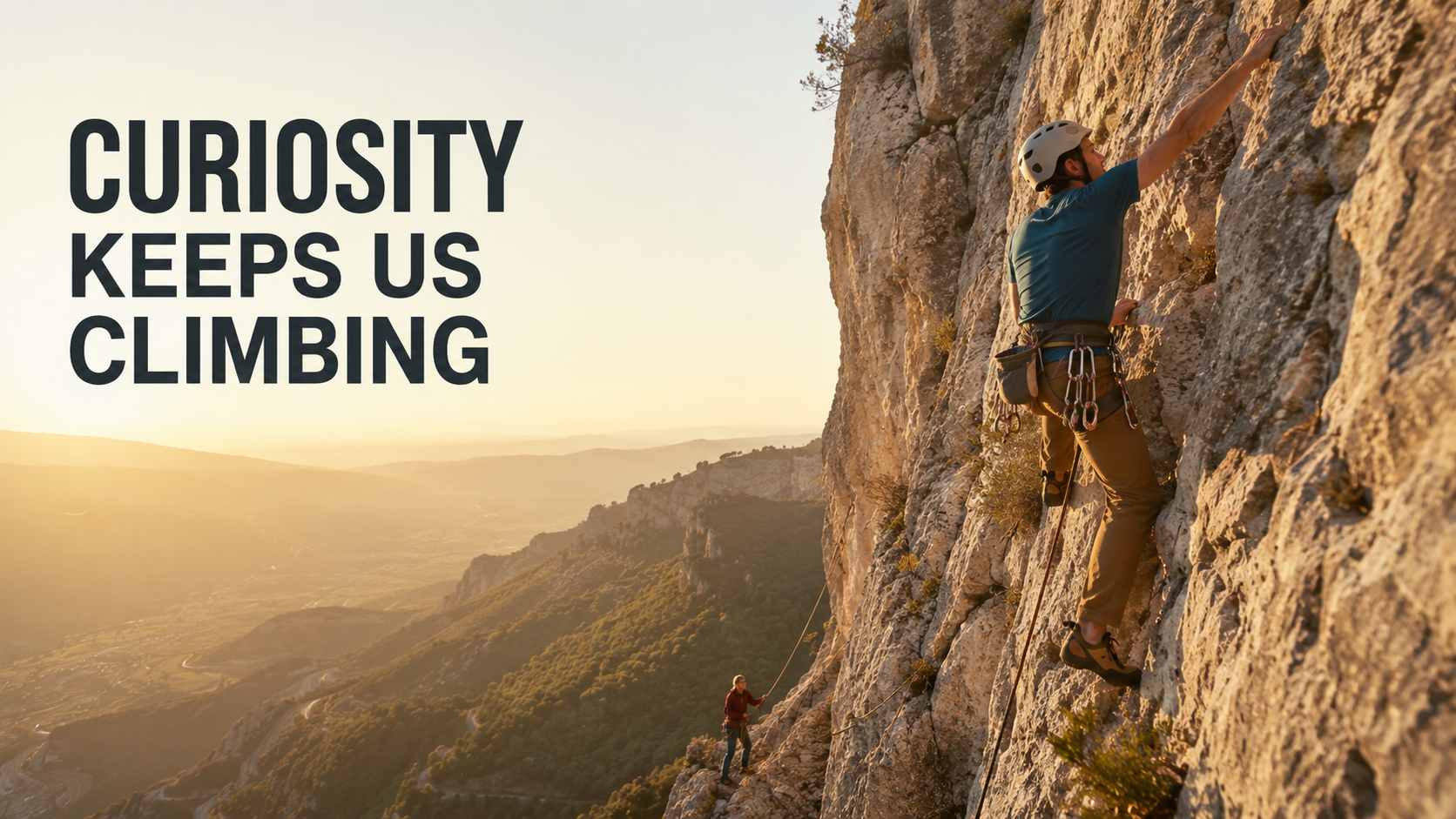
Every great adventure in personal and professional growth begins with a simple question. When we explore our world, curiosity keeps us climbing toward new levels of understanding and capability.
Like physical exploration, mental exploration requires drive, resilience, and a desire to discover what lies beyond the familiar. Curiosity encourages us to leave our comfort zones and remain open to new experiences.
The American Psychological Association recognizes curiosity as an important part of human learning and psychological development. This natural desire to understand the world can support learning, adaptation, and personal growth.
In this article, we will explore why curiosity matters, what to say when rock climbing, the benefits of curiosity, whether it is a personal strength, and why curiosity can be so powerful.
Why Is Curiosity Important?
Curiosity is important because it drives learning, discovery, adaptation, and personal growth. It encourages people to ask questions instead of accepting information without examination. That habit can reveal gaps in knowledge and lead to better decisions.
In education, curiosity helps learners explore subjects beyond basic requirements and take greater ownership of what they learn. At work, it encourages employees to investigate problems, test assumptions, and find practical solutions. It can also improve collaboration because thoughtful questions help people understand different viewpoints. Student choice in learning can further encourage this sense of ownership and exploration.
Curiosity also supports lifelong learning and continuous growth. New questions can motivate people to develop skills, explore unfamiliar ideas, and adapt when circumstances change. This matters in a world where technology, workplaces, and social expectations continue to evolve.
A curious mindset does not mean questioning everything without purpose. It means seeking useful understanding with an open mind. When curiosity is paired with critical thinking, it can turn everyday challenges into opportunities to learn and improve.
Fueling Personal and Professional Growth
Inquisitive minds often seek ways to improve rather than remain comfortable with familiar routines. This desire can support personal development and professional growth. A curious person may ask how a process works, why a problem occurs, or what could be done differently.
At work, this mindset can encourage employees to learn new tools, understand customer needs, and explore better ways to complete tasks. It is especially useful in fast-changing industries, where skills can become outdated quickly. Curiosity creates motivation to keep learning and develop independent learning habits.
Someone learning a language, instrument, sport, or creative skill will face setbacks. Curiosity can make those setbacks easier to examine. Instead of seeing difficulty as failure, the learner can ask what needs to change.
Over time, this approach builds knowledge and confidence in learning. It also makes learning more active because the person searches for answers rather than simply receiving information.
What to Say When Rock Climbing?
Clear communication is essential for safety when two climbers work together. Rock climbing uses standard verbal commands to confirm that the belay system is ready and to communicate rope needs.
Before climbing, the climber may ask, “On belay?” The belayer answers, “Belay on,” when the system is prepared. The climber can then ask, “Climbing?” and the belayer responds, “Climb on.”
During a climb, commands can communicate specific needs. “Slack” tells the belayer to provide more rope. “Take” asks the belayer to remove slack and hold the rope tightly. “Falling!” warns the belayer that the climber is falling and should prepare to catch the load.
Exact commands can vary by climbing gym, partner, or region. Climbers should agree on their communication system before leaving the ground. They should also follow their gym’s safety rules and established procedures. Clear speech and consistent commands reduce avoidable misunderstandings.
Essential Safety Commands on the Wall
Standard climbing commands create a shared language between the climber and belayer. That language matters because both people may need to react quickly while the climber is off the ground.
Before starting, partners should confirm the commands they will use. They should also complete their normal equipment checks. These habits matter most when conditions become stressful.
During a climb, commands should be loud, clear, and specific. Background noise can make short words difficult to hear. A climber should not assume a command was understood if the response is unclear.
The goal is not to memorize phrases mechanically. It is to create reliable communication between partners. Different gyms may use slightly different wording, so local instruction should take priority.
Good communication supports trust, but it does not replace proper training or equipment checks. Climbers should learn belaying and emergency procedures from qualified instructors before relying on them independently.
What Are the Benefits of Curiosity?
The benefits of curiosity can appear across learning, relationships, problem-solving, and decisions. Curious people often approach uncertainty by seeking information instead of immediately avoiding it. This can make unfamiliar situations feel more manageable.
Curiosity can strengthen learning. Asking questions encourages deeper thinking and helps people connect new information with what they already know. Exploring different subjects can also build broader knowledge and mental flexibility.
Socially, genuine curiosity can improve conversations. Asking thoughtful follow-up questions shows that you are listening and interested in another person’s perspective.
At work, curiosity can support problem-solving and innovation. Employees who investigate causes instead of treating symptoms may discover better solutions. However, curiosity works best when balanced with judgment. Constantly chasing information can become distracting.
The most useful form of curiosity is purposeful. It helps people learn, understand, question assumptions, and make better choices without turning every question into an endless search.
Enhancing Social Connections and Empathy
Curiosity can strengthen social connections when it appears through genuine listening and respectful questions. Genuine interest can make people feel heard and respected.
Good questions can move a conversation beyond small talk. Instead of immediately sharing your opinion, ask why someone thinks a certain way or how they reached a conclusion. This creates space for a more balanced exchange.
Curiosity can also support empathy. Learning about another person’s viewpoint does not require agreement. It requires a willingness to understand their reasoning before judging it. That habit can reduce unnecessary conflict.
Curiosity can also improve teamwork. Employees who ask clarifying questions are less likely to make assumptions about responsibilities, goals, or expectations.
However, curiosity needs boundaries. Personal questions should respect privacy and context. The goal is not to interrogate people. Healthy curiosity combines attention, respect, and restraint, making conversations more meaningful without becoming intrusive.
Is Curiosity a Good Strength?
Curiosity can be a valuable personal strength because it encourages learning, adaptability, and thoughtful problem-solving. Curiosity becomes useful when guided by judgment and meaningful goals.
A curious person is more likely to investigate unfamiliar problems instead of avoiding them. When something goes wrong, they can ask what happened, what information is missing, and what could change. It also supports thoughtful exploration when situations change unexpectedly.
Curiosity can help people stay engaged with long-term goals. Learning new methods or exploring different perspectives can prevent repetitive routines from becoming stale.
There are limits. Curiosity can become distracting when every new idea interrupts important work. It can also lead to unnecessary risk when people explore dangerous situations without adequate knowledge.
The strongest form of curiosity is disciplined curiosity. It combines questions with critical thinking, evidence, and responsible action. That balance turns an interesting trait into a practical strength.
Transforming Setbacks Into Learning Opportunities
Curious thinkers can respond to setbacks by investigating them instead of treating them as final judgments. When a project fails or a skill proves difficult, they can ask what caused the problem and what information is missing. This mindset reflects the idea of innovation born from limitations, where constraints can encourage people to examine problems differently and search for new solutions.
This approach changes the role of failure. A mistake becomes feedback that can guide the next attempt. For example, someone struggling with a technical skill can review an error, identify the missing concept, and practice that area.
Some failures are simply frustrating, and improvement may take time. Curiosity helps by keeping the person engaged with the problem rather than encouraging avoidance.
When combined with persistence, reflection, and evidence, curiosity can turn setbacks into learning opportunities. Instead of focusing only on the result, curious people examine the process that produced it.
That mindset can lead to better decisions during future attempts. It does not guarantee success, but it can build a stronger ability to adapt after difficulty.
Why Is Curiosity So Powerful?
Curiosity is powerful because it turns uncertainty into a reason to investigate. Curious people seek information, test ideas, and explore explanations.
Curiosity can also make learning more engaging. Research suggests that curiosity can increase attention and influence how people process information. This active approach to learning connects with the broader value of education in our lives and its role in personal development.
This matters at individual and societal levels. Scientific discoveries, engineering advances, medical research, and creative work often begin with questions about how something works or whether it can improve. This connection between questioning, experimentation, and problem-solving is also central to STEM education in modern schools.
An interesting idea can be wrong, and enthusiasm should not replace verification. Questions still need evidence and careful testing.
Its real power comes from what happens after the question. Curiosity encourages people to investigate, learn, revise assumptions, and try again. This cycle can expand knowledge and create meaningful progress over time.
The same process works in everyday life. Asking better questions can improve decisions, deepen understanding, and reveal possibilities that might otherwise remain unnoticed. That is why curiosity remains such an important force behind learning and innovation.
Unlocking Boundless Human Potential
Curiosity can help people move beyond familiar limits by encouraging exploration and experimentation. When someone asks why a process works or whether another approach could work better, they create an opportunity to discover something new.
Researchers investigate unanswered questions, engineers test new designs, and creators experiment with unfamiliar techniques. These activities can lead to discoveries, improvements, and new ways of solving problems.
Curiosity can also expand personal potential. A person who explores new subjects may discover skills or interests they never considered. Trying unfamiliar activities can reveal strengths that remain hidden inside familiar routines.
Progress also requires practice and evidence. Asking questions without acting on the answers produces little change.
The productive approach is to connect curiosity with action. Ask a useful question, investigate it, test what you learn, and adjust your approach. Over time, that cycle can build expertise and open new possibilities for personal and professional growth.
FAQ SECTION
How Can I Become a More Curious Person?
You can become more curious by making questions part of your daily routine. Curiosity Keeps Us Climbing when we stay open to unfamiliar ideas and experiences. Read topics outside your usual interests and ask open-ended questions about everyday situations. Avoid accepting surface-level answers when you want deeper understanding. Keep a journal of interesting questions, observations, or discoveries. You can also talk with people who have different experiences. Their perspectives can introduce ideas you have never considered. Over time, these small habits can strengthen your curiosity and make learning feel more natural.
Can Curiosity Help Reduce Stress and Anxiety?
Curiosity Keeps Us Climbing by changing how we approach uncertainty. Instead of immediately viewing an unfamiliar situation as threatening, try treating it as something worth understanding. Ask yourself what is happening, what you can learn, and what actions are available. This approach may help create psychological distance from an immediate emotional reaction. However, curiosity is not a replacement for professional support when anxiety becomes severe or persistent. It is better viewed as a useful mindset for handling everyday uncertainty. By focusing on questions and practical information, you may respond more thoughtfully instead of reacting automatically.
Is Curiosity Something You Are Born With or Can You Learn It?
People naturally show curiosity from an early age, but Curiosity Keeps Us Climbing because it can also be developed through practice. You do not need to consider yourself naturally inquisitive to become more curious. Start by questioning familiar routines and exploring subjects you normally ignore. Ask why something works, how it could improve, or what you might be missing. Reading, experimenting, observing, and discussing new ideas can strengthen this habit. Curiosity also grows when you become comfortable admitting that you do not know something. With consistent practice, asking thoughtful questions can become a natural part of everyday learning.
Does Curiosity Improve Relationships With Others?
Curiosity Keeps Us Climbing not only through knowledge but also through stronger relationships. Genuine interest encourages people to listen carefully and understand perspectives before forming judgments. Ask thoughtful questions about another person’s experiences, opinions, goals, or challenges. Avoid turning conversations into interrogations or asking questions that cross personal boundaries. Instead, allow the discussion to develop naturally. Active listening is equally important because curiosity has little value if you are waiting only for your turn to speak. When people feel heard and respected, conversations can become more meaningful. This habit can strengthen trust, empathy, and communication in both personal and professional relationships.
Conclusion
Curiosity Keeps Us Climbing because every meaningful discovery begins with a willingness to ask questions. Throughout this article, we explored why curiosity matters, how it supports personal growth, and how it can strengthen learning and relationships. We also examined the communication commands used during rock climbing and the importance of clear safety communication.
Curiosity Keeps Us Climbing when we treat challenges as opportunities to understand rather than reasons to stop. It encourages us to question assumptions, explore unfamiliar ideas, and learn from setbacks. It can also make ordinary experiences more engaging.
The goal is not to question everything without purpose. Instead, develop purposeful curiosity. Ask better questions, listen carefully, investigate what you do not understand, and act on useful insights.
When curiosity keeps us climbing, learning becomes an ongoing journey rather than a destination. Keep exploring, keep questioning, and keep looking for new ways to grow.