
How Brain Fire Drills Help Students Face the Unexpected
Classrooms move quickly, and sudden surprises can trigger anxiety or disruptive behavior. When routines change, the nervous system may quickly shift into a stress response. Teaching brain fire drills gives students a dependable mental script before unexpected situations occur. Proactive behavioral rehearsal can also support psychological safety and emotional resilience in school communities, as highlighted by the National Association of School Psychologists.
When educators teach self-regulation and safety habits, unexpected alarms become easier to manage. Students can rely on practiced coping skills instead of reacting with immediate panic. These routines also help teachers guide children through stressful moments with greater consistency.
This guide explains how brain breaks support student readiness and classroom focus. It also explores social stories for fire drills, emergency evacuation purposes, realistic drill scenarios, and common drill models. Together, these approaches help students understand what to expect and how to respond when normal classroom routines suddenly change.
How do brain breaks benefit students?
Brain breaks give young minds a short reset during demanding learning periods. Continuous academic work can lead to cognitive fatigue, reduced attention, and sensory overload. Short periods of movement, stretching, breathing, or quiet reflection give students time to regulate their nervous systems.
These pauses can help children return to learning with better focus. Physical activity may also support attention, working memory, and behavioral self-control. The goal is not to interrupt learning unnecessarily. Instead, teachers can use brief, planned pauses to help students maintain mental energy throughout the school day, alongside proven study tips for exam preparation that help students stay focused during demanding academic periods.
Brain breaks also connect with brain fire drills because both approaches prepare students to respond to changing conditions. A child who regularly practices calming strategies may find it easier to use them during an unexpected alarm.
Simple activities can include:
- Slow breathing for one minute
- Gentle stretching beside the desk
- Brief movement exercises
- Quiet sensory activities
- Short periods of guided mindfulness
These routines make resetting attention a familiar classroom behavior.
Supporting Classroom Focus and Executive Function
Regular cognitive rests can support executive functions such as attention, impulse control, emotional regulation, and flexible thinking. These skills are important when students must stop one activity and quickly follow new instructions. A short break gives the brain an opportunity to reduce mental fatigue before returning to demanding work.
Movement can also increase alertness and help students shift between activities. Calm breathing provides another strategy for managing frustration or overstimulation. These skills become especially useful during unexpected classroom disruptions.
For students practicing brain fire drills, the connection is practical. They learn that stopping, listening, thinking, and following instructions are manageable steps. Repeated practice can make these responses more familiar when an alarm or sudden change occurs.
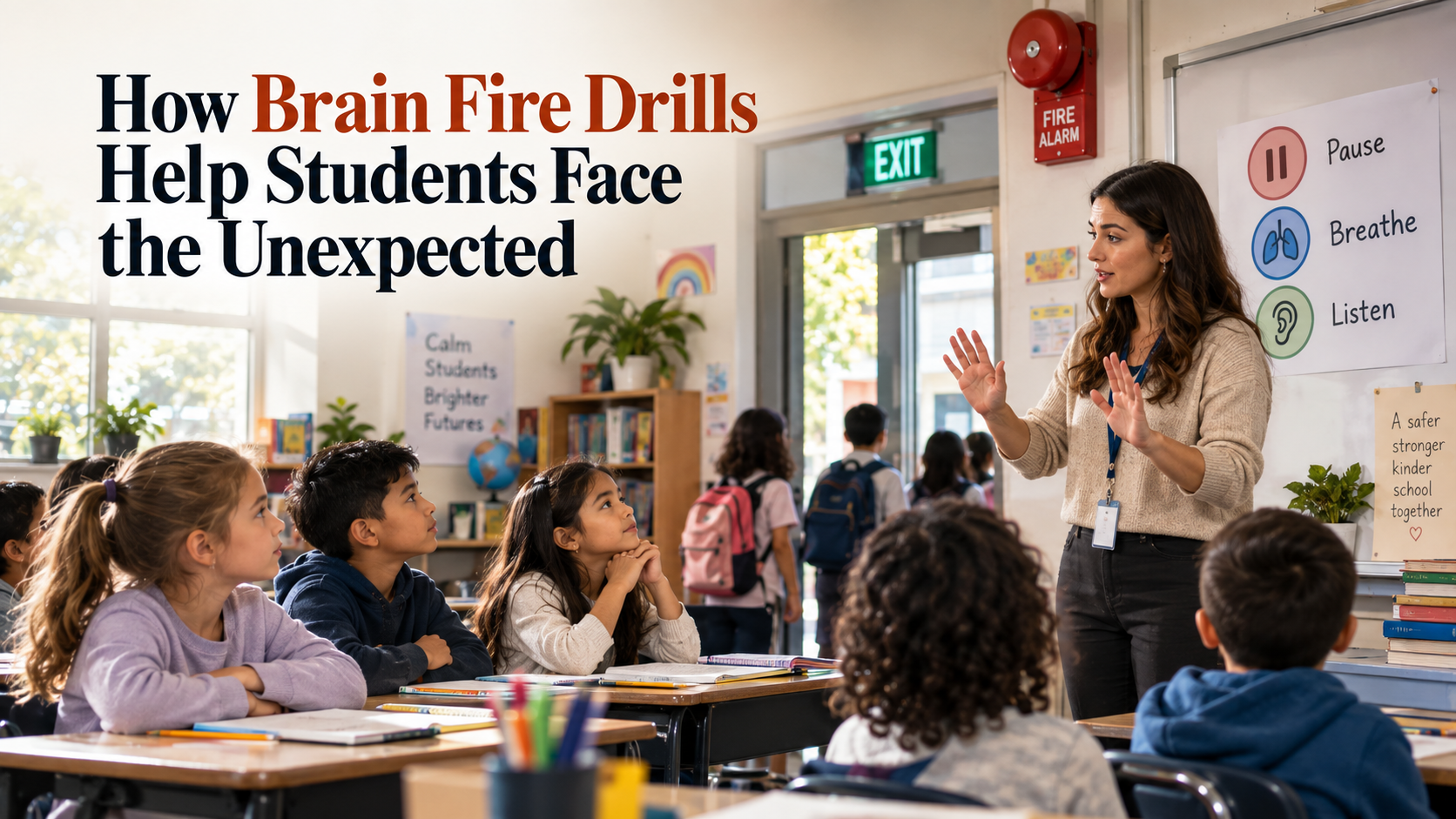
Teachers can support executive function by using consistent cues. For example, a simple phrase such as “pause, breathe, listen” can become a familiar classroom routine. Over time, these predictable cues may help students transition between ordinary learning and unexpected situations with greater control while also building confidence in students when they face unfamiliar situations.
Can you tell me a social story about a fire drill at school?
Sometimes the school fire alarm makes a loud buzzing sound. Bright lights may also flash to help everyone notice the alarm. When the alarm sounds, I stop my work and listen to my teacher. My teacher helps everyone leave the classroom safely.
I keep my hands to myself and walk calmly with my class. We follow the planned route toward the exit. We continue outside to the designated assembly area. I stay with my group while my teacher checks attendance.
If the alarm feels loud, I can take slow breaths and use an approved sensory support. I remember that the adults are there to help me. When the school gives permission to return, I follow my teacher back inside.
Practicing brain fire drills and reading social stories can help my brain understand what will happen. Knowing the steps can make an unfamiliar situation feel more predictable.
Preparing Sensory-Sensitive Learners for Emergency Sounds
Social stories can give sensory-sensitive students a clear picture of what to expect during an emergency drill. Predictable language can reduce uncertainty by explaining the alarm, evacuation route, assembly area, and return process before the event happens.
This preparation can be particularly useful for autistic students and children who experience anxiety around sudden sounds. However, every child responds differently, so schools should adapt the approach to individual needs.
Visual schedules, photographs, simple symbols, and teacher demonstrations can reinforce the story. Some students may also benefit from approved sensory supports, such as ear defenders, when these are consistent with school safety procedures.
The purpose is not to eliminate every uncomfortable sensation. Instead, brain fire drills should help students recognize the sound, understand its meaning, and follow the required safety steps.
Teachers can practice the story during calm periods. Repetition allows students to process the sequence without the pressure of an active alarm. This preparation can make emergency routines more understandable and manageable while helping create classrooms where students feel valued and supported during challenging situations.
What is the purpose of a fire drill?
The primary purpose of a fire drill is to practice safe evacuation procedures before a real emergency occurs. During an actual crisis, fear and adrenaline can make it harder to process unfamiliar instructions. Repeated practice helps students and staff become familiar with evacuation routes, exits, assembly areas, and expected behaviors, much like effective productivity systems for students help make important routines more manageable.
Fire drills also allow schools to evaluate their emergency procedures. Staff can observe whether alarms are noticeable, exits remain accessible, and evacuation routes work as planned. Administrators can identify congestion, communication problems, or difficulties with attendance checks.
A well-planned drill should teach students what to do rather than simply measure speed. Students need to understand why they must leave quickly, remain with their group, and follow adult instructions.
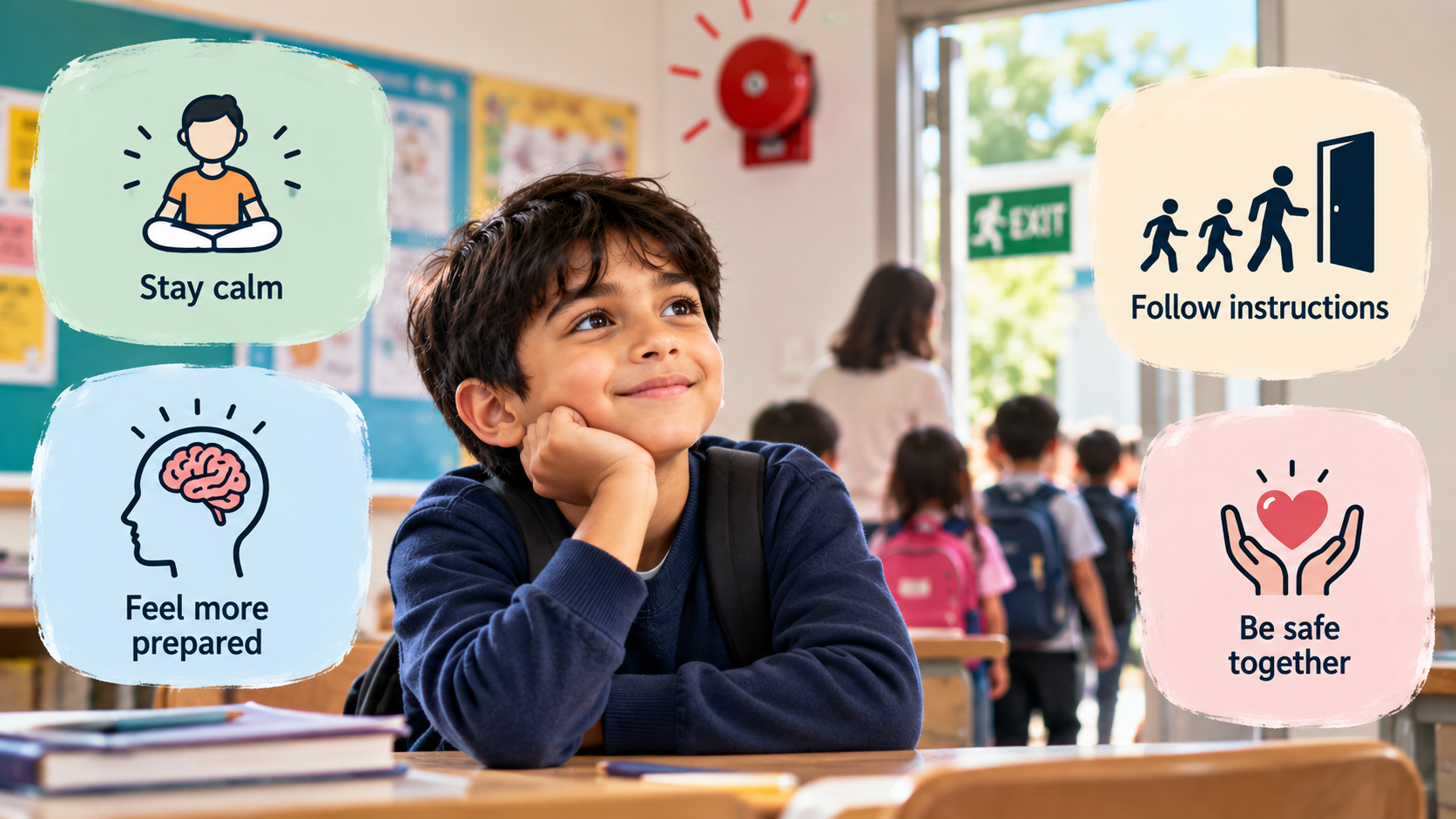
This is where brain fire drills can complement physical evacuation practice. Mental rehearsal gives students a simple response pattern: stop, listen, stay calm, follow instructions, and move safely.
Regular practice can turn emergency procedures into familiar habits without treating drills as games or creating unnecessary fear.
Cultivating Calm Habits Under High Stress
Consistent safety rehearsals can help students become more familiar with emergency procedures. Knowing where to go and what to expect removes some of the uncertainty surrounding an alarm. Students can focus on following instructions instead of trying to understand the situation for the first time, just as time management tips for college students can help learners approach demanding routines with greater structure.
Teachers also benefit from predictable routines. Clear procedures help them guide students, maintain group organization, and complete attendance checks at the assembly point. Staff can identify students who need additional support and adjust preparation accordingly.
Calm habits do not mean students will never feel frightened. An alarm can still feel loud or stressful, especially for younger or sensory-sensitive children. The goal is to give them practical strategies for responding safely despite those feelings.
Brain fire drills reinforce this mental preparation. Students repeatedly practice pausing, listening, regulating their emotions, and following the next instruction. When these actions become familiar, unexpected disruptions may feel less confusing.
Schools should balance realistic practice with age-appropriate preparation. Drills should build safety awareness without deliberately creating unnecessary distress or panic.
What are some examples of fire drill scenarios?
Schools can use several scenarios to practice different aspects of emergency readiness. An announced drill gives teachers time to prepare students and explain what will happen. This approach can be useful when introducing evacuation procedures or supporting students who need additional preparation.
An unannounced drill tests how students respond during ordinary classroom activities. Staff can observe whether students recognize the alarm, follow instructions, and move toward the correct exit without extensive prompting.
Schools may also practice situations involving blocked primary routes. Students and staff then learn to use an approved secondary route when their usual path is unavailable. Drills during lunch, recess, or transitions can test procedures when students are spread across different areas.
Tabletop exercises provide another option. Staff can discuss hypothetical situations without physically evacuating the building.
Possible scenarios include:
- Announced classroom evacuation
- Unannounced evacuation
- Alternative exit routes
- Lunch or recess evacuations
- Staff tabletop exercises
Each scenario can reveal different preparation needs.
What are the three main types of fire drills?
Schools can use different drill formats depending on their safety plans, student needs, and local requirements. Three broad models are commonly useful for explaining these approaches.
The first is an announced walkthrough, where students know that a drill will occur. This format emphasizes teaching evacuation routes, listening skills, and expected behavior. It can be useful when students are learning the basic procedure.
The second is an unannounced evacuation drill. Students are not given advance notice of the exact timing. This allows staff to observe how the existing routine works during normal classroom activity.
The third is a functional or scenario-based exercise. This approach introduces a specific complication, such as an unavailable route or a staffing challenge. It focuses on how adults and students respond when standard procedures require adjustment.
Schools should follow applicable fire safety rules and emergency plans when selecting drill formats. Brain fire drills can complement these physical exercises by helping students mentally rehearse calm, safe responses.
Combining mental preparation with practical evacuation practice gives students clearer expectations before unexpected events occur.
Frequently Asked Questions
What is the difference between a brain break and a brain drill?
A brain break is a brief restorative rest that resets mental energy, reduces cognitive fatigue, and restores sensory balance during focused learning periods. In contrast, a brain drill is a proactive psychological rehearsal designed to teach coping strategies, emotional control, and behavioral routines before stressful classroom disruptions occur.
How often should schools conduct safety evacuation drills?
Most educational jurisdictions mandate monthly evacuation drills during the school year, especially within the first month of classes. Consistent monthly practice ensures that safety routes remain fresh in students’ minds, accommodates newly enrolled learners, and allows administrative staff to identify structural or procedural hazards systematically.
Why do some students freeze during unexpected school drills?
Students freeze when intense sensory inputs—such as blaring alarms and flashing strobe lights—trigger a primal survival response in the nervous system. Without practiced coping mechanisms, sensory overload temporarily hijacks their working memory, making it difficult to process basic verbal directions until structured emotional grounding occurs.
Building Lasting Student Resilience
Unpredictable disruptions will always occur within busy academic settings. However, panic does not have to be the default response. By pairing physical evacuation procedures with deliberate brain fire drills, educators give children the emotional footing needed to navigate unexpected challenges. Physical drills protect physical bodies, while intentional mental pauses protect emotional well-being.
Practicing diverse safety scenarios, sharing reassuring social narratives, and scheduling rejuvenating sensory breaks transforms natural anxiety into steady competence. Children learn that unfamiliar noises and sudden transitions are manageable events rather than personal catastrophes. When schools intentionally cultivate emotional regulation alongside logistical crisis planning, the entire learning community benefits.
Take the time to evaluate your current classroom transition routines today. Introduce simple grounding exercises, walk through secondary exit routes, and prepare neurodiverse students with visual stories. With patient instruction and steady practice, you can empower every learner to meet life’s sudden alarms with quiet confidence and lasting resilience.