
Braille Education for Students: Essential Facts and Insights
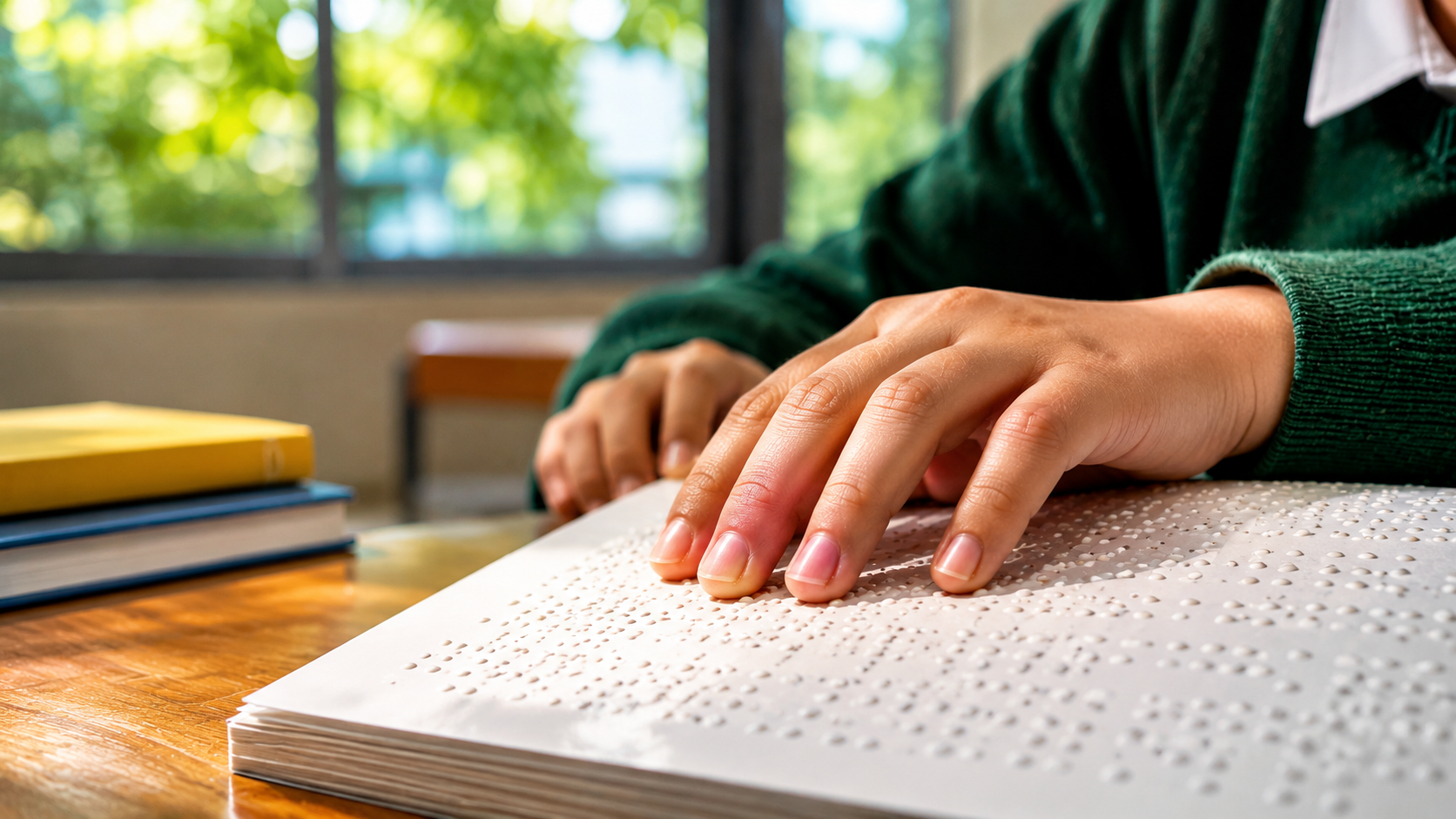
Effective Braille Education for Students with visual impairments builds the foundation for lifelong literacy, independence, and academic success. According to the American Foundation for the Blind, tactile reading gives learners direct access to written information. It also helps them develop essential literacy skills without depending entirely on audio technology.
Learning to read through touch creates opportunities in higher education and professional careers. Audio software makes information easier to access quickly, but it cannot fully replace traditional reading and writing skills. Students who learn braille can independently understand punctuation, spelling, sentence structure, and mathematical symbols.
This guide answers important questions about braille literacy and inclusive education. You will discover how braille improves everyday life, what challenges visually impaired learners face, and which resources support their development. We also explore classroom activities for sighted students, the two main types of literary braille, and current literacy statistics.

How does braille help visually impaired people?
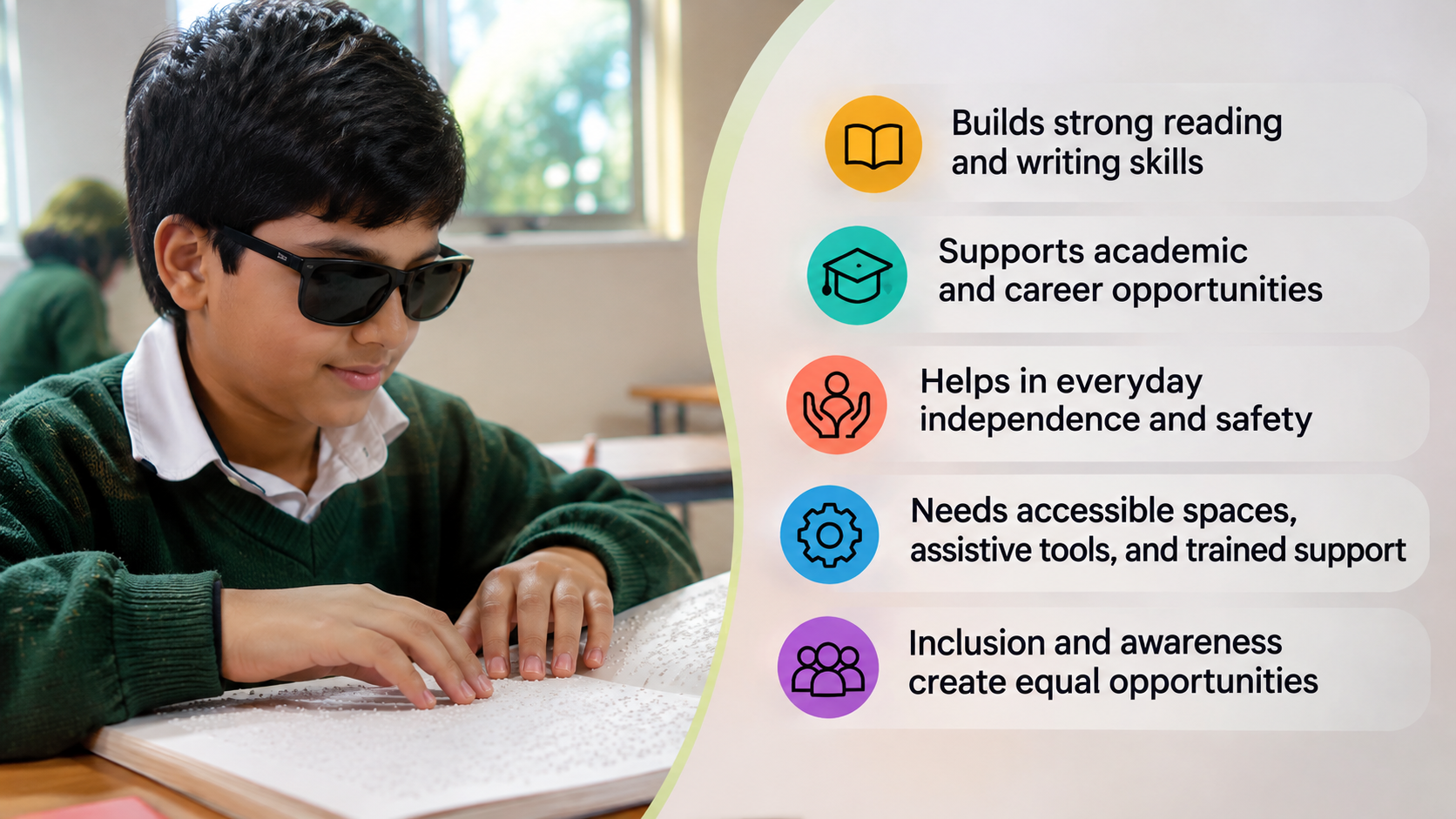
Braille gives visually impaired people direct, independent access to written language through touch. Unlike audio recordings, tactile reading helps learners understand spelling, punctuation, grammar, and sentence structure. Students can review difficult passages, recognize individual words, and study information at their own pace.
In everyday life, braille labels on elevators, medication packaging, and public signs support personal safety and independence. In classrooms, students use tactile literacy to take notes, solve mathematical problems, and read educational materials. They can also access music notation and technical information through specialized braille formats.
Learning braille can strengthen academic confidence and improve access to employment opportunities. However, outcomes also depend on quality education and accessible learning opportunities, as well as individual circumstances. Developing strong reading and writing skills gives visually impaired learners greater control over their education and professional development.
Building True Literacy Beyond Audio
Screen readers and audio tools make digital information accessible. However, listening alone does not provide the same experience as reading written language. Understanding the difference between literacy and education also highlights why developing independent reading and writing abilities matters. Braille allows students to examine individual letters, punctuation marks, spelling patterns, and paragraph structures directly.
This distinction becomes particularly important when learning subjects that require accurate written communication. For example, students studying mathematics, science, and foreign languages often need access to specialized symbols and spelling conventions. Tactile reading also allows learners to review information without repeatedly navigating audio recordings.
Braille literacy supports active learning, proofreading, and independent writing. Students can identify grammatical mistakes, understand document formatting, and organize their thoughts more effectively. These abilities become valuable in higher education and professional environments.
Audio technology and braille should complement each other rather than compete. Combining both methods gives visually impaired students greater flexibility when accessing information and completing academic tasks.
What are the challenges faced by people with visual impairments?
People with visual impairments face several challenges involving accessibility, education, employment, and everyday mobility. Physical obstacles, poorly designed public spaces, and inaccessible transportation systems can make independent navigation difficult. Missing tactile indicators and inconsistent signage create additional barriers in unfamiliar environments.
Digital accessibility also remains an important concern. Websites without proper screen-reader compatibility, descriptive alternative text, or keyboard navigation can prevent users from accessing essential information. These problems affect education, employment applications, online banking, and public services.
Educational barriers can create long-term disadvantages. A shortage of qualified braille teachers may delay literacy instruction for blind and low-vision students. Access to Braille Education for Students is essential for developing independent reading and writing skills. These challenges reflect broader systemic barriers in education that can limit equal learning opportunities. Specialized equipment, including refreshable braille displays, can also be expensive for families and schools.
Social misconceptions create another challenge. Some people underestimate the abilities of visually impaired individuals because of their disability. Inclusive education, accessible technology, and equal employment opportunities can help address these barriers.
What are the needs of blind people?
Blind people need accessible environments, appropriate assistive technology, mobility training, and equal opportunities to participate in society. These resources support independence at home, in educational institutions, and at work. Their requirements vary depending on individual abilities, preferences, and circumstances.
In public spaces, tactile paving, audible pedestrian signals, and accessible signage help people navigate safely. At home, everyday adaptations and organized surroundings make routine activities easier. In workplaces and educational settings, screen readers, magnification software, and refreshable braille displays improve access to digital information. These developments demonstrate how technology has changed education by making learning more accessible to students with different needs.
Education is another essential requirement. Blind children benefit from early intervention, specialized literacy instruction, and opportunities to develop independent living skills. Learning braille can help them communicate, study, and manage written information confidently.
Emotional encouragement and social inclusion matter equally. Families, teachers, and employers should maintain appropriate expectations and provide practical support. Most importantly, blind individuals deserve equal respect, independence, and opportunities rather than assumptions about their capabilities.
What are some braille activities for sighted students?
Sighted students can explore tactile literacy through interactive classroom activities. These exercises introduce braille while encouraging empathy, creativity, and inclusion. Teachers can begin with simple materials that demonstrate how the six-dot braille system represents different letters and symbols.
One popular activity uses muffin tins and tennis balls to create oversized braille cells. Students arrange the balls in different positions to represent letters, spell their names, and decode simple messages. This hands-on exercise helps them understand how braille patterns work.
Another activity involves creating tactile greeting cards. Students can use puffy paint, adhesive pearls, or textured stickers to make raised patterns and messages. Teachers can also introduce a slate and stylus to demonstrate traditional braille writing.
Additional classroom activities include:
- Braille alphabet matching: Match raised-dot patterns with printed letters.
- Tactile storytelling: Create short stories using textured objects.
- Braille message exchange: Write simple messages for classmates to decode.
- Accessibility challenges: Explore how accessible signs and labels improve everyday experiences.
These activities encourage curiosity and support more inclusive classrooms.
What are the two types of braille?
The two primary types of literary braille are uncontracted braille and contracted braille. Both systems use raised-dot patterns that readers recognize through touch. However, they differ in how they represent letters, words, and common combinations.
Uncontracted braille, traditionally called Grade 1, represents printed letters individually. It also uses specific patterns for numbers and punctuation. Beginners, young children, and adults who recently lost their vision may start with this format. Its straightforward structure makes learning basic braille patterns easier.
Contracted braille, formerly known as Grade 2, uses additional symbols and contractions to represent common words and letter combinations. This approach reduces the number of cells required to write many words. As a result, readers can save space and potentially improve reading efficiency.
Many experienced braille readers use contracted braille for books, magazines, and everyday documents. However, the best starting format depends on the learner’s age, educational needs, and reading development. Both formats play important roles in braille literacy.
How many visually impaired people use braille?
Accurate global figures remain difficult to establish because countries use different definitions and measurement methods for blindness and braille literacy. However, organizations such as the National Federation of the Blind have highlighted concerns about declining braille literacy in the United States.
Historical estimates indicate that braille instruction was more common among blind school-age children during earlier decades. Some frequently cited estimates suggest that fewer than 10% of legally blind Americans read braille. However, this figure should be treated cautiously because estimates vary by source, population, and definition of literacy.
Several factors may contribute to reduced braille instruction. These include shortages of qualified teachers, changes in educational approaches, and increased reliance on audio technology. Limited access to specialized learning materials can create additional difficulties.
Despite these challenges, braille remains essential for independent literacy. Advocacy organizations continue promoting accessible education, early instruction, and better access to learning resources. Improving braille education can help students develop stronger reading, writing, and communication skills.
Why Braille Literacy Rates Matter Today
Braille literacy rates matter because reading and writing skills influence educational achievement, independence, and employment opportunities. Students who learn braille can develop essential abilities that audio technology alone may not provide. These include accurate spelling, punctuation, proofreading, and written communication.
Low access to braille instruction can create difficulties later in life. For example, students may struggle with tasks that require editing documents, reviewing written information, or understanding complex mathematical notation. These skills are particularly important in higher education and many professional environments.
However, braille proficiency alone does not determine employment success. Workplace accessibility, qualifications, experience, and employer attitudes also influence career opportunities. A combination of assistive technology and strong literacy skills can improve access to different professions.
Reversing declining literacy trends requires coordinated action. Schools should provide early literacy assessments, qualified braille teachers, and appropriate learning materials. Governments and educational organizations should also improve funding for specialized instruction.
Ultimately, accessible braille education helps visually impaired students participate more independently in education, employment, and everyday life.
Frequently Asked Questions
At what age should a child start learning braille?
Children with severe visual impairments should begin pre-braille readiness activities during infancy and toddlerhood. Parents and specialists introduce tactile books, textured toys, and fine-motor exercises before formal instruction starts. Most children begin learning actual braille letters around kindergarten, matching the timeline when sighted peers learn print.
Can sighted people learn to read braille?
Yes, sighted people can easily learn braille, though they usually read it visually rather than by touch. Teachers, parents, and transcribers routinely master the six-dot code using their eyes to support blind students. Developing true fingertip sensitivity takes months of dedicated daily practice without looking at the dots.
How fast can a fluent reader read braille?
Fluent tactile readers typically read between 100 and 200 words per minute using contracted braille. Highly experienced readers who use both hands simultaneously can reach speeds up to 400 words per minute. Reading speed depends heavily on early instruction, daily practice, and fingertip sensitivity.
Is braille the same in every language?
No, braille is a tactile code rather than a single universal language. While the standard six-dot cell structure remains consistent worldwide, different languages assign unique dot patterns to their specific alphabets and accents. International organizations regularly update unified codes to keep mathematics, music, and science symbols standardized across countries.
Conclusion
Investing in braille education for students transforms lives by turning passive listeners into active, independent readers. Throughout this guide, we explored how tactile literacy boosts academic achievement, overcomes classroom barriers, and meets core accessibility needs. We also looked at engaging classroom activities for sighted peers, compared uncontracted and contracted formats, and examined current literacy statistics.
While digital audio tools offer convenience, they cannot match the spelling accuracy, comprehension, and autonomy that braille provides. Parents, educators, and policymakers must work together to train more specialists and supply modern tactile technology in every school.
If you are an educator or parent, start by introducing tactile books and inclusive braille games into your daily routine. Supporting tactile literacy today ensures every visually impaired learner has the tools to succeed tomorrow.