

How Technology Has Changed Education: Benefits and Challenges
Classrooms look very different today than they did just one generation ago. Chalkboards and printed encyclopedias have increasingly been replaced by tablets, interactive displays, and cloud-based learning platforms. This shift shows how technology has changed education at almost every level.
According to research published by UNESCO, equitable access to digital learning can support better educational opportunities and strengthen digital literacy. These skills have become increasingly important as modern workplaces depend on technology, communication, critical thinking, and problem-solving.
However, educational technology is not automatically beneficial. Schools, teachers, and families must consider both its advantages and limitations. Digital tools can improve access and engagement, but they can also create distractions, privacy concerns, and unequal learning opportunities.
Understanding this transformation requires looking beyond new devices and software. The more important question is how these tools affect students and teachers. This guide explores the major benefits, disadvantages, importance, and overall impact of technology in education.
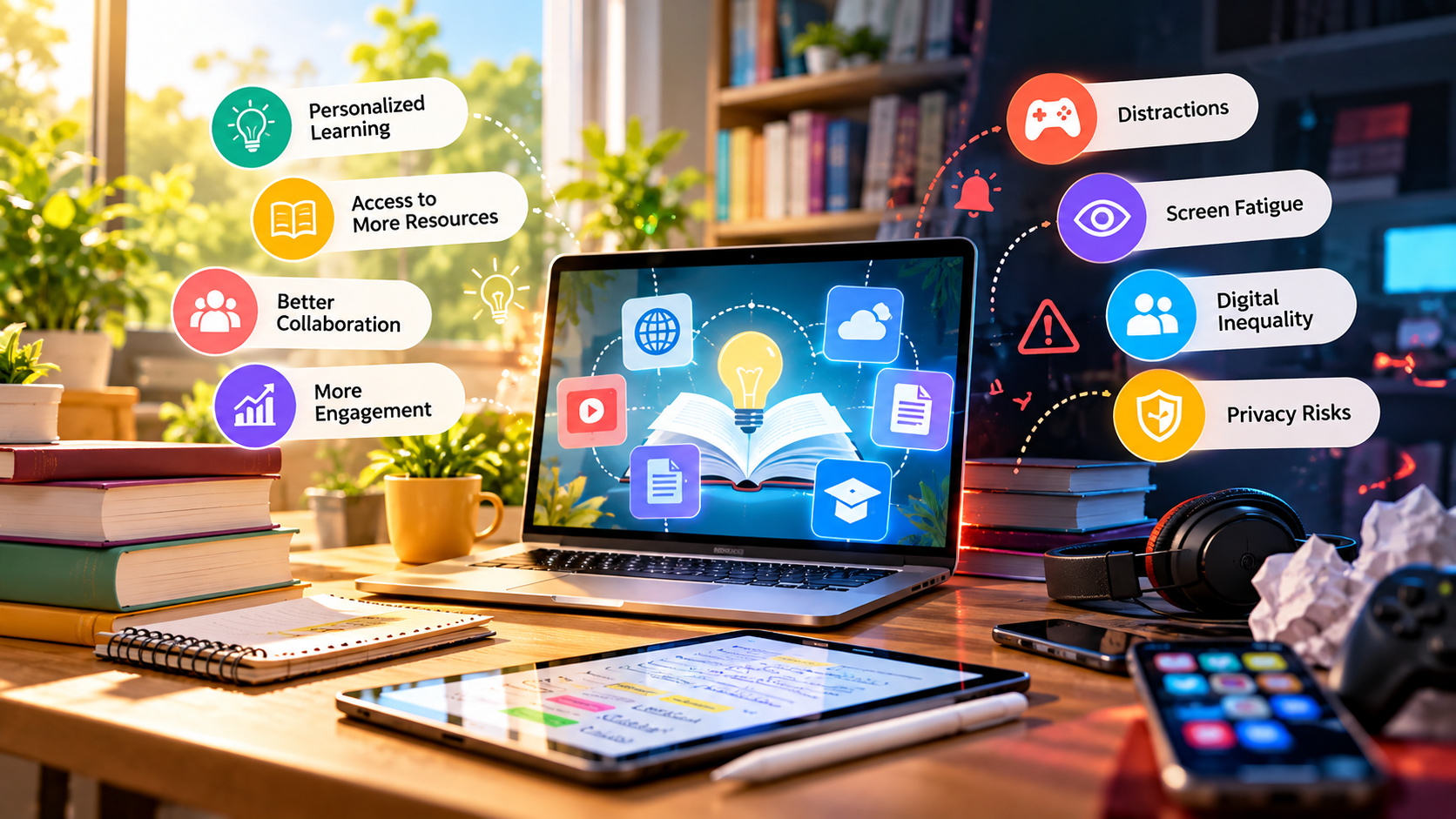

What are 10 positive effects of technology?
Technology provides students with several practical benefits when schools use it thoughtfully. Digital learning tools can make lessons more flexible, interactive, and accessible. Online learning can also give students access to courses and educational resources beyond the traditional classroom. They also allow teachers to support students with different learning needs and abilities.
Ten major positive effects include:
- Personalized learning: Students can review difficult concepts and learn at their own pace.
- Greater access: Online resources provide access to courses, libraries, lectures, and educational materials.
- Better collaboration: Cloud platforms allow students to work together and share ideas.
- Interactive learning: Videos, simulations, and presentations can make difficult topics easier to understand.
- Faster feedback: Digital assessments can show mistakes quickly and help students improve.
- Remote education: Online classrooms allow students to learn without being physically present.
- Digital skills: Students develop technical skills that can support future careers.
- Higher engagement: Educational games and interactive activities can make lessons more engaging.
- Improved accessibility: Assistive technologies can support students with disabilities.
- Greater efficiency: Digital assignments can simplify submission, grading, and record management.
What are the 10 disadvantages of technology for students in education?
Technology can improve learning, but excessive or poorly managed use can create serious problems. The biggest issue is that access to a digital device does not automatically produce better learning. Students still need guidance, discipline, and meaningful interaction with teachers.
Ten common disadvantages include:
- Distractions: Notifications, social media, and entertainment can interrupt concentration.
- Screen fatigue: Long periods of screen use may contribute to eye strain and tiredness.
- Digital inequality: Students without reliable devices or internet access may fall behind.
- Reduced critical thinking: Easy access to answers can discourage deeper analysis.
- Plagiarism: Students may copy information instead of developing their own work.
- Less social interaction: Excessive online learning can reduce face-to-face communication.
- Technical problems: Software failures and connectivity issues can interrupt lessons.
- Privacy risks: Poor security can expose student information and school records.
- Cyberbullying: Online platforms can create additional opportunities for harmful behavior.
- Maintenance costs: Schools must continually pay for devices, software, security, and infrastructure.
Why is technology important for education?
Technology is important because education must prepare students for a workplace that increasingly depends on digital tools. Many modern organizations use databases, automation, cloud platforms, communication software, and virtual collaboration. Students therefore need opportunities to develop digital confidence and skills employers look for in graduates before entering professional life.
Technology can also expand access to educational resources. A student with an internet connection may access online libraries, recorded lectures, tutorials, research materials, and learning platforms. This can be especially valuable when local educational resources are limited.
However, access alone is not enough. Schools must teach students how to evaluate information, protect their privacy, communicate responsibly, and use digital tools effectively. Teachers also need appropriate training and reliable infrastructure.
When implemented carefully, technology can support more flexible and inclusive education. It can connect learners with information and opportunities that may otherwise remain unavailable. This makes technology in education important not simply because it is modern, but because it can help students develop skills needed in a changing economy.
Has technology improved the quality of education?
Technology can improve the quality of education, but the result depends heavily on how teachers use it. Simply placing computers or tablets in classrooms does not guarantee better academic outcomes. Effective technology supports a clear teaching goal rather than replacing good teaching practices.
Digital learning platforms can help teachers monitor student progress and identify areas where additional support is needed. Online quizzes can provide faster feedback, while learning management systems can organize assignments and resources in one place.
Technology can also make difficult subjects more understandable. Scientific simulations, interactive diagrams, educational videos, and virtual activities can give students practical ways to explore concepts that may be difficult to explain through text alone.
At the same time, excessive technology use can create distractions and reduce meaningful interaction. Teachers must therefore balance digital activities with discussion, writing, practical work, and face-to-face collaboration.
Overall, technology has changed education by giving teachers more tools for instruction and assessment. Its effect on educational quality is strongest when technology supports sound teaching methods rather than becoming the focus of the lesson.
Enhancing Data-Driven Pedagogical Interventions
Educational technology has made it easier for teachers to use student performance data when planning lessons. Traditional assessments often require significant time to mark and analyze. Digital assessment systems can provide results much faster, allowing teachers to identify common mistakes and knowledge gaps.
For example, an online quiz can show which questions students struggled to answer. A teacher can then revisit those concepts before moving to a more advanced topic. This approach helps educators provide additional support instead of waiting until a major examination reveals a problem.
Learning platforms can also help identify differences between individual students. Some learners may need additional practice, while others may be ready for more challenging material. Teachers can use this information to adjust activities and provide more targeted instruction.
However, data should support professional judgment rather than replace it. Numbers cannot fully explain a student’s motivation, confidence, personal circumstances, or learning preferences. Used carefully, educational analytics can help teachers make better-informed decisions while keeping human judgment at the center of education.
How has technology changed our education?
Technology has changed education from a system centered mainly on physical classrooms and printed materials into a more connected learning environment. Traditional vs modern classrooms now differ significantly in how teachers deliver lessons and how students access information. In the past, teachers were often the primary source of information. Students depended heavily on textbooks, classroom lectures, and school libraries.
Today, students can access information from websites, digital libraries, educational platforms, videos, and online courses. This has changed the teacher’s role as well. Students can also use resources such as large language models alongside other digital tools, while teachers increasingly act as guides who help students evaluate information, solve problems, collaborate, and apply knowledge.
Technology has also made learning more flexible. Students can complete assignments online, participate in virtual classrooms, and communicate with teachers or classmates beyond traditional school hours. Collaborative platforms allow learners to work together even when they are in different locations.
At the same time, this transformation has introduced new responsibilities. Students must learn how to manage distractions, protect personal information, identify unreliable sources, and use digital tools responsibly.
Ultimately, technology has changed education by making learning more connected, flexible, and interactive. Its long-term value depends on how effectively schools combine digital innovation with strong teaching and meaningful human interaction.
Frequently Asked Questions
At what age should students begin using digital classroom tools?
Elementary students should begin using basic digital devices around seven or eight years old. Early adoption must emphasize foundational digital citizenship, basic literacy programs, and fundamental computational logic. Screen time should remain tightly moderated to protect developing motor skills and maintain regular face-to-face social development.
How can educators prevent AI-driven cheating on writing assignments?
Teachers can curb digital dishonesty by assigning in-class handwritten drafts, oral presentations, and personalized reflective prompts. Emphasizing iterative research processes rather than merely grading final written submissions discourages students from relying on generative shortcuts while reinforcing authentic analytical composition skills.
What are the most cost-effective technologies for underfunded schools?
Open-source digital libraries, refurbished low-power laptops, and browser-based productivity suites offer tremendous academic value at minimal cost. Additionally, free interactive platforms provide standards-aligned lessons across subjects, allowing budget-constrained districts to modernize classrooms without purchasing expensive commercial software licenses.
Does remote digital learning harm student social-emotional development?
Exclusively virtual instruction can hinder interpersonal communication and collaborative relationship building if schools rely solely on asynchronous activities. However, incorporating structured group video discussions, cooperative group assignments, and hybrid community activities preserves essential emotional growth and peer bonding during remote coursework.
Conclusion: Reflecting on the Digital Educational Shift
The evolution of modern academic environments confirms that technology has changed education at its foundational core. From automated classroom assessments and universal information access to digital distractions and privacy hurdles, the modern academic landscape presents both unprecedented advantages and distinct challenges. Successful modern schooling does not depend on installing the newest gadgets into old structures. Instead, it requires deploying digital tools intentionally to inspire curiosity, cultivate critical evaluation skills, and build inclusive learning spaces.
As digital innovations continue to evolve, educators, parents, and learners must establish deliberate boundaries that prioritize authentic cognitive growth over digital novelty. Balance dynamic online resources with disciplined study routines today to unlock your full academic potential.