
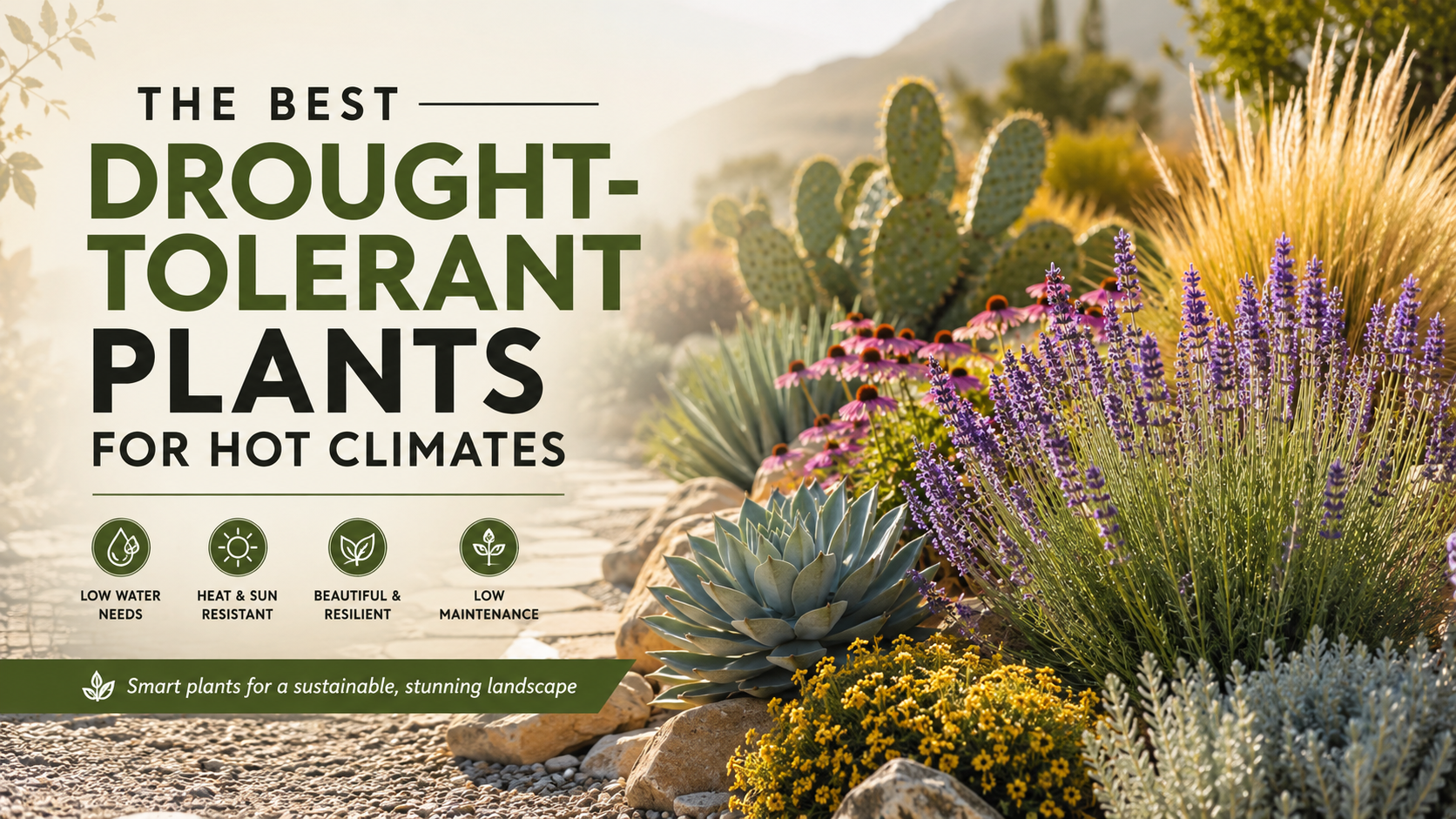
The Best Drought-Tolerant Plants for Hot Climates
Finding the right drought-tolerant plants for hot climates helps create a healthy landscape with less water. These plants can handle intense summer heat and periods of dry weather. They also reduce the need for frequent irrigation.
As temperatures rise and water restrictions become more common, climate-appropriate gardening matters more. Choosing resilient plants can turn a dry yard into a colorful and productive outdoor space. The Royal Horticultural Society recommends selecting plants suited to local growing conditions to reduce unnecessary watering and support biodiversity.
This guide covers some of the best choices for hot, dry landscapes. You will learn which plants tolerate extreme heat, full sun, dry air, and limited watering. You will also find practical tips for creating a low-maintenance drought-tolerant garden.

Which plants can survive in hot weather?
Plants that survive extreme heat often have adaptations that help them conserve water. These include deep root systems, waxy leaves, fine foliage, and reflective silver or gray surfaces. Many plants from Mediterranean and desert regions naturally develop these characteristics.
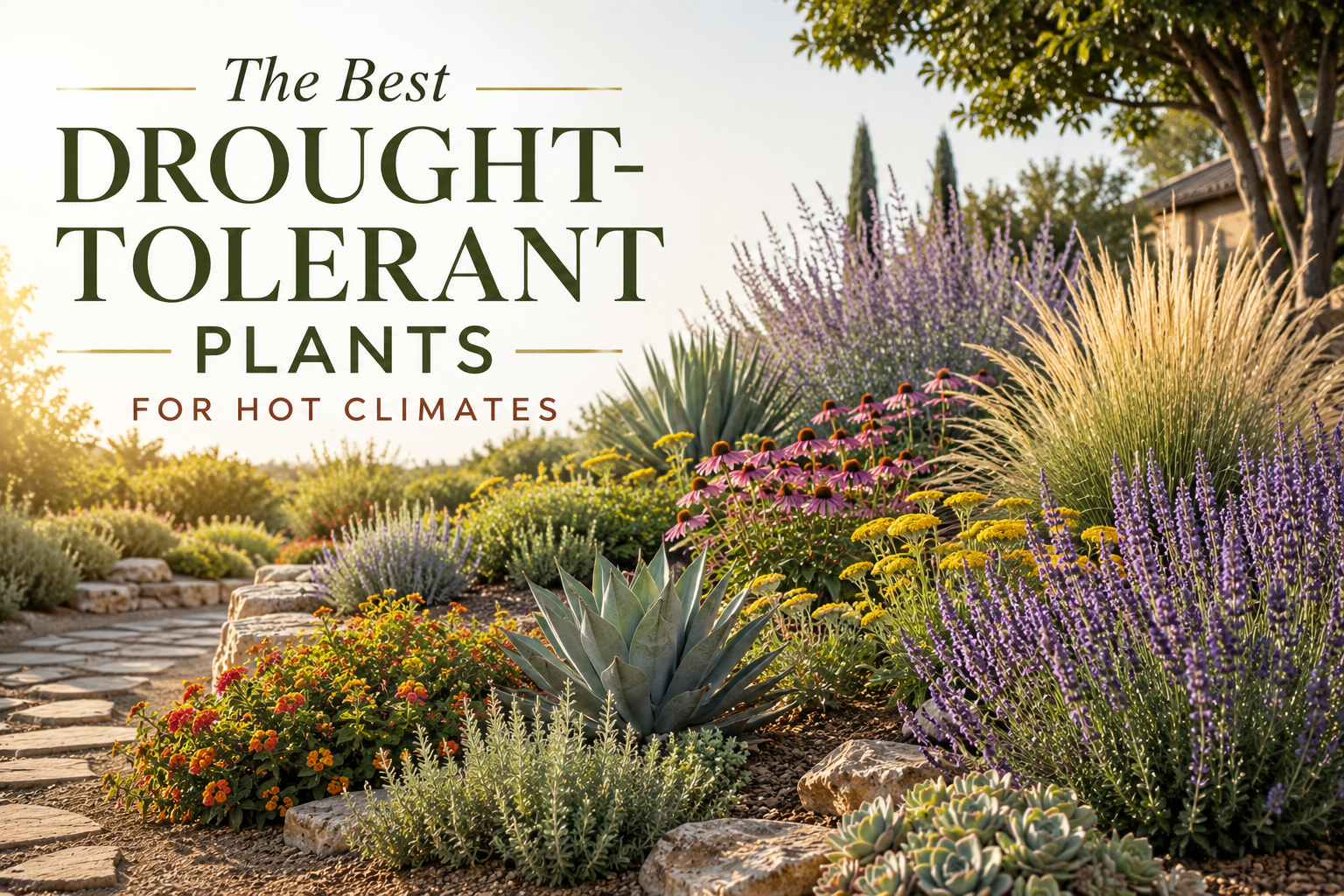
Lavender, Russian sage, and ornamental grasses are reliable choices for hot gardens. They can maintain attractive foliage when temperatures rise and rainfall becomes limited. Their natural adaptations also help reduce moisture loss during extended dry periods. For additional cooling benefits, consider incorporating best trees for natural cooling into the landscape.
For the best results, plant these species in well-draining soil. Avoid areas where water remains around the roots after irrigation. Good drainage encourages deeper root growth and reduces problems caused by excessive moisture.
When choosing drought-tolerant plants for hot climates, always consider your local conditions. Heat tolerance varies between species and cultivars. Check your plant’s recommended growing zone before planting.
Top Perennials for Extreme Temperatures
Lavender and Russian sage perform well in hot conditions once their roots become established. Their aromatic foliage also makes them less attractive to many common garden pests. Both plants prefer sunny locations and soil that drains quickly.
Lavender performs particularly well in dry, sunny beds. Avoid planting it in heavy, poorly drained soil. Too much moisture can damage its roots and reduce long-term performance.
Russian sage offers tall stems and soft, silvery foliage. Its appearance adds structure to borders without creating a high-maintenance planting. It also produces flowers that can attract pollinators during the growing season.
Ornamental grasses provide another useful option for hot landscapes. Many varieties tolerate heat and periods of limited rainfall after establishment. Their movement adds texture and visual interest to otherwise dry garden beds.
For stronger results, group plants with similar water needs together. This approach makes irrigation more efficient and prevents overwatering plants that prefer dry conditions.
What plants can tolerate full hot sun?
Full sun can create intense heat and rapid moisture loss, especially during summer afternoons. Plants growing in these locations need strong tolerance for sunlight and dry conditions. Drought-tolerant plants with thick leaves, protective coatings, or deep roots often perform well, while understanding the heat island effect in cities can provide useful context for why built-up areas experience additional heat.
Coneflowers, black-eyed Susans, and yarrow are useful choices for sunny flower beds. These plants can handle direct sunlight while producing attractive blooms. Their flowers also add seasonal color to landscapes exposed to strong solar radiation.
Before planting, check the soil and drainage of the selected area. Even sun-loving plants can struggle when their roots remain waterlogged. Well-draining soil helps roots access moisture without sitting in excess water.
Full sun does not mean plants should never receive water. Newly planted specimens need regular irrigation while their roots establish. Once established, many heat-tolerant varieties can tolerate longer periods between watering.
Choose plants according to your local climate rather than appearance alone. A plant that thrives in one hot region may need more water elsewhere. Matching plants to local conditions creates a stronger, more sustainable landscape.
Maximizing Solar Energy in Flower Beds
Coneflowers and yarrow can develop extensive root systems that help them access moisture below the soil surface. Their ability to tolerate sunny conditions makes them useful for exposed flower beds.
Position these plants where they receive several hours of direct sunlight. South-facing locations can work well when other site conditions are suitable. However, sunlight exposure should always match the plant’s specific requirements.
Prepare the soil before planting. Remove compacted areas and improve drainage when necessary. Good soil structure allows roots to move downward and access available moisture.
Mulching around plants can also reduce evaporation from the soil surface. Keep mulch slightly away from plant stems to reduce moisture-related problems. Organic mulch can gradually improve soil structure as it breaks down. For a broader approach to reducing heat around your property, explore ways to brighten and improve your garden.
Avoid assuming that established plants need no water. Even drought-tolerant species may require supplemental irrigation during extreme heat or prolonged drought. Deep, occasional watering is often more useful than frequent shallow watering.
What plant has the highest heat tolerance?
Agaves and many cacti rank among the most heat-tolerant plants available for dry landscapes. Their structures allow them to survive intense sunlight and extended periods with little rainfall. However, exact heat tolerance varies by species and growing conditions.
These plants use specialized adaptations to conserve water. Many succulents use crassulacean acid metabolism, or CAM photosynthesis. This process allows them to open their stomata mainly at night, reducing daytime water loss.
Cacti and agaves also store water in their fleshy tissues. Their thick leaves or stems act as reservoirs during dry periods. Waxy surfaces further reduce moisture loss from exposed plant tissues.
The saguaro cactus and century plant demonstrate these adaptations particularly well. However, they may not be suitable for every residential garden. Their mature size, climate requirements, and available space should be considered before planting.
For home landscapes, choose species that match your local conditions. Extreme heat tolerance does not automatically mean a plant will thrive in every garden. Drainage, sunlight, winter temperatures, and soil type still matter.
The Science of Succulent Heat Survival
Succulent plants survive harsh conditions by storing water inside specialized tissues. These tissues act as reservoirs that support the plant during periods of limited rainfall.
Their thick leaves and stems can hold substantial amounts of moisture. Many succulents also have waxy outer surfaces that reduce evaporation. These features help protect internal tissues from prolonged heat and intense sunlight.
CAM photosynthesis provides another important adaptation. Plants using this process generally open their stomata at night. This reduces water loss compared with opening them during hot daytime conditions.
However, succulents are not completely maintenance-free. Young plants need appropriate watering while their roots establish. Poor drainage can also cause root problems, even in species adapted to dry climates.
Use gritty, well-draining soil when growing suitable succulents. Containers should have drainage holes, and garden beds should not remain saturated after irrigation. With the right conditions, these plants can provide long-lasting structure and texture.
What plants do well in dry heat?
Dry heat combines high temperatures with low humidity, increasing moisture loss from plant tissues. Plants adapted to these conditions often have narrow, leathery, hairy, or wax-coated leaves. These characteristics help them reduce unnecessary water loss.
Rosemary and thyme are excellent examples of plants suited to dry conditions. Both are Mediterranean herbs that prefer sunlight and well-draining soil. Their compact foliage helps them tolerate periods of dry weather after establishment.
Oleander can also tolerate heat and drought in suitable climates. However, it is important to handle this plant carefully because all parts are toxic if eaten. It should not be planted where children or pets can easily access it.
When growing drought-tolerant plants in dry heat, soil preparation remains important. Avoid heavy soils that hold excessive moisture around roots. Instead, improve drainage where necessary and select plants suited to the existing soil.
Water newly planted specimens consistently until roots establish. After establishment, gradually reduce irrigation according to local rainfall and plant requirements. This encourages plants to develop stronger root systems.
Harnessing Arid-Adaptable Herb Varieties
Mediterranean herbs such as rosemary and thyme are naturally adapted to sunny, relatively dry environments. Their narrow leaves reduce the surface area exposed to dry air. This helps limit moisture loss during hot conditions.
These herbs generally perform best in loose, well-draining soil. Rocky or sandy soil can work well when it provides adequate drainage. Avoid planting them in areas that stay wet after irrigation or rainfall.
Rosemary can provide both culinary value and ornamental structure. Its evergreen foliage adds year-round interest in climates where it can survive winter temperatures. Thyme works well along pathways, borders, containers, and small garden beds.
Avoid frequent shallow watering once these plants become established. Instead, water deeply when conditions require it. Allowing the soil to dry between watering can better match their natural growing conditions.
Harvest herbs regularly to encourage useful growth. Avoid removing too much foliage at once. With proper sunlight, drainage, and watering, these herbs can remain productive with relatively little maintenance.
Flowering plants that like full sun and heat
A hot garden does not have to sacrifice color. Several flowering plants can tolerate intense sunlight while producing attractive blooms. Lantana, bougainvillea, and desert marigold are popular choices for warm landscapes. These ideas can also complement thoughtful backyard design for a more attractive outdoor space.
These plants can add strong visual interest to areas where more delicate flowers struggle. Their colorful blooms can also provide resources for pollinators during the growing season.
Lantana is especially useful for sunny beds and containers in suitable climates. Bougainvillea works well where winters remain mild enough for its growth requirements. Desert marigold offers bright flowers and suits dry, sunny environments.
Even heat-tolerant flowering plants need water during establishment. Newly planted specimens cannot immediately rely on drought adaptations. Provide appropriate irrigation until roots become established.
Once established, reduce unnecessary watering according to the plant’s needs. Grouping plants with similar requirements can make irrigation easier. Mulching can also reduce evaporation and help stabilize soil moisture.
Before planting, check whether each species is suitable for your region. Winter temperatures, soil drainage, and local rainfall can affect performance. Choosing the right plant for the site is more important than choosing the most drought-resistant species alone.
Attracting Pollinators with Sun-Loving Blooms
Many sun-loving flowering plants can support pollinators while adding color to hot landscapes. Lantana, coneflowers, and other suitable flowering species can provide nectar and pollen during their blooming periods.
Planting several flowering species can create a longer season of available resources. Choose varieties with different flowering times when possible. This approach can provide more consistent food sources for bees and butterflies.
Place flowering plants near patios, pathways, or garden entrances where their colors can be enjoyed. Avoid relying on a single plant species across the entire landscape. A mixture of plants creates greater structural and seasonal diversity.
Do not assume that every flowering plant has identical water needs. Some species may require more irrigation during prolonged drought. Group plants according to their moisture requirements for more efficient watering.
Avoid unnecessary pesticide use when supporting pollinators. Instead, focus on healthy plants and appropriate growing conditions. When pests do become a problem, consider how to make homemade insecticides for your plants before relying on unnecessary chemical treatments. Selecting locally adapted drought-tolerant flowering plants can help create attractive gardens while reducing irrigation demands.
Low-maintenance plants for hot dry areas
Busy homeowners often want attractive landscapes without constant watering, pruning, and fertilizing. Low-maintenance drought-tolerant plants can help meet that goal when they are matched to suitable growing conditions.
Succulents, sedums, and many ornamental grasses can perform well in hot, dry landscapes. Their different shapes and textures also make it easier to create visually interesting garden designs.
Sedums can spread across suitable areas and form dense ground cover. Their fleshy foliage helps them handle dry conditions. Ornamental grasses can add movement and height while requiring relatively little maintenance after establishment.
However, low maintenance does not mean zero maintenance. Newly planted specimens need appropriate care while roots develop. Occasional watering, pruning, and seasonal cleanup may still be necessary.
Avoid planting species with different water requirements together. Doing so can lead to overwatering some plants while leaving others too dry. Instead, create planting zones based on sunlight, soil, and moisture needs.
With careful plant selection, hot dry areas can remain attractive without demanding constant attention. The goal is not to eliminate maintenance completely. It is to reduce unnecessary work while choosing plants that naturally suit the environment.
Creating Effortless Ground Cover Solutions
Hardy sedums can provide useful ground cover in sunny, dry garden beds. Their low-growing habit allows them to spread across suitable spaces while their fleshy leaves store moisture.
Dense ground cover can also help shade the soil surface. This may reduce evaporation and keep soil conditions more stable during hot weather. A covered soil surface can also make open planting areas less attractive to some weeds.
Choose sedum varieties according to your climate and site conditions. Some types prefer dry, rocky locations, while others tolerate different moisture levels. Always check the growing requirements of the specific variety.
Prepare the planting area before installation. Remove persistent weeds and correct major drainage problems. Give new plants enough space to spread without overcrowding neighboring species.
Ground covers still need water during establishment. Gradually reduce irrigation as roots develop and plants begin spreading. Once established, suitable varieties can provide attractive coverage with relatively little ongoing care.
Combining sedums with ornamental grasses, stones, and other drought-tolerant plants can create a layered landscape. This approach adds texture while keeping irrigation needs relatively low.
FAQ SECTION
How often should newly planted drought-tolerant plants be watered?
Even drought-tolerant plants require regular watering during their first growing season to establish strong, deep root systems. Provide a deep soaking every week for the first month, gradually tapering off frequency as roots anchor into the surrounding soil. Once fully established after one year, most of these resilient species survive entirely on natural rainfall or minimal supplemental irrigation.
Can drought-tolerant plants survive in clay soil?
Many drought-tolerant plants originate from sandy or rocky environments and struggle in heavy, poorly draining clay soil. Excess moisture trapped around roots in winter causes fatal root rot. To fix this, amend your clay soil with coarse sand, organic compost, or expanded shale, or plant specimens on elevated mounds and raised garden beds to ensure proper drainage.
Do drought-tolerant plants require fertilizer?
Most drought-tolerant species prefer poor, nutrient-deficient soils and actually suffer when over-fertilized. Excessive nitrogen pushes fast, weak stem growth that requires more water and makes the plant vulnerable to pests and heat damage. A light layer of organic compost applied annually around the base provides all the slow-release nutrients these tough plants need.
Are all drought-tolerant plants also cold-hardy?
Drought tolerance and cold hardiness are completely separate botanical traits governed by different survival mechanisms. While plants like lavender and Russian sage tolerate freezing winter temperatures, tropical succulents like many agaves and bougainvilleas suffer severe frost damage. Always verify the USDA hardiness zone ratings of specific plants before adding them to your regional landscape.
Conclusion
Designing a resilient outdoor space begins with selecting the right drought-tolerant plants for hot climates. Throughout this article, we explored tough perennials, sun-worshipping bloomers, and hardy succulents that conquer blistering temperatures, full sun, and dry air effortlessly. Embracing these climate-smart choices lowers water bills, minimizes landscape maintenance, and ensures a stunning, vibrant yard all year long. Now is the perfect time to evaluate your landscape, replace thirsty turf with resilient alternatives, and enjoy a sustainable garden that thrives under the most demanding summer conditions.