

Best AI Tools in 2026: Top Picks & Free Options
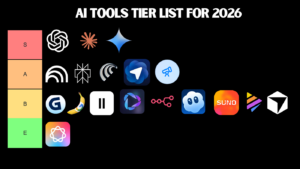
The demand for the best AI tools in 2026 continues to grow rapidly. Businesses, developers, and creators now rely on AI for daily tasks. Moreover, AI tools improve speed, accuracy, and creativity in almost every field. Therefore, choosing the right tools has become more important than ever.
In addition, AI technology evolves faster each year. Because of this, users must understand both current leaders and upcoming innovations. This article explains the best AI tools in 2026, future AI trends, developer-focused tools, and free options that deliver real value.
What is the best overall AI tool in 2026?
The best overall AI tools in 2026 combine versatility, accuracy, and ease of use. Currently, advanced large language models lead the market. For example, AI assistants like ChatGPT-style systems and multimodal platforms handle writing, coding, image generation, and research efficiently.
Moreover, these tools support businesses by automating repetitive work. Therefore, teams save time and reduce operational costs. In addition, they improve decision-making through data analysis and predictive insights.
However, the best AI tool depends on user needs. For content creation, tools like ChatGPT-style assistants perform strongly. On the other hand, enterprise users often prefer platforms such as Microsoft Copilot or Google Gemini because they integrate deeply with productivity ecosystems.
Furthermore, multimodal AI tools stand out in 2026. They process text, images, audio, and video in one system. As a result, users complete complex tasks without switching platforms.
For example, a marketer can generate ads, analyze performance, and create visuals in one AI workflow. Consequently, productivity increases significantly.
In conclusion, the best AI tools in 2026 focus on integration, intelligence, and automation. However, the “best” choice always depends on specific goals and workflows.
What AI is coming in 2026?
AI in 2026 focuses on autonomy, reasoning, and real-time decision-making. Therefore, new systems move beyond simple chat responses. Instead, they act like intelligent assistants that complete full tasks independently.
Moreover, agent-based AI systems become a major trend. These systems perform multi-step actions without constant human input. For example, an AI agent can plan a marketing campaign, execute it, and report results automatically.
In addition, multimodal AI continues to expand. These models combine text, video, and audio understanding. Because of this, users interact with AI more naturally than ever before.
Meanwhile, personal AI assistants also improve significantly. They learn user preferences deeply and provide customized recommendations. As a result, they feel more like digital coworkers than tools.
However, AI safety and regulation also grow in importance. Governments and organizations introduce stronger frameworks to ensure responsible use. For more details on AI development trends, you can explore research from OpenAI Blog.
Consequently, the future of AI in 2026 focuses on smarter automation, better personalization, and safer deployment. Therefore, users can expect more powerful and reliable AI systems in everyday life.
What are the AI developer tools for 2026?
AI developer tools in 2026 help engineers build faster, smarter, and more scalable applications. Moreover, these tools reduce coding time and improve software quality.
For example, AI-powered IDEs like GitHub Copilot-style systems assist with code completion, debugging, and optimization. Therefore, developers write cleaner code with fewer errors.
In addition, vector databases play a key role. They help store and search unstructured data efficiently. Consequently, AI applications retrieve information faster and more accurately.
Furthermore, machine learning frameworks such as PyTorch and TensorFlow remain essential. However, new simplified frameworks also emerge. These new tools focus on low-code or no-code AI development. As a result, even non-experts build AI applications.
Meanwhile, API-based AI platforms become more popular. Developers integrate powerful models through simple API calls instead of building models from scratch. Therefore, development cycles become much shorter.
In addition, cloud-based AI infrastructure improves scalability. Developers deploy models globally with minimal setup. Consequently, startups launch AI products faster than ever.
Overall, the best AI tools in 2026 for developers focus on speed, simplicity, and scalability. Therefore, both beginners and experts benefit from these advancements.
What is the best overall AI tool free?
Free AI tools in 2026 offer impressive capabilities, especially for students, freelancers, and small businesses. Moreover, many companies now provide limited free tiers to attract users.
For example, free versions of AI chat assistants provide strong writing and research support. Therefore, users generate articles, emails, and summaries without paying.
In addition, free AI design tools help users create images, logos, and social media content. Consequently, creators reduce their dependence on expensive software.
However, free tools usually come with limitations. These include usage caps, slower processing, or fewer advanced features. On the other hand, they still deliver strong value for basic tasks.
Moreover, open-source AI models also play a major role in the free AI ecosystem. Developers and researchers access powerful models without licensing costs. Therefore, innovation spreads faster across the community.
For instance, many free tools integrate directly into browsers or mobile apps. As a result, users access AI instantly without installation barriers.
However, users must choose carefully. Some free tools may lack strong data privacy controls. Therefore, it is important to review terms and security policies before use.
In conclusion, the best free AI tools in 2026 provide strong functionality for everyday needs. However, advanced users often upgrade to paid plans for better performance and reliability.
Conclusion
The best AI tools in 2026 transform how people work, learn, and create. Moreover, they offer powerful automation, smarter reasoning, and better user experiences. Therefore, individuals and businesses gain major productivity benefits.
In addition, AI continues to evolve toward more autonomous and multimodal systems. However, users must choose tools based on their specific goals and workflows. Consequently, understanding both free and advanced options helps make better decisions.
Ultimately, the best AI tools in 2026 combine intelligence, flexibility, and accessibility. Therefore, users who adopt these tools early will stay ahead in a rapidly changing digital world.