
How AI Camera Technology in Smartphones Is Revolutionizing Mobile Photography
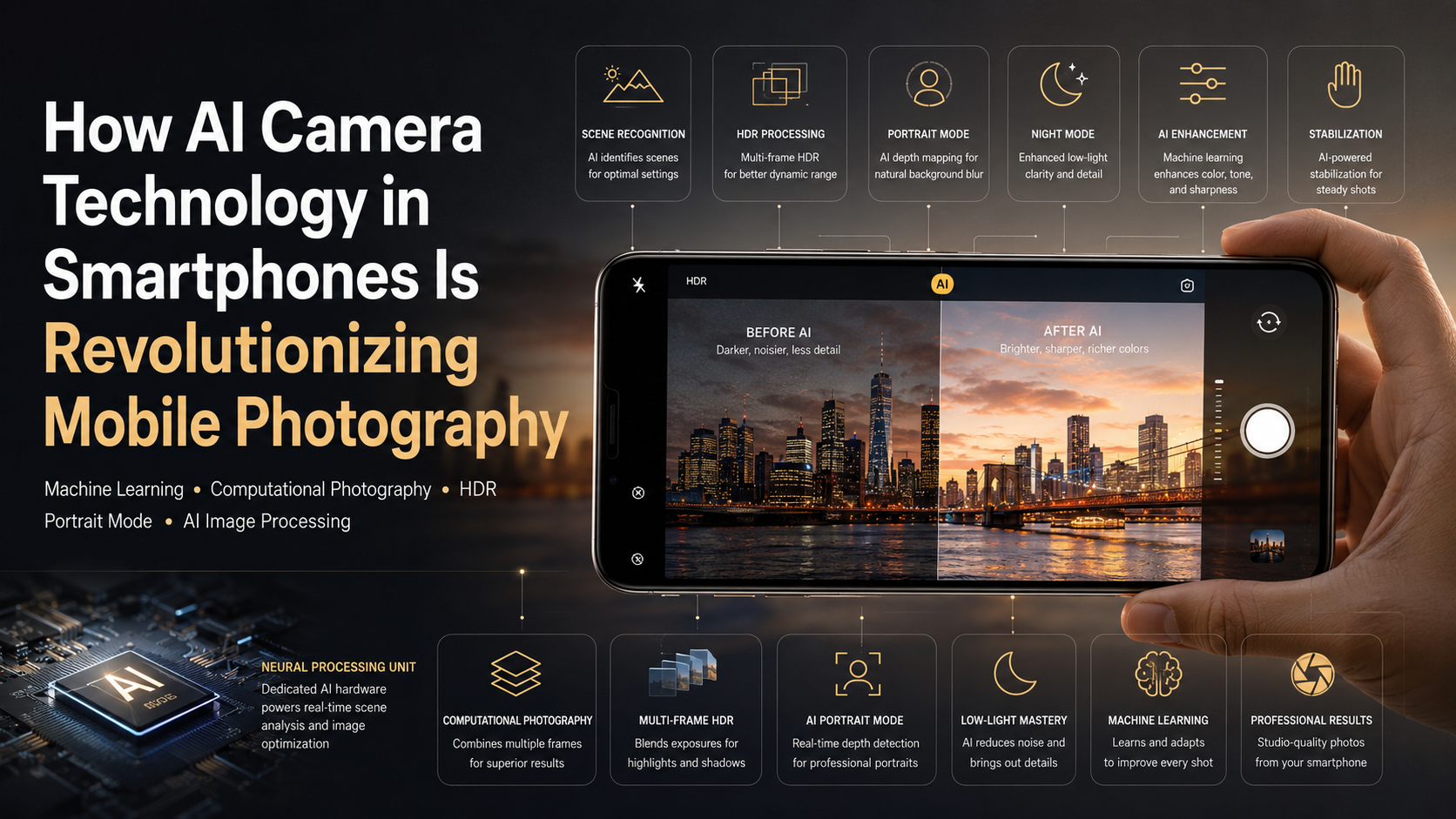
AI camera technology in smartphones is transforming mobile photography by combining advanced camera hardware with powerful machine learning algorithms. Modern smartphones now use AI-powered image processing to capture sharper, brighter, and more detailed photos automatically. This technology allows pocket-sized devices to deliver results that once required professional cameras.
At the center of this transformation is AI camera technology in smartphones. This innovation combines powerful camera sensors with machine learning algorithms to improve image quality automatically.
Modern smartphone cameras can recognize scenes, enhance details, and adjust lighting within milliseconds. Advances in neural network research from organizations such as Google DeepMind have helped improve AI capabilities for visual data processing and image understanding.
Without AI-powered image processing, many smartphone photos would lack sharpness, accurate colors, and strong low-light performance. This technology explains why pocket-sized devices can now compete with traditional cameras in everyday photography.

What is the AI camera in mobile phones?
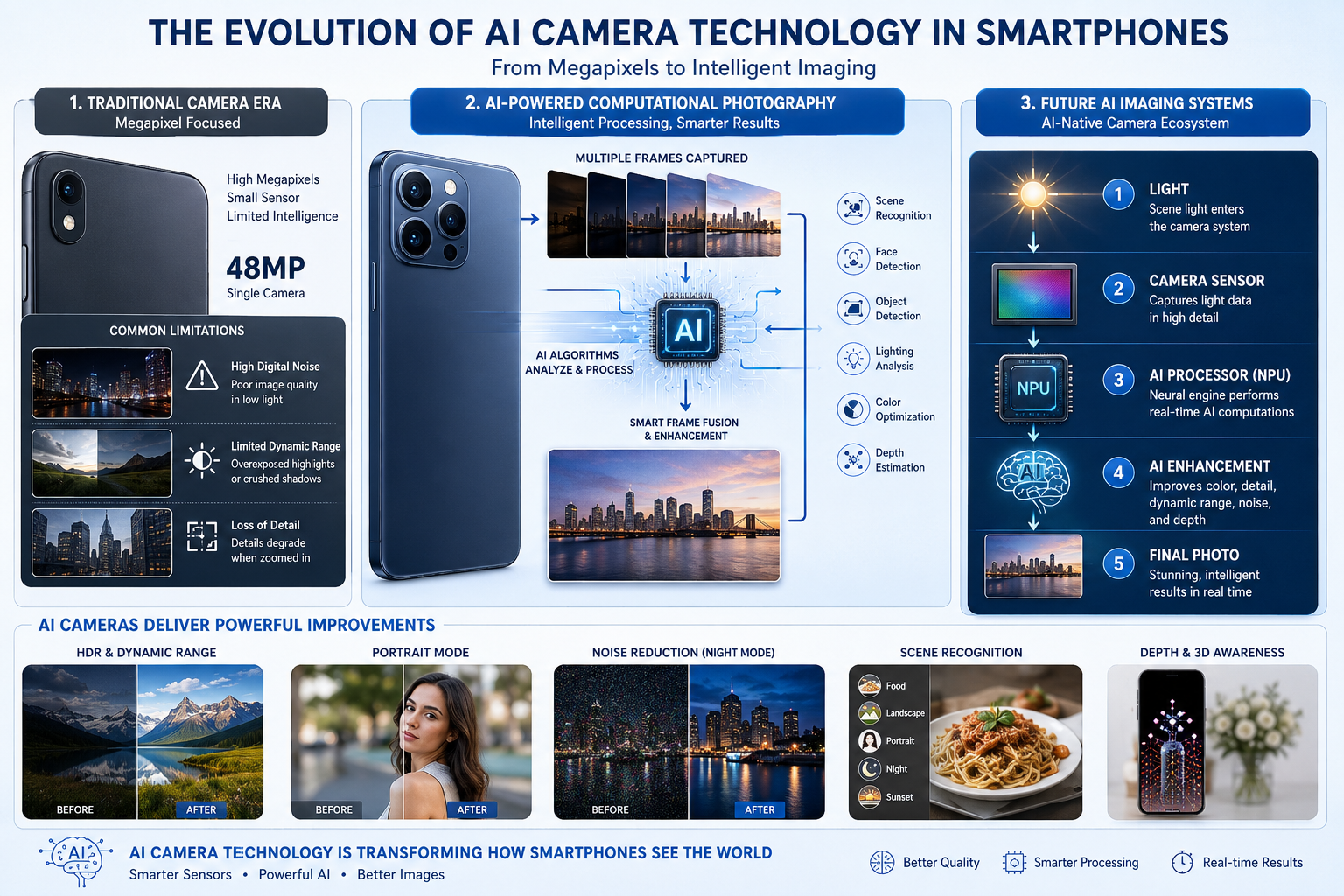
An AI camera in mobile phones refers to a smart hardware and software integration that uses artificial intelligence and machine learning algorithms to elevate mobile photography. Unlike traditional lenses that rely purely on basic light exposure and mechanical focus, an AI camera system actively analyzes the scene in real time. According to insights shared by tech innovators like NVIDIA, computational photography processes visual data instantly to improve clarity, balance colors, and minimize noise. It recognizes faces, pets, food, and landscapes automatically, applying tailored adjustments without requiring manual user configurations. This technology removes the guesswork from capturing professional-grade photos. Users simply point and shoot, while complex neural networks handle depth mapping, stabilization, and dynamic range optimization in fractions of a second.
Scene Recognition and Automatic Adjustments
Modern smart sensors utilize deep neural networks to instantly identify what is inside the frame. Once the subject is recognized, the software adjusts shutter speed, white balance, and contrast dynamically to highlight the most important elements of the composition
Which Phone Has the Best AI Camera?
Choosing the smartphone with the best AI camera depends on personal preferences, testing methods, and photography needs. Different manufacturers focus on different strengths, such as natural colors, advanced zoom, low-light performance, or portrait quality.
Leading smartphone brands, including Apple, Samsung Electronics, and Google, continue to improve their computational photography systems. Their flagship devices use advanced processors, neural engines, and optimized camera software.
Apple’s approach usually focuses on realistic colors, consistent results, and smooth video performance. Google’s Pixel devices are widely recognized for software-driven image processing and computational photography features. Samsung often emphasizes versatility through multiple lenses, powerful zoom, and creative shooting options.
However, the “best” AI camera depends on what users value most. Some people prefer realistic photographs, while others enjoy brighter colors and stronger image effects.
Important factors to consider include:
- Image processing quality
- Low-light performance
- Portrait accuracy
- Video stabilization
- Zoom capabilities
- Software updates and camera features
A smartphone with excellent AI processing can often outperform a device with higher megapixel numbers but weaker optimization.
The Role of Custom Neural Processing Units
The performance of modern AI cameras depends heavily on specialized hardware. Megapixels alone no longer determine smartphone camera quality. Instead, dedicated processing systems help transform raw camera data into detailed and balanced images.
Many premium smartphones include a neural processing unit (NPU) or similar AI accelerator. This hardware handles complex tasks such as image recognition, depth calculation, noise reduction, and real-time enhancements.
Because these calculations happen directly on the device, smartphones can process images quickly while reducing dependence on cloud services. This improves speed, privacy, and overall user experience.
Neural processors also enable advanced camera features. They support faster autofocus, improved portrait effects, and intelligent editing tools. Some modern devices can even generate missing details or remove unwanted objects using AI-based editing systems.
The combination of camera sensors, AI software, and neural hardware creates a powerful imaging system. This balance allows compact smartphones to compete with larger traditional cameras in many everyday situations.
Are Samsung cameras AI?
Samsung cameras heavily integrate advanced artificial intelligence across their entire smartphone lineup, ranging from budget-friendly models to premium flagship devices. The company utilizes powerful proprietary processors and neural processing units to drive intelligent computational photography features. Samsung camera software uses deep learning to optimize low-light performance, enhance zoom clarity, and execute intelligent portrait blurring. When users capture a picture, the system instantly processes multiple frames to reduce grain and sharpen textures. Furthermore, Samsung incorporates generative editing tools that allow users to move objects, fill backgrounds, or remove reflections effortlessly. This seamless blend of specialized hardware and intelligent software ensures that everyday users can capture crisp, vibrant images across diverse lighting conditions without manual tweaking.
ProVisual Engine and Intelligent Processing
The incorporation of dedicated processing engines allows these devices to handle complex computational tasks instantly. This specialized architecture ensures that high-resolution sensors deliver accurate skin tones, deep contrast, and exceptional detail preservation even in difficult environments.
Which AI Camera Is Best?
Finding the best AI camera system requires looking beyond individual features. A high-quality smartphone camera should provide reliable results in different conditions, including bright daylight, indoor environments, moving subjects, and nighttime scenes.
Industry leaders usually focus on three important areas: image consistency, software optimization, and ease of use. A camera may have impressive specifications, but its real performance depends on how effectively AI processes the captured information.
Google Pixel devices are known for strong computational photography and intelligent image processing. Apple’s flagship iPhone models are recognized for smooth hardware and software integration. Other premium brands also compete by offering advanced zoom systems, large sensors, and AI-powered editing features.
The best AI camera should handle difficult situations automatically. It should capture clear images without requiring users to adjust complicated settings.
Key qualities of a strong AI camera include:
- Accurate colors and skin tones
- Fast autofocus performance
- Reliable low-light photography
- Natural-looking image enhancement
- Effective motion detection
Ultimately, the ideal choice depends on the user’s photography style and expectations.
Balancing Hardware Sensors and Software
A smartphone camera’s performance depends on more than just its physical hardware. While larger sensors and high-quality lenses help capture more light, AI camera technology determines how effectively that information is processed and improved.
Modern smartphones combine advanced sensors with intelligent software to create better images. The sensor collects raw visual data, while AI algorithms analyze and enhance that information. This partnership helps reduce digital noise, improve sharpness, correct lens distortion, and preserve important details.
For example, a larger sensor can capture more light in dark environments. However, AI processing can further improve the final image by combining multiple frames and adjusting exposure levels. This is why some smartphones with smaller sensors can still produce impressive results.
The strongest camera systems maintain a balance between hardware and software. A powerful sensor without smart processing may deliver inconsistent results. Likewise, advanced AI cannot fully replace high-quality camera components.
Important elements of a balanced smartphone camera system include:
- Large image sensors for better light capture
- Advanced lenses for optical clarity
- AI processing for image enhancement
- Neural hardware for faster calculations
- Optimized camera software for natural results
This combination allows modern smartphones to deliver professional-looking images while remaining compact and convenient.
What is the cost of AI camera in India?
The cost of an AI camera setup in India varies widely depending on the smartphone segment, brand positioning, and overall hardware specifications. Entry-level devices equipped with basic computational photography features usually start around Rs. 10,000, making smart imaging accessible to budget-conscious buyers. Mid-range smartphones offering enhanced multi-lens setups and advanced scene recognition generally range from Rs. 20,000 to Rs. 40,000. Meanwhile, premium flagship devices featuring cutting-edge sensors, massive processing power, and sophisticated generative editing tools can cost anywhere from Rs. 60,000 to well over Rs. 1,00,000. Buyers can easily find a device matching their financial plan because intelligent photography features are no longer restricted exclusively to ultra-expensive models.
Value Versus Premium Flagship Pricing Tiers
Mid-range options provide exceptional value by delivering nearly eighty percent of flagship photo quality at a fraction of the cost. Evaluating specific storage variants and processor capabilities helps consumers choose the right device for their budget.
What Are the Disadvantages of AI Cameras?
Although AI camera technology has improved smartphone photography, it also has some limitations. One common concern is excessive image processing. Sometimes, AI enhancement can make photos appear unnatural by increasing sharpness, contrast, or brightness too aggressively.
In certain situations, AI systems may misinterpret complex scenes. They can create unwanted effects around objects, remove important textures, or produce unrealistic colors. Professional photographers often prefer more manual control because they want to preserve the original look of a scene.
Another limitation is the increased processing power required for advanced camera features. Functions like high-resolution AI editing, night photography, and real-time effects can consume additional battery power.
AI cameras may also reduce creative control. Automatic adjustments are helpful for casual users, but experienced photographers may prefer manually adjusting exposure, focus, and colors.
Common disadvantages include:
- Over-processing of images
- Artificial-looking colors or textures
- Reduced manual control
- Higher battery consumption
- Occasional processing errors
Understanding these limitations helps users decide when to rely on AI features and when to use manual camera settings.
The Problem of Over-Processing and Image Artifacts
One of the biggest criticisms of AI-powered cameras is over-processing. Smartphone software often tries to create visually attractive images by increasing brightness, sharpness, and color intensity.
While this can improve photos for social media and everyday sharing, excessive processing may remove natural details. Skin textures may appear too smooth, shadows may lose depth, and images may look less realistic.
AI systems can also create artifacts during complex editing processes. These issues may appear as unnatural edges, incorrect background separation, or strange details in difficult lighting conditions.
Professional photographers often prefer images with minimal processing because they want greater control during editing. Many flagship smartphones now include professional modes that allow users to capture more natural results.
The best AI camera systems aim to enhance images without making them look artificial. Balanced processing preserves the original character of a photograph while improving quality.
Frequently Asked Questions
What is AI camera technology in smartphones?
AI camera technology in smartphones uses machine learning algorithms to improve photos automatically. For example, it analyzes scenes, adjusts exposure, enhances colors, reduces noise, and improves details without requiring manual settings. As a result, users can capture better images with minimal effort.
How does machine learning improve low-light photography?
Machine learning improves low-light photography by combining multiple exposures and reducing digital noise. In addition, AI aligns different frames, brightens shadows, and preserves realistic details even in darker environments. Therefore, smartphone cameras can produce clearer nighttime photos with improved brightness and accuracy.
Do smartphone AI camera features require internet access?
Most AI camera features work without an internet connection. This is because modern smartphones include dedicated AI processors that handle image processing directly on the device. Additionally, on-device processing allows faster results while improving privacy and reliability.
How does Portrait Mode create background blur?
Portrait Mode uses AI depth estimation to identify the main subject and separate it from the background. After that, the software applies a realistic blur effect while keeping the subject sharp. Consequently, smartphones can create professional-looking portrait images without advanced camera equipment.
Will AI make traditional cameras obsolete?
AI has greatly improved smartphone photography; however, traditional cameras still offer advantages. For instance, larger sensors, optical zoom, and interchangeable lenses remain valuable for professional photographers. Therefore, traditional cameras continue to serve users who need advanced control and specialized equipment.
Conclusion: The Future of Mobile Photography With AI
AI camera technology in smartphones has permanently changed the way people capture everyday moments. Advanced processors and intelligent algorithms now perform tasks that once required professional equipment and editing software.
Moreover, features such as HDR processing, portrait effects, low-light improvements, and AI-powered video tools continue to make smartphones smarter imaging devices. As a result, users can create higher-quality photos and videos with less effort.
In the future, machine learning models will continue to improve mobile photography and make advanced features more accessible. However, technology trends are also moving toward more intentional digital experiences, including the rise of the screen-free tech trend, where users seek smarter ways to balance innovation with reduced screen dependency.
Ultimately, AI does not simply make smartphone cameras better. Instead, it helps people capture clearer, more creative, and more meaningful memories with a single tap.