
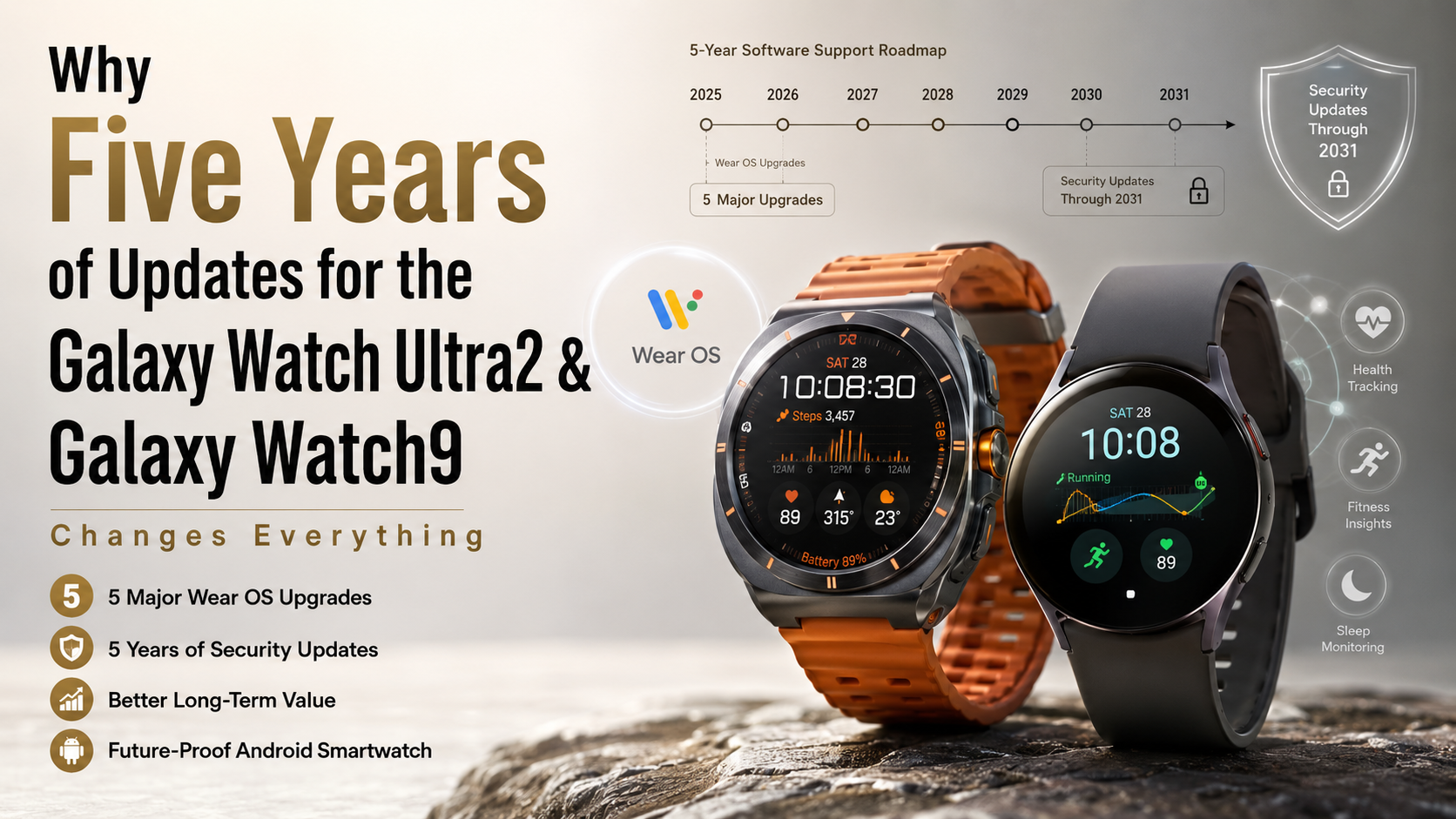
Why Five Years of Updates for the Galaxy Watch Ultra2 and Galaxy Watch9 Changes Everything
Samsung has raised the bar for wearable technology by announcing that the Galaxy Watch Ultra2 and Galaxy Watch9 will receive five years of software support. This marks one of the biggest improvements in the Android smartwatch market. Buyers can now expect their devices to remain secure, feature-rich, and compatible with new software for much longer than before.
For years, smartwatches lagged behind smartphones in software longevity. Many devices stopped receiving major updates after only a few years. That often left users with outdated features, weaker security, and reduced app compatibility. Samsung is changing that approach by pairing its latest smartwatch hardware with an extended update policy.
This commitment includes five major Wear OS upgrades and five years of security updates. It gives users greater confidence that their smartwatch will continue improving long after purchase. Whether you prefer the rugged Galaxy Watch Ultra2 or the stylish Galaxy Watch9, this long-term support makes both devices a smarter investment. In this article, you’ll learn what Samsung’s new policy includes, how it compares with competitors, and why it could reshape expectations for future wearable devices.
How Many Years of Software Updates Does Samsung Galaxy Watch Ultra Get?
The Samsung Galaxy Watch Ultra receives up to five years of software updates from Samsung. This includes major Wear OS upgrades, One UI Watch improvements, security patches, and regular performance updates. The extended support period helps users keep their smartwatch secure and reliable for longer.
Samsung’s longer update commitment makes the Galaxy Watch Ultra a strong choice for buyers who want premium hardware with long-term support. Its titanium build, advanced health features, and outdoor-focused design are built for years of use.
With five years of software support, owners can expect continued improvements to apps, health tracking features, and system stability. Regular updates also help protect personal information by fixing security issues. This makes the Galaxy Watch Ultra a better long-term investment compared with older smartwatch models that received shorter support periods.
Extended Support and Security Patches
Modern smartwatches collect sensitive health and activity information. Because of this, regular security updates are essential. Samsung’s longer support approach helps protect user data while maintaining reliable performance.
Wearable technology continues to become more advanced. Features such as GPS navigation, heart monitoring, sleep tracking, and fitness analysis require ongoing software optimization.
A smartwatch with long-term updates can also receive improvements after launch. Manufacturers can fix issues, improve efficiency, and introduce refinements without requiring users to purchase a new device.
The move toward longer support cycles reflects a larger industry trend. Premium devices are becoming long-term products rather than short-term upgrades.
For Galaxy Watch Ultra2 and Galaxy Watch9 owners, this means better value and more confidence when investing in Samsung’s wearable ecosystem.

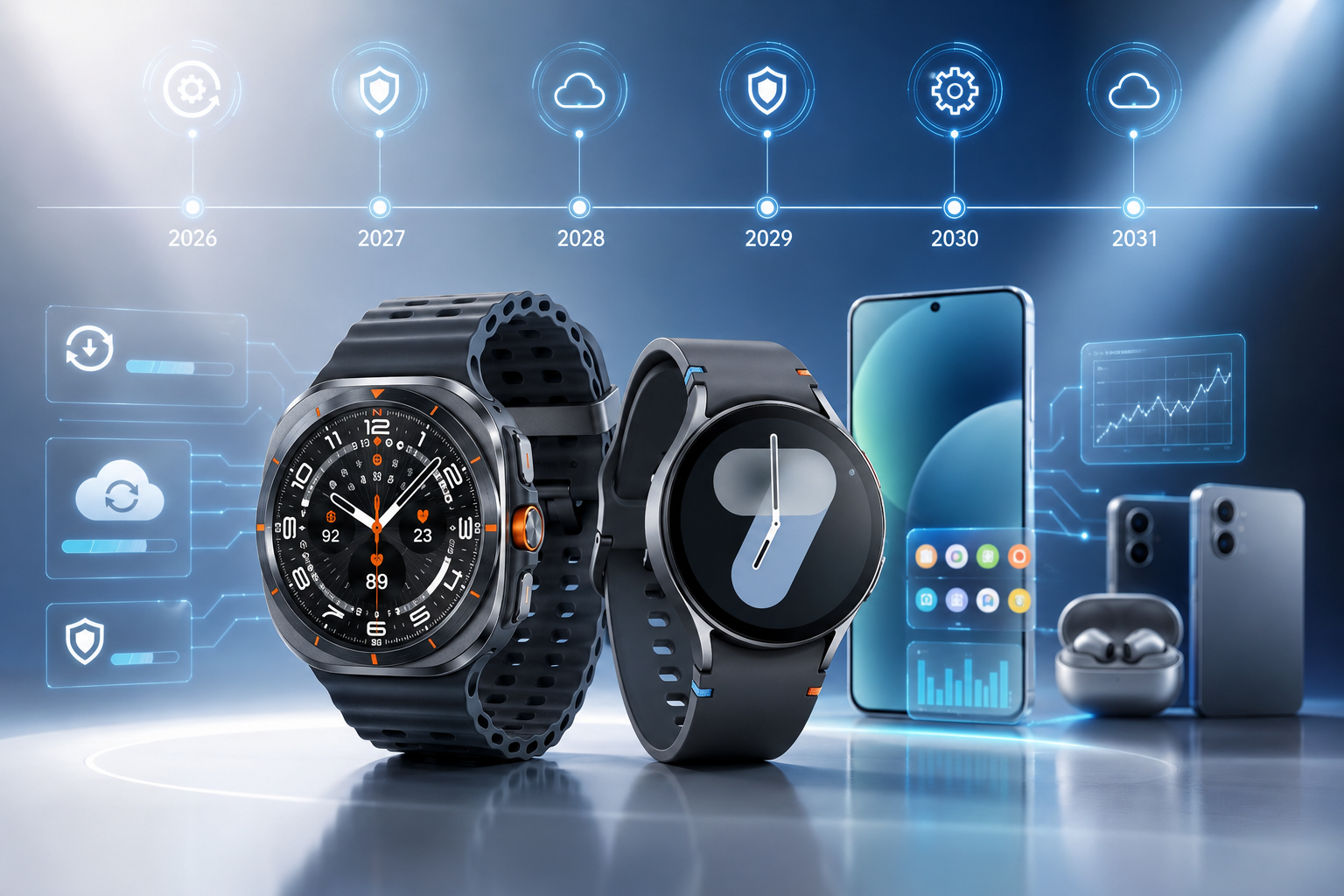
How Will Galaxy Watch 9 and Ultra 2 Improve Battery Life?
Battery life remains one of the biggest concerns for smartwatch users. This is because advanced displays, health sensors, and constant connectivity require efficient power management.
Samsung’s latest smartwatch improvements focus on combining larger batteries with more efficient processors. As a result, these changes help reduce power consumption while maintaining strong performance.
Additionally, newer chipsets can complete tasks faster while using less energy. This improves everyday battery life, especially during background tracking and regular smartwatch activities.
Because of these improvements, users can spend less time charging and more time using their devices.
Expected battery improvements include:
- More efficient processors
- Better power management
- Larger battery capacity
- Optimized software performance
- Improved standby efficiency
For users who rely on fitness tracking, navigation, and health monitoring, better battery performance creates a more convenient smartwatch experience.
Efficient Processors and Larger Battery Cells
Processor technology plays an important role in smartwatch battery life. Modern wearable chips are designed to deliver higher performance while reducing unnecessary power consumption.
As a result, Samsung’s focus on efficient hardware helps balance speed and endurance. Users can enjoy smoother animations, faster apps, and improved health tracking without sacrificing battery performance.
Furthermore, battery improvements are essential for premium smartwatches. Features such as always-on displays and continuous sensor monitoring require reliable energy management.
Therefore, combining efficient processors with improved battery capacity creates a better overall experience. Galaxy Watch Ultra2 and Galaxy Watch9 users can enjoy advanced features for longer periods while maintaining strong performance.
How many years do Galaxy watches last?
Samsung Galaxy Watches generally last around four to six years, depending on usage, battery condition, and software support. The physical lifespan of a smartwatch depends heavily on daily habits. Factors like charging frequency, water exposure, and overall care can affect how long the device remains reliable.
The battery is usually the first component that shows aging. Lithium-ion batteries gradually lose capacity after repeated charging cycles. Over time, users may notice shorter battery life and the need for more frequent charging.
Software support also plays an important role in smartwatch longevity. Newer Samsung models receive longer update periods, allowing users to enjoy improved features and stronger security protection.
To extend the life of a Galaxy Watch, users should maintain battery health, install updates regularly, and avoid unnecessary strain on the device. Proper care can help a smartwatch remain useful beyond its expected lifespan.
How Many Years of Updates Will the Galaxy Watch 8 get?
The Galaxy Watch 8 is expected to receive around four years of software updates, following Samsung’s previous smartwatch support approach. This includes operating system upgrades, security updates, bug fixes, and feature improvements throughout its support period.
Although newer Samsung wearables have moved toward longer update commitments, the Galaxy Watch 8 still offers strong long-term value. Its hardware is designed to support modern health tracking features, improved performance, and future software enhancements.
Owners can continue using important features such as fitness tracking, notifications, and Samsung Health tools during the supported period. Regular firmware updates also help improve reliability and overall user experience.
While the Galaxy Watch 8 may not match the longest support period of newer Ultra models, it remains a capable smartwatch. Buyers who want several years of dependable performance can still consider it a practical option.
Which Samsung has 7 years of updates?
Samsung offers up to seven years of updates on select flagship Galaxy smartphones and tablets. However, this extended update policy does not currently apply to Galaxy Watch models.
Smartwatches have different hardware limitations compared with smartphones. They use smaller batteries, compact components, and wearable designs that create different challenges for long-term software support.
Samsung’s latest Galaxy Watch models currently provide up to five years of software support. This includes important security improvements, system updates, and feature enhancements. Although this is shorter than smartphone support, it still provides a strong lifespan for a wearable device.
Smartphones can often support longer update cycles because they have larger batteries and more powerful internal hardware. Galaxy Watches focus on balancing performance, battery efficiency, and compact design. For users comparing device lifecycles, a smartwatch’s support period should be considered alongside battery health and daily usage patterns.