
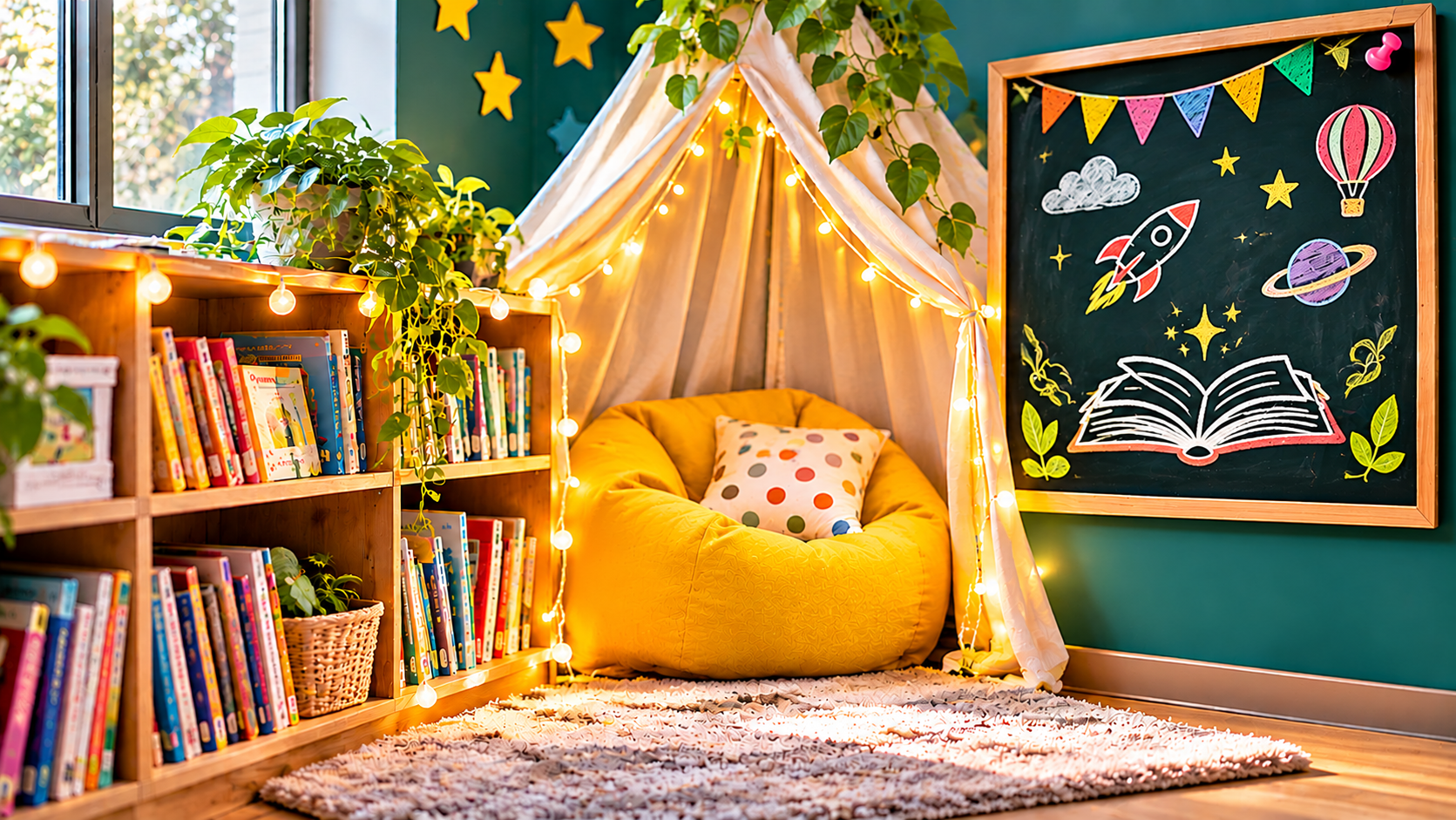
How to Set Up an Inviting Classroom Reading Corner on a Budget
Creating a dedicated classroom reading corner can transform how students view books without draining your personal bank account. According to the National Literacy Trust, children who enjoy reading are more likely to achieve academic success and experience stronger mental well-being. A warm, welcoming reading space encourages students to explore books during their free time. It also helps make reading a regular part of classroom life.
You do not need expensive flexible seating or custom-built bookshelves to create an inviting space. With creativity, thrifted finds, and smart organization, almost any classroom corner can become a favorite student destination.
In this practical guide, you will learn how to create an inspiring reading nook using everyday materials and budget-friendly strategies. We cover simple setup tips, creative themes, and ways to maximize limited classroom space. You will also discover kid-friendly design ideas, alternative names for your reading nook, and practical examples. These ideas can help you build a comfortable reading environment without overspending.
How can I create a reading corner in my classroom?
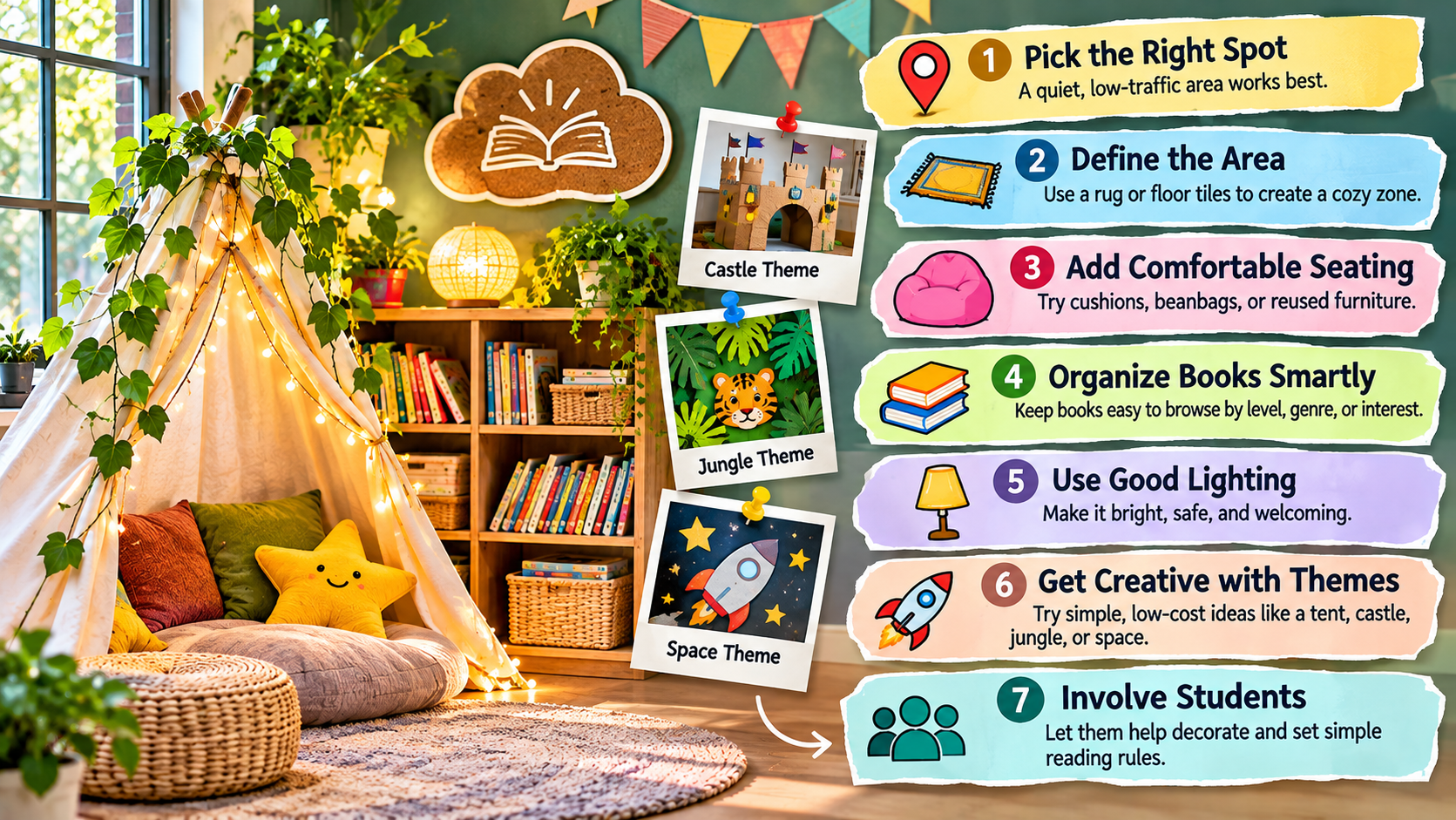
Start by choosing a quiet classroom spot away from high-traffic areas. Avoid placing your reading corner near the classroom door, pencil sharpener, or other busy spaces. Corners work particularly well because two existing walls create a sense of privacy and comfort.
Next, define the space using an inexpensive area rug or colorful foam floor tiles. Add forward-facing book bins or plastic crates so students can easily recognize book covers. This arrangement makes browsing simpler and encourages independent book selection.
For comfortable seating, consider floor cushions, folded blankets, or secondhand beanbags. You can also reuse existing classroom furniture to reduce expenses. Keep the area organized and avoid unnecessary decorations that might distract young readers.
Finally, establish a few simple reading rules. Encourage students to return books, respect shared materials, and keep the space tidy. These small steps help maintain an inviting classroom reading corner throughout the school year.
Lighting and Organization Tips
Lighting and organization play important roles in creating a comfortable reading environment. If your classroom allows it, use natural light from nearby windows. You can also introduce battery-operated fairy lights or a suitable floor lamp. Secure electrical cords and keep lighting away from fabrics.
Organize books using labeled plastic tubs or baskets. Consider grouping them according to:
- Reading levels and age groups.
- Genres, such as fiction and nonfiction.
- Popular subjects, including animals, science, and adventure.
- Student interests and seasonal themes.
Display selected books with their covers facing outward. This makes titles easier to recognize, especially for younger readers. Rotate the displayed collection every few weeks to maintain interest.
Use simple picture labels to help students identify different book categories. A well-organized reading corner encourages independence and makes classroom routines easier. Students can find books, return materials, and maintain the space with minimal teacher assistance.
What are some creative ideas for a classroom reading corner?
An ordinary classroom corner can become an exciting reading destination with inexpensive materials. The key is choosing a theme that encourages imagination without overcrowding the space. You can create a cozy environment using items already available at school or home.
For example, hang lightweight curtains around a reading area to create a private reading tent. Always use secure, classroom-approved fittings. Another idea involves transforming a large cardboard appliance box into a castle, rocket ship, or cozy cabin. Check that the structure has safe edges and enough ventilation.
You can also build a simple canopy using a lightweight frame and colorful bedsheets. Decorate nearby walls with student-made book reviews, paper vines, or handmade bunting. These decorations make the reading space feel personal.
Consider themes such as a jungle library, space adventure, or underwater reading world. Let students contribute drawings and decorations. Their involvement creates excitement and encourages ownership of the classroom reading nook without requiring expensive classroom furniture.
How to create a small reading corner?
Limited classroom space does not mean you cannot create a comfortable reading area. The best approach is to use compact furniture, vertical storage, and multipurpose materials. Start by identifying an unused area between existing shelves, cabinets, or classroom walls.
Instead of purchasing bulky bookcases, consider narrow wall-mounted shelves or repurposed spice racks. These options can display books without occupying valuable floor space. Make sure all shelves are securely installed and positioned within students’ safe reach.
For seating, choose one small beanbag or two large floor cushions. Stackable cushions are particularly useful because teachers can store them during group activities. You can also use a folded floor mattress or a compact padded bench.
An over-the-door shoe organizer offers another practical storage solution. Use its pockets for bookmarks, reading cards, and lightweight books. Keep walkways clear and avoid overcrowding the area.
A thoughtfully arranged small classroom reading corner can feel comfortable and functional. Focus on accessibility, organization, and student comfort rather than the number of decorations or furniture pieces.
Maximizing Vertical Wall Space
Vertical storage helps teachers make better use of limited classroom space. Instead of adding more furniture, use available wall areas to organize reading materials. This approach keeps the floor clear and makes classroom movement easier.
Consider these affordable storage ideas:
- Install narrow wall shelves to display selected books.
- Use secure wall hooks for reading charts and student recommendations.
- Attach labeled pockets to suitable organizers for bookmarks and reading cards.
- Display reading goals using clipboards or reusable notice boards.
- Repurpose the side of a filing cabinet for lightweight magnetic storage containers.
You can also create a rotating book recommendation wall. Ask students to display their favorite titles with short handwritten reviews. This encourages peer recommendations and helps classmates discover unfamiliar books.
Always check that shelves, hooks, and storage containers are firmly secured. Keep heavier materials at lower levels and avoid placing objects above seating areas. Effective vertical organization makes even a compact classroom reading corner easier to maintain.
What are some ideas for a kids reading corner?
Children enjoy reading spaces that reflect their interests and encourage independent exploration. Therefore, a successful kids reading corner should feel welcoming, comfortable, and suitable for different reading abilities. Fortunately, simple additions can make the space more engaging without increasing your classroom budget.
Start by creating a small collection of reading buddies. For example, use donated stuffed animals that children can take along during independent reading. This allows students to read stories aloud to their chosen companions while practicing fluency and expression.
Additionally, introduce whisper phones made from classroom-safe PVC pipe fittings. These simple tools help children hear their own voices while reading quietly. You can also encourage pair reading activities to help students practice reading aloud with classmates. Add soft blankets, washable floor cushions, and comfortable seating to create a relaxing atmosphere.
Furthermore, display colorful book covers and student-created artwork to make the space more inviting. A rotating student book recommendation board is another useful addition. Encourage children to suggest titles and organize their favorite books.
Most importantly, involve students in creating the reading corner rules. Ask them to arrange materials and help maintain the space. As a result, they develop a stronger sense of ownership and responsibility, making reading time more enjoyable.
What is another name for a reading corner?
Choosing a creative name for your classroom reading corner can make the space more recognizable and exciting. Additionally, a memorable name helps establish a unique reading-focused classroom identity. Instead of simply labeling the area as a library corner, choose something that reflects its atmosphere and theme.
For instance, many teachers use familiar names such as:
- Reading Nook: A simple name for a small, comfortable reading space.
- Book Nook: A cozy place dedicated to exploring books.
- Literacy Lounge: A relaxed area for reading and literacy activities.
- Reading Oasis: A peaceful escape for independent reading.
- Book Sanctuary: A quiet space where students can enjoy stories.
Alternatively, you can choose playful names that match your classroom decorations. Some examples include Story Cove, Bookworm Bungalow, Reading Jungle, and Literary Lighthouse. These names can also complement themed classroom displays.
Another option is to involve students in the naming process. First, ask them to suggest creative ideas. Then, let everyone vote for their favorite name. This simple activity creates excitement and encourages participation. Finally, display the chosen name on a handmade sign above your classroom reading corner.
What is the 5 finger rule for reading?
The 5 finger rule is a simple strategy that helps students choose books suitable for independent reading. It gives children a quick way to identify whether a book feels too easy, manageable, or challenging. Therefore, teachers can use this method to encourage independent book selection.
To begin, ask students to open a book to any full page of text. Next, they should read the page and raise one finger for every unfamiliar word they cannot understand or pronounce.
The number of raised fingers provides a general indication of reading difficulty:
- Zero to one finger: The book may be too easy.
- Two to three fingers: The book may offer a comfortable challenge.
- Four to five fingers: The book may be too difficult for independent reading.
This method helps students become more confident when selecting books. However, it should not replace teacher guidance or formal reading assessments. If a child consistently struggles with reading, parents can look for signs that their child might need a reading tutor. Vocabulary difficulty, comprehension, and personal interests also influence book selection.
To make this strategy easier, teachers can display a five-finger reading chart inside the classroom reading corner. As a result, students can check their choices independently before selecting another book. Encourage them to explore enjoyable stories while gradually developing their reading abilities.
What are some examples of reading corners in classrooms?
Teachers can create attractive reading spaces using inexpensive materials and simple furniture. You do not need a large classroom or a significant budget. A few carefully selected items can create a comfortable environment that encourages students to explore books.
Here are three practical classroom reading corner examples:
1. Kiddie Pool Nook
Place a clean, sturdy plastic wading pool in a suitable classroom corner. Fill it with washable floor cushions and soft blankets. Students can sit comfortably while exploring picture books and short stories. Make sure the pool is stable and does not create a tripping hazard.
2. Crate Seat Library
Arrange sturdy storage crates to create a compact bookshelf. Add a securely fitted, padded seating surface if the structure is designed to support sitting. Use the remaining compartments to organize books by category or reading level.
3. Canopy Cushion Corner
Create a cozy reading area using a lightweight canopy, a secondhand rug, and oversized floor pillows. Choose washable materials and secure the canopy properly. Keep the space open and well-ventilated.
These examples show how everyday materials can transform an ordinary classroom into an inviting reading destination. Choose a design that suits your available space, student age group, and classroom budget.
Conclusion
Building an inviting classroom reading corner does not require a massive budget or hours of complicated DIY work. By choosing a quiet corner, defining the space with a cozy rug, and organizing books in accessible bins, you create an environment where literacy naturally thrives. Simple additions like soft lighting, creative themes, and the 5 finger rule empower students to take charge of their reading journeys.
Remember that the best reading spaces grow alongside your students. Start small with a few pillows and a crate of high-interest books, then let your class help shape the space over time. Pick one budget-friendly idea from this guide and start transforming an empty corner of your classroom this week. Your students will thank you every time they curl up with a great book.