Is DSLR Worth Buying in 2026? Honest Camera Guide
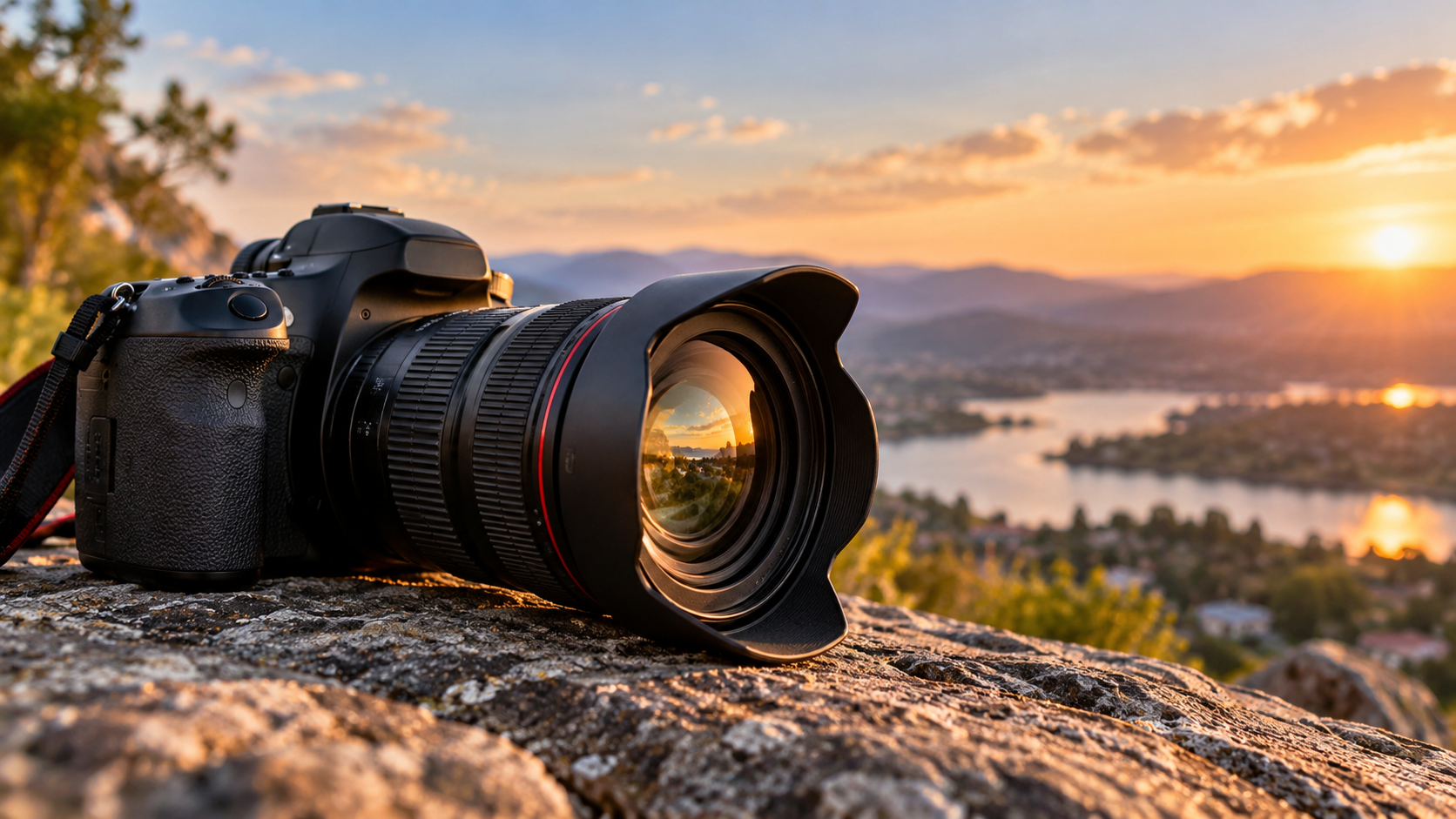
Camera technology continues to evolve, leaving many creators wondering whether older camera systems still offer good value. With modern mirrorless cameras and smartphones dominating the market, is DSLR worth buying in 2026?
Major manufacturers like Canon and Nikon have shifted much of their development focus toward mirrorless systems. However, the secondhand market still offers affordable DSLR cameras with impressive image quality and reliable performance. Many older models remain capable of producing professional-looking photographs.
Understanding where your money goes matters more than ever. You do not need expensive equipment to capture beautiful images. The right camera depends on your photography goals, experience, and budget.
In this guide, we explore whether DSLRs are still worth buying. We also compare them with mirrorless cameras and iPhones, examine AI’s impact on photography, and explain why younger creators are rediscovering older cameras.
What Camera Should I Buy in 2026?
Choosing a camera in 2026 depends on your photography goals, budget, and shooting preferences. There is no single camera that works best for everyone. Mirrorless cameras offer modern features, advanced autofocus, silent shooting, and improved video capabilities. They are suitable for creators who want newer technology and long-term system support.
However, a secondhand DSLR can offer excellent value for traditional photography. You get an optical viewfinder, physical controls, impressive battery life, and access to a large collection of affordable lenses. These advantages make older cameras attractive to beginners and budget-conscious photographers.
Before purchasing, consider the following factors:
- Photography type: Consider portraits, landscapes, wildlife, sports, or everyday photography.
- Budget: Include lenses, memory cards, batteries, and accessories.
- Autofocus: Choose a system that suits your subject and shooting style.
- Video requirements: Check resolution, frame rates, and autofocus performance.
- Future upgrades: Consider lens compatibility and available accessories.
Matching Camera Gear to Your Photography Needs
Different photography styles require different camera features. Wildlife and sports photographers often benefit from modern mirrorless autofocus and subject tracking. These systems can recognize and follow moving subjects more effectively than many older DSLRs. Astrophotography has different equipment requirements, making it useful to explore the best cameras for astrophotography before choosing your setup.
Portrait and landscape photographers have different priorities. They often need good image quality, accurate exposure, and suitable lenses rather than the latest autofocus technology. Even older DSLR bodies can produce excellent results in these situations.
Your lens selection also matters. A quality lens can improve sharpness, background separation, and overall image quality.
Consider allocating a significant portion of your budget to lenses rather than spending everything on an expensive camera body. Good lenses can remain useful across multiple camera upgrades. Always check compatibility before purchasing used equipment.
Is DSLR Worth Buying in 2026?
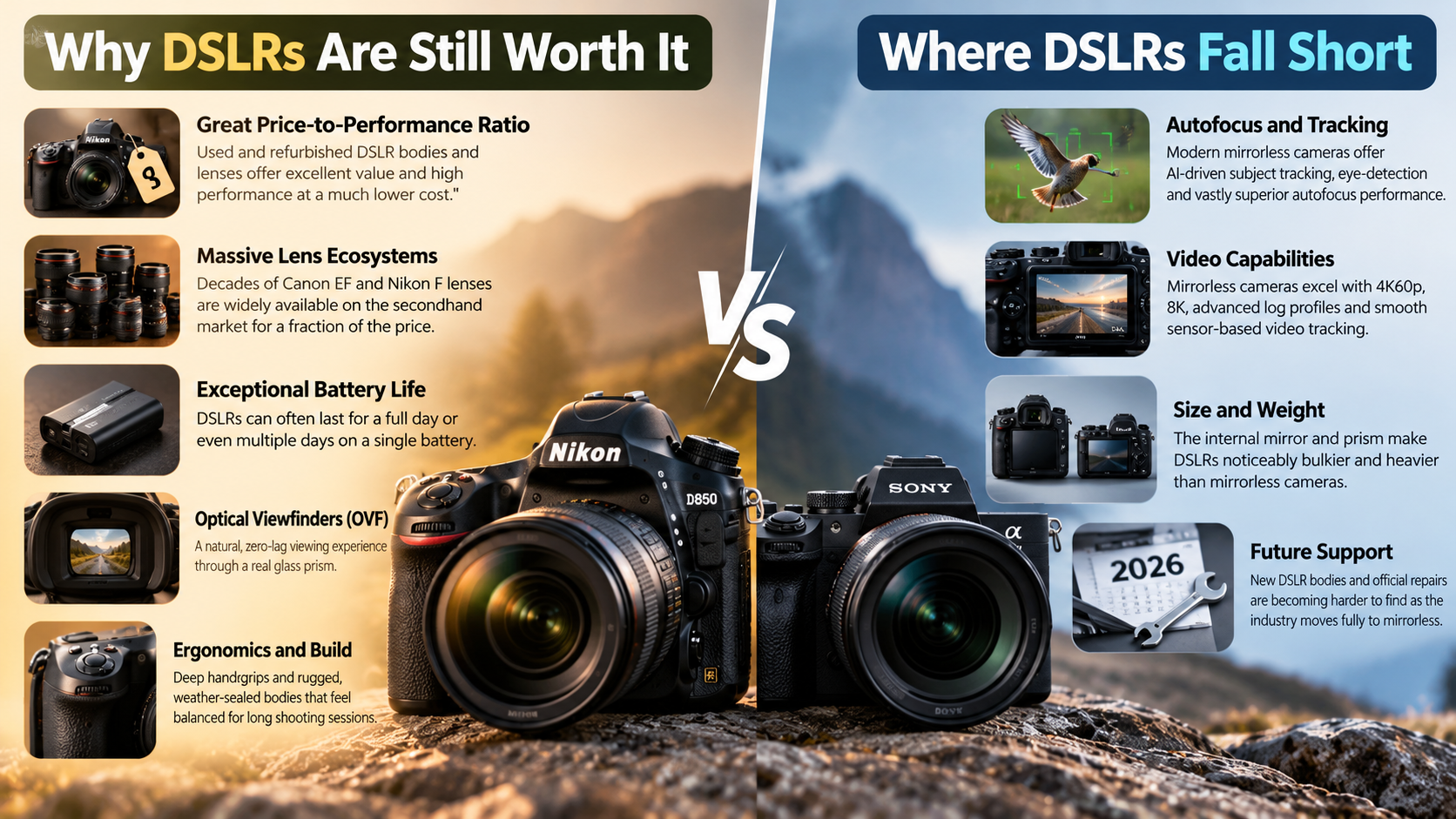
Yes, a DSLR can still be worth buying in 2026, especially if you prioritize affordable still photography. Although major manufacturers have shifted their development toward mirrorless systems, older DSLRs remain capable photographic tools. Models like the Nikon D850 and Canon EOS 5D Mark IV still deliver excellent resolution, dynamic range, and professional image quality.
The secondhand market makes these cameras particularly attractive. You can purchase previously expensive professional bodies at considerably lower prices. They also provide optical viewfinders, physical controls, and impressive battery endurance.
However, buying an older DSLR involves some compromises. You may miss modern subject-tracking autofocus, advanced video features, and newer connectivity options. Finding replacement batteries or servicing older equipment can also become difficult.
A DSLR makes sense if you:
- Mainly shoot still photographs.
- Prefer optical viewfinders and physical controls.
- Want affordable access to professional camera equipment.
- Already own compatible DSLR lenses.
- Do not require the latest video and autofocus features.
Maximizing Value Through Used Professional DSLR Cameras
Buying a secondhand professional DSLR can provide access to features that once belonged to expensive flagship cameras. Models like the Nikon D850 and Canon EOS 5D Mark IV offer durable construction, excellent image quality, and extensive manual controls.
Some professional models also include weather sealing, dual memory card slots, and customizable buttons. These features remain useful for photographers working in demanding environments.
However, not every used camera represents good value. A low purchase price means little if the camera has a damaged sensor, excessive shutter usage, or expensive repair requirements.
Before purchasing, check:
- Shutter count: Review the camera’s shutter usage and expected lifespan.
- Sensor condition: Look for scratches, dust, and visible damage.
- Autofocus: Test focusing accuracy and consistency.
- Buttons and dials: Make sure every control works correctly.
- Battery condition: Check battery performance and availability.
- Lens compatibility: Confirm that your existing lenses work properly.
Purchase from reputable sellers whenever possible. A tested, well-maintained DSLR can offer excellent value without requiring a large investment.
Is DSLR Better Than iPhone?
A DSLR can outperform an iPhone in several important areas of photography. Its larger sensor captures more light and provides greater control over exposure and depth of field. This becomes particularly useful when shooting in challenging lighting conditions or creating large prints.
Dedicated cameras also support interchangeable lenses. You can choose wide-angle, portrait, macro, or telephoto lenses depending on your requirements. This flexibility gives photographers greater creative control than most smartphone camera systems.
However, an iPhone has advantages that traditional cameras cannot easily match. Computational photography combines multiple exposures, applies intelligent processing, and improves everyday photographs automatically. Modern smartphones also use AI camera technology to enhance images, recognize scenes, and improve photography results. Smartphones are also easier to carry, share images, and use without additional equipment.
The differences become clearer when comparing specific features:
- Sensor size: DSLRs generally have larger sensors than smartphones.
- Lens flexibility: DSLRs support interchangeable optical lenses.
- Convenience: iPhones are easier to carry and use immediately.
- Image processing: Smartphones use computational photography extensively.
- Manual control: DSLRs provide dedicated controls for advanced shooting.
- Video and sharing: Modern iPhones offer convenient recording and instant sharing.
The Advantages of Dedicated Camera Lenses
Dedicated camera lenses provide optical flexibility that smartphone cameras cannot fully replicate. You can select different focal lengths, apertures, and lens characteristics to achieve specific photographic results. Keeping these lenses clean is equally important for maintaining image quality, so it is worth understanding whether you should clean both sides of a camera lens.
For example, a fast portrait lens can create natural background separation. A telephoto lens can capture distant wildlife without relying entirely on digital cropping. Macro lenses also reveal details that ordinary smartphone cameras may struggle to reproduce.
Sensor size plays another important role. Many DSLRs feature APS-C or full-frame sensors, which are considerably larger than smartphone sensors. Larger sensors can capture more light and provide greater flexibility when editing RAW photographs.
However, sensor size alone does not guarantee better photographs. Lens quality, exposure, lighting, autofocus, and image processing all influence the final result.
Smartphones remain highly capable cameras. Dedicated cameras simply provide more control over the photographic process, particularly when image quality and creative flexibility are priorities.
Is AI Replacing Photographers?
Artificial intelligence is changing photography, but it is not eliminating the need for professional photographers. Modern AI tools can automate several editing tasks, including background removal, noise reduction, object removal, and image selection. These features help photographers save time and manage large collections of photographs.
Generative AI can also create synthetic images, backgrounds, and visual concepts. This has changed certain areas of commercial photography and digital content production. However, creating an image and capturing a real moment are different processes.
Professional photographers offer more than technical camera skills. They understand lighting, composition, storytelling, client requirements, and human emotions. Wedding, sports, event, and documentary photographers must respond to real situations as they happen.
AI also introduces new challenges involving authenticity, copyright, and image manipulation. Clients may increasingly expect transparency when photographers use generative tools.
Rather than replacing every photographer, AI is becoming another tool in the creative workflow. Photographers who combine technical skills with creative judgment can use these developments to improve their productivity.
Using AI Tools to Improve Your Photography Workflow
Modern photographers can use AI-powered editing tools to reduce repetitive work. These tools handle several time-consuming tasks that previously required extensive manual adjustments.
For example, AI-assisted applications can identify subjects, remove unwanted objects, reduce image noise, and create automatic masks. Some software can also help organize thousands of photographs by recognizing faces, scenes, and other visual elements.
These capabilities can improve productivity, especially for wedding photographers, commercial studios, and content creators handling large image collections.
Useful AI-assisted photography tasks include:
- Noise reduction: Improve photographs captured at high ISO settings.
- Object removal: Remove distracting elements from suitable images.
- Automatic masking: Select subjects and backgrounds for editing.
- Image organization: Sort and categorize large photo collections.
- Color adjustments: Speed up repetitive editing tasks.
However, AI editing should support your creative decisions rather than replace them. Overprocessing can remove natural details and make photographs look artificial.
Understanding exposure, composition, lighting, and color remains essential. AI can accelerate editing, but photographers still need to decide how their images should look.
Why Is Gen Z Using Old Cameras?
Gen Z is showing renewed interest in older digital cameras, including vintage DSLRs and compact point-and-shoot models. One reason is the desire for photographs that look different from the heavily processed images produced by modern smartphones.
Older cameras can produce distinctive colors, contrast, grain, and flash effects. These characteristics create a nostalgic appearance that many younger creators enjoy. Some photographers also appreciate the limitations of older equipment because they encourage more deliberate shooting.
Affordability is another important factor. Students and beginners can often find secondhand cameras at reasonable prices. This makes photography more accessible without requiring expensive modern equipment.
There is also a practical appeal to using a dedicated camera. Unlike smartphones, traditional cameras do not constantly display social media notifications or encourage users to switch between applications.
However, not every older camera automatically produces a vintage aesthetic. The final appearance depends on the sensor, lens, lighting, exposure, and editing choices.
For younger creators, older cameras offer an alternative way to explore photography, develop personal styles, and experiment with different visual results.
The Appeal of Physical Controls and a More Traditional Photography Experience
Older digital cameras offer a shooting experience that feels different from using a smartphone. Physical buttons, dedicated dials, manual focus rings, and optical viewfinders provide direct control over camera settings.
These features encourage photographers to understand how exposure, shutter speed, aperture, and ISO work together. Instead of relying entirely on automatic processing, users can experiment with different settings and learn through practice.
Optical viewfinders also provide a direct view through the camera’s lens without displaying an electronic image. Some photographers prefer this experience, particularly when shooting outdoors in bright sunlight.
Another attraction is the simplicity of dedicated camera equipment. Traditional cameras focus primarily on photography rather than notifications, applications, and social media features.
Older equipment also offers opportunities to explore different lenses and photographic styles without spending heavily on new technology.
Ultimately, the appeal goes beyond image quality. Many younger photographers enjoy the physical experience of taking photographs, experimenting with settings, and creating images with a distinctive visual character.
Final Verdict: Is DSLR Worth Buying in 2026?
DSLR cameras are not outdated, but their value depends on your photography needs and budget. If you primarily enjoy still photography, want excellent image quality, and have a limited budget, a secondhand DSLR can still be a worthwhile investment.
However, mirrorless cameras are a better option if you prioritize modern autofocus, advanced video features, and long-term system support. Smartphones remain ideal for everyday photography and convenience.
For more information, explore the Camera & Imaging Products Association (CIPA) for camera industry statistics and market trends.
Ultimately, buy a DSLR for affordable photography, choose mirrorless for modern features, and stick with your smartphone for everyday convenience. The best camera is not necessarily the newest or most expensive one. It is the one that fits your creative needs, budget, and shooting style.