Uses and Benefits of Earthen Pots: The Complete Guide to Healthier Living
Modern living often prioritizes convenience, but traditional practices can still offer practical health and environmental benefits. Exploring the uses and benefits of earthen pots reveals why natural clay cookware remains popular in many households. From keeping drinking water cool without electricity to cooking traditional meals, earthenware supports a more natural approach to everyday living.
Pottery is also an important part of human cultural heritage. Traditional clay vessels have served communities for centuries, providing practical solutions for cooking, storing food, and carrying water. The UNESCO Intangible Cultural Heritage website documents traditional craftsmanship and cultural practices, highlighting the importance of preserving skills passed down through generations.
Beyond cooking, earthen pots have several household and gardening applications. Unglazed clay containers allow air and moisture to pass through their walls, making them suitable for plants that prefer well-drained soil. Clay cookware can also distribute heat gradually, although its performance depends on the vessel and cooking method.
This comprehensive guide explores the different uses and benefits of earthen pots. It covers traditional clay cookware, the benefits of earthen pots for plants, the purpose of a mitti tawa, and practical ways to incorporate earthenware into modern daily life.
What are five uses of pots?
Pots serve many practical purposes in homes, gardens, and kitchens. Their uses depend on their shape, material, and design. From preparing meals to growing plants, these everyday containers support a wide range of household activities. Learn how to extend the life of fresh ingredients with practical methods for preserving vegetables and fruits.
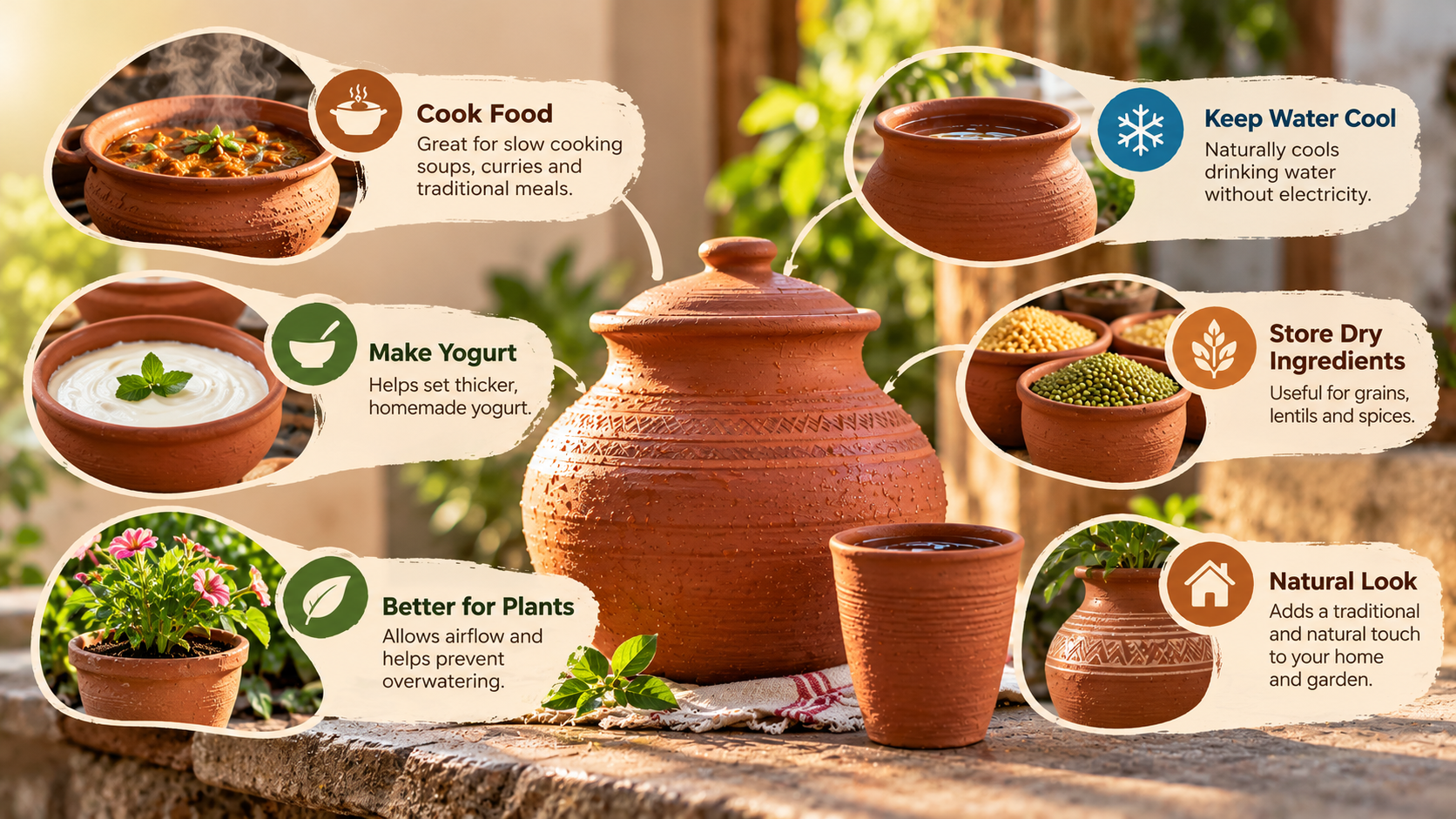
Here are five common uses of pots:
- Cooking food: Deep pots are useful for preparing soups, stews, curries, and other slow-cooked dishes. Clay pots can distribute heat gradually when used correctly.
- Storing drinking water: Traditional earthen pots can cool water naturally through evaporation, particularly in warm, dry conditions.
- Growing plants: Gardeners use pots to grow herbs, flowers, succulents, and indoor plants. Different materials suit different watering needs.
- Preparing yogurt: Clay containers can help set homemade yogurt by absorbing some moisture through their porous walls, depending on the vessel and preparation method.
- Storing household ingredients: Suitable pots and containers can hold dry foods such as grains, lentils, and spices when kept clean and dry.
These uses demonstrate why pots remain valuable in everyday life. Choosing the right material and design helps improve convenience, food preparation, storage, and plant care.
What are the benefits of using clay pots for plants?
Clay pots offer several benefits for indoor and outdoor plants, particularly when they are made from unglazed terracotta. Their porous walls allow moisture to evaporate, helping the growing medium dry more quickly than it might in a non-porous plastic container.
This feature can benefit plants that prefer well-drained soil, including many succulents and cacti. However, clay pots may require more frequent watering, especially during hot weather. Plants that prefer consistently moist soil may need a different container or a carefully adjusted watering routine.
Other benefits of clay pots for plants include:
- Better airflow: Porous walls allow air exchange through the container, supporting a well-aerated growing environment.
- Reduced water retention: Evaporation through the sides can help prevent the soil from staying wet for too long.
- Temperature buffering: Thick clay walls can moderate some short-term temperature changes around the roots, although they do not eliminate temperature stress.
- Natural appearance: Terracotta complements indoor plants, balcony gardens, and outdoor landscaping.
Clay pots do not automatically prevent fungal diseases or root rot. Proper drainage, suitable soil, and appropriate watering remain essential for healthy plant growth.
What are the uses of clay pots?
The uses of clay pots extend beyond traditional cooking. These versatile vessels can support food preparation, drinking water storage, yogurt making, gardening, and home decoration. Their natural properties make them particularly useful in households that value traditional materials and practical, low-energy solutions.
In the kitchen, suitable clay pots can be used for slow cooking, simmering, and preparing selected oven-baked dishes. Their ability to retain and distribute heat depends on the clay composition, thickness, and design. Explore different cooking techniques to understand how cooking methods influence food preparation. Always check whether a pot is intended for stovetop, oven, or open-flame use before heating it.
Earthen pots also have several other applications:
- Water cooling: Unglazed clay pots can cool drinking water through evaporation.
- Yogurt preparation: Traditional clay vessels can absorb some moisture, helping produce a thicker consistency.
- Plant cultivation: Terracotta pots suit many herbs, flowering plants, and moisture-sensitive species.
- Food storage: Appropriate glazed or unglazed vessels can store certain dry ingredients when properly cleaned and maintained.
- Home decoration: Handcrafted clay pots add a natural, traditional appearance to living spaces and gardens.
The best use depends on the vessel’s construction and intended purpose. Choosing suitable, food-safe earthenware helps you enjoy its practical advantages while maintaining proper hygiene.
Expanding Beyond Stovetops into Sustainable Living
Exploring the uses and benefits of earthen pots can help households incorporate traditional materials into everyday routines. Reusable clay vessels may reduce reliance on certain disposable products, although their overall environmental impact depends on production, transportation, durability, and how frequently they are reused. You can also explore practical ways to care for the environment in daily life.
In the kitchen, clay containers can be useful for preparing yogurt and storing suitable foods. Unglazed vessels absorb some moisture, which may influence the texture of homemade yogurt. However, the final result also depends on milk preparation, starter culture, temperature, and fermentation time.
Earthen pots can also support traditional food preparation and gardening. They provide an alternative to some plastic containers and can be reused when handled carefully. Nevertheless, clay is fragile and may crack if exposed to sudden temperature changes.
For safer, more sustainable use, choose food-grade vessels from reliable manufacturers. Avoid decorative pots for food preparation unless they are specifically designed for that purpose. Wash them appropriately, allow them to dry fully, and follow the manufacturer’s heating instructions. These simple practices help extend their useful life while keeping everyday routines practical.
What are the benefits of using a mitti tawa?
A mitti tawa, or traditional clay griddle, offers an alternative to conventional metal and non-stick cooking surfaces. It is commonly associated with preparing rotis and other flatbreads. Its cooking performance depends on the clay composition, thickness, surface finish, and heating method.
One potential advantage is gradual heat transfer. When properly designed and preheated, a clay tawa can cook flatbreads without relying on a synthetic non-stick coating. However, clay generally heats more slowly than metal, so temperature control and cooking times may differ.
Other considerations include:
- Traditional cooking: A mitti tawa supports familiar cooking methods used in many households.
- No synthetic non-stick coating: An uncoated clay surface avoids the use of a manufactured non-stick layer, provided the vessel contains no unsuitable coatings or contaminants.
- Distinctive cooking results: The surface and heat distribution may affect the texture and browning of flatbreads.
- Traditional material: Clay cookware appeals to people who prefer natural materials in their kitchens.
Claims that a mitti tawa automatically improves digestion or preserves all essential nutrients are not well established. Nutrient retention depends on the ingredients, temperature, and cooking duration.
Before buying one, check that the tawa is intended for your heat source. Heat it gradually, avoid sudden temperature changes, and follow the manufacturer’s instructions to reduce the risk of cracking.
What are pots used for?
The uses and benefits of earthen pots include cooking, food storage, drinking water storage, and plant cultivation. Pots are versatile containers designed to hold, heat, store, or support different materials. Their purpose depends on their shape, construction, and intended environment.
In the kitchen, deep pots are suitable for boiling water, preparing soups, simmering sauces, and cooking meals for several people. Different materials offer different heating properties. Metal pots generally heat quickly, while some clay pots distribute heat gradually and retain it effectively.
Pots also serve important functions outside the kitchen. Gardeners use them to hold soil and support plant roots, while decorative pots add visual interest to indoor and outdoor spaces. Traditional earthen vessels can also store water or other suitable household ingredients.
Common purposes include:
- Cooking: Preparing curries, soups, stews, grains, and other dishes.
- Storage: Holding suitable dry ingredients and household supplies.
- Water management: Storing drinking water in clean, food-safe vessels.
- Gardening: Supporting plants in homes, balconies, and outdoor gardens.
- Decoration: Enhancing interiors, patios, and landscaped areas.
Selecting the right pot improves convenience and performance. Understanding the uses and benefits of earthen pots can help you choose suitable containers for cooking, storage, and gardening. Consider the material, capacity, durability, drainage, and compatibility with your intended use.
Universal Functionality for Food and Beverage Preparation
Pots play an essential role in food and beverage preparation across different culinary traditions. Their depth, shape, and material influence how heat moves through ingredients and how quickly liquids evaporate during cooking. For additional kitchen guidance, explore these culinary cheat sheets and practical cooking tips.
Deep pots are especially useful for preparing soups, broths, sauces, and stews. Their tall sides help contain liquids and reduce splashing. A lid can further limit evaporation, while occasional stirring helps distribute ingredients evenly and prevents food from sticking.
Different materials perform differently during cooking. Stainless steel is durable and easy to maintain, while cast iron retains heat well. Suitable clay pots can provide gradual heating and steady heat retention, making them useful for selected slow-cooked recipes.
When choosing cookware, consider the type of food you prepare most often. Some clay vessels require soaking or gradual heating, while others have specific temperature restrictions. Always follow the manufacturer’s instructions to avoid thermal shock and cracking.
For drinking water, use a clean vessel intended for potable water. Regular cleaning and proper storage are essential, regardless of the material. These precautions help make pots practical tools for everyday food and beverage preparation.
What are earthen pots?
Earthen pots are traditional vessels made from natural clay. Potters shape the clay by hand or on a wheel, then dry and fire it to produce a durable container. Depending on the clay and firing process, the finished vessel may be porous, partially porous, or covered with a glaze.
Unglazed earthenware is often associated with natural evaporative cooling. When water seeps through its microscopic pores, evaporation from the outer surface can lower the water’s temperature. The effect depends on factors such as humidity, airflow, and the surrounding temperature.
Earthen pots have many household uses, including cooking, water storage, yogurt preparation, and gardening. Their performance varies with their design and manufacturing process. Not every clay vessel is suitable for direct heating or food contact, so intended use matters. For another practical household use, explore creative mason jar projects for ideas on reusing containers at home.
When choosing earthenware, look for products made by reputable manufacturers. For cooking and drinking, select vessels specifically intended for food use and check that any glaze is food-safe. Avoid sudden temperature changes, which can cause cracking.
With appropriate care, earthen pots can offer a practical way to incorporate traditional materials into modern homes. Their value lies in their specific properties, versatility, and cultural significance rather than unverified health claims.
Frequently Asked Questions
How do you properly season a new earthen cooking pot before its first use?
To season a new pot, soak it completely in clean water for twenty-four hours. Allow it to air-dry thoroughly. Next, rub the entire interior surface with unrefined cooking oil, fill it halfway with water or rice starch liquid, and simmer gently over low heat for thirty minutes. This process strengthens clay bonds, seals microscopic pores, and eliminates earthy odors before routine cooking.
Can you wash earthen cookware using standard chemical dish soaps?
No, you should never clean unglazed earthenware using commercial chemical dish detergents. Because clay features thousands of microscopic pores, it readily absorbs synthetic fragrances and toxic cleaning compounds, which leach directly into your next meal. Instead, scrub pots using hot water, a stiff natural brush, and baking soda or wood ash to lift grease safely.
Why does drinking water stored inside an earthen pot taste naturally chilled?
Water stored inside unglazed pots cools through passive evaporative chilling. The pot’s porous structure draws minute amounts of moisture through the walls to the outer surface. As warm circulating room air evaporates this surface moisture, it absorbs thermal energy from the vessel, lowering the temperature of the internal water naturally by several degrees without using electrical refrigeration.
Are glazed ceramic pots as beneficial for cooking as unglazed earthen pots?
Glazed ceramic pots do not provide the identical health and thermal benefits of unglazed earthenware. While non-porous glossy glazes simplify cleaning, they block the micro-pores responsible for alkaline interaction, steam venting, and passive evaporative chilling. Additionally, poorly regulated decorative glazes may occasionally contain trace lead or cadmium, whereas unglazed earthen pots offer pure, non-toxic mineral contact.
Conclusion
Embracing the uses and benefits of earthen pots represents a conscious step toward sustainable, nutrient-rich, and chemically clean daily living. Whether you are seeking superior soil moisture regulation for delicate houseplants, craving the tender texture of rotis prepared on a mitti tawa, or enjoying refreshingly cool water without electric power, earthenware offers time-tested performance that modern synthetic materials simply cannot replicate.
These porous vessels bridge ancient elemental science with present-day wellness priorities, reducing our environmental impact while enhancing the sensory quality of our home environment. Caring for natural earthenware requires simple, mindful cleaning habits, yet the digestive, horticultural, and culinary dividends are well worth the effort. By introducing unglazed clay containers, cookware, and planters into your daily domestic space, you protect your household from harsh industrial coatings while celebrating an authentic, earth-friendly tradition that has sustained human vitality for millennia.