How Do I Make Money With Flowers: A Comprehensive Guide to Floriculture and Floral Business Success
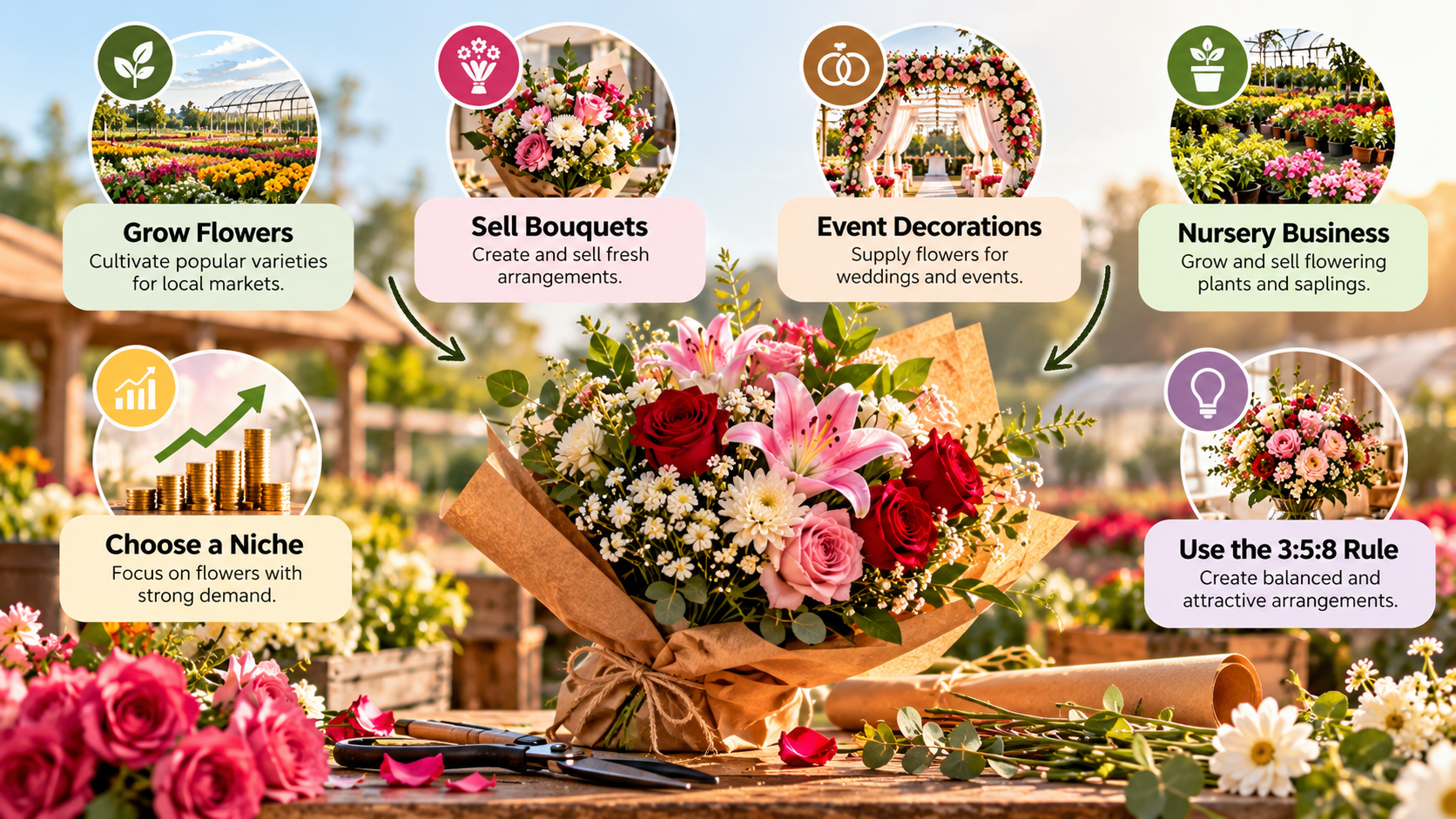
If you are wondering how do I make money with flowers, floriculture offers several opportunities to turn your interest in plants into a business. You can grow flowers for local markets, sell bouquets, supply wedding decorators, or start a floral design studio. However, earning a reliable income requires more than growing beautiful blooms. You must understand customer demand, production costs, pricing, and distribution.
According to India’s National Horticulture Board, horticulture resources and market information can help growers understand commercial cultivation opportunities. The demand for flowers comes from weddings, festivals, religious ceremonies, corporate events, and everyday gifting. However, profitability depends on local market conditions, crop selection, and operating expenses.
Today, many customers also seek locally grown flowers and seasonal arrangements. This creates opportunities for small-scale growers and independent florists who can offer fresh products and personalized services. Nevertheless, flowers are perishable, so efficient harvesting, storage, and transportation are essential.
This guide explores how to make money with flowers, which varieties offer commercial potential, and how to improve profitability. Whether you own agricultural land or want to start a small floral business in India, understanding these fundamentals can help you make informed decisions and build a sustainable source of income.
Is it possible to make money with flowers?
Yes, you can make money with flowers by choosing a business model that matches your budget, skills, and local demand. Options include commercial flower farming, bouquet making, retail sales, nursery management, and floral decoration for weddings or corporate events. Each model has different startup costs, operational requirements, and earning potential.
Flower farming can generate income when growers select suitable varieties, maintain consistent quality, and secure reliable buyers. However, production alone does not guarantee profitability. Prices fluctuate with seasons, festivals, weather conditions, and local competition. Unsold flowers can also reduce earnings because fresh blooms have a limited shelf life.
Before investing, research local wholesale markets, florists, event planners, and religious institutions. Ask potential buyers which flowers they purchase, how much they need, and what quality they expect. Calculate your expected expenses, including seeds, fertilizers, labor, packaging, and transportation.
Starting small can help you test demand without taking unnecessary financial risks. Once you understand your customers and operating costs, you can expand production or introduce higher-value services. A clear business plan, dependable buyers, and careful expense management are essential for turning flowers into a sustainable income source. Learning how to make money online can also help you explore additional income opportunities.
Selecting Viable Market Niches for Maximum Financial Growth
Choosing a specific market niche can help your flower business stand out from competitors. Instead of selling every available variety, focus on products that local customers regularly purchase. For example, you could supply roses to florists, marigolds to religious retailers, or seasonal flowers to wedding decorators.
Farmers can explore wholesale markets, direct sales, and contracts with local businesses. Small entrepreneurs can sell bouquets at farmers’ markets, through social media, or from a home-based floral studio. Event-focused businesses can specialize in wedding arrangements, birthday decorations, and corporate floral displays. Before investing, review money mistakes to avoid to help you make more informed financial decisions.
Another option is growing unusual or premium varieties for customers willing to pay more. Examples include specialty dahlias, lisianthus, and selected orchid varieties. However, these flowers may require specialized growing conditions, additional investment, or a smaller customer base. Research demand before committing to large quantities.
Consider these factors when evaluating a niche:
- Customer demand: Identify who buys the flowers and how frequently they purchase them.
- Competition: Compare local prices, product quality, and existing suppliers.
- Production costs: Estimate growing, harvesting, packaging, and delivery expenses.
- Sales channels: Determine whether you can sell directly or need wholesale intermediaries.
The best niche balances customer demand, manageable costs, and reliable sales opportunities.
What is the 3:5:8 rule for flowers?
The 3:5:8 rule is a floral design guideline used to create balanced, visually appealing arrangements. It generally involves combining different quantities of flowers or arranging design elements in proportions of three, five, and eight. These numbers can help designers create movement, variation, and visual interest. However, the rule is a practical design convention, not a universal requirement for every bouquet.
To apply the rule, begin with three prominent flowers that establish the arrangement’s main visual focus. Add five supporting blooms to introduce color, texture, or complementary shapes. Finish with eight smaller flowers or foliage elements to fill spaces and connect the composition. You can adapt these numbers according to stem size, vase dimensions, flower variety, and the style of the arrangement.
For example, a bouquet might combine three roses, five carnations, and eight smaller filler stems. Greenery can help soften the edges and create a more natural appearance. The exact quantities are flexible, so use your judgment rather than following the ratio mechanically.
This approach can help beginners develop consistent arrangements and improve presentation. For commercial florists, attractive designs can support premium pricing when customers recognize the quality and craftsmanship. Practice different combinations, photograph finished bouquets, and compare customer feedback to identify styles that sell well.
Which flower farming is most profitable?
The most profitable flower farming option depends on your location, climate, investment, production costs, and access to buyers. Roses, gerberas, carnations, and orchids can offer commercial opportunities, particularly when growers supply florists, event planners, and wholesale markets. However, no single crop guarantees the highest profit for every farmer.
Roses are widely used for bouquets, weddings, anniversaries, and other celebrations. Gerberas offer bright colors that suit decorative arrangements, while carnations can serve retail and event markets. Orchids may command premium prices, but some varieties require specialized growing environments and longer production cycles.
In India, marigolds, jasmine, and tuberose are also worth considering. Marigolds have strong demand during festivals and religious ceremonies. Jasmine is used for garlands, personal adornment, and religious offerings. Tuberose can supply florists and event decorators, depending on regional preferences and seasonal demand.
Protected cultivation, including greenhouses and polyhouses, can improve control over temperature, humidity, and crop quality. However, installation, energy, maintenance, and labor expenses can be substantial. Calculate the total investment before choosing this approach.
Before selecting a crop, compare expected yields, local selling prices, production costs, and the availability of buyers. Speak with experienced growers and nearby agricultural extension services. Starting with a small trial plot can help you evaluate crop performance before expanding into commercial production.
Which plant is best for earning money?
The best plant for earning money depends on how much you can invest and whether you plan to sell cut flowers, flowering plants, or ornamental greenery. Roses are popular for bouquets and special occasions, while marigolds and jasmine serve established cultural and religious markets in India. Each option has different growing requirements and sales opportunities.
Marigolds can be suitable for small-scale growers because they are relatively easy to cultivate under suitable conditions. Demand often increases during festivals, weddings, and religious celebrations. However, prices can fall when many farmers harvest simultaneously, so market timing matters.
Roses offer opportunities for bouquet makers, florists, and commercial growers. Premium stems may attract higher prices, but consistent quality, pest management, and post-harvest handling require attention. Jasmine may suit growers near markets that regularly purchase flowers for garlands and religious use.
If you prefer selling plants rather than cut flowers, consider ornamental varieties such as pothos, snake plants, and selected flowering houseplants. A small nursery can generate revenue from individual plant sales, pots, growing media, and related supplies. Success depends on maintaining healthy stock and choosing varieties that customers want.
Compare the following factors before investing:
- Startup budget: Consider land, pots, growing materials, tools, and labor.
- Growing conditions: Check sunlight, temperature, water requirements, and pest risks.
- Local demand: Confirm which varieties sell regularly in your area.
- Time to revenue: Estimate how long plants take to reach marketable size.
- Selling price: Calculate your likely revenue after accounting for waste and expenses.
The right choice is the plant that fits your resources and has a dependable market.
Can flower business be profitable?
Yes, a flower business can be profitable if you understand customer demand, control operating expenses, and manage waste effectively. If you are wondering how do I make money with flowers, focus on reliable sales, competitive pricing, and efficient operations. High sales do not automatically guarantee profit, especially when flowers spoil before they reach customers.
Common expenses include seeds, bulbs, fertilizers, growing materials, rent, labor, packaging, refrigeration, and transportation. Retail florists must also account for unsold stock, damaged stems, marketing, payment processing, and delivery. Wedding decorators may face additional expenses for equipment, staff, setup, and removal.
Different business models offer different earning opportunities. Wholesale suppliers often depend on sales volume and regular buyers. Retail florists can earn more per arrangement but must cover presentation and customer service costs. Wedding and event services may generate higher-value orders, although demand can be seasonal.
Calculate your gross profit by subtracting the direct cost of goods sold from sales revenue. Then deduct operating expenses to understand your overall profitability. Track these figures regularly instead of relying on general industry margin estimates. Understanding budgeting and managing money can help you organize business expenses and monitor your cash flow.
You can improve financial performance by building repeat customer relationships, negotiating reliable supply arrangements, and offering products at different price points. Start with manageable inventory and expand when sales justify the investment. A realistic budget, accurate records, and consistent quality can help you build a sustainable flower business. Explore ways to spend money wisely to help guide purchasing decisions as your business grows.
Minimizing Waste and Maximizing Margins in Floral Retail
Flower waste is one of the biggest challenges for businesses selling fresh blooms. Flowers can lose quality quickly because of unsuitable temperatures, poor hydration, or rough handling. Unsold stems represent money spent without generating revenue. If you want to understand how do I make money with flowers consistently, reducing these losses should be a priority.
Begin by purchasing quantities that reflect actual demand. Review sales records to identify popular varieties, busy periods, and products that frequently remain unsold. Adjust orders according to weddings, festivals, holidays, and seasonal changes. If you grow flowers yourself, coordinate harvesting with confirmed orders whenever possible. Applying practical money-saving tips can also help reduce unnecessary business expenses.
Proper post-harvest handling can extend the usable life of many flowers. Use clean containers, suitable water, appropriate storage temperatures, and careful transportation. Commercial refrigeration may benefit businesses handling substantial volumes. Smaller operations should compare equipment costs with the value of the flowers they might otherwise lose.
Other practical strategies include:
- Rotate inventory: Sell older, healthy stock before using newer deliveries.
- Create smaller arrangements: Use suitable leftover stems in affordable bouquets.
- Offer preorders: Match purchasing and harvesting with confirmed customer demand.
- Track losses: Record damaged, discarded, and discounted flowers to identify recurring problems.
- Build supplier relationships: Arrange deliveries that match your sales volume and schedule.
These measures can reduce unnecessary losses and improve cash flow. The goal is not simply to sell more flowers but to earn more from the flowers you purchase or grow.
Which plant gives 12 months flowers in India?
Several flowering plants can produce blooms across much of the year in suitable parts of India. Examples include hibiscus, periwinkle (sadabahar), bougainvillea, and certain rose varieties. However, continuous flowering depends on the local climate, plant variety, sunlight, water availability, pruning, and seasonal conditions. No plant is guaranteed to flower continuously in every Indian region.
Hibiscus can flower repeatedly in warm conditions with sufficient sunlight and regular care. Periwinkle is known for its resilience and long flowering season, making it suitable for gardens and ornamental planting. Bougainvillea can provide recurring displays of colorful bracts, particularly in warm locations with adequate sunlight and well-drained soil.
Roses can also produce repeated flushes of flowers, although production varies by cultivar, temperature, and growing conditions. Commercial growers should select varieties suited to their region rather than assuming that a plant will maintain the same output throughout the year.
If your goal is to earn money, consider whether the plant’s flowers have a dependable market. A plant that blooms frequently may still be unsuitable for commercial production if customers do not buy it in sufficient quantities. Compare local demand, harvesting requirements, labor, and transportation costs before making a decision.
For year-round supply, you can also consider growing multiple varieties with different flowering periods. This approach may reduce seasonal gaps and help maintain a wider product selection. Consult local horticulture experts to identify varieties suited to your district and commercial objectives.
CONCLUSION
Navigating how do I make money with flowers involves combining agricultural expertise, creative design principles, and smart business strategies. Throughout this article, we explored the foundational aspects of commercial floriculture, from understanding profitability benchmarks and utilizing the 3:5:8 proportion rule to selecting high-yield crops like roses and year-round bloomers. Building a successful floral enterprise requires dedication, careful inventory management, and strategic market positioning. Whether you choose to establish a protected greenhouse farm, supply wholesale markets, or launch an independent retail studio, the floral industry offers immense economic potential for passionate entrepreneurs. By applying these expert insights, maintaining consistent quality, and adapting to evolving consumer demands, you can transform your love for blooms into a thriving, highly profitable commercial business venture. Take the vital first step today by evaluating your local market, selecting your ideal crops, and planning your commercial entry into the vibrant world of modern commercial floriculture and design.