
Real Benefits of Essential Oils: A Complete Guide to Plant Wellness
Modern life often brings stress, mental fatigue, and disrupted sleep. Exploring the benefits of essential oils can introduce simple, plant-based practices into your daily wellness routine. Research discussed by the National Center for Complementary and Integrative Health (NCCIH) suggests that aromatherapy may help with certain symptoms, although evidence varies by condition.
Essential oils are concentrated extracts obtained from plants. They contain aromatic compounds that create distinctive scents and may influence mood, relaxation, and perceived comfort. People commonly use them for aromatherapy, massage, and personal care. However, their effects depend on the oil, application method, concentration, and individual response.
From creating a relaxing bedtime routine to refreshing a room, essential oils offer several practical uses. Still, natural ingredients are not automatically safe. Some oils can irritate skin, trigger allergies, or cause harm if swallowed.
This guide explores popular essential oils, their potential wellness benefits, and practical applications. You will also learn how to choose suitable oils, understand their limitations, and use them safely at home.
What are the benefits of each essential oil?
Each essential oil contains a different combination of aromatic compounds. These differences influence its scent, potential uses, and safety considerations. Understanding these characteristics helps you choose oils that match your personal wellness goals. For a broader understanding of plant science, explore the major branches of botany and how they examine plant structures, functions, and chemical compounds.
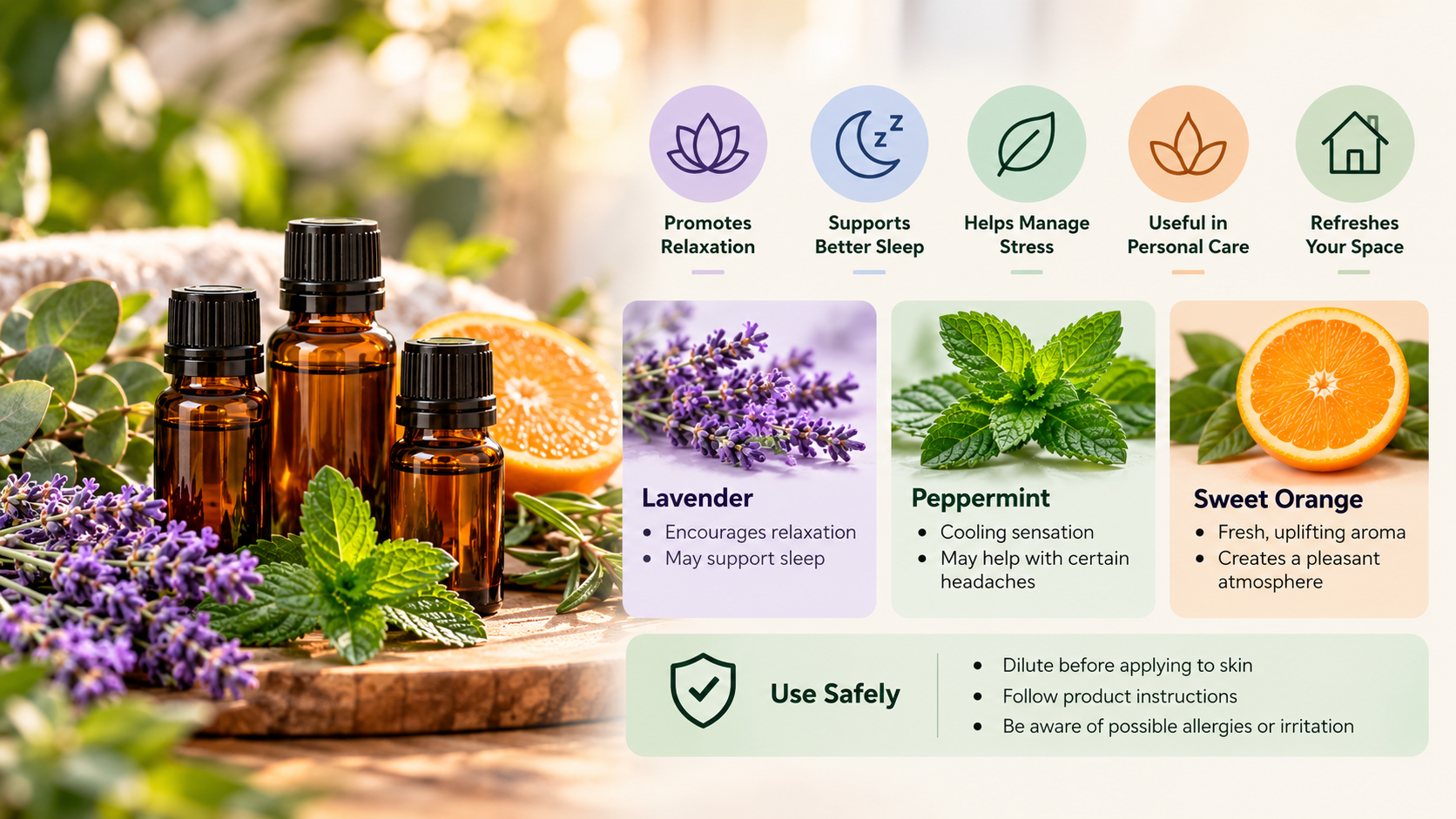
- Lavender oil: Commonly used in aromatherapy to encourage relaxation and support sleep. Some research suggests potential benefits for anxiety, although stronger evidence is needed.
- Peppermint oil: Its menthol content creates a cooling sensation. Properly formulated peppermint products may help with certain types of headaches, but concentrated oil can irritate skin.
- Tea tree oil: Often used in topical products for acne and other skin concerns. Evidence supports some uses, but it should never be swallowed.
- Sweet orange oil: Its fresh citrus aroma may help create a more uplifting atmosphere. Evidence for specific mood-related benefits remains limited.
- Frankincense oil: Popular in meditation and massage for its distinctive woody scent. Strong clinical evidence for many claimed health benefits is lacking.
- Eucalyptus oil: Frequently used in aromatic products for a refreshing sensation. Concentrated eucalyptus oil can be toxic if swallowed.
- Rosemary oil: Commonly used for its herbal aroma. Claims about improving memory, circulation, or hair growth require more research.
Choose oils based on your needs, available evidence, and safety requirements rather than marketing claims.
What are the benefits of using essential oils?
The benefits of essential oils vary according to the plant, method of use, and individual response. Aromatherapy can provide a pleasant sensory experience and may support relaxation. Some people find certain scents helpful when managing everyday stress or establishing a calming bedtime routine. Understanding the difference between research-based and evidence-based approaches can also help readers evaluate wellness claims more critically. However, essential oils should complement healthy habits rather than replace established medical treatments.
Common uses include:
- Relaxation and stress management: Lavender and other soothing aromas may help some people feel calmer.
- Sleep routines: A familiar, relaxing scent may make bedtime more comfortable. Evidence for consistent improvements in sleep quality remains limited.
- Massage and muscle comfort: Properly diluted oils can add fragrance to massage products. Any relief may also come from the massage itself.
- Personal care: Certain formulated products containing tea tree oil may help with mild acne. Results depend on the formulation and individual skin sensitivity.
- Refreshing indoor spaces: Diffusing selected oils can introduce pleasant scents without relying on synthetic air fresheners.
Essential oils do not automatically purify indoor air or eliminate harmful microorganisms. They can also trigger headaches, respiratory irritation, or allergic reactions in sensitive individuals.
For safer use, follow product instructions, ventilate rooms, and dilute oils before applying them to the skin. Avoid swallowing essential oils or using them as substitutes for professional medical advice.
What is the healthiest essential oil?
There is no single healthiest essential oil for everyone. The most suitable choice depends on your intended use, health needs, allergies, and sensitivity to fragrances. Lavender is a popular option because its aroma is widely used in relaxation routines. Some studies also suggest potential benefits for anxiety and sleep, although research findings are not conclusive.
Lavender contains aromatic compounds, including linalool and linalyl acetate. These compounds contribute to its characteristic fragrance. However, their presence does not establish that lavender oil can treat every condition associated with stress, inflammation, or skin irritation.
Lavender oil may be useful in a calming bedtime routine or as a fragrance in a properly formulated massage product. It should not be applied undiluted to the skin or used to treat burns, wounds, or persistent skin conditions without appropriate medical guidance.
Other oils may be more suitable for specific purposes. For example, properly formulated tea tree products may help with mild acne, while peppermint products have evidence for certain headache applications.
Before choosing an oil, consider its intended use, product quality, and potential risks. Patch testing diluted products can help identify some skin reactions, although it cannot guarantee that an allergic reaction will not occur later.
Exceptional Safety and Broad Everyday Utility
Lavender is versatile, but it is not completely risk-free. Like other essential oils, it can cause skin irritation or allergic contact dermatitis. Proper dilution and careful application reduce some risks, but individual reactions remain possible.
For aromatherapy, use lavender according to the manufacturer’s instructions and maintain suitable ventilation. If you have asthma or fragrance sensitivity, strong aromas may worsen your symptoms. Stop using the oil if you experience coughing, breathing difficulties, skin irritation, or other unexpected reactions.
When applying lavender oil to the skin, mix it with a suitable carrier oil or choose a product formulated for topical use. You can explore the benefits of coconut oil to learn more about its moisturizing properties and other skincare applications. Do not apply it directly to burns, open wounds, or severely irritated skin. These conditions may require appropriate first aid or medical assessment.
Keep essential oils away from children and pets. Their concentrated compounds can cause harm if swallowed or used incorrectly. Pregnant individuals, young children, and people with existing medical conditions should seek appropriate professional guidance before using essential oils.
Lavender can be a useful addition to a personal wellness routine, but its value comes from appropriate use rather than claims that it is universally safe or effective.
What are the 7 essential oils?
Seven popular essential oils can provide a practical starting point for exploring aromatherapy. Each has a distinctive fragrance and commonly reported use, but scientific evidence varies. Begin with one or two oils instead of purchasing a large collection immediately.
- Lavender: Commonly used to encourage relaxation and establish a calming bedtime routine.
- Peppermint: Offers a cooling, minty aroma and is used in certain products for headache relief. Concentrated oil requires careful handling.
- Tea tree: Found in topical formulations for acne and other skin concerns. Never swallow it.
- Lemon: Provides a fresh citrus fragrance that can brighten a room. Some cold-pressed citrus oils can increase skin sensitivity to sunlight.
- Eucalyptus: Used in aromatic products for a refreshing sensation. It must be kept away from children because swallowing it can cause serious poisoning.
- Frankincense: Popular in meditation and massage because of its warm, resinous scent. Many broader therapeutic claims lack strong clinical evidence.
- Rosemary: Offers an herbal fragrance and appears in personal-care products. Claims about memory, circulation, and hair growth need further research.
These oils serve different purposes and are not interchangeable. Your selection should reflect your preferences, intended application, and safety needs.
Purchase products with clear ingredient labels and follow the manufacturer’s directions. Avoid assuming that expensive, highly concentrated, or advertised therapeutic-grade oils are automatically safer or more effective.
Which essential oil is the most powerful?
No single essential oil is universally the most powerful. Potency depends on its chemical composition, concentration, intended use, and biological effects. Oregano oil is often described as particularly strong because it contains carvacrol and other compounds studied for antimicrobial activity. However, laboratory findings do not prove that applying oregano oil treats infections or provides reliable protection against disease.
Oregano oil can irritate the skin and mucous membranes. Its concentrated form may cause burning, redness, or other adverse reactions when used incorrectly. For this reason, it is not an appropriate first choice for people seeking a gentle, everyday aromatherapy oil.
Before using any concentrated essential oil, consider these precautions:
- Follow dilution instructions: Never assume that a stronger concentration produces better results.
- Avoid ingestion: Do not swallow oregano oil or use it internally without appropriate medical supervision.
- Check the intended application: A product suitable for a diffuser may not be appropriate for skin contact.
- Avoid unsupported treatment claims: Essential oils should not replace prescribed medication or evidence-based infection treatment.
- Stop if irritation develops: Wash the affected skin gently and seek medical advice if symptoms persist or worsen.
For everyday aromatherapy, a less irritating option may be more practical. Lavender, for example, is commonly used for relaxation, although it also requires appropriate handling. The best oil is the one that suits your needs and can be used safely.
Frequently Asked Questions
How do I safely dilute essential oils for topical use?
Always mix pure essential oils into a nourishing carrier oil, such as jojoba, sweet almond, or fractionated coconut oil, before applying them to your skin. For healthy adults, a safe dilution rate ranges between one and two percent. This ratio equals three to six drops of botanical extract per ounce of carrier oil. People with sensitive skin should begin with a lower dilution to avoid unexpected irritation.
Can I ingest essential oils for faster health results?
Never swallow pure essential oils without direct guidance from a clinically trained aromatherapist or certified healthcare professional. Ingesting concentrated botanical extracts can irritate delicate mucous membranes, damage internal stomach linings, and place unnecessary stress on your liver. Inhaling aromatic steam or applying properly diluted blends topically provides rapid, reliable, and far safer therapeutic benefits for daily health issues.
Are essential oils safe to diffuse around household pets?
Certain essential oils present serious toxic risks to pets, especially cats and dogs who lack specific liver enzymes to process them. Toxic extracts include tea tree, wintergreen, pine, eucalyptus, and citrus oils. Always diffuse botanicals in well-ventilated rooms where animals can leave freely. If your pet exhibits lethargy, drooling, or respiratory distress, discontinue diffusion immediately and consult a veterinarian.
What is the shelf life of pure botanical oils?
Most pure plant extracts stay fresh and potent for one to three years when stored correctly. Citrus oils degrade fastest, losing therapeutic properties after about twelve months due to light and air oxidation. Heavier oils like patchouli, vetiver, and sandalwood can remain stable for up to six years. Store every bottle tightly sealed in dark amber glass away from direct heat and sunlight.
Conclusion
Harnessing the genuine benefits of essential oils invites restorative plant therapy into modern living. As we have explored, targeted botanicals like soothing lavender, clarifying peppermint, and potent oregano offer effective, chemical-free solutions for common daily discomforts. Knowing their distinct molecular properties allows you to select the right extract for nervous tension, focus, or topical skin health with complete confidence.
Always approach these strong plant extracts with appropriate safety measures. Using reliable carrier oils, respecting proper dilution rates, and opting for gentle diffusion protects your physical wellbeing while delivering optimal botanical performance. Building a core kit of essential remedies allows you to address daily stressors naturally and economically.
Take a thoughtful first step today by choosing one or two versatile extracts that align with your immediate lifestyle goals. Whether you diffuse calming botanicals to unwind after work or blend soothing oils for tired muscles, nature provides practical tools for lasting vitality.