Ultimate Guide to Pearl Farming: Profit, Legality, and Essential Methods
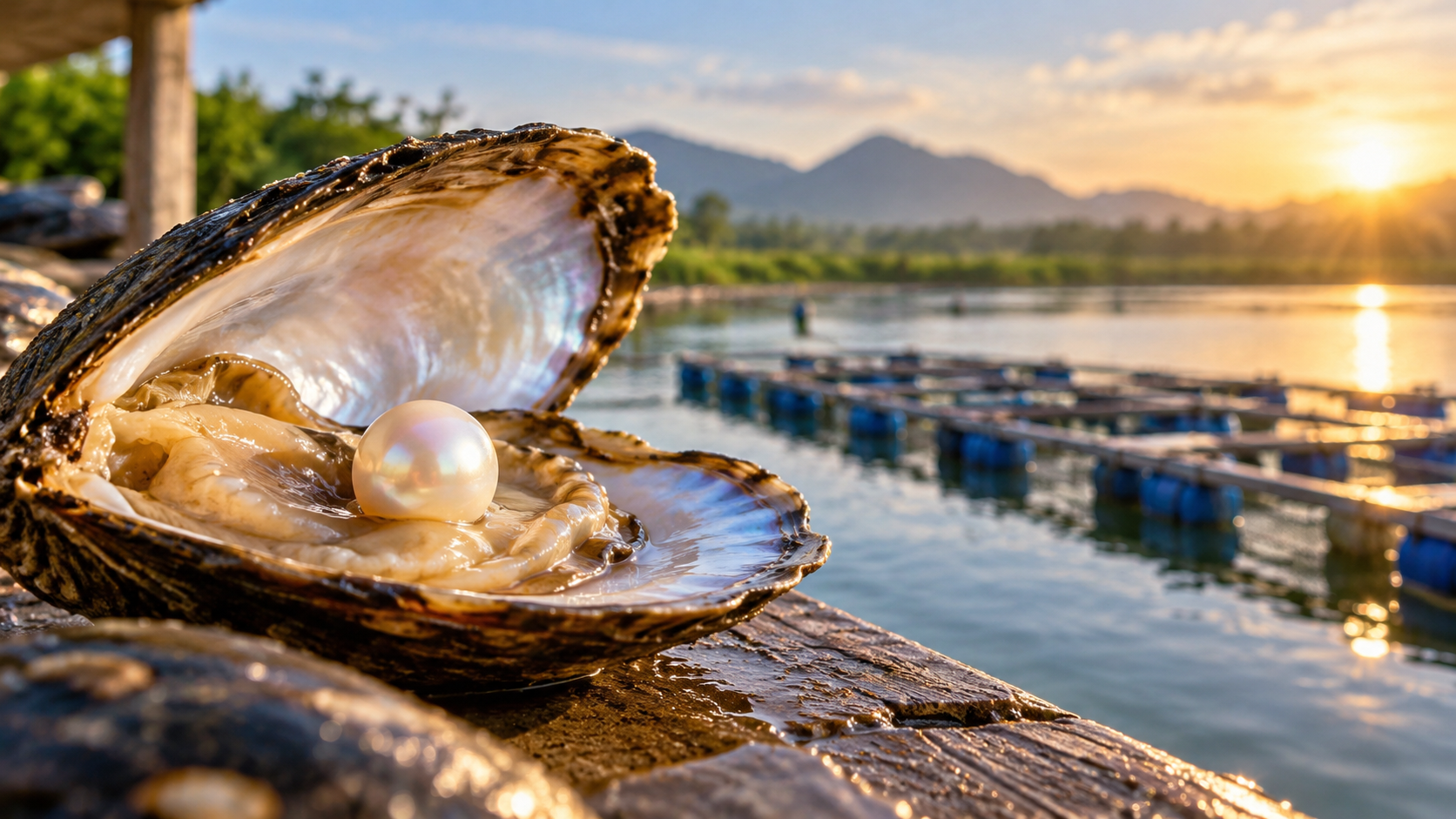
Pearl farming is an interesting aquaculture business for entrepreneurs seeking alternative agricultural income. It involves cultivating pearls inside freshwater or marine mollusks under controlled conditions. Farmers introduce mantle tissue or a nucleus into suitable mollusks, which gradually produce layers of nacre around the implanted material. The result is a cultured pearl that can be sold to jewelry manufacturers, wholesalers, and retailers. Entrepreneurs exploring other agricultural opportunities can also learn about starting a farm and generating income.
The profitability of pearl farming depends on several factors, including setup costs, survival rates, pearl quality, and market demand. Water quality and technical expertise also influence production outcomes. Therefore, understanding the process is essential before investing money in this business.
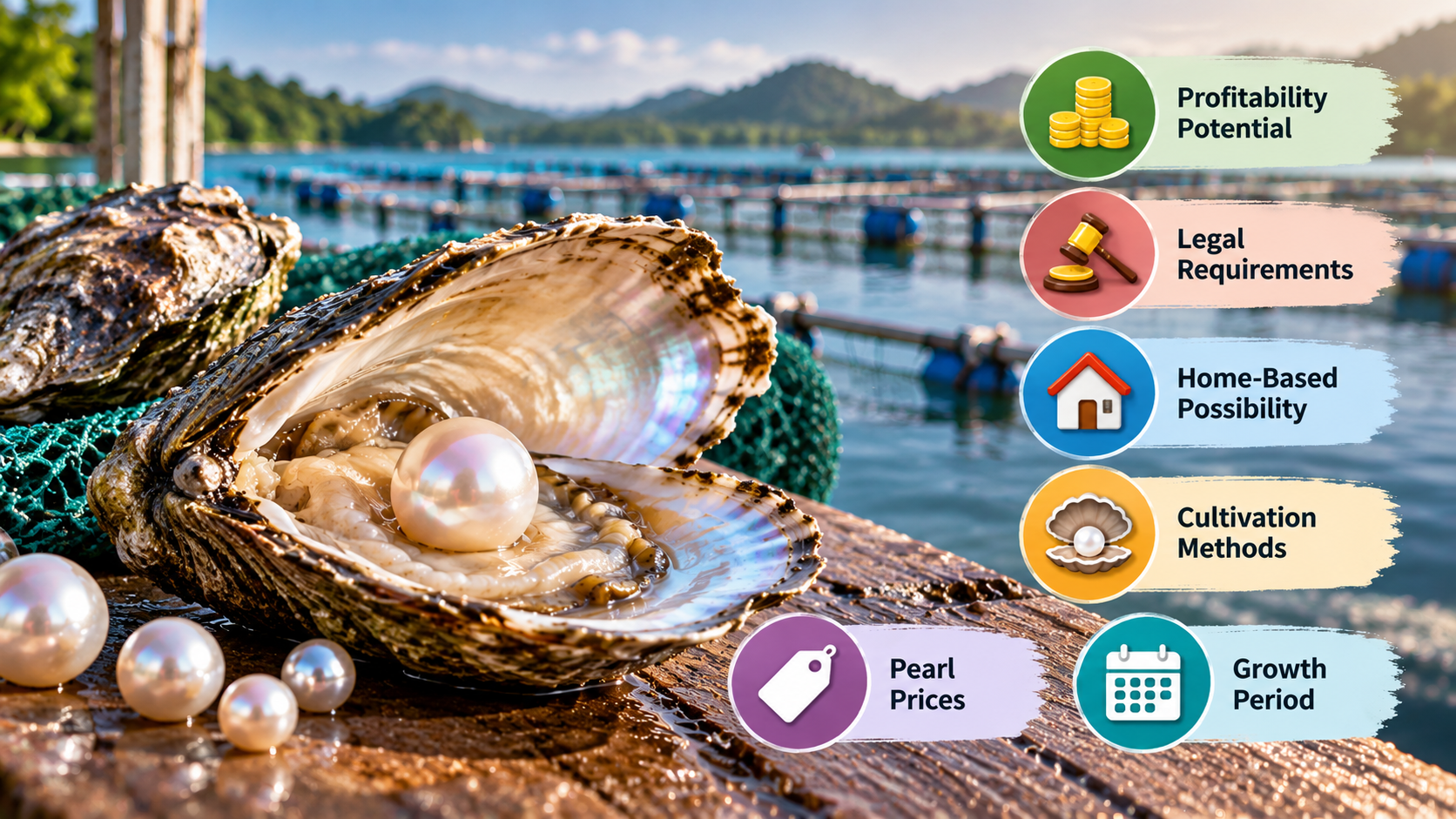
In India, aspiring farmers can explore technical guidance and aquaculture resources through organizations such as the Marine Products Export Development Authority (MPEDA). However, requirements vary depending on the species, location, and farming method. This guide explains pearl farming profitability, legal considerations, home-based setups, cultivation methods, pearl prices, and typical growth periods.
Is pearl farming profitable?
Pearl farming can generate profits, but success depends on production quality, operating costs, and access to reliable buyers. Genuine cultured pearls have established markets in jewelry manufacturing and retail. However, not every harvested pearl achieves a high selling price. Shape, size, surface quality, luster, and market demand influence its commercial value.
Farmers must consider several expenses before starting. These include tanks or ponds, healthy mussels, implantation materials, technical training, labor, aeration, water management, and harvesting. Unexpected mortality and poor-quality pearls can also reduce earnings. Therefore, calculating expected costs and realistic selling prices is essential. Understanding how solar and wind energy costs compare can also help farmers explore renewable energy options when evaluating operating expenses.
Profitability improves when farmers maintain suitable water conditions and minimize losses. Developing relationships with jewelry manufacturers, wholesalers, and pearl traders can also improve sales opportunities. Some producers may earn additional income by selling finished jewelry, although this requires further investment in design, processing, and marketing.
Before investing, prepare a business plan that estimates production costs, expected survival rates, saleable pearl yields, and potential revenue. Pearl farming is not a guaranteed source of profit, particularly for beginners without practical training or confirmed buyers.
High Returns on Low Investment
Pearl farming is sometimes promoted as a low-investment business with exceptionally high returns. However, these claims should be evaluated carefully. Although a small experimental setup may require less capital than a large aquaculture facility, commercial production involves additional expenses and technical challenges.
The initial investment depends on the number of mussels, the cultivation system, equipment, and local infrastructure costs. Farmers must also account for training, implantation services, feed management, water testing, and losses during cultivation. These expenses can increase significantly when operations expand.
Higher returns are possible when farmers produce attractive pearls that meet buyers’ quality requirements. Designer pearls may offer specialized market opportunities, but their prices depend on appearance, craftsmanship, and customer demand. They do not automatically command premium rates.
To evaluate the business, calculate the expected cost per surviving mussel and the percentage likely to produce saleable pearls. Then compare the projected revenue with all production and selling expenses. A realistic financial estimate is more useful than an advertised profit percentage. Beginners should test a small batch before committing substantial capital.
Is pearl farming legal in India?
Pearl farming is not generally prohibited in India, but its legal requirements depend on the farming location, species, water source, and production method. A small freshwater operation may face different requirements from a commercial marine aquaculture facility. Therefore, entrepreneurs should confirm the applicable rules before purchasing equipment or stocking mollusks.
For freshwater pearl farming, contact the relevant state fisheries department for guidance on training, species selection, stocking, and local permissions. Farmers using private ponds or tanks should also check applicable water-use, land-use, and environmental requirements. Collecting mussels from natural water bodies may be subject to separate restrictions. Understanding groundwater conservation and aquifers can also provide useful background on responsible water resource management.
Marine pearl cultivation can involve additional coastal and environmental regulations. Depending on the location and activity, approvals from relevant fisheries, coastal, environmental, or other authorities may be necessary. Requirements should be verified with the appropriate authorities rather than assumed.
Organizations such as the Marine Products Export Development Authority (MPEDA) provide information relevant to India’s marine products and aquaculture sectors. However, not every freshwater pearl farming activity falls under the same regulatory framework.
Before starting, obtain written clarification about the permissions applicable to your proposed site and farming method. Legal compliance helps prevent costly delays and operational problems. Also verify current eligibility conditions before relying on any government subsidy or training scheme.
Can I farm pearls at home?
Yes, pearl farming can be attempted at home if you have adequate space, suitable water conditions, and access to healthy freshwater mussels. A backyard pond or appropriately designed tank may support a small experimental operation. However, keeping mussels alive is not the same as producing commercially valuable pearls.
Successful cultivation requires suitable species, appropriate stocking conditions, reliable water quality, and careful handling. The implantation procedure is particularly important because incorrect techniques can injure mussels, increase mortality, or reduce pearl quality. Beginners should seek practical training before attempting implantation.
A home-based setup may include tanks, aeration equipment, water-testing tools, and systems for removing waste. Water temperature, dissolved oxygen, pH, and other parameters must remain within the requirements of the selected species. Feeding and filtration arrangements also depend on the production system. For a broader understanding of responsible water management, see this guide to building water security and resilience.
Home farming can help beginners learn about aquaculture before expanding into commercial production. Nevertheless, the initial investment should match your experience and budget. Start with a manageable pilot project and keep records of mortality, water conditions, and production results.
The biggest challenge is achieving consistent pearl quality, not simply creating a suitable place to keep mussels. Before expanding, confirm that your production method is viable and identify potential buyers for the harvested pearls.
Backyard Tank Setup Essentials
A backyard pearl farming setup requires more than a container filled with water. The tank must provide suitable conditions for the selected freshwater mussel species. Fiberglass tanks, appropriately designed concrete tanks, and lined ponds may be options, depending on local conditions and the farming method.
Before stocking mussels, assess the water source and establish a routine for monitoring water quality. Important factors include temperature, pH, dissolved oxygen, and waste accumulation. Sudden changes can stress mussels and increase the risk of mortality.
Aeration equipment may help maintain dissolved oxygen levels, although its capacity must match the system’s needs. Filtration and water exchange arrangements should also be designed according to stocking density and waste production. Feeding requirements vary, so farmers should follow species-specific guidance instead of assuming that every mussel needs the same feed.
Regular observation helps identify abnormal behavior, damaged shells, and changing water conditions. Keep equipment clean and avoid overcrowding the tank. If treatment or water replacement becomes necessary, make changes carefully to reduce stress.
A stable, well-managed environment is essential for successful pearl cultivation. Consult an aquaculture specialist before selecting tank dimensions, stocking density, and equipment for your intended production scale.
What is pearl farming and how does it work?
Pearl farming is a form of aquaculture that produces cultured pearls inside freshwater or marine mollusks. Instead of waiting for naturally occurring pearls, farmers use controlled techniques to encourage pearl formation. The exact process depends on the mollusk species and the type of pearl being cultivated.
The process generally begins with selecting healthy, suitable mussels or oysters. Trained technicians then introduce mantle tissue, a nucleus, or both, depending on the cultivation method. This procedure requires specialized knowledge because poor implantation can damage the animal and reduce survival rates.
After implantation, the mollusks enter a cultivation period. They produce layers of nacre around the implanted material, gradually forming the pearl. Nacre consists primarily of calcium carbonate and an organic matrix. Its structure contributes to the pearl’s appearance and luster.
During cultivation, farmers monitor water quality, inspect stock, and manage conditions that affect mollusk health. The length of the growing period varies according to species, environmental conditions, and the desired pearl characteristics. Once the pearls reach the appropriate stage, trained workers harvest them and assess their quality. Understanding the water cycle process can provide additional context on the natural processes that influence water availability and aquatic environments.
Successful pearl farming combines biological knowledge, careful handling, and consistent water management. Understanding each stage helps farmers identify potential problems and make informed decisions about production costs and expected yields.
The Surgical Implantation Process
Surgical implantation is a specialized step in many cultured pearl production methods. It involves introducing material into a mollusk to encourage pearl formation. Depending on the species and desired result, technicians may use a nucleus, donor mantle tissue, or a combination of both.
The procedure requires training, suitable tools, and careful handling. Technicians must understand the mollusk’s anatomy and select appropriate implantation locations. Incorrect placement or excessive tissue damage can increase mortality and reduce the likelihood of producing saleable pearls.
In some freshwater methods, mantle tissue is used to encourage the formation of tissue-based pearls. Other methods use a spherical nucleus to influence the pearl’s shape. The choice depends on the species, production technique, and desired product.
After implantation, the mussels need suitable water conditions and careful monitoring. Farmers should observe survival rates and avoid unnecessary handling during recovery. Proper hygiene and appropriate post-procedure management can help reduce avoidable losses. Farmers can also explore green technology innovations for ideas on improving sustainability and resource efficiency in agricultural operations.
Beginners should not assume that implantation is a simple procedure they can learn from written instructions alone. Practical training from an experienced specialist is important before commercial production begins.
Implantation quality affects both survival and pearl development. Farmers should evaluate training options and technical support before investing in large quantities of mussels or implantation materials.
What is the price of 1 kg of pearls in India?
The price of 1 kg of pearls in India varies considerably. There is no single reliable price that applies to every pearl variety or grade. Freshwater cultured pearls, marine cultured pearls, natural pearls, and imitation pearls belong to different market categories and can have very different values.
Several characteristics influence the selling price. These include luster, size, shape, surface condition, color, matching quality, and the type of pearl. Perfectly round pearls with attractive luster may command higher prices than irregular or heavily blemished specimens. However, the final value also depends on current demand and the buyer’s requirements.
Wholesale prices may differ from retail prices because retailers include additional costs for grading, processing, marketing, and jewelry production. Some buyers purchase pearls individually, while others buy graded lots or quantities by weight. Consequently, a kilogram of mixed-grade pearls cannot be valued using the price of premium individual pearls.
Before selling a harvest, obtain quotations from multiple established pearl traders or jewelry manufacturers. Compare offers for the same grade, variety, and condition. Request clear grading criteria and verify whether the quoted price includes processing or other deductions.
Avoid relying on unverified online claims about pearl prices per kilogram. Current buyer quotations provide a more useful basis for estimating revenue and calculating the potential profitability of a pearl farming business.
Do pearls take 7 years to grow?
No, pearl farming does not always require seven years. Many cultured pearls are produced within approximately one to three years, although the actual cultivation period varies by species, farming method, and desired pearl characteristics. Some operations may require shorter or longer periods, depending on local conditions and production goals.
Freshwater pearl cultivation can often take around one to two years under suitable conditions. However, this is a general estimate rather than a guaranteed harvesting schedule. Pearl size, nacre development, water temperature, nutrition, and the health of the mollusk can all influence the timeline.
Marine pearl farming follows different schedules depending on the oyster species and cultivation technique. Some marine pearls require longer periods to develop the desired size and quality. The growing period may also be extended when environmental conditions slow nacre deposition or when farmers target particular market grades.
Farmers should not choose a production schedule based solely on the shortest advertised cultivation period. Harvesting too early may result in pearls that do not meet buyers’ quality requirements. Extending cultivation also involves ongoing costs and potential losses.
Before beginning production, ask an experienced aquaculture specialist to estimate the likely cultivation period for your selected species and method. A realistic growth timeline helps with cash-flow planning, stock management, and harvest scheduling.
Conclusion
Pearl farming stands out as a highly profitable, sustainable, and legally supported agricultural venture in modern India. By understanding the core fundamentals of pearl farming, mastering surgical implantation techniques, and maintaining optimal water conditions, entrepreneurs can build thriving aquaculture businesses. Whether starting small in a backyard tank or scaling up to commercial ponds, proper planning ensures consistent harvests and strong financial returns. The relatively short growth cycle of one to two years allows for rapid inventory turnover compared to traditional agriculture. Aspiring farmers should seek certified training, utilize government subsidies, and adhere to strict quality standards to maximize their success. Exploring climate-smart agriculture practices can also help entrepreneurs understand broader approaches to sustainable agricultural production. Embrace this unique aquaculture opportunity today, apply proven management practices, and turn your agricultural enterprise into a lucrative pearl-producing powerhouse.