

Green Technology Innovations: Top 10 Changes for Our World
The modern world faces serious environmental challenges, making green technology innovations increasingly important for long-term sustainability. Climate change, resource depletion, pollution, and waste require practical solutions that can work at scale. Scientists, engineers, businesses, and policymakers are developing technologies that can reduce emissions and protect natural ecosystems.
These advances include renewable energy systems, energy storage, green hydrogen, smart grids, sustainable construction, and advanced recycling. Other innovations focus on cleaner transport, agriculture, water management, and industrial production. Together, they can reduce environmental damage while supporting economic growth and improving resource efficiency.
Understanding these technologies helps explain how scientific progress can address major environmental problems. The International Energy Agency highlights the importance of faster clean-energy deployment for global climate goals. This article explores promising green technologies, emerging innovations, sustainable habits, major global developments, advances in India, and potential future breakthroughs.
Top 10 green technology innovations
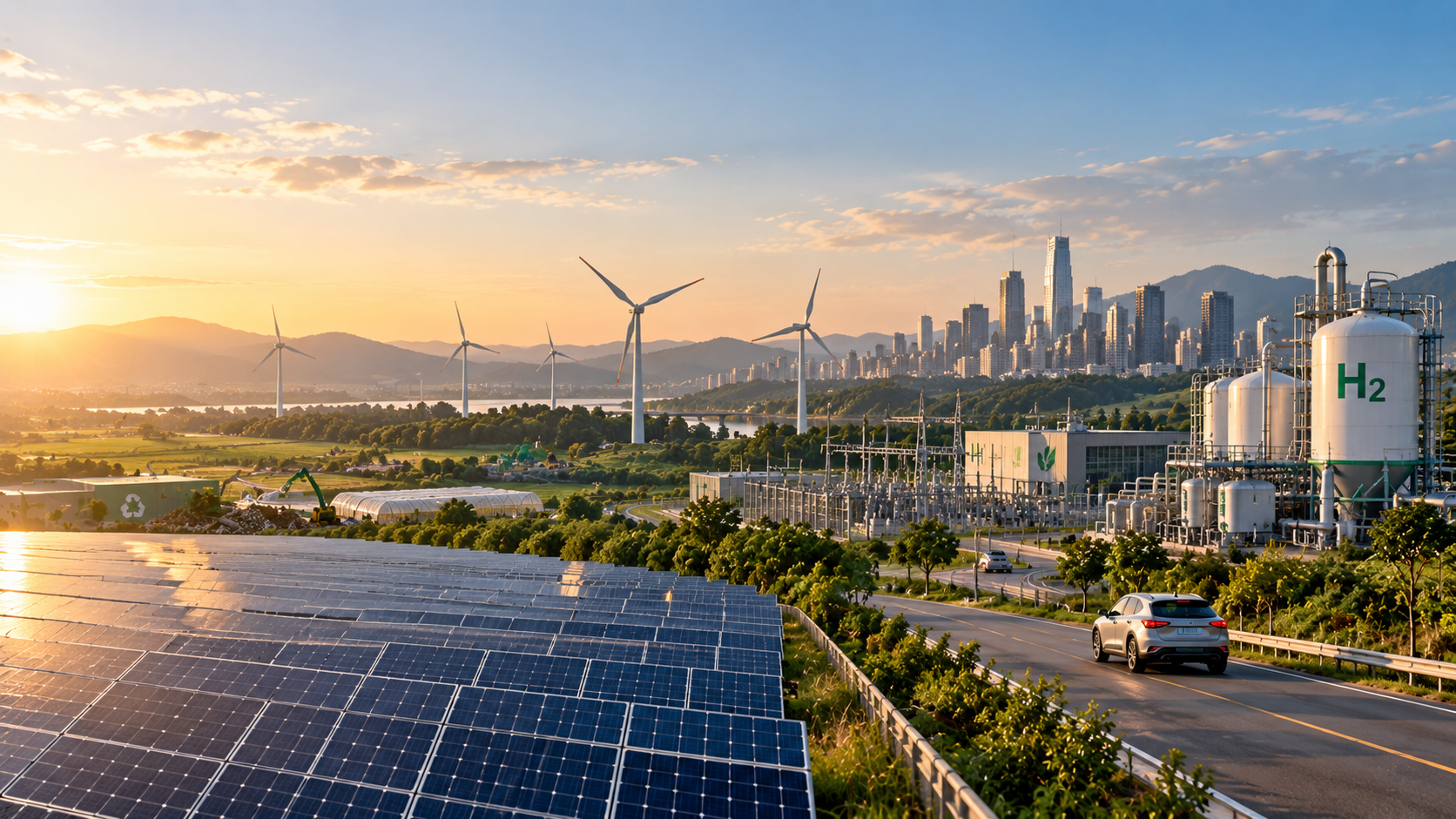
- Solar Energy Technology – Advances in solar panels and energy storage are making renewable power more accessible and efficient.
- Wind Energy Systems – Modern wind turbines generate clean electricity while reducing dependence on fossil fuels.
- Electric Vehicles (EVs) – EVs help lower transportation emissions and support cleaner, more sustainable mobility.
- Green Hydrogen – Produced using renewable electricity, green hydrogen can provide a low-carbon alternative for difficult-to-electrify industries.
- Energy Storage Solutions – Batteries and other storage technologies help balance renewable energy supply and demand.
- Smart Grids – Digital grid systems improve energy distribution, efficiency, and integration of renewable power sources.
- Carbon Capture Technology – Carbon capture can reduce emissions from certain industrial processes and hard-to-decarbonize sectors.
- Sustainable Building Technology – Energy-efficient buildings use smart systems, sustainable materials, and renewable energy to reduce environmental impact.
- Waste-to-Energy Technology – These systems convert certain types of waste into useful energy while supporting better waste management.
- Precision Agriculture Technology – Sensors, drones, and data-driven systems can reduce water, fertilizer, and resource use while improving agricultural efficiency.
What are the most promising green technologies?
The most promising green technologies are changing how societies produce energy, manage resources, and manufacture products. Their main goal is to reduce greenhouse gas emissions while improving efficiency and reducing dependence on finite resources.
Advanced solar cells can capture more sunlight and improve renewable electricity generation. Long-duration energy storage can help balance electricity supply when solar and wind output changes. Green hydrogen also offers a potential low-carbon option for industries that are difficult to electrify directly.
Smart grid technology is another important development. Digital monitoring and automated controls can match electricity supply with demand more efficiently. This can reduce energy losses and improve the integration of renewable power, while helping balance generation from sources such as wind and solar energy.
Other promising areas include electric vehicles, heat pumps, sustainable building materials, and carbon-management technologies. No single solution can address every environmental challenge. Instead, combining several technologies can create a more flexible and resilient clean-energy system, including cleaner transportation options that can reduce the environmental impact of commercial aviation.
Breakthroughs in Green Hydrogen Production
Green hydrogen is produced by splitting water through electrolysis using electricity from renewable sources. When renewable electricity powers the process, hydrogen production can have very low operational carbon emissions. This makes it different from grey hydrogen, which is generally produced from natural gas without carbon capture.
Green hydrogen could support sectors where direct electrification remains difficult. Potential applications include steel production, shipping fuels, chemicals, and some heavy industrial processes. However, its widespread adoption still depends on lowering costs and expanding renewable electricity supplies.
Recent improvements in proton exchange membrane electrolyzers and other electrolyzer technologies may improve efficiency, flexibility, and scalability. These systems can respond quickly to changes in renewable electricity availability.
Green hydrogen also faces challenges. Production requires significant electricity and water, while storage and transportation can be complex. Therefore, the technology is most useful when applied to sectors with limited cleaner alternatives. Continued investment and infrastructure development could determine how widely green hydrogen is adopted.
What are the 10 emerging technologies?
Emerging green technologies are moving from research laboratories toward commercial applications in different industries. These innovations address problems such as pollution, inefficient energy use, resource shortages, and environmental monitoring.
Important developments include artificial intelligence for climate modeling, solid-state batteries, biodegradable electronics, direct air capture, and advanced waste-management systems. Each technology targets a different environmental challenge.
Ocean-cleanup technologies can help collect plastic and other debris from polluted waterways. Direct air capture aims to remove carbon dioxide directly from the atmosphere, although current systems remain expensive and energy-intensive. Vertical farming can produce food in controlled environments while potentially reducing land and water requirements.
Other emerging systems focus on cleaner materials and more efficient energy storage. Solid-state batteries, for example, could improve energy density and safety compared with some conventional battery designs. Advanced data center technologies are also emerging as computing demand increases and energy efficiency becomes more important.
These technologies remain at different stages of development. Some are already entering markets, while others require further research, lower costs, or large-scale testing before widespread adoption.
Artificial Intelligence in Climate Modeling
Artificial intelligence is becoming an important tool for environmental monitoring and climate research. Machine learning systems can process large datasets from satellites, sensors, weather stations, and other sources. This allows researchers to identify patterns that may be difficult to detect manually.
AI can support climate modeling, weather forecasting, and ecosystem monitoring. It can also help optimize renewable-energy systems. For example, algorithms can analyze weather conditions to improve wind-turbine operations and predict solar-power generation.
Environmental organizations can use AI to monitor deforestation, identify changes in land use, and detect potential ecological risks. Faster analysis can help decision-makers respond before environmental damage becomes more severe.
However, AI itself requires computing power and electricity. Its environmental value therefore depends partly on how efficiently systems operate and what energy sources power them. This makes the design and operation of data centers an important consideration as AI computing demand continues to grow.
AI should be viewed as a supporting technology rather than a complete climate solution. When combined with reliable environmental data and human expertise, it can improve planning, forecasting, conservation, and resource management.
Is Gen Z more eco-friendly?
Generation Z has helped increase public attention toward sustainability, ethical consumption, and corporate environmental responsibility. Many younger consumers show interest in products with lower environmental impacts and businesses that communicate clearly about their sourcing and production practices.
Sustainable choices can include second-hand clothing, public transportation, reusable products, reduced food waste, and lower-impact diets. Digital platforms also make it easier for younger consumers to research brands and compare environmental claims.
However, it would be too broad to describe an entire generation as uniformly eco-friendly. Environmental attitudes vary based on income, location, culture, access, and individual priorities. Concern about climate change does not always translate into consistent purchasing behavior.
Greenwashing has also become an important concern. Consumers increasingly expect companies to provide evidence behind environmental claims rather than relying on vague marketing language.
Gen Z’s influence is particularly visible through online activism and consumer conversations. Their expectations can encourage businesses to improve transparency, reduce waste, and develop more sustainable products and services.
The Role of Digital Activism
Digital platforms have changed how environmental campaigns reach audiences. Social media allows individuals, nonprofit organizations, researchers, and community groups to share information quickly with people across geographic boundaries.
Generation Z has used these platforms to discuss climate change, promote sustainable lifestyles, and draw attention to environmental campaigns. Online petitions, educational videos, hashtags, and public campaigns can help environmental issues gain visibility.
Digital activism can also increase pressure on companies. Consumers can question environmental claims, compare corporate policies, and publicly discuss concerns about pollution or waste. This visibility can encourage organizations to communicate more transparently.
However, online attention does not automatically create meaningful environmental change. Viral campaigns can lose momentum, and misinformation can spread quickly. Effective activism often requires a combination of digital communication, community organization, scientific evidence, and policy engagement.
The biggest value of digital activism is its ability to connect individual voices. When online awareness leads to sustained participation, it can support broader changes in consumer behavior, business practices, and environmental policy.
What are the top 10 innovations in India?
India is developing and adopting a wide range of technologies designed to address energy, transportation, agriculture, water, and waste challenges. These green technology innovations in India are especially important because the country has a large population and rapidly growing energy and infrastructure needs.
Major areas include large-scale solar power, electric mobility, renewable-energy mini-grids, bio-CNG, sustainable construction materials, and smart irrigation. These technologies can support cleaner economic growth while addressing local environmental problems.
Decentralized energy systems can provide electricity to communities that face limitations with centralized infrastructure. Electric vehicles can reduce tailpipe emissions, especially when charging increasingly relies on cleaner electricity.
Agricultural waste can also become a useful resource. Bio-CNG projects can convert organic materials into fuel while helping reduce uncontrolled waste burning. Smart irrigation systems can improve water efficiency by delivering water according to crop and soil conditions.
India’s experience demonstrates the importance of adapting green technologies to local conditions. Affordable systems, reliable infrastructure, financing, and skilled workers will all influence how effectively these innovations scale.
Scaling Solar Mini-Grids in Rural Areas
Solar mini-grids can provide reliable electricity to rural communities without requiring every location to depend entirely on a large centralized grid. These systems typically combine solar generation, batteries, and local distribution networks.
Reliable electricity can support small businesses, schools, healthcare facilities, communication services, and household activities. It can also reduce dependence on diesel generators in areas where conventional electricity access is limited or unreliable.
Battery storage plays an important role because solar generation changes throughout the day. Storing excess electricity can help maintain supply after sunset or during periods of lower solar output.
The wider impact depends on affordability, maintenance, financing, and local technical support. A solar mini-grid must remain operational over many years to deliver lasting benefits.
Expanding these systems can also support India’s broader renewable-energy transition. Rural communities can gain cleaner and more dependable electricity while reducing reliance on fossil-fuel-based generation.
For successful deployment, projects should involve local communities and account for actual energy demand, payment models, and long-term maintenance requirements.
What are the top 10 innovations?
Several major green technology innovations are reshaping energy, manufacturing, transportation, construction, and waste management. Carbon capture and utilization can capture carbon dioxide from industrial processes and potentially reuse it in selected products or applications.
Biodegradable and bio-based polymers offer alternatives to some conventional plastics. Advanced geothermal systems could expand access to underground heat in locations where traditional geothermal resources are limited.
Marine-energy technologies are another area of research. Ocean thermal energy conversion uses temperature differences in seawater, while wave-energy systems attempt to convert ocean motion into electricity. Tidal energy is another marine renewable technology that uses the movement of ocean tides to generate electricity.
Other important developments include carbon-absorbing building materials, alternative proteins, and closed-loop textile recycling. These technologies aim to reduce resource consumption and limit waste.
However, not every innovation is ready for large-scale deployment. Costs, energy requirements, infrastructure, durability, and environmental impacts must be evaluated before widespread adoption.
Together, these technologies support a shift from the traditional take-make-waste model toward more circular systems. Their success will depend on combining technological progress with better policies, investment, responsible consumption, and efficient resource management.
Closed-Loop Textile Recycling Systems
Closed-loop textile recycling aims to recover fibers from discarded clothing and use them to produce new textile materials. This approach can reduce dependence on virgin fibers and decrease the amount of clothing sent to landfills or incineration.
Traditional textile recycling can face quality limitations. Fibers may become shorter or weaker during mechanical processing. Newer chemical and fiber-to-fiber recycling methods attempt to recover materials while maintaining more of their useful properties.
This technology is particularly relevant to the fast-fashion industry, which produces large volumes of clothing and contributes to resource consumption and waste. Better recycling systems could help keep valuable materials in circulation for longer.
However, closed-loop recycling still faces practical challenges. Mixed fabrics, dyes, coatings, contamination, collection systems, and recycling costs can make processing difficult.
Better garment design can also support recycling. Products made from fewer material types are often easier to separate and process.
When combined with longer product lifespans, reuse, repair, and responsible production, closed-loop textile recycling can contribute to a more circular fashion industry.
What is the next biggest innovation?
There is no single technology that can objectively be called the “next biggest” green innovation. However, nuclear fusion is often discussed as a potentially transformative future energy technology because it could produce large amounts of electricity without directly emitting carbon dioxide during operation.
Fusion attempts to recreate the nuclear reactions that power stars. Most proposed systems use hydrogen isotopes as fuel and require extremely high temperatures to create plasma.
Recent progress in magnetic confinement, plasma control, superconducting magnets, and fusion engineering has increased interest in commercial fusion. However, practical fusion power remains an engineering challenge.
Fusion would not automatically eliminate fossil fuels or solve every environmental problem. Commercial reactors would still require complex infrastructure, materials, maintenance, and fuel systems. Fusion also produces radioactive materials through neutron interactions, although its waste profile differs from conventional fission.
If engineers achieve reliable commercial fusion, it could become an important source of low-carbon electricity. Potential applications could include electricity generation, industrial heat, and energy-intensive processes such as desalination.
Advancements in Magnetic Confinement
Magnetic confinement is one of the leading approaches for developing controlled nuclear fusion. Devices such as tokamaks and stellarators use powerful magnetic fields to confine extremely hot plasma inside a reactor chamber.
The plasma must reach temperatures high enough for fusion reactions to occur. At those temperatures, no conventional material can directly contain the plasma. Magnetic fields therefore provide the necessary separation between the plasma and reactor walls.
Recent progress in high-temperature superconducting magnets could enable stronger magnetic fields while potentially reducing the size of future fusion devices. Stronger fields can improve plasma confinement and may help researchers pursue more compact reactor designs.
However, stronger magnets alone do not make commercial fusion possible. Engineers must also manage plasma stability, heat exhaust, materials, fuel cycles, and overall energy efficiency.
Magnetic confinement remains an active research field. Its long-term importance depends on whether experimental advances can translate into reliable and economically viable electricity generation. If that happens, fusion could become a significant component of future low-carbon energy systems.
Frequently Asked Questions
Conclusion
Green technology innovations represent our strongest defense against escalating global environmental crises, offering practical solutions for a sustainable future. From promising renewable energy systems and emerging AI climate tools to generational eco-habits and nuclear fusion, these advancements reshape modern civilization. Embracing these transformative changes requires collaboration between governments, industries, and individuals dedicated to preserving natural ecosystems. By actively supporting and adopting these technologies, society ensures a cleaner, healthier planet for generations to come.