
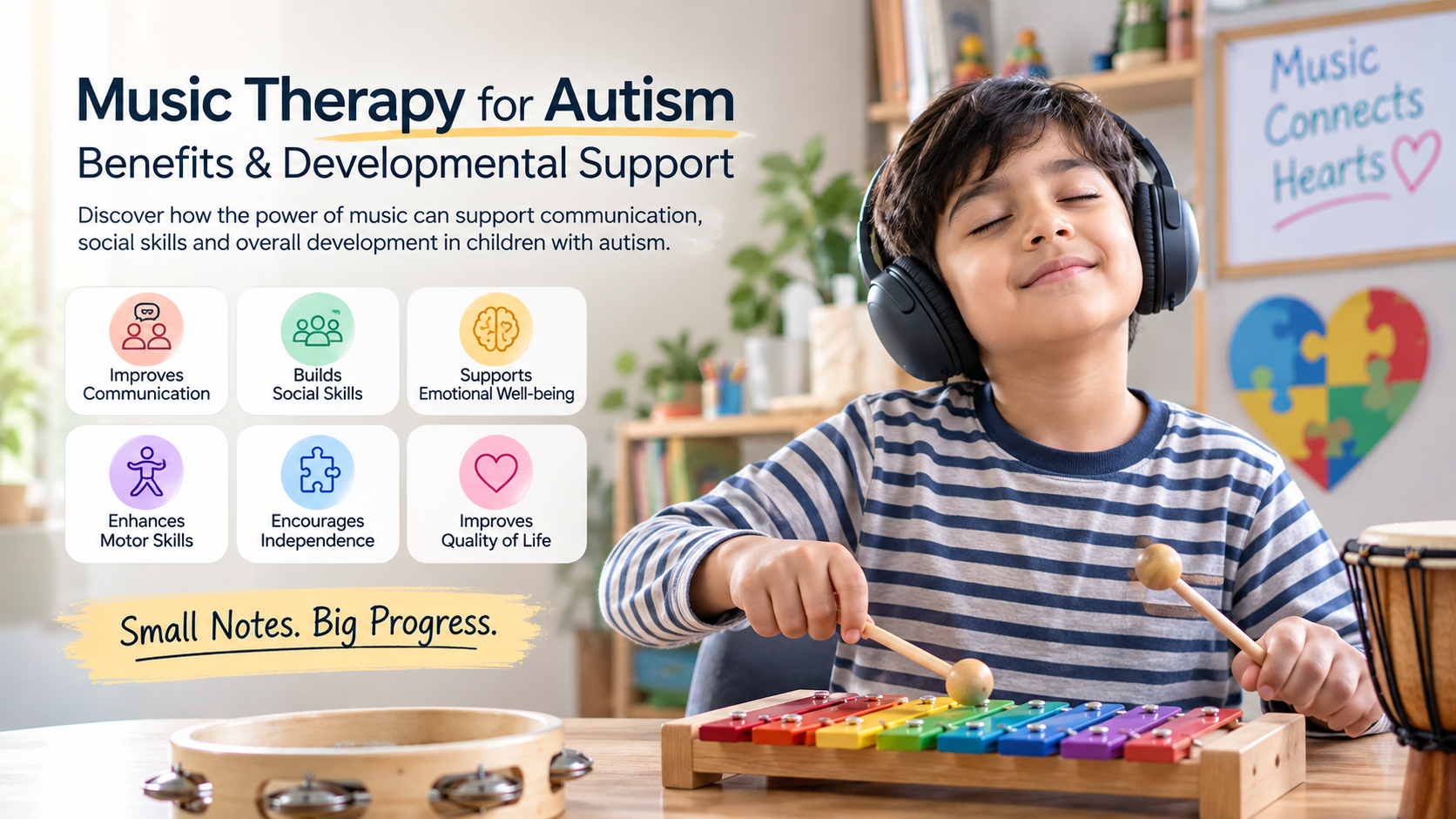
Music Therapy for Autism: Benefits & Developmental Support
Music Therapy for Autism can provide developmental support through structured musical activities involving melody, rhythm, movement, and vocalization. An autism diagnosis often brings questions about development, independence, sensory preferences, therapy options, and daily routines.
Understanding these areas can help families make informed decisions that support growth and quality of life. According to the American Music Therapy Association, clinical music interventions can address social, communication, and motor needs.
This guide explores common questions about autism, suitable music choices, therapeutic approaches, and practical routines. It also explains how music can complement broader developmental support.
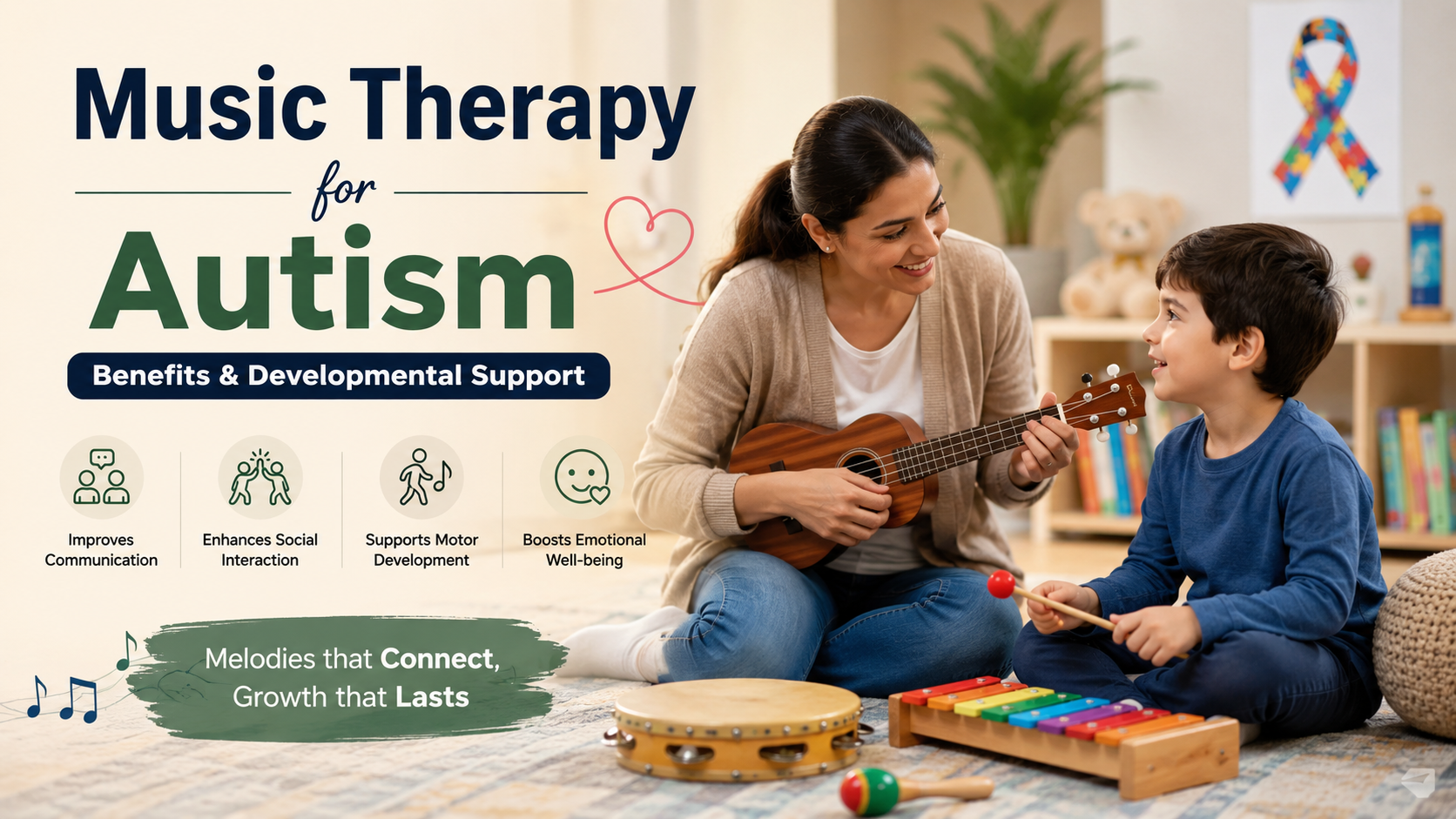
Can autistic children live a normal life?
Autistic children can grow into fulfilling, meaningful, and increasingly independent lives. Their paths may differ from those of non-autistic people, but autism does not determine a person’s potential. Outcomes vary based on individual strengths, communication styles, support needs, environment, and access to appropriate services. Many autistic adults pursue education, employment, friendships, relationships, hobbies, and independent living. Others may need ongoing support with communication, daily tasks, or decision-making, and that support can remain valuable throughout life.
A helpful goal is not to make an autistic child appear “normal.” Instead, families can focus on quality of life, autonomy, communication, safety, and participation. Inclusive environments can reduce unnecessary barriers and support authentic self-expression. Early support may also help children develop useful skills, although needs and priorities can change over time. Families can encourage progress by recognizing individual strengths and adapting support as the child grows.
Building Independence Through Targeted Life Skills
Building independence works best when everyday skills are taught in small, predictable steps. Caregivers can break tasks such as dressing, brushing teeth, preparing food, or organizing school materials into clear sequences. Visual schedules, checklists, demonstrations, and consistent routines can make these steps easier to understand. Positive reinforcement can also encourage children to practice skills without turning every mistake into a setback.
Independence does not mean doing everything without help. The goal is to give children appropriate control over their choices and daily activities. Self-advocacy is especially important because children need ways to communicate preferences, boundaries, discomfort, and sensory needs. Assistive technology may support communication or organization when useful. Families should adjust expectations to the child’s developmental level and abilities. Small gains can build confidence over time. The same principle applies to Music Therapy for Autism, where structured musical activities can support communication, participation, turn-taking, and other functional goals. Parents may also benefit from understanding how musical training alters development in children when considering structured musical activities.
What kind of music is best for autism?
There is no single type of music that works best for every autistic person. Musical preferences and sensory responses vary widely, so the most suitable choice depends on the individual. Some children may prefer predictable rhythms, familiar melodies, and gentle instrumental sounds. Others may enjoy energetic songs, strong beats, singing, or opportunities to play instruments. Volume, tempo, repetition, and sudden changes can also affect comfort. Understanding how 8D audio works and creates spatial sound may also help explain why different audio experiences can affect listeners differently.
When using Music Therapy for Autism, therapists can adapt musical experiences to the participant’s needs and goals. Activities may include singing, rhythmic movement, instrument playing, improvisation, or listening. The aim is not simply to play calming music. Instead, music becomes a structured way to encourage communication, interaction, movement, attention, or emotional expression. Families can observe which sounds help the child engage and which create distress. Keeping sessions flexible and respecting sensory preferences can make musical activities more comfortable and meaningful.
Exploring Predictable Rhythms and Gentle Melodies
Predictable rhythms and familiar melodies can create useful structure during musical activities. Repeated patterns may make it easier for some children to anticipate what comes next. This predictability can support participation, especially during transitions or activities that feel unfamiliar. However, repetition is not automatically calming for every autistic child. Some individuals may find certain sounds, rhythms, or frequencies uncomfortable. This is particularly relevant when considering the science of spatial sound and how 8D audio works, as different auditory effects may be experienced differently by each listener.
Caregivers can start with music the child already enjoys and adjust the volume, tempo, and duration. Familiar songs can also become cues for routines, such as getting ready, cleaning up, or preparing for bedtime. During Music Therapy for Autism, a trained therapist can use rhythm and musical structure for specific developmental goals. The therapist may gradually introduce turn-taking, movement, vocal responses, or instrument play. The most useful approach remains individualized. Watch the child’s responses rather than assuming a particular genre or sound will work for everyone.
How is autism spectrum disorder treated?
Autism spectrum disorder does not have one treatment that suits every person. Support is individualized around communication, daily functioning, learning, sensory needs, relationships, and personal goals. Depending on those needs, care may involve speech-language therapy, occupational therapy, educational support, behavioral approaches, or other services. Interventions may focus on communication, adaptive skills, sensory challenges, or social interaction. Families may also find broader information about what we know about ourselves and mental health useful when considering emotional and behavioral support.
Music Therapy for Autism can be used as a complementary intervention when musical activities fit the person’s goals and preferences. A music therapist may use singing, rhythm, movement, or instruments to support communication, engagement, social interaction, or motor skills. Music therapy should not replace medically or developmentally appropriate care. Instead, it can work alongside other supports when appropriate. Collaboration among families, therapists, educators, and healthcare professionals can help keep goals consistent. Plans should also be reviewed regularly because a child’s strengths, challenges, preferences, and support needs can change over time.
Integrating Expressive Therapies for Holistic Growth
Expressive therapies can give children additional ways to communicate, participate, and explore emotions. Music, art, and movement can be useful when spoken communication is difficult or when a child prefers nonverbal forms of expression. These approaches do not need to replace speech or other communication methods. Instead, they can add another channel for interaction and self-expression. For families exploring different approaches to wellbeing, stress busters that can help reduce stress in daily life may provide additional practical strategies.
In Music Therapy for Autism, structured musical activities may support turn-taking, shared attention, vocalization, movement, and social engagement. A therapist can adjust activities to match the child’s communication level and sensory preferences. Art and movement activities can follow similar principles, focusing on meaningful participation rather than performance. Families should not assume every expressive activity will reduce stress or improve behavior. Responses differ from child to child. The strongest approach is individualized and goal-focused. When children feel safe and able to participate, expressive activities can become useful parts of a broader developmental support plan.
What is a good daily routine for an autistic child?
A useful daily routine gives an autistic child enough predictability to understand what comes next while leaving room for flexibility. The ideal routine depends on age, communication style, school schedule, sensory needs, sleep patterns, and interests. A visual timetable can show activities such as waking, eating, school, therapy, play, quiet time, and bedtime. Pictures, written words, or symbols can be used based on what the child understands best.
Regular breaks can help children manage demanding activities, especially in noisy or unpredictable environments. Families can also include preferred interests and enjoyable activities rather than making the schedule entirely task-focused. Music can become part of routines when the child responds positively. A familiar song might signal cleanup or another transition. However, Music Therapy for Autism should remain goal-focused when delivered by a qualified professional. Families can also explore stress busters that may help reduce stress in daily life when building supportive routines. Routines should be adjusted when they stop working. Flexibility can be taught gradually rather than expected immediately.
Implementing Visual Schedules and Predictable Transitions
Visual schedules give children a clear reference for upcoming activities and can make daily transitions easier to understand. A schedule might use photographs, icons, written words, or a combination of these formats. Choose the method that matches the child’s abilities. Keep the schedule simple at first, then add detail when the child becomes comfortable using it.
Transition warnings can reduce uncertainty. A caregiver might give a brief reminder before an activity ends and show what comes next. Consistent cues can help children prepare for changes without relying only on spoken instructions. Music Therapy for Autism may sometimes support transitions through familiar songs, rhythmic cues, or structured musical routines. The purpose should be practical, such as signaling a change. If a transition remains difficult, examine the environment and task itself. Noise, fatigue, hunger, sensory discomfort, or an unclear expectation may contribute. Adjusting those factors can make routines more manageable.
FAQ SECTION
How does music therapy improve communication for autistic children?
Music therapy utilizes singing, rhythm, and vocal chanting to stimulate brain regions associated with language processing. Many children who struggle with verbal speech can sing phrases or express emotions through musical instruments before they can speak fluidly. This creative bridge helps build confidence, encourages social interaction, and supports natural language development over time.
At what age should interventions for autism begin?
Early intervention yields the most positive developmental outcomes for autistic children. Support can begin as soon as developmental differences or delays are noticed, often during infancy or toddlerhood. Starting early takes advantage of optimal brain plasticity, helping children develop crucial coping mechanisms, communication skills, and adaptive behaviors much faster.
Can sensory overload cause behavioral outbursts in autistic children?
Sensory overload occurs when environmental inputs like loud noises, bright lights, or crowded rooms overwhelm the nervous system. This intense discomfort frequently manifests as behavioral outbursts, meltdowns, or sudden withdrawal. Recognizing early warning signs allows caregivers to provide a quiet, low-stimulus environment before the child reaches their emotional limit.
Are all autistic individuals sensitive to the same sounds?
Autistic sensory profiles vary wildly from person to person. While one child may experience extreme distress from sudden loud noises, another might actively seek out auditory stimulation through rhythmic pounding or high-volume music. Understanding a specific child’s unique auditory sensitivities is essential for creating a comfortable environment.
Conclusion
Embracing music therapy for autism provides a wonderful avenue for enhancing developmental support, emotional expression, and daily communication. Throughout this article, we explored how targeted interventions, structured routines, and individualized sonic experiences empower autistic children to thrive. By focusing on each person’s unique strengths and sensory needs, families can foster lasting independence and a high quality of life. We encourage caregivers to apply these practical strategies, incorporate predictable daily structures, and explore stress busters that can help reduce stress in daily life to support their child’s incredible journey. Every small milestone celebrated today paves the way for a bright, confident, and fulfilling future.