
Why You Should Think Twice Before Buying a Smart Ring
Smart wearables have officially shrunk to finger size. The market promises effortless health and fitness tracking in a discreet titanium-style band. Many shoppers choose a smart ring to monitor sleep, recovery, activity, and other wellness trends.
However, moving advanced sensors to the finger creates new engineering and lifestyle challenges. Smart rings can lack displays, require careful sizing, and may place important software features behind subscriptions.
Before spending hundreds of dollars, look beyond the sleek design. A smart ring can be useful, but it is not ideal for everyone. Your needs, fitness routine, phone, budget, and expectations all matter.
In this guide, we examine the main reasons to consider a smart ring. We also cover what to look for, its advantages and disadvantages, possible side effects, and what healthcare professionals generally recommend. The FDA’s guidance on wearable health technology also highlights the distinction between consumer wellness tracking and authorized medical devices.
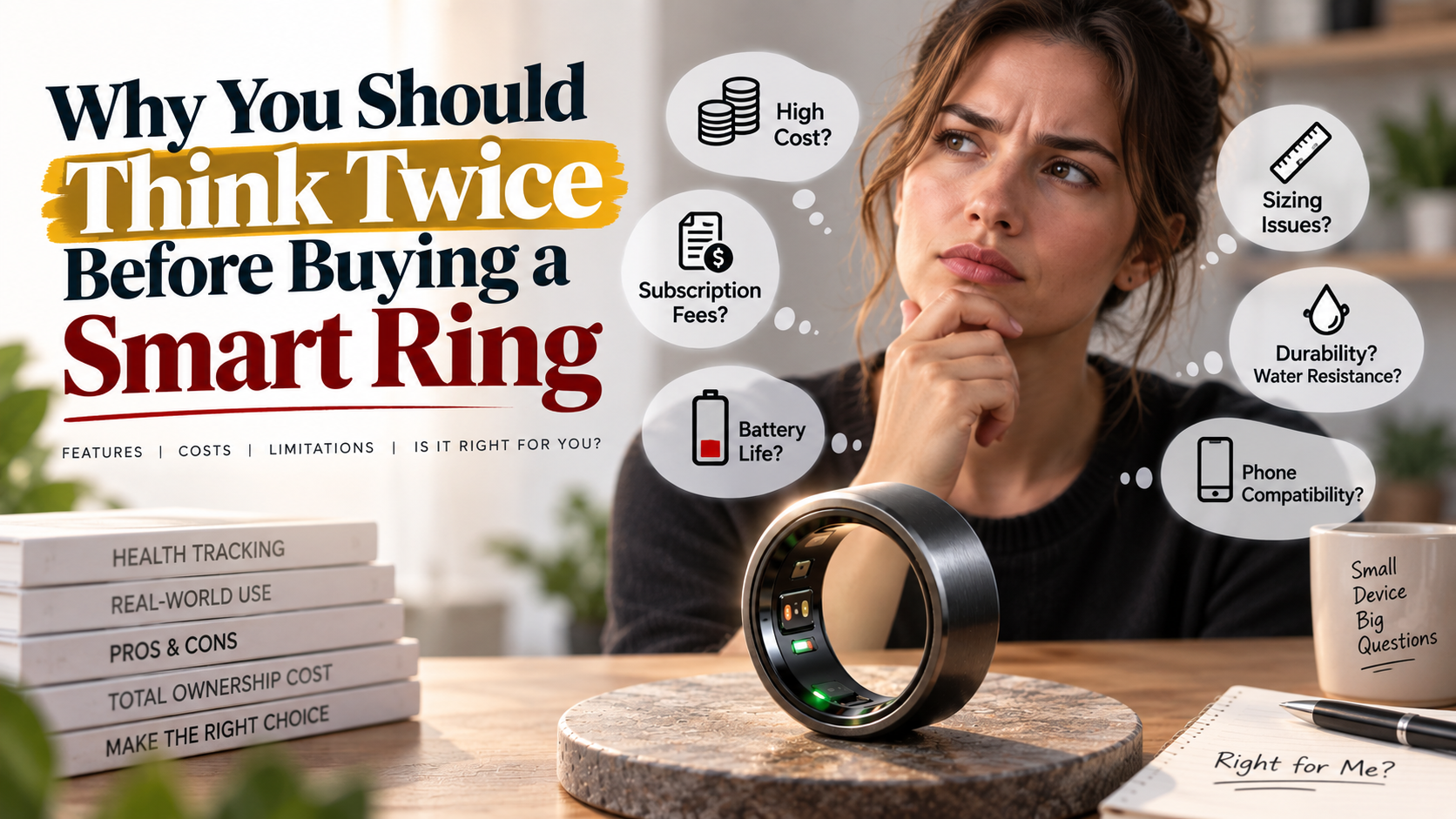

Why Should I Buy a Smart Ring for Health and Sleep Tracking?
You should consider a smart ring if you want lightweight, screen-free wellness tracking. Unlike many fitness watches, a ring can monitor sleep without a bright display or constant notifications. Its small design also makes it less distracting during work, travel, and social occasions.
Many smart rings track metrics such as resting heart rate, sleep patterns, skin temperature trends, and daily activity. Some models also estimate recovery or readiness scores using several measurements. These features can help you understand changes in your personal baseline over time.
The finger can also provide a useful location for optical sensors. However, sensor performance varies between people and devices. Fit, movement, skin contact, temperature, and device design can affect readings.
Superior Comfort During Overnight Rest
Comfort is one of the biggest reasons people choose a smart ring. A lightweight ring may feel less intrusive than a smartwatch during sleep. This can make overnight tracking easier for people who dislike wearing a watch.
Consistent use also matters when tracking long-term trends. A device you comfortably wear each night can provide more useful data than one you regularly remove.
Still, comfort depends heavily on sizing and personal preference. Some users may find a ring uncomfortable during swelling or physical activity.
What Should You Look for When Buying a Smart Ring?
When buying a smart ring, start with sizing rather than appearance. A ring that fits poorly can become uncomfortable and may affect sensor contact. Most manufacturers recommend using their sizing kit before ordering the final ring. If you are comparing screen-free wearables, the Garmin Cirqa Smart Band is another option worth considering.
Wear the sample size for an extended period. Your fingers can change size throughout the day because of heat, hydration, exercise, and other factors. A comfortable fit should remain secure without feeling tight.
You should also examine the total ownership cost. Some brands require subscriptions for advanced insights, while others provide more features without recurring payments. Compare the included features before choosing a model.
Other factors deserve attention too:
- Battery life: Check how often the ring needs charging.
- Water resistance: Confirm whether it suits your normal activities.
- Phone compatibility: Make sure the app supports your smartphone.
- Durability: Consider scratching, impacts, and daily wear.
- Sensor design: Look for comfortable, consistent skin contact.
Sensor Placement and Material Durability
Material quality can affect both comfort and durability. Some smart rings use titanium or other lightweight materials. However, do not assume every model uses medical-grade materials.
Pay attention to the interior sensor design. Recessed sensors can reduce pressure against the skin. Smooth interior surfaces may also make the ring more comfortable during extended wear.
Durability matters if you exercise regularly or work with your hands. Rings can collect scratches from gym equipment, tools, desks, and other hard surfaces. Their small size does not make them immune to everyday damage.
Before buying, check the manufacturer’s durability and warranty information. Also consider whether replacement sizing is possible. A ring that becomes uncomfortable after weight changes may need to be resized or replaced.
What Are the Advantages and Disadvantages of Using a Smart Ring?
A smart ring offers several advantages over traditional fitness wearables. Its small size makes it discreet, while its lack of a screen reduces distractions. Many models can also provide multi-day battery life. However, if you prefer a device with a display and broader smartwatch features, old Apple Watches may offer a different approach.
Sleep tracking is another major benefit. A ring can collect overnight measurements without the bulk of a smartwatch. Depending on the model, you may receive insights about sleep, resting heart rate, temperature trends, activity, and recovery.
However, smart rings also have important limitations. They are not designed to replace every feature found on a smartwatch or fitness tracker.
The main advantages include:
- Discreet, screen-free design
- Comfortable overnight wear for many users
- Multi-day battery life on some models
- Passive tracking of selected wellness metrics
- Easy integration with some health and fitness apps
The main disadvantages include:
- No interactive display on most models
- Limited real-time workout information
- No built-in GPS on many models
- Careful sizing requirements
- Possible subscription costs
- Safety concerns during certain physical activities
The Problem of Hidden Long-Term Costs
The initial price is only part of the cost. Some premium smart rings cost several hundred dollars. Certain brands also charge recurring fees for advanced analytics, reports, or wellness insights.
That subscription can significantly increase the total cost over several years. A cheaper device may therefore become more expensive over time.
Before purchasing, calculate the full ownership cost. Include the ring, subscription, replacement needs, and any accessories.
Also check what happens if you cancel the subscription. Some services continue providing basic measurements, while others restrict access to deeper insights. Do not assume that every smart ring follows the same model.
A simple comparison can help:
- Upfront price: What does the ring cost?
- Subscription: Is a monthly or annual fee required?
- Included features: Which metrics are available without payment?
- Long-term cost: What will you spend after two or three years?
- Data access: Can you still view your historical information?
Are There Any Side Effects of Wearing a Smart Ring?
Yes, a smart ring can cause physical discomfort for some users. The most common problems are usually related to fit, moisture, friction, or skin sensitivity. A tight ring can trap sweat, soap, and moisture against the skin.
This may contribute to irritation, redness, itching, or peeling. People with sensitive skin may be more likely to experience contact irritation from certain materials or prolonged moisture exposure.
Finger swelling can create another problem. Fingers may become larger during hot weather, exercise, or long periods of travel. A ring that normally fits well can then become uncomfortable or overly tight.
There is also a significant ring avulsion risk during certain activities. A ring can catch on equipment or objects and cause severe finger injuries. For this reason, many people should remove rings during heavy lifting, machinery work, climbing, or similar activities.
If you notice pain, numbness, discoloration, swelling, or persistent irritation, remove the ring. Seek medical attention if symptoms are severe or do not improve.
Preventing Persistent Friction, Irritation, and Swelling
Good hygiene can reduce some common smart ring problems. Clean both the ring and your finger regularly according to the manufacturer’s instructions. Dry the skin thoroughly before putting the ring back on.
You do not necessarily need to remove a water-resistant ring every time you wash your hands. However, trapped moisture can still irritate the skin. Pay attention to how your finger reacts after washing, exercising, or sweating.
Fit is equally important. Do not force a ring onto a swollen finger. If your finger becomes noticeably swollen, remove the ring until the swelling subsides.
Avoid wearing the ring during activities where it could catch on equipment or objects. This is particularly important during heavy weightlifting and manual work.
If irritation continues, stop wearing the ring and consider whether the material, size, or design is causing the problem. Persistent skin symptoms may require advice from a healthcare professional.
What Do Doctors Say About Smart Rings and Health Tracking?
Healthcare professionals generally view consumer smart rings as wellness tools, not replacements for medical testing. These devices can help users notice personal trends in sleep, resting heart rate, activity, and other measurements.
That information can sometimes support healthier habits. For example, a user may notice that poor sleep follows late-night alcohol consumption or an inconsistent schedule. However, a trend from a consumer device does not automatically identify its cause.
Accuracy is another important limitation. Smart ring measurements can be affected by movement, fit, skin contact, temperature, and other factors. Different devices can also use different sensors and algorithms.
For these reasons, you should not treat a wellness score as a diagnosis. Do not change medication or make major health decisions based solely on data from a smart ring.
Some people may also become overly focused on sleep-tracking results. Orthosomnia describes excessive concern about achieving perfect sleep according to tracking data. In these cases, constant monitoring may increase anxiety rather than improve sleep.
Understanding Lifestyle Trends Versus Clinical Diagnostics
The most useful way to view a smart ring is as a tool for observing trends. It may show that your resting heart rate, sleep duration, or temperature pattern has changed. That information can provide useful context for a conversation with a healthcare professional.
However, consumer wellness data should not replace validated clinical measurements. A smart ring is not automatically capable of diagnosing heart conditions, sleep disorders, or other medical problems.
If a device reports an unusual result, consider the broader context. Check whether the reading persists and whether you have symptoms. Do not panic over a single unusual score.
For concerning symptoms or repeated abnormal measurements, speak with a qualified healthcare professional. They can determine whether clinical testing is appropriate.
Ultimately, a smart ring makes the most sense when you want convenient wellness tracking and understand its limitations. Its small size is appealing, but comfort, safety, accuracy, software costs, and your personal needs should guide the purchase.
Frequently Asked Questions
Can you lift weights while wearing a smart ring?
You should avoid lifting heavy free weights or barbells while wearing a smart ring. Metal knurling on gym equipment instantly scratches the ring exterior. More importantly, heavy gripping creates severe pinch forces that can break interior sensors, crush the band into your finger, or cause dangerous ring avulsion injuries during sudden weight slips.
How accurate are smart rings compared to smartwatches?
Smart rings match or occasionally exceed smartwatches for resting metrics, such as baseline heart rate and skin temperature variation. The digital arteries in fingers provide strong signals during sleep. However, smartwatches remain vastly superior for high-movement cardio workouts, GPS sports tracking, interval training, and rapid heart rate spike detection.
Do smart rings emit dangerous levels of EMF radiation?
No, smart rings do not emit dangerous levels of electromagnetic field radiation. They rely on low-energy Bluetooth protocols that transmit minimal signals, primarily syncing data intermittently rather than maintaining a constant high-power transmission. The non-ionizing radiation output rests well below strict safety thresholds established by international health and safety agencies.
How long does a smart ring battery typically last?
A smart ring battery usually lasts between four to seven days on a single charge, depending on your tracking settings. However, because miniature lithium-ion cells degrade rapidly through continuous charging cycles, you can expect total battery capacity to decline noticeably within two to three years of daily use.
Conclusion
Smart rings offer an intriguing glimpse into the future of ambient health tracking. Their discreet profile, elegant styling, and screen-free design deliver exceptional convenience for monitoring nightly sleep phases and baseline body temperature shifts. If you dislike glowing screens on your wrist while resting, a ring offers an alluring alternative.
Nevertheless, you must weigh these aesthetic perks against practical compromises. Permanent ring sizing, recurring app paywalls, workout safety hazards, and the absence of live exercise stats make smart rings far less versatile than modern GPS fitness watches. Furthermore, optical health data must always be treated as casual wellness trends rather than definitive medical evaluations.
Take time to assess your personal routine before buying a smart ring. If you need a comprehensive, rugged fitness tool for strenuous athletics, stick with a traditional smartwatch. If minimal sleep recovery tracking is your sole goal, a ring might suit you—provided you measure carefully and accept the subscription costs.