
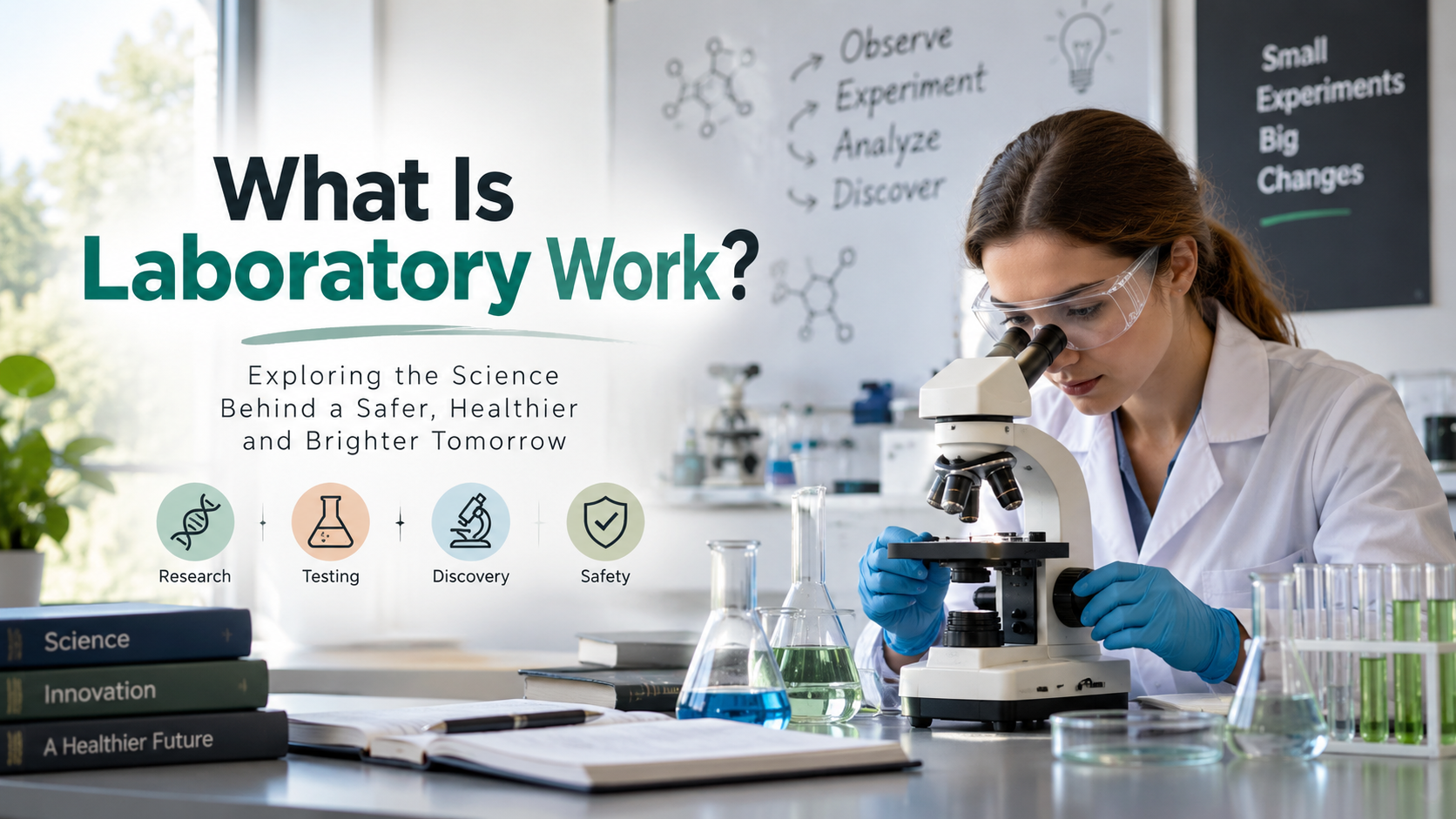
What Is Laboratory Work? Definition, Purpose, and Safety Rules
Step inside almost any research center, hospital, or academic department, and you will find a dedicated space for testing ideas. To understand scientific progress, it helps to ask, what is laboratory infrastructure designed to achieve? At its core, a laboratory provides a controlled environment where researchers can test theories, analyze materials, and produce measurable results.
Modern society depends on laboratories for healthcare, scientific research, environmental testing, and technological development. Precise measurements and controlled conditions help researchers produce reliable and repeatable results. The National Institute of Standards and Technology (NIST) highlights the importance of accurate measurement across science, industry, and everyday life. National Institute of Standards and Technology
Whether you are a student entering a laboratory for the first time or simply curious about scientific work, understanding these spaces is useful. This guide explains laboratory definitions, chemistry laboratories, common equipment, safety rules, terminology, and the history of the word.
What is the definition of a laboratory?
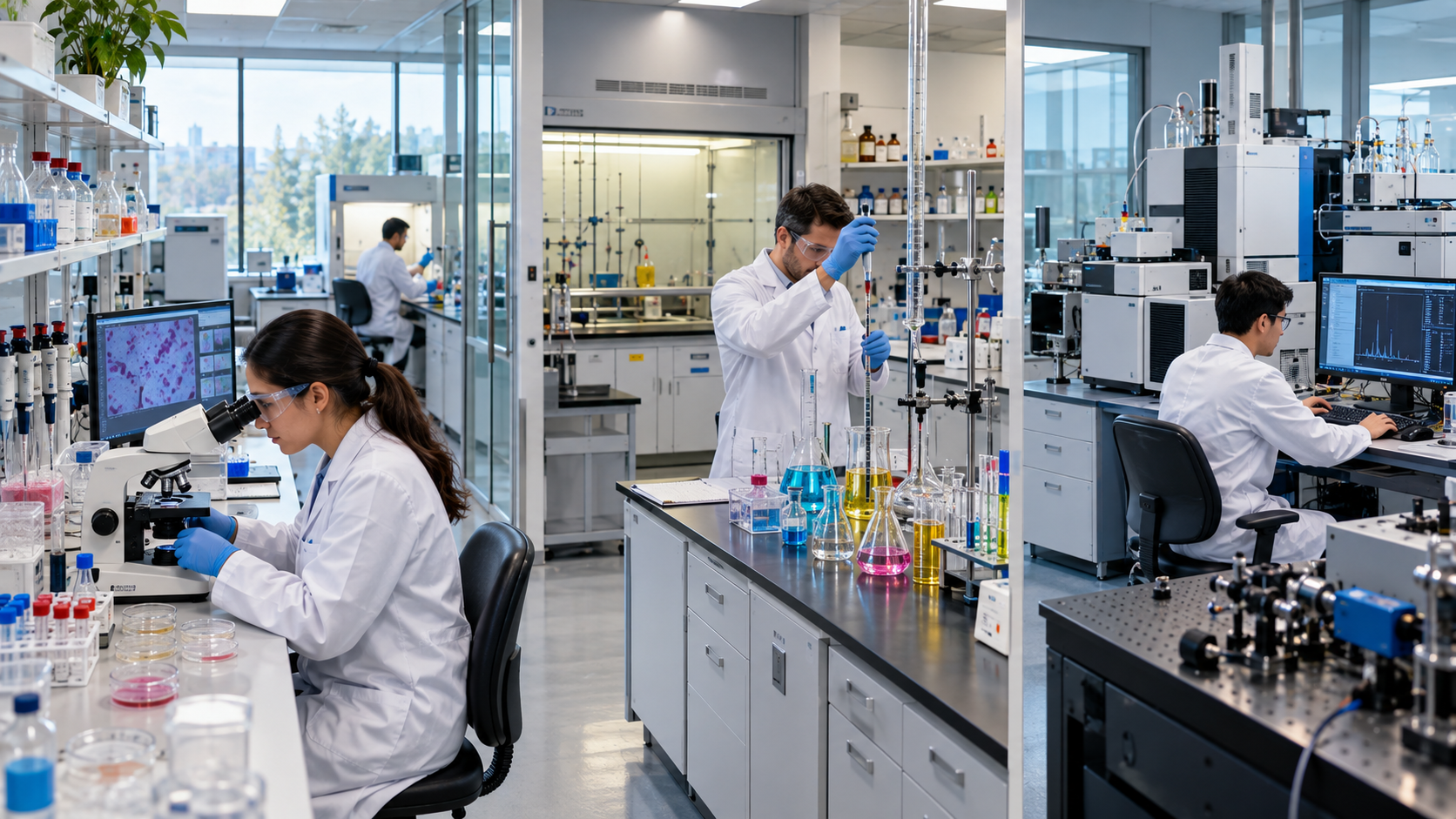
A laboratory is a controlled facility designed for scientific research, experiments, testing, analysis, and measurement. It provides specialized equipment and working conditions that help researchers study materials, organisms, chemicals, and physical processes. Laboratories operate across many fields, including biology, chemistry, physics, medicine, engineering, and environmental science. Understanding peer-reviewed research and how it works also helps explain how laboratory findings are evaluated and validated.
The main purpose of a laboratory is to create conditions where observations can be measured and repeated. Researchers follow established procedures to reduce contamination, measurement errors, and unwanted variables. These practices make experimental results more reliable and easier to verify.
A laboratory can range from a school science room to a highly specialized medical or industrial facility. Its design depends on the work performed inside it. Some laboratories require sterile environments, while others need advanced ventilation or temperature control.
Ultimately, a laboratory connects scientific ideas with practical evidence. It gives researchers a structured setting for testing hypotheses, collecting data, and developing useful applications.
Primary Purpose of Controlled Scientific Spaces
The primary purpose of controlled scientific spaces is to create consistent and reproducible conditions for research and testing. Researchers need to control relevant environmental factors because unexpected changes can affect experimental results. These practices are particularly important when researchers evaluate primary and secondary sources in research and determine how evidence should be interpreted.
Depending on the work, a laboratory may regulate temperature, humidity, air quality, lighting, pressure, or cleanliness. These controls help protect samples and reduce outside influences that could affect measurements. However, not every laboratory requires the same level of environmental control.
Controlled conditions are especially important in clinical testing, pharmaceutical research, microbiology, and materials science. Even small changes can influence sensitive samples or experimental reactions.
Laboratories also rely on standardized procedures and calibrated instruments. These practices help researchers compare results across different experiments and locations. Proper documentation further improves reproducibility and helps researchers assess findings within established levels of scientific evidence.
The goal is not simply to make a laboratory look controlled. It is to create conditions that support accurate measurements and dependable observations. By reducing unnecessary variables, researchers can better determine whether an observed result comes from the factor being studied.
What is a laboratory in chemistry?
A chemistry laboratory is a specialized facility designed for chemical experiments, synthesis, analysis, and testing. Its equipment and layout support activities that involve chemicals, reactions, heat, gases, and potentially hazardous substances.
Chemistry laboratories commonly use chemical-resistant work surfaces, sinks, ventilation systems, storage cabinets, and specialized instruments. Many also contain fume hoods that help control exposure to hazardous vapors and airborne contaminants.
Inside a chemistry laboratory, scientists may mix substances, measure reactions, identify compounds, determine concentrations, or create new materials. Different experiments require different equipment and safety controls. A teaching laboratory may have basic glassware, while a research facility may use sophisticated analytical instruments.
Safety is especially important because chemical reactions can produce toxic fumes, heat, pressure, corrosive materials, or reactive byproducts. Proper storage and handling reduce these risks.
A well-designed chemistry laboratory therefore combines practical workspace with engineering controls. These features allow researchers to perform chemical work while protecting people, samples, equipment, and the surrounding environment.
Essential Ventilation and Hazard Containment Systems
Ventilation and hazard containment systems are essential in many chemistry laboratories. Their purpose is to reduce exposure to hazardous vapors, fumes, aerosols, and airborne contaminants generated during laboratory work.
A fume hood is one of the most important engineering controls. It draws air away from the user’s breathing zone and directs contaminated air through an appropriate exhaust system. Fume hoods should not be treated as a substitute for proper chemical handling or personal protective equipment.
Laboratories may also use specialized cabinets for storing flammable, corrosive, or otherwise hazardous chemicals. Proper segregation helps prevent incompatible substances from reacting accidentally.
Other containment measures can include sealed equipment, local exhaust ventilation, spill-control materials, and designated waste containers. The exact system depends on the chemicals and procedures involved.
Effective containment follows a broader principle: control hazards at their source whenever possible. Combining engineering controls with safe procedures, training, and appropriate protective equipment creates a safer working environment for laboratory personnel.
What is lab full form?
The word “lab” does not have a full form in the acronym sense. It is simply a shortened form of the word “laboratory.” Unlike terms created from initial letters, “lab” comes from shortening the original word for everyday use.
People commonly use “lab” in schools, universities, hospitals, research institutions, and workplaces. For example, someone might say “chemistry lab,” “medical lab,” or “research lab.” In each case, the shortened word refers to a laboratory.
The complete term is generally preferred in formal documents, scientific writing, regulations, institutional names, and official records. The shorter version is more common in conversation and informal communication.
It is also important not to confuse “lab” with a technical abbreviation that has a separate meaning. Its meaning depends on context, but when discussing scientific facilities, it simply means laboratory.
So, if you are searching for the “lab full form,” the simplest answer is that lab is an abbreviation or shortened form, not an acronym. Understanding this distinction helps avoid a common terminology mistake.
Truncation and Common Usage in Modern English
The shortened form “lab” developed through ordinary language use rather than from a set of initial letters. English frequently shortens longer words when speakers need faster and easier forms for everyday communication.
Laboratory is a relatively long word, so “lab” became a convenient alternative in educational, scientific, medical, and professional settings. Today, the shortened term is widely understood and rarely causes confusion when the context is clear.
You may encounter expressions such as “lab test,” “lab equipment,” “lab report,” and “lab technician.” These phrases are common in both professional and everyday communication.
However, formal writing may still require the complete word. Scientific publications, institutional documents, legal materials, and official policies often use laboratory for clarity and consistency.
The important distinction is simple: “lab” is a shortened form, not a letter-based full form. Its widespread use reflects normal English word formation rather than a separate technical definition.
Understanding this usage also makes it easier to recognize related terms across medical, academic, industrial, and research environments.
What’s in a laboratory?
A laboratory contains equipment, work surfaces, storage systems, safety devices, and instruments suited to its specific purpose. The exact contents vary widely between facilities. A school laboratory may have basic glassware, while a medical or research laboratory can contain highly specialized equipment.
Common laboratory items include beakers, test tubes, measuring cylinders, flasks, pipettes, balances, and centrifuges. Other facilities may use microscopes, incubators, spectrophotometers, chromatography systems, or specialized testing machines.
Safety equipment is equally important. Depending on the laboratory, this may include eyewash stations, safety showers, fire extinguishers, spill kits, emergency alarms, and appropriate personal protective equipment.
Storage areas also require careful organization. Chemicals, biological samples, instruments, and waste should be stored according to their hazards and intended use.
A laboratory is therefore more than a room containing scientific equipment. Its layout supports safe workflows, accurate measurements, contamination control, and efficient research.
The equipment selected should always match the laboratory’s purpose. A chemistry laboratory, clinical laboratory, microbiology facility, and engineering laboratory will have very different setups.
Essential Analytical Instrumentation and Glassware
Glassware and analytical instruments form an important part of many laboratories. Common glassware includes beakers, Erlenmeyer flasks, test tubes, pipettes, volumetric flasks, and graduated cylinders. Each item has a specific purpose and level of measurement accuracy.
Borosilicate glass is widely used because it offers good resistance to thermal shock and many chemicals. However, it is not suitable for every substance or situation. Laboratory users must select materials according to the procedure being performed.
Analytical balances provide highly precise mass measurements. Other instruments can measure properties such as absorbance, temperature, pressure, concentration, or molecular composition.
For example, spectrophotometers can measure how samples interact with light, while chromatography systems help separate and analyze mixtures. Centrifuges separate materials based on differences in density and sedimentation behavior.
Correct use matters as much as equipment quality. Instruments may require calibration, maintenance, cleaning, and proper operating procedures. Accurate results depend on both suitable equipment and careful technique.
Together, laboratory glassware and analytical instruments allow researchers to prepare samples, perform experiments, and collect dependable measurements.
What are 5 laboratory rules?
Laboratory safety depends on consistent behavior, proper training, and appropriate procedures. While individual facilities may have additional requirements, five basic rules apply broadly to many laboratory environments.
- Wear appropriate personal protective equipment. Safety glasses, gloves, lab coats, or other protection should match the hazards involved.
- Do not eat, drink, or apply cosmetics in the laboratory. These activities can increase the risk of accidental exposure or contamination.
- Know the location of emergency equipment. Users should understand how to access eyewash stations, safety showers, fire equipment, and emergency exits.
- Label containers correctly. Chemicals and samples should have clear identification and relevant hazard information.
- Dispose of waste properly. Chemical, biological, sharps, and other hazardous waste require appropriate disposal methods.
These rules provide a basic foundation, but they do not replace laboratory-specific training. Always follow the facility’s written procedures and safety instructions.
Proper Disposal of Hazardous Chemical Waste
Proper chemical waste disposal prevents accidental exposure, environmental contamination, fires, and unwanted chemical reactions. Laboratory waste should never be handled casually or mixed without knowing whether the substances are compatible. Proper procedures are especially important when learning how to dispose of medical waste items appropriately.
Different waste streams may require separate containers. For example, certain solvents, corrosive chemicals, reactive materials, and heavy-metal-containing waste may require specialized collection methods. Facilities should follow applicable regulations and their own waste-management procedures.
Laboratory personnel should never assume that a chemical can be poured down a sink. Disposal requirements depend on the substance, concentration, local regulations, and laboratory policy.
Waste containers should remain clearly labeled and compatible with their contents. They should also be kept closed when not actively receiving waste, where the applicable procedure requires it.
Sharps and contaminated materials require separate handling as well. Biological or infectious waste follows additional controls.
The safest approach is to identify the waste before disposal and follow the laboratory’s approved procedure. When uncertain, personnel should consult the laboratory supervisor or designated safety officer rather than making assumptions.
Why is it called a laboratory?
The word laboratory comes from the Medieval Latin laboratorium, meaning a place for work. The term is related to the Latin verb laborare, meaning “to work” or “to labor.”
The original meaning reflects the practical nature of early scientific and technical work. Before modern laboratories existed, activities such as metalworking, medicine, pharmacy, and alchemy often required dedicated spaces for experimentation and preparation.
Over time, the meaning of laboratory became more closely associated with systematic scientific investigation. The word eventually came to describe facilities where researchers conduct controlled experiments, perform measurements, and analyze materials.
The history of the term therefore connects scientific investigation with practical work. Laboratories are places where ideas are tested through observation, measurement, and experimentation.
Today, the word applies to many specialized environments. These include medical laboratories, chemistry laboratories, biology laboratories, engineering laboratories, research laboratories, and industrial testing facilities.
Although laboratory technology has changed dramatically, the central idea remains similar. It is a dedicated place where organized work produces knowledge, measurements, or practical results.
Historical Evolution from Alchemical Workshops
The modern laboratory developed gradually from earlier spaces used for practical experimentation. Alchemists, pharmacists, metallurgists, and other practitioners worked with materials, heat, tools, and chemical processes long before modern scientific laboratories emerged.
These early workplaces could involve furnaces, grinding equipment, distillation vessels, storage containers, and other specialized tools. Their practices differed significantly from modern science, but they contributed to the broader tradition of experimental investigation.
During the development of modern science, experimental spaces became increasingly organized. Researchers began emphasizing controlled procedures, measurement, documentation, and repeatability. This shift helped transform practical workshops into more recognizable scientific laboratories.
The meaning of the word also evolved with this change. Laboratory eventually became associated less with manual labor alone and more with systematic research and scientific analysis.
Today, laboratories support fields that early experimenters could not have imagined. Researchers work with molecular biology, advanced materials, electronics, medicine, environmental science, and many other disciplines.
The history of the laboratory therefore reflects a broader change in science: practical experimentation gradually became a structured process based on measurement, evidence, documentation, and reproducibility.
Frequently Asked Questions
What are the main types of scientific laboratories?
The primary types include clinical and medical testing facilities, chemical synthesis suites, biosafety suites, research spaces, and industrial quality-assurance testing rooms. Each variety operates under specific environmental controls and regulatory guidelines. For example, clinical facilities focus directly on diagnosing human diseases through tissue analysis, whereas industrial testing rooms evaluate manufactured commercial products to ensure consumer durability.
What is the difference between a dry lab and a wet lab?
A wet lab processes biological fluids, chemicals, and reactive liquids using non-porous benches, sinks, and chemical hoods. In contrast, a dry lab focuses exclusively on computational modeling, mathematical simulations, electronics fabrication, or data analysis. Dry spaces rely on computer equipment, specialized software packages, and electronic hardware rather than chemical sinks and specialized ventilation systems.
What does Biosafety Level mean in research facilities?
Biosafety Levels, designated from BSL-1 through BSL-4, define specific biological containment safeguards required when handling infectious microbes. A standard BSL-1 suite handles well-characterized, harmless agents using basic precautions. Conversely, a maximum-containment BSL-4 facility isolates dangerous, life-threatening airborne pathogens through positive-pressure personnel suits, full-facility air filtration, and strict security isolation protocols.
Who works inside an analytical testing facility?
These specialized workspaces employ cross-disciplinary professionals, including research scientists, laboratory technicians, medical laboratory scientists, safety compliance officers, and quality assurance analysts. Principal investigators guide scientific strategy, while certified technicians manage complex instrumentation, process experimental samples, record results, calibrate sensitive sensors, and enforce strict adherence to standard operating procedures.
Conclusion
Understanding what is laboratory infrastructure reveals the meticulous planning behind every scientific and medical breakthrough. These controlled settings transform abstract concepts into proven discoveries through rigorous physical containment, precise instrumentation, and disciplined methods. As demonstrated across chemistry and medical diagnostics, these rooms offer the safe environment necessary to test hazardous materials without endangering researchers or the public.
Furthermore, the evolution of the term highlights how physical toil transformed into intellectual and systematic inquiry over the centuries. Whether enforcing the five essential safety rules or using specialized glassware, researchers follow protocols that protect integrity and safety.
Whenever you encounter new medicines, durable consumer goods, or verified scientific discoveries, remember the specialized facilities that validated them. Respecting basic protocols, appreciating rigorous work, and understanding standard equipment prepares anyone to enter these environments confidently.