
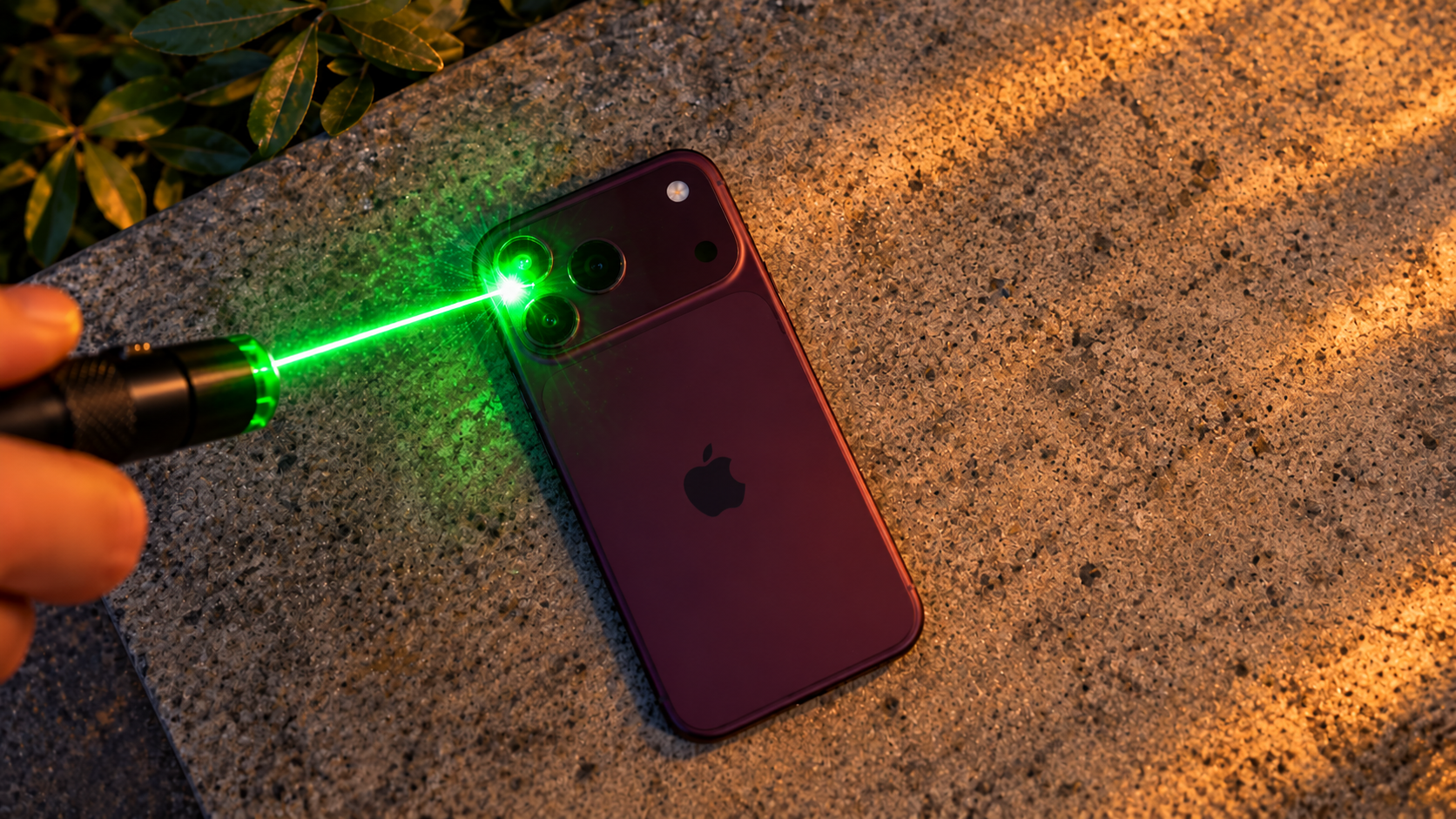
What Does a Laser Do to Your Phone’s Camera?
Lasers produce concentrated beams of light that can affect sensitive electronic and optical equipment. Although smartphone cameras handle everyday lighting conditions well, intense laser exposure can damage their internal components. Understanding what happens when you direct a laser to phone’s camera can help you protect your device from costly repairs.
Modern smartphones use complementary metal-oxide-semiconductor (CMOS) image sensors to capture photographs and videos. These sensors contain millions of light-sensitive pixels that convert incoming light into electrical signals. Under certain conditions, concentrated laser light can overwhelm or permanently damage these components.
The risk depends on the laser’s power, wavelength, exposure duration, and distance from the camera. Some exposures cause temporary image distortion, while others may leave permanent defects. This guide explains how a laser to phone’s camera can affect image quality and hardware. It also covers CCTV systems, LiDAR technology, safety precautions, and legal considerations.
Will lasers damage your phone camera?
Yes, lasers can damage smartphone cameras, but the outcome depends on the exposure conditions. When a concentrated beam enters the lens, the optics may focus its energy onto a small area of the image sensor. Sufficiently intense exposure can damage individual pixels or other sensitive components.
If you point a laser to phone’s camera, you might notice unusual colored lines, bright spots, dark patches, or distorted images. These symptoms can indicate sensor damage, although other hardware problems may produce similar results.
Several factors influence the risk:
- Laser power: More powerful lasers generally present greater potential for damage.
- Wavelength: The sensor’s sensitivity and optical filters affect how much energy reaches its components.
- Exposure duration: Longer exposure can increase the likelihood of damage.
- Distance: The energy reaching the camera depends partly on the beam’s characteristics and distance.
A low-powered pointer may cause no lasting harm, but stronger lasers can permanently damage a camera. Avoid deliberately testing these effects. If your camera develops persistent defects after exposure, seek professional inspection. If you own an iPhone 18 Pro, review AppleCare+ for the iPhone 18 Pro and check the plan’s terms before assuming camera damage is covered.
The Physics Behind Sensor Burnout
A smartphone camera uses a lens to focus incoming light onto a CMOS image sensor. The sensor’s pixels convert that light into electrical signals, allowing the phone to create an image. However, concentrated laser energy can overwhelm these light-sensitive components. For a broader explanation of how camera hardware and image processing work together, explore AI camera technology in smartphones.
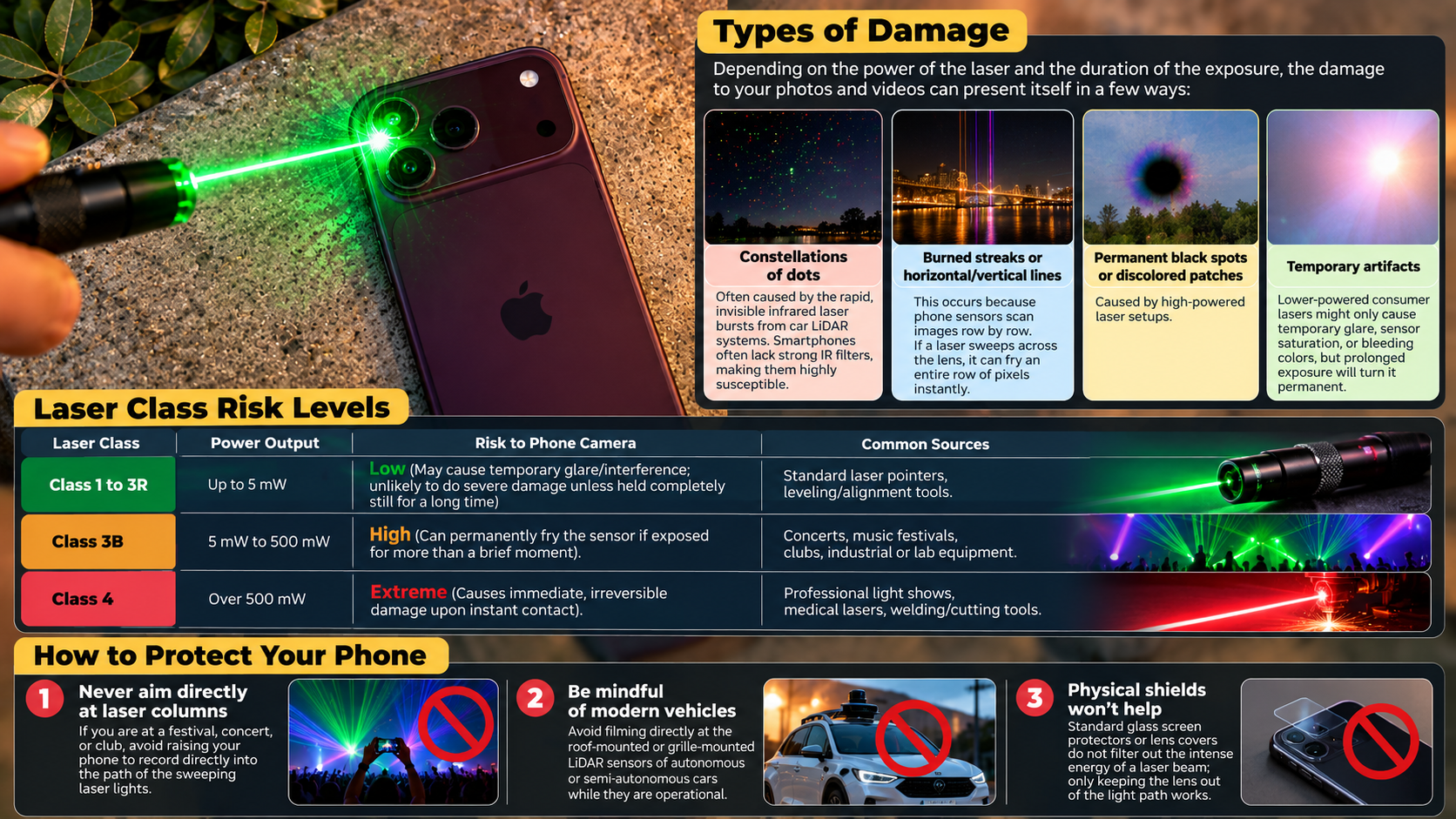
When you direct a sufficiently powerful laser to phone’s camera, the sensor may experience temporary saturation or permanent physical damage. Intense exposure can generate localized heating or damage sensitive structures, depending on the laser’s characteristics.
Temporary saturation occurs when the sensor cannot accurately represent the intense light. You might see bright streaks or washed-out areas that disappear after the light moves away.
Permanent damage is different because physical changes to the sensor cannot be reversed through ordinary camera settings. Damaged pixels may produce persistent lines, bright spots, or dark patches in photographs.
Not every laser exposure burns the sensor. The outcome depends on the laser’s power, wavelength, exposure duration, and the camera’s optical design. Avoid directing concentrated beams into camera lenses, even for brief periods.
Can laser light destroy a CCTV camera?
Yes, sufficiently intense laser light can damage a CCTV camera, although permanent failure is not inevitable. Most modern surveillance systems use CMOS or, in some models, CCD image sensors. These components capture light and convert it into images for monitoring and recording.
When a laser reaches a surveillance lens, it may produce glare, bright patches, streaks, or temporary loss of image detail. More intense exposure can permanently damage the sensor. The result depends on the laser’s characteristics and the camera’s design.
Directing a laser to phone’s camera or a CCTV lens can create similar image disturbances. However, the exact effects vary because different cameras use different sensors, lenses, and protective components.
Some surveillance systems include optical filters or image-processing features that help manage difficult lighting conditions. These features do not guarantee protection against damaging laser exposure.
Camera placement, suitable protective housings, and appropriate equipment selection can help reduce risks. If a CCTV system continues producing distorted footage after the light source disappears, a technician should inspect its lens, sensor, and other components. Deliberately interfering with security equipment may also create legal problems.
Vulnerability of Night Vision Optics
Night-vision security cameras use infrared-sensitive sensors to capture images in low-light conditions. Some models also include infrared illuminators to improve visibility after dark. Their sensitivity to infrared light does not automatically make them more vulnerable to every laser.
The actual risk depends on the laser’s wavelength, intensity, exposure duration, and compatibility with the camera’s sensor. A laser may create temporary interference or overwhelm the image before causing permanent damage.
When a laser to phone’s camera or a night-vision camera produces a bright patch, that effect alone does not prove physical damage. The image may recover once the light disappears and the sensor adjusts to normal lighting.
However, sufficiently intense exposure can cause lasting harm to infrared-sensitive equipment. Damaged pixels may appear as persistent bright spots, lines, or unusual discoloration.
To protect night-vision equipment, avoid directing lasers toward its lenses. If the image remains distorted under normal lighting, arrange a professional inspection. Do not assume that a camera is permanently destroyed based on a single unusual image.
Can LiDAR destroy a camera?
LiDAR stands for Light Detection and Ranging. It uses laser pulses to measure distances and gather information about surrounding environments. The technology appears in some smartphones, vehicles, industrial systems, and surveying equipment.
Whether LiDAR can damage a camera depends on the optical output and the camera’s sensitivity. Consumer LiDAR sensors are generally designed to operate within applicable laser-safety limits. Their normal operation does not ordinarily damage nearby cameras.
However, a laser system designed to meet eye-safety requirements is not automatically guaranteed to protect every image sensor under every exposure condition. Specialized equipment may present different risks from consumer devices.
If a laser to phone’s camera comes from an intense optical source, the sensor may experience temporary saturation or, under certain conditions, permanent damage. Wavelength, pulse characteristics, distance, and optical design all influence the outcome.
For everyday users, the safest approach is to follow the equipment manufacturer’s instructions. Avoid deliberately directing laser beams into camera lenses to test their resistance. If you notice persistent image defects after exposure to a LiDAR or laser source, seek professional assessment.
Understanding Consumer LiDAR Safety Standards
Consumer LiDAR systems are designed to meet safety requirements appropriate to their intended use and operating characteristics. Some smartphones use low-power laser components for depth sensing, autofocus, or augmented reality features. Other devices use different optical technologies to estimate distance.
Manufacturers design these systems to comply with applicable laser-safety standards. However, classifications depend on the product, operating modes, and emitted radiation. It is inaccurate to assume that every LiDAR device has identical power levels or safety characteristics.
These standards also have specific purposes. Eye-safety classifications primarily address risks to human eyes under defined conditions. They do not guarantee that every camera sensor will remain unaffected by every possible exposure.
For example, a laser to phone’s camera may cause different effects depending on the source’s intensity and the camera’s optical design. Consumer devices generally present lower risks during normal operation, but that does not make every laser exposure harmless.
Use optical equipment according to its instructions and avoid directing concentrated beams into camera lenses. If persistent image defects appear after exposure, arrange a professional inspection rather than relying on assumptions about the device’s safety classification.
Does pointing a laser at a camera do anything?
Pointing a laser at a camera can affect its image, but the result varies considerably. Depending on the intensity and camera design, the display may show a bright spot, colored streaks, glare, or temporary loss of detail. These effects occur because concentrated light can overwhelm the sensor’s ability to capture the scene accurately.
Directing a laser to phone’s camera may produce temporary interference without causing permanent damage. However, intense exposure can also damage sensitive sensor components. The laser’s power, wavelength, distance, and exposure duration all influence the potential outcome.
Camera optics also affect how much light reaches the sensor. Some filters reduce specific wavelengths, but they do not provide universal protection against every laser.
A camera’s automatic exposure settings may adjust to bright light, but these adjustments cannot prevent all forms of sensor damage. Similarly, optical filters do not guarantee complete protection.
Do not use a laser to test a camera’s limits. Even if the image looks normal afterward, that does not establish that every component remains unaffected. Keep lasers away from camera lenses and seek professional inspection if persistent image problems appear.
Temporary Saturation Versus Permanent Destruction
Temporary sensor saturation and permanent sensor damage are different outcomes of intense light exposure. Understanding the distinction helps you assess unusual camera behavior without immediately assuming the hardware has failed.
Temporary saturation occurs when intense light overwhelms the sensor’s ability to capture image details. You may see a bright patch, streak, or washed-out area. The image may return to normal once the light source moves away and the camera readjusts.
Permanent damage occurs when exposure physically harms sensitive sensor components. Possible symptoms include persistent lines, dead pixels, unusual discoloration, or recurring image defects. These problems may remain even after restarting the phone or changing camera settings.
If a laser to phone’s camera causes persistent visual defects, the symptoms should be investigated. However, symptoms alone cannot confirm the cause. A damaged lens, software issue, or failing camera module can produce similar problems.
Test the camera only under ordinary lighting conditions. Compare the front and rear cameras if appropriate, and avoid further laser exposure. If the defects continue, ask a qualified technician to diagnose the device.
Is it illegal to point lasers at cameras?
The legality of pointing a laser at a camera depends on the location, circumstances, and consequences. Directing a laser toward private security equipment may constitute unlawful interference or property damage if it disrupts operations or causes physical harm. The applicable offence depends on local law and the facts of the incident.
Interfering with cameras used for traffic enforcement, public safety, or official functions may carry additional consequences. Damaging equipment, obstructing lawful activities, or creating a public hazard can lead to legal action in some jurisdictions.
Pointing a laser to phone’s camera may seem harmless, but intentionally damaging another person’s device can create legal and financial consequences. Interfering with surveillance equipment may also prevent people from recording important events or maintaining security.
Laser misuse can create risks beyond the camera itself. A beam may reflect from a surface or reach someone’s eyes, creating a separate safety concern. Never direct lasers at people, vehicles, aircraft, or sensitive optical equipment.
Do not assume that every laser pointer is illegal or that every incident carries the same penalty. Rules vary by country and device type. Check local regulations before using powerful laser equipment.
Legal Penalties and Public Safety Regulations
Legal consequences for laser misuse vary according to the jurisdiction, the device, and the circumstances. A person who accidentally directs a low-powered laser toward a camera may face a different situation from someone who deliberately damages property or interferes with public safety operations.
Depending on the applicable law, intentional damage could lead to fines, compensation claims, or criminal charges. Additional penalties may apply when laser misuse endangers people or disrupts regulated activities. The exact outcome depends on the evidence and relevant legal provisions.
In India, the legal position should be assessed under applicable national and local laws. Do not assume that a particular penalty applies without checking the relevant legislation and circumstances. For serious incidents involving damaged equipment or public safety, consult a qualified legal professional.
Whether someone directs a laser to phone’s camera or targets a surveillance system, responsible use remains essential. Follow the manufacturer’s instructions and keep laser beams away from cameras, vehicles, aircraft, and people.
These precautions help prevent equipment damage, avoid unnecessary disputes, and reduce the risk of injury. Using lasers responsibly also protects privacy and supports the safe operation of recording equipment.
Conclusion
A laser to phone’s camera can cause anything from temporary image distortion to permanent sensor damage. The outcome depends on the laser’s power, wavelength, exposure duration, and distance from the device. While some exposures leave no lasting effects, stronger lasers can damage sensitive camera components.
To protect your smartphone, avoid pointing lasers directly at the camera lens. For additional guidance, read Sony’s explanation of how lasers can damage camera image sensors. If you notice persistent lines, dark spots, or unusual colors after exposure, have your device inspected by a qualified technician.
The same precautions apply to CCTV cameras and other sensitive optical equipment. The safest approach is to keep lasers away from camera lenses. Understanding the risks can help you prevent expensive repairs, protect your devices, and use laser equipment responsibly.