
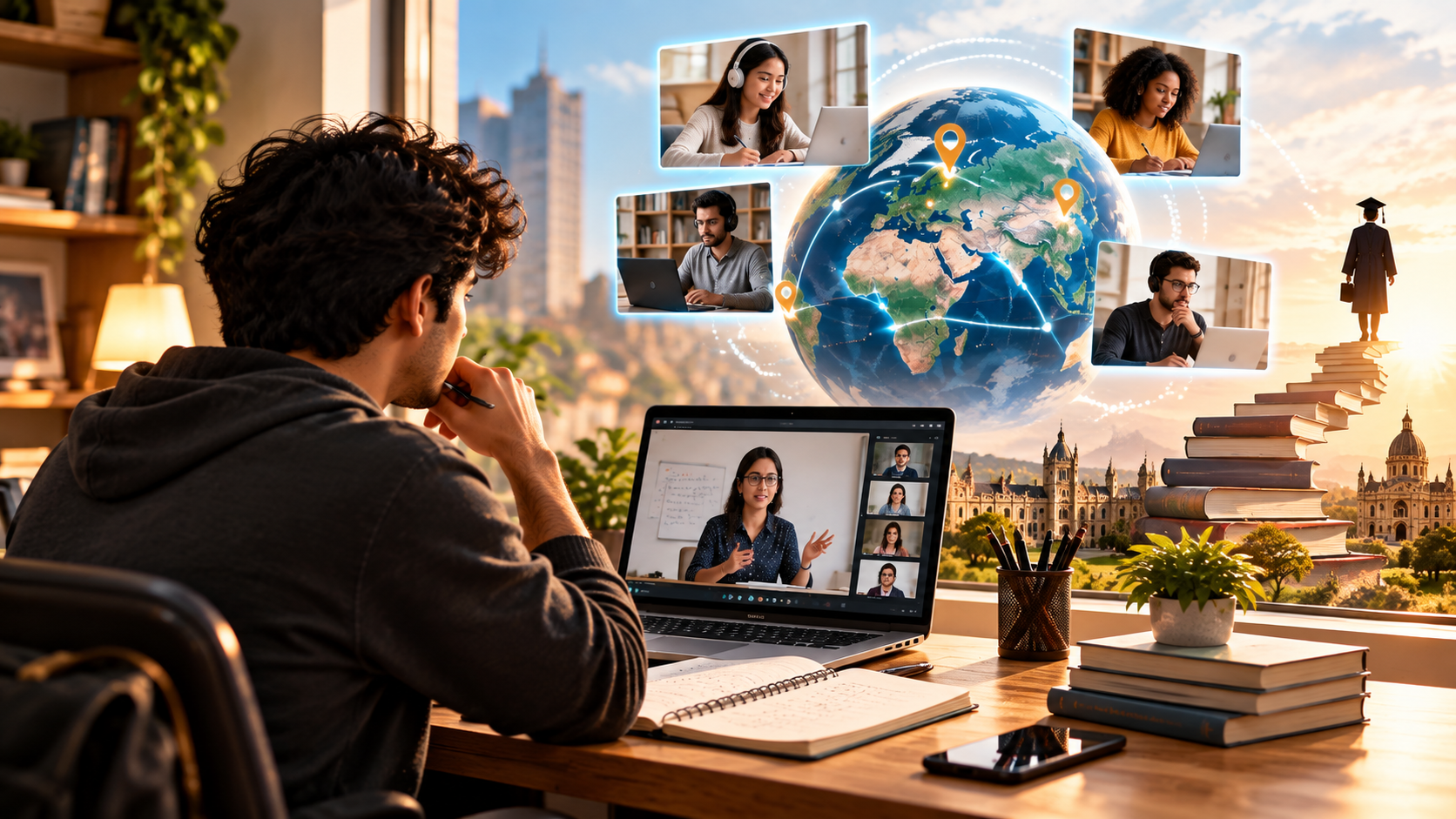
The Complete Guide to Distance Learning: Validity, History, and Value
Distance learning has changed how people acquire skills, change careers, and pursue higher education. Students no longer need to relocate to access programs from established institutions. Digital platforms now make education more accessible to learners with an internet connection, suitable technology, and self-discipline.
Organizations such as UNESCO have highlighted the role of technology in expanding educational access. Distance learning can help learners overcome geographical and social barriers that may limit access to traditional classrooms.
Before choosing a program, however, students should understand how distance learning works. They should also check whether an institution and its qualification are officially recognized. Questions about employer acceptance, suitable courses, history, costs, and career value are equally important.
This guide explores these key areas. It explains what distance learning means, how its qualifications are recognized, which courses may suit different career goals, and how distance education developed. It also examines its advantages, limitations, and practical value for modern learners.


What do you mean by distance learning?
Distance learning is an educational model where teachers and students remain physically separated during instruction. Instead of attending traditional classrooms, students access lessons through online platforms, recorded lectures, digital resources, study materials, or virtual sessions.
The format can support learners who need to balance education with work, family responsibilities, or other commitments. Depending on the program, students may follow a fixed schedule or complete coursework at their own pace. This flexibility is also closely related to the broader benefits of learning outside the classroom.
Communication usually happens through email, discussion forums, video meetings, learning management systems, or other digital tools. Some programs may also require occasional in-person sessions or examinations.
Distance learning has existed in different forms for much longer than the internet. Early correspondence education relied heavily on postal services and printed materials. Modern technology has expanded these methods through video conferencing, online assessments, digital libraries, and interactive learning platforms.
The main feature of distance learning is physical separation between the learner and instructor. This gives students greater flexibility while still allowing them to work toward formal academic or professional qualifications.
Is a distance learning degree valid?
A distance learning degree can be valid and widely accepted when it comes from a properly recognized institution and meets the applicable educational requirements. The delivery method alone does not automatically make a qualification legitimate or illegitimate.
Recognition rules vary by country, institution, program, and profession. Some fields may have additional requirements for professional licensing or practical training. Students should therefore verify the status of both the institution and the specific program before enrolling.
In India, for example, students should check whether the relevant institution and distance or online program are recognized by the appropriate authorities. Recognition can also change over time, so relying on an old advertisement or outdated website is risky.
Employers may consider additional factors beyond the qualification itself. These can include relevant skills, work experience, projects, communication ability, and the reputation of the institution.
An accredited or officially recognized qualification is therefore only one part of career value. Always verify current recognition before paying fees, especially when the course promises professional eligibility, government employment, or international opportunities.
Verifying Institutional Accreditation
Before applying, check official education or regulatory websites for the institution and program. Do not rely only on claims made by advertisements, social media pages, agents, or third-party education websites.
Look for the institution’s current recognition status and confirm whether the specific distance or online program is covered. This distinction matters because an institution may be recognized while particular programs have additional conditions.
Verification can help you avoid problems with employment, further education, credit transfers, or professional licensing. It can also protect you from institutions that make misleading claims about their qualifications.
Before enrolling, consider checking:
- Institutional recognition: Confirm that the university or college is officially recognized.
- Program recognition: Check whether the specific course is approved for distance or online delivery.
- Professional requirements: Verify additional rules if the qualification leads to a regulated profession.
- Current status: Make sure the information applies to the academic session in which you plan to enroll.
Taking these steps requires little effort compared with the time and money invested in a degree. When information is unclear, contact the relevant education authority or institution directly and request written confirmation.
Which distance course is best?
There is no single best distance course for every learner. The right choice depends on your career goal, previous education, available time, budget, and the skills employers require in your target field. Students preparing for higher education can also benefit from guidance on preparing for college and choosing an educational path.
Some subjects adapt particularly well to distance learning because they rely heavily on theory, software, analysis, and digital assignments. These can include business administration, computer science, information technology, data analytics, finance, and digital marketing.
Professional programs can also be useful when they develop practical skills that employers can evaluate. For example, project management courses may include planning exercises, while technology programs can involve coding projects or portfolio work.
When comparing courses, look beyond the course title. Check the curriculum, faculty, assessment method, practical projects, student support, recognition, and total cost.
A useful distance course should help you develop skills that have clear value outside the classroom. Consider whether you will graduate with demonstrable abilities rather than only a certificate.
Your career objective should guide the decision. A course that matches your existing experience and future plans will usually provide more value than one selected simply because it is popular.
Who is the father of distance education?
Sir Isaac Pitman is commonly described as the father of correspondence education. In the 1840s, he developed an innovative method for teaching shorthand through written correspondence in the United Kingdom.
Pitman used the postal system to send instructional material to learners. Students completed shorthand exercises and returned their work for review and correction. This created a structured learning relationship between teacher and student without requiring them to meet in person.
His approach became an important milestone in the development of organized correspondence education. It demonstrated that teaching and assessment could take place despite significant physical distance.
However, distance education did not begin with Pitman alone. Earlier forms of remote instruction existed, and the broader history of distance education developed gradually through correspondence schools, radio, television, and later digital technologies.
Pitman’s work is important because it helped establish a recognizable and scalable correspondence-learning model. His approach also demonstrated the potential of communication networks to expand access to education.
Modern distance learning is far more advanced. Learning management systems, video calls, digital libraries, online assessments, and recorded lessons have transformed the basic correspondence model into a highly connected educational environment.
When did distance education start in India?
Distance education in India developed through correspondence education before expanding into the modern open-learning system. The University of Delhi introduced correspondence courses in 1962, marking an important early milestone in India’s organized distance education system.
The initiative responded to growing demand for higher education among learners who could not attend conventional university programs. Correspondence courses allowed students to study using printed materials while maintaining employment or managing other responsibilities.
The model gradually expanded as other universities established correspondence education departments. These programs helped extend higher education beyond traditional campus boundaries.
India’s distance education system later grew substantially through specialized open universities. Dr. B.R. Ambedkar Open University, established in 1982, became an important institution in open and distance learning. Indira Gandhi National Open University (IGNOU) was established in 1985 and became a major provider of distance education across India.
The development of open universities significantly expanded access to higher education. Today, technology has added online classrooms, digital study materials, recorded lectures, virtual assessments, and online student services to the earlier correspondence model.
Is distance education good or bad?
Distance education is not automatically good or bad. Its effectiveness depends on the learner, the course, the institution, and the level of support provided. Understanding the pros and cons of online learning can help students make a more informed decision.
For working professionals, parents, and students who need flexible schedules, distance learning can provide significant advantages. Learners can often study without relocating and may continue working while completing their education.
However, distance education also creates challenges. Students must manage their own schedules, meet deadlines, stay motivated, and communicate proactively with instructors. Some learners may struggle without the structure of a physical classroom.
Certain subjects also require practical facilities, clinical training, laboratory work, or direct supervision. In these situations, a fully remote format may not provide the same experience as traditional education.
Before choosing distance education, consider your learning style and the requirements of your chosen field. Ask whether you can study independently and whether the program provides adequate academic support.
For disciplined learners, distance education can be a practical route to education and career development. However, flexibility should not be confused with easy learning. The responsibility for managing time and completing coursework remains largely with the student.
Self-Motivation as the Deciding Factor
Self-motivation is one of the most important factors in successful distance learning. Students often have greater freedom over when and where they study, but that freedom also creates responsibility.
Without regular classroom attendance, it can be easier to postpone assignments or fall behind with course materials. Successful learners usually create a consistent study routine and treat their coursework as a serious commitment.
Students should also learn to manage deadlines independently. Breaking larger assignments into smaller tasks can make the workload easier to control. Calendar reminders and weekly study plans can help maintain consistency.
Good distance learners also know when to ask for help. They should use discussion forums, instructor communication, academic support services, and available learning resources instead of struggling alone. In virtual classes, activities such as icebreaker games for virtual classrooms can also help learners become more comfortable participating and communicating.
Useful habits include:
- Set fixed study hours and follow them consistently.
- Track assignment deadlines using a calendar or task manager.
- Create a quiet study space with minimal distractions.
- Review lessons regularly instead of waiting until examinations.
- Ask questions early when a topic or assignment is unclear.
Distance learning rewards independence, but independence does not mean isolation. A structured routine and active use of available support can significantly improve the learning experience.
What are the top 5 advantages of distance education?
Distance education offers several practical advantages, particularly for learners who need flexibility. Five major benefits are flexibility, affordability, geographical freedom, career continuity, and self-paced learning. These advantages are part of the broader future of online education, as digital learning continues to change how people access education.
1. Flexibility: Students can often organize study around employment, family responsibilities, or other commitments. Some programs also provide recorded lessons that learners can review later.
2. Affordability: Distance education may reduce expenses associated with commuting, accommodation, and campus-based living. However, tuition fees vary significantly between institutions.
3. Geographical freedom: Students can access programs without necessarily relocating to the institution’s city. This can make education more accessible to learners living far from major academic centers.
4. Career continuity: Working professionals can continue earning while developing new qualifications or skills. This can reduce the disruption caused by taking full-time campus-based education.
5. Self-paced learning: Some programs allow students to review difficult concepts and manage their study schedule independently.
These advantages make distance education useful for many learners. However, students should still evaluate course quality, recognition, support, and career relevance before enrolling.
Conclusion
Distance learning has evolved from early postal correspondence into a sophisticated, universally recognized pillar of modern higher education. It dismantles physical obstacles, lowers financial barriers, and enables ambitious learners to pursue academic excellence on their own terms. As demonstrated throughout this guide, accredited remote degrees hold genuine professional validity and offer remarkable advantages for disciplined individuals seeking career advancement.
Choosing the right educational path demands a candid assessment of your personal learning style, budget, and professional targets. If you possess the drive to manage your study schedule independently, remote education offers unmatched flexibility to acquire market-relevant skills without sacrificing your current job. Take time to research accredited universities, explore available curricula, and verify institutional credentials carefully. By selecting an accredited, career-aligned program, you can expand your knowledge base, elevate your resume, and achieve your educational aspirations on a timeline that works for you.