
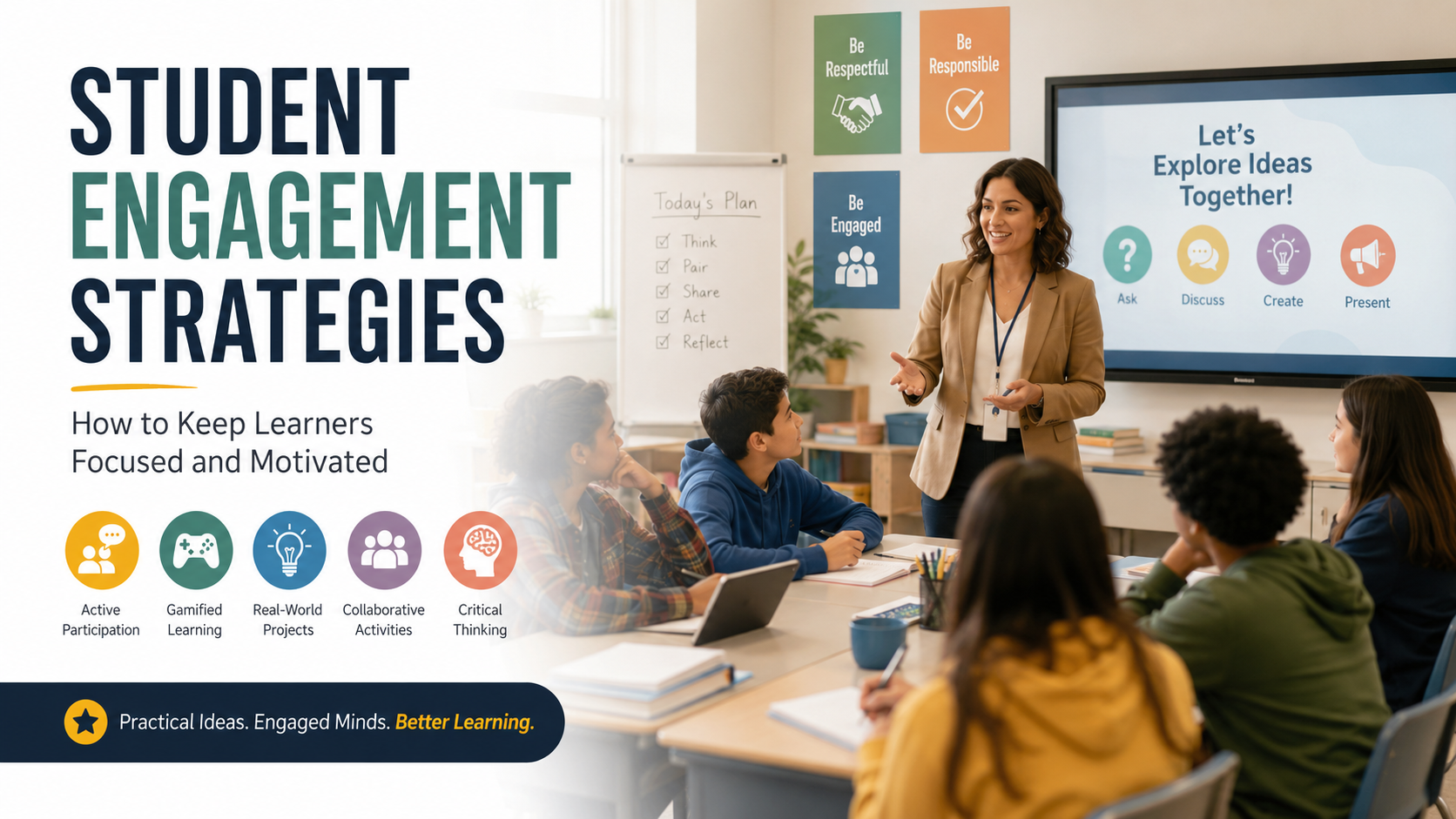
Student Engagement Strategies: How to Keep Learners Focused and Motivated
Keeping a room full of learners focused can often feel like demanding, uphill work. Traditional lecture models usually lose students within minutes, which inevitably leads to boredom, missed concepts, and passive attendance. Fortunately, implementing dynamic student engagement strategies transforms this dynamic completely by turning passive listeners into active participants. Consequently, when educators design lessons around interaction rather than instruction alone, retention increases, discipline issues decrease, and the overall classroom culture thrives.
According to research published by the U.S. Department of Education, active learning environments directly correlate with higher academic achievement as well as a stronger emotional connection to school communities. Therefore, student engagement is not simply about keeping learners busy; instead, it involves fostering cognitive, emotional, and behavioral connections to the material.
In this comprehensive guide, we will explore practical, evidence-based methods to energize your teaching space. Furthermore, you will discover how to blend active learning tactics, educational technology, and collaborative activities into your daily routine. Ultimately, whether you teach primary grades, high school, or adult learners, these actionable techniques will help you build a far more connected and motivated classroom.
Understanding the Dimensions of Student Engagement and Active Learning
Before applying specific classroom tactics, educators must understand what true engagement looks like in practice. Student motivation is multifaceted; therefore, it goes far beyond simply raising a hand to answer a question.
Specifically, experts categorize engagement into three distinct dimensions:
-
Behavioral Engagement: This includes attendance, effort, attention, and participation in class discussions or extracurricular activities.
-
Emotional Engagement: This involves a student’s feeling of belonging, interest in the subject matter, and positive attitude toward learning and peers.
-
Cognitive Engagement: This represents a learner’s internal drive to master complex ideas, self-regulate their learning, and go beyond minimum requirements.
Because each dimension plays a vital role, effective teaching targets all three areas simultaneously. For example, if a student sits quietly without causing disruption (behavioral engagement), they might still be completely disconnected from the material (cognitive engagement).
7 Impactful Student Engagement Strategies and Classroom Tactics
To build an interactive learning environment, teachers need concrete routines that systematically encourage participation. As a result, here are seven field-tested engagement methods that consistently increase focus and deepen understanding.
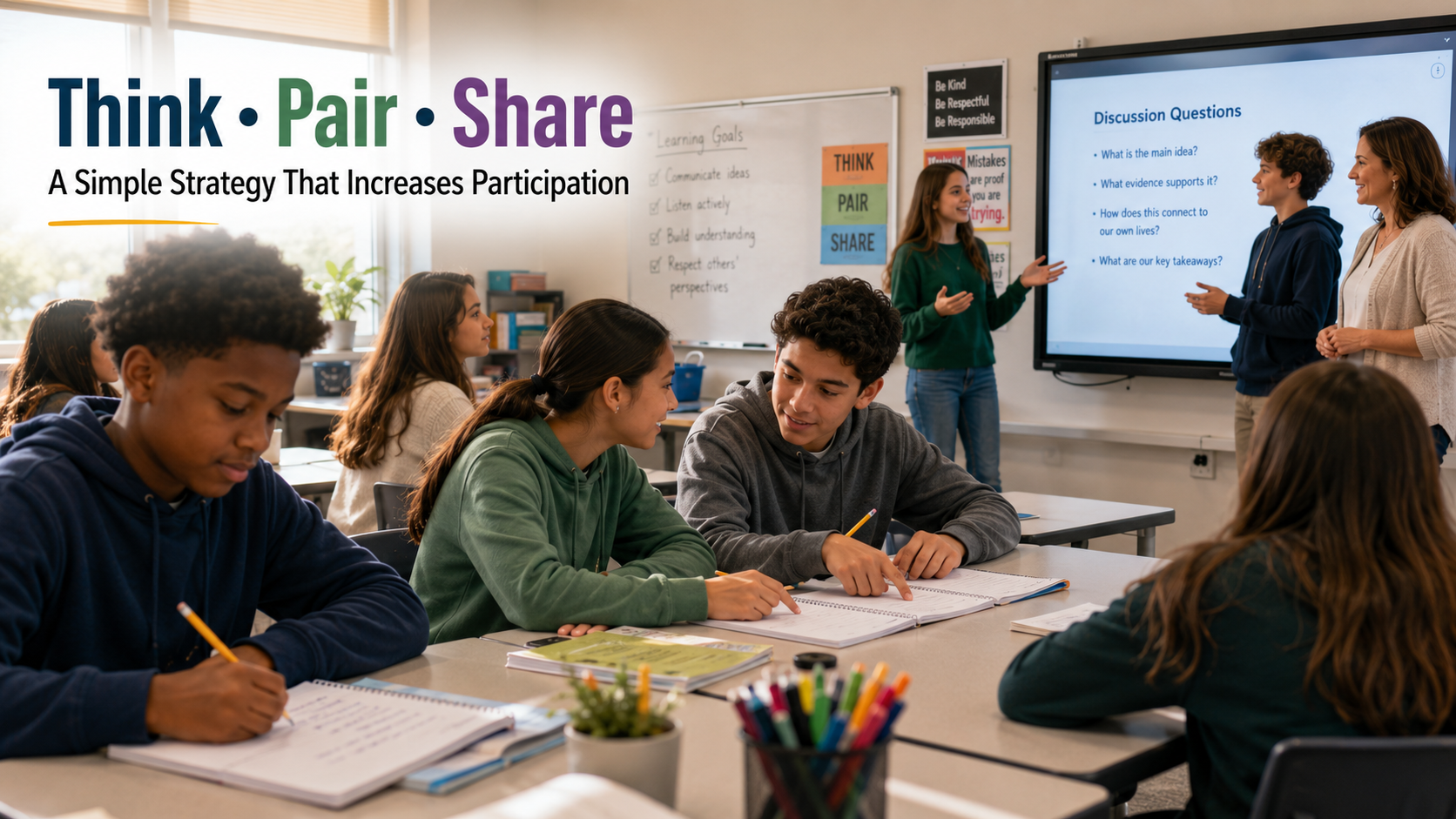
1. Implement Think-Pair-Share Routines for Student Participation
First, Think-Pair-Share gives every student time to process information individually before speaking publicly. To begin, pose an open-ended question to the class. Next, give everyone 60 seconds to write down their thoughts. After that, ask them to pair up with a neighbor to compare answers. Finally, invite pairs to share their key insights with the entire room.
Because this structure gives students time to validate their thoughts with a peer before presenting to the whole group, it significantly reduces academic anxiety. Consequently, overall response quality improves dramatically.
2. Use Gamified Retrieval Techniques to Boost Learner Engagement
Similarly, low-stakes testing helps reinforce long-term memory without inducing unnecessary test anxiety. Digital platforms like Kahoot or Quizizz quickly turn simple review sessions into friendly competitions. However, non-tech options work equally well for this goal. For instance, you can run rapid-fire whiteboard quizzes or team-based trivia challenges to review essential concepts from previous lectures.
| Step | Activity | Description |
|---|---|---|
| 1 | THINKS | Individual processing time where learners think independently about the topic or question. |
| 2 | PAIRS | Peer-to-peer discussion where learners share and compare their ideas with a partner. |
| 3 | SHARES | Whole-group synthesis where pairs present their ideas and the class discusses key insights. |
3. Incorporate Brain Breaks and Movement Tactics
Physical activity directly stimulates brain function; therefore, when energy drops, teachers should introduce a quick two-minute movement break. For instance, ask students to stand up and move to different corners of the room based on their opinion regarding a debate prompt (the “Four Corners” strategy). As a result, movement increases oxygen flow to the brain, which immediately resets attention spans.
4. Leverage Project-Based Methods to Motivate Students
In addition, students care far more about learning when the outcomes carry real-world weight. Project-Based Learning shifts the instructional focus away from passive memorization and toward authentic problem-solving. For example, assign tasks where students solve real community issues, design product prototypes, or publish articles on local topics.
Key Insight: When students see a tangible connection between their assignments and real life, their intrinsic motivation rises dramatically.
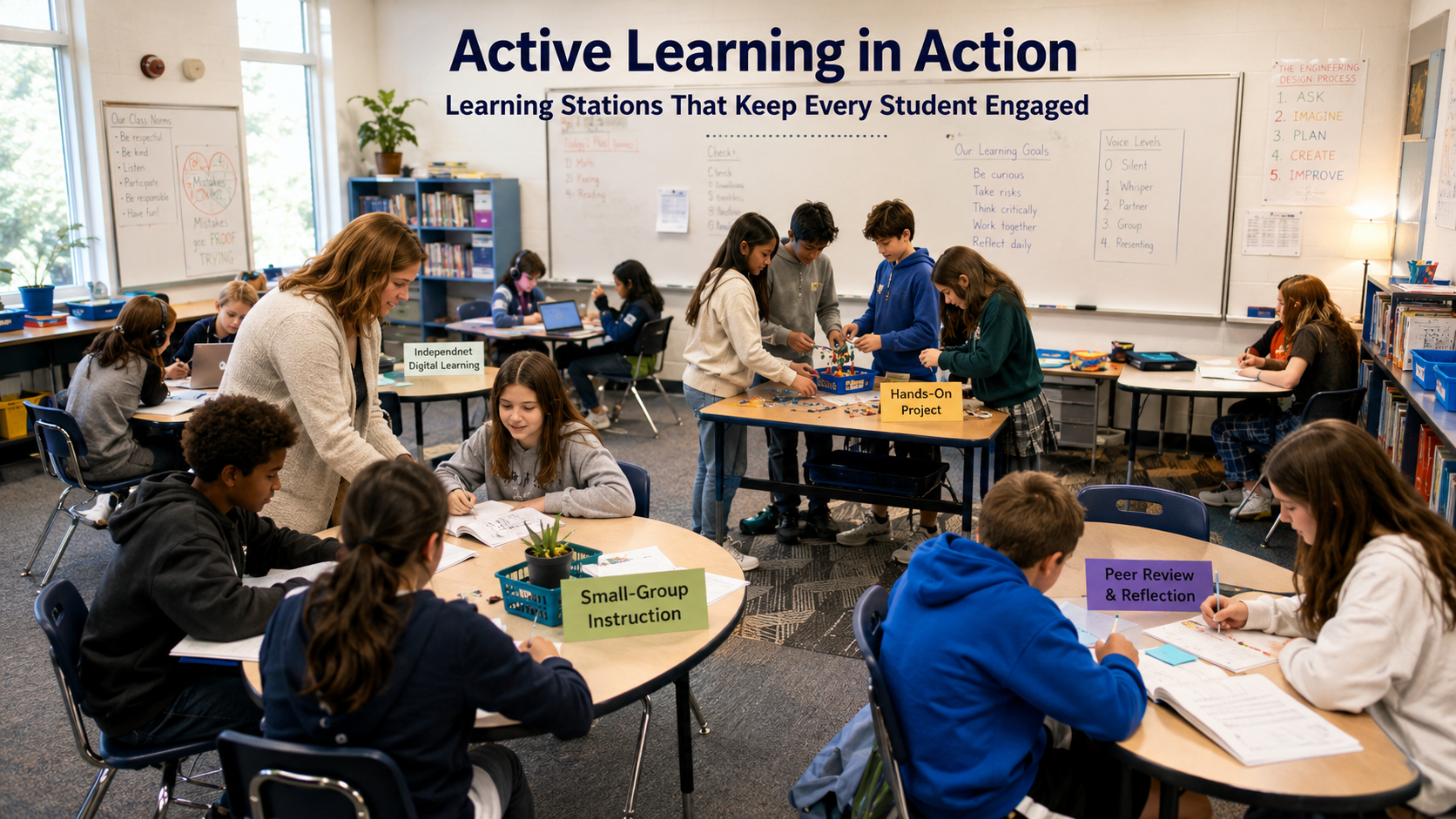
5. Rotate Learning Stations to Keep Student Interest High
Sitting in one spot for an hour tests anyone’s patience; therefore, station rotation breaks a single lesson into bite-sized, dynamic segments. To illustrate, set up 3 to 4 stations around the room:
-
Station A: Teacher-led small group instruction
-
Station B: Collaborative hands-on project work
-
Station C: Independent digital practice
-
Station D: Peer review or written reflection
By rotating groups every 12 to 15 minutes, you ensure that momentum remains exceptionally high throughout the period.
6. Give Students Voice and Choice to Promote Active Learning
Autonomy inevitably breeds commitment. Whenever possible, offer choices in how students demonstrate their subject mastery. For example, provide a choice board for assignments where options include writing an essay, recording a podcast episode, creating an infographic, or building a presentation. When learners control their learning path, they naturally take far greater ownership of the final output.
7. End with Interactive Exit Tickets for Immediate Engagement Feedback
Finally, conclude lessons five minutes early to collect immediate diagnostic feedback. Specifically, ask students to answer one or two quick questions on a slip of paper or a digital form:
-
What was the most important concept you learned today?
-
What is one question you still have about this topic?
This practice forces instant cognitive synthesis while simultaneously providing valuable diagnostic data for your next lesson plan.
Overcoming Common Classroom Engagement Challenges
Even well-planned lessons occasionally encounter student resistance. Fortunately, recognizing common obstacles allows educators to adapt quickly without losing valuable instructional time.
Addressing Distractions and Low Student Motivation
Digital devices and external stress frequently pull attention away from instruction. However, rather than banning technology outright, teachers should integrate it purposefully into lessons. For example, use live polls, collaborative documents, and interactive digital whiteboards to turn devices into useful learning tools rather than distracting temptations.
Supporting Diverse Learning Styles and Disengaged Students
Furthermore, not every student thrives in large group discussions. Introverted learners often feel overwhelmed by fast-paced verbal debates; therefore, educators should balance whole-class discussions with written reflection time, small group tasks, and silent digital forums. Ultimately, offering multiple avenues for expression ensures that every voice is heard and valued.
FAQ SECTION
What are student engagement strategies?
Student engagement strategies are specific instructional techniques, routines, and activity designs that teachers use to keep learners focused, motivated, and actively participating in the learning process. These methods move beyond traditional lecture formats by integrating hands-on tasks, peer collaboration, digital tools, and physical movement. Ultimately, these strategies aim to boost cognitive understanding, emotional connection, and positive behavior in the classroom.
Why is student engagement important for academic success?
Student engagement directly drives academic achievement because active participation reinforces long-term memory and conceptual understanding. When students engage deeply with material, they process information at higher cognitive levels rather than memorizing facts for a test. Furthermore, highly engaged classrooms experience fewer behavioral disruptions, higher attendance rates, and stronger overall student morale.
How do you measure student engagement in the classroom?
Teachers measure engagement through formal and informal assessments, direct observation, and regular feedback channels. Common indicators include active participation in discussions, completion rates of non-graded practice, the depth of student questions, and scores on diagnostic exit tickets. Additionally, digital analytics from learning platforms provide insights into how often and how thoroughly students interact with course materials.
How can teachers engage quiet or introverted students?
Engaging quiet students requires providing low-anxiety avenues for participation. Techniques like Think-Pair-Share, written exit tickets, individual reflection time, and digital discussion boards allow introverted learners to process and express their ideas without needing to speak in front of a large group. Offering options for individual project work also helps quiet students showcase their knowledge effectively.
What are some quick engagement tactics for low-energy days?
When classroom energy is low, implement quick physical or mental resets. Use the “Four Corners” movement activity, launch a 3-minute competitive quiz game, or pause for a quick peer-to-peer discussion break. Changing the physical room setup or switching from teacher-led instruction to a quick hands-on group challenge also instantly restores focus and energy.
How does technology improve student engagement?
Technology enhances engagement by adding interactivity, immediate feedback, and personalization to lessons. Interactive tools like digital polling, gamified quizzes, virtual simulations, and multimedia presentation software allow students to interact with content dynamically. When used purposefully, tech tools transform passive viewing into an interactive, student-driven experience.
CONCLUSION
In summary, creating a vibrant, interactive learning space requires intentional planning and a willingness to try new approaches. By moving away from passive lecturing and incorporating active student engagement strategies, educators foster an environment where learners take true ownership of their education.
Throughout this article, we explored how balancing behavioral, emotional, and cognitive engagement creates the necessary foundation for meaningful learning. Furthermore, tapping into tactics like Think-Pair-Share, station rotations, project-based tasks, and gamified reviews keeps energy high and focus sharp. Therefore, remember that small shifts in your daily routine can yield substantial gains in both student performance and classroom morale.
As a next step, start small by picking one or two techniques from this guide to test in your upcoming lessons. As you implement them, observe how your students respond, refine your approach based on their feedback, and continue expanding your instructional toolkit over time. If you’re looking for additional strategies to create a more effective learning environment, explore our guide on 10 Things Schools Need to Get Right for practical insights that complement these teaching techniques.