
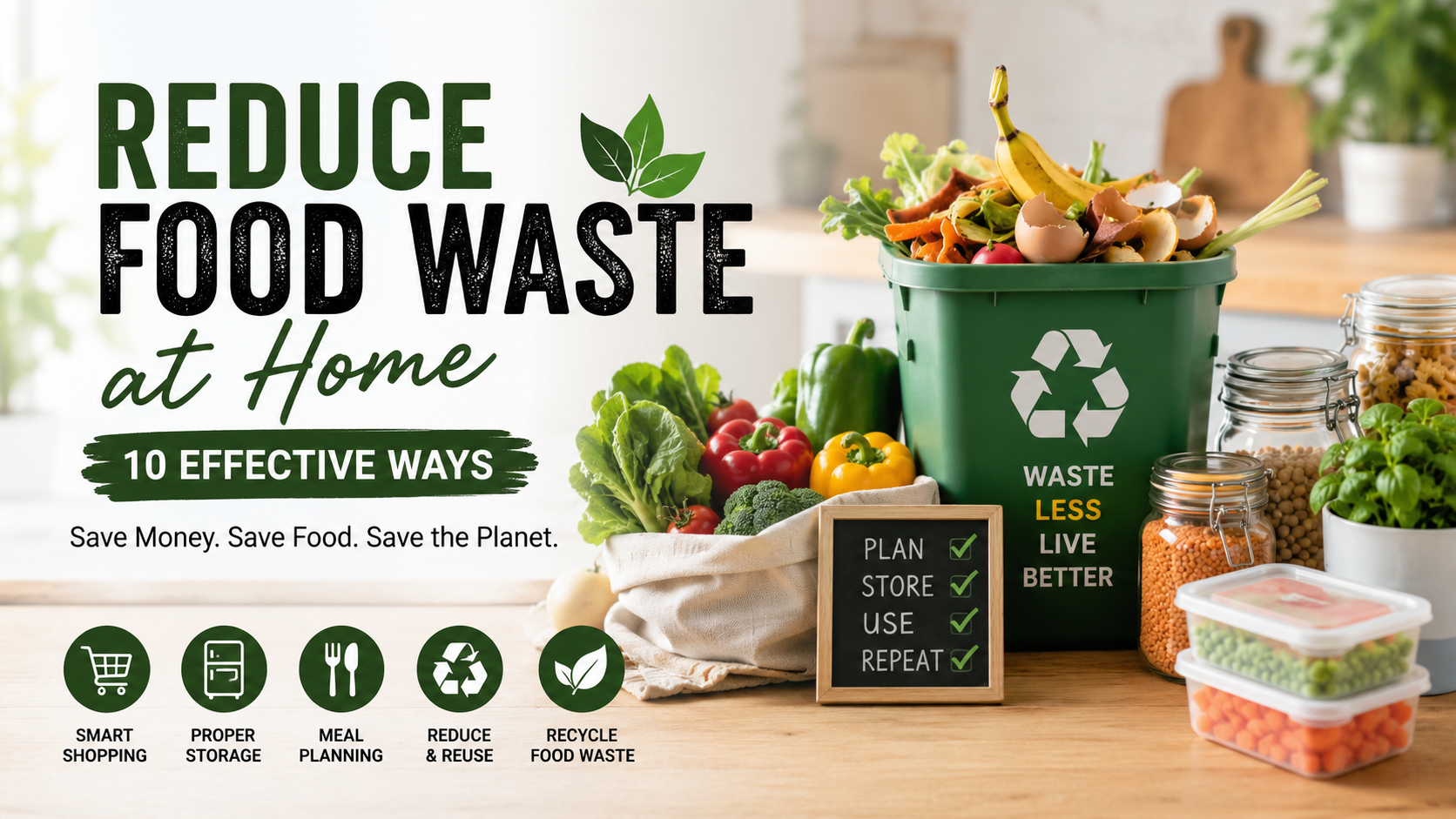
Reduce Food Waste at Home: 10 Effective Ways
Every single day, millions of households throw away perfectly edible food, which places a massive burden on our landfills and natural resources. When we fail to manage our kitchen supplies properly, we lose valuable money and contribute to global greenhouse gas emissions. According to the Food and Agriculture Organization, a significant portion of global food loss happens right at the household level. Fortunately, you can easily turn things around by adopting mindful consumption habits and smart storage techniques. Throughout this article, we will answer the most important questions about what are 10 ways to reduce food waste, what are 10 ways to reduce waste, how do we reduce food waste at home, what are the 5 steps to reduce food waste, and how to recycle food waste at home. By following these practical strategies, you will transform your kitchen into an efficient, eco-friendly space.
What Are 10 Ways to Reduce Food Waste?
Tackling surplus food in your kitchen requires a mix of planning, smart storage, and creative cooking habits. To reduce food waste, you need practical strategies that fit your daily routine. These methods can help you save money while keeping usable food out of landfills.
Food waste often happens because we buy too much, forget what we have, or store ingredients incorrectly. Small changes can solve each problem. A weekly meal plan can guide your shopping list and reduce impulse purchases. Clear storage practices can also help food stay fresh longer.
The goal is not to create a perfect kitchen. Focus on habits you can repeat every week. Use what you already have before buying more. Check your refrigerator regularly, understand date labels, and find simple ways to reuse leftovers. Together, these habits can reduce food waste at home while making everyday meals more efficient and affordable.
For households preparing for unexpected disruptions, practical food management can also complement the advice in Essential Emergency Tools Every Home Needs in 2026. Keeping an organized supply of useful household resources can make it easier to avoid unnecessary purchases and waste.
Planning Meals and Storing Produce Properly
Meal planning is one of the easiest ways to reduce food waste because it connects your grocery list with meals you expect to cook. Before shopping, check your refrigerator, freezer, and pantry. Note ingredients that need to be used soon, then build meals around them.
Create a weekly plan that matches your schedule. Avoid complicated meals on busy days, since unused ingredients can spoil before you have time to cook them. Make a shopping list based on the portions your household needs. Stick to that list and avoid buying food simply because it is discounted.
Proper storage matters too. Keep produce in conditions that help it stay fresh. Store some fruits and vegetables separately because certain produce can speed up ripening. Keep leafy greens dry, refrigerate foods that require refrigeration, and freeze ingredients you cannot use soon. These habits can extend shelf life and reduce unnecessary disposal.
Learning how to Preserve Your Vegetables and Fruits can provide additional ways to extend the usable life of seasonal produce and reduce the amount that gets discarded.
Food preservation can also be useful when managing a home garden. If you grow your own produce, combining preservation techniques with an Organic Garden from Scratch can help you make better use of what you grow throughout the year.
What Are 10 Ways to Reduce Waste?
Reducing household waste requires more than managing leftover food. It starts with buying fewer unnecessary products and choosing items that can be reused or repaired. Before purchasing something, consider whether you need it and whether you already own an alternative.
Shopping with intention can reduce material waste and packaging. Choose durable products when practical, avoid unnecessary single-use items, and select refillable formats when they genuinely reduce packaging. However, buying in bulk is not always better. A large package can create more waste if your household cannot use it before it expires.
Reuse should come before disposal whenever possible. Repurpose suitable containers, donate usable items, and repair products instead of replacing them. Sort recyclable materials according to local rules. These habits create a more mindful approach to consumption and can reduce waste sent to municipal facilities. The key is to prevent waste before it appears.
For broader environmental habits, you can also explore How to Promote the Environment More Powerfully for additional ideas on making sustainable choices part of everyday life.
Embracing Minimalism and Smart Purchasing Habits
Mindful purchasing can reduce how much waste your household creates. Minimalism does not mean owning as little as possible. It means buying with a clear purpose and avoiding products that add little value.
Before shopping, ask whether you need the item, how often you will use it, and whether you already own an alternative. This check can prevent impulse purchases and reduce packaging. When choosing household goods, consider durability, repairability, and lifespan rather than focusing only on price.
Food purchases deserve the same attention. Avoid buying large quantities simply because an item is discounted. A lower unit price does not save money if food ends up in the trash. Check your pantry before shopping and use older products first.
These habits can reduce clutter, spending, packaging, and household waste. Buying less, using items longer, and reusing what you can creates a practical foundation for waste reduction.
Financial discipline is closely connected to these purchasing habits. If you’re trying to make your household budget more efficient, Common Saving Mistakes to Avoid for Financial Freedom offers additional guidance on avoiding unnecessary spending.
You can also learn practical strategies for Saving Money on Healthy Food Products, especially when trying to balance nutritious meals with a limited grocery budget.
How Do We Reduce Food Waste at Home?
Reducing food waste at home starts with paying attention to what enters and leaves your kitchen. Food is often wasted because portions are too large, ingredients are forgotten, or date labels are misunderstood. Simple routines can prevent these problems.
Start by checking your refrigerator and pantry before shopping. Organize foods so older items stay visible and easier to use. Place foods that need attention soon in a clearly visible area. When preparing meals, choose portions that match your household’s appetite.
Learn the difference between food quality dates and safety instructions. When a product has specific storage guidance, follow the label and manufacturer instructions. Do not rely on smell or appearance alone for foods that may be unsafe.
Finally, plan how you will use leftovers. Store them promptly and keep them easy to see. Turn suitable leftovers into lunches, soups, sauces, or other meals. These habits can lower food waste while helping your grocery budget go further.
Mastering Portion Control and Creative Cooking
Portion control can reduce food waste because it prevents more food from being served than people are likely to eat. Start with smaller servings, especially when you are unsure how hungry everyone will be. Anyone who wants more can take a second serving.
Pay attention to meals that regularly produce leftovers. If a dish is consistently uneaten, adjust the quantity next time. This feedback helps you cook more accurately without complicated calculations.
Creative cooking can give extra ingredients a second life. Cooked vegetables can become soup, pasta filling, or omelet ingredients. Extra rice can work in fried rice. Soft fruit can be used in smoothies when safe to eat.
Store usable leftovers promptly and keep them visible. A little planning can turn leftovers into convenient meals instead of forgotten containers. The aim is to use edible food wisely and discard only what cannot reasonably be used.
What Are the 5 Steps to Reduce Food Waste?
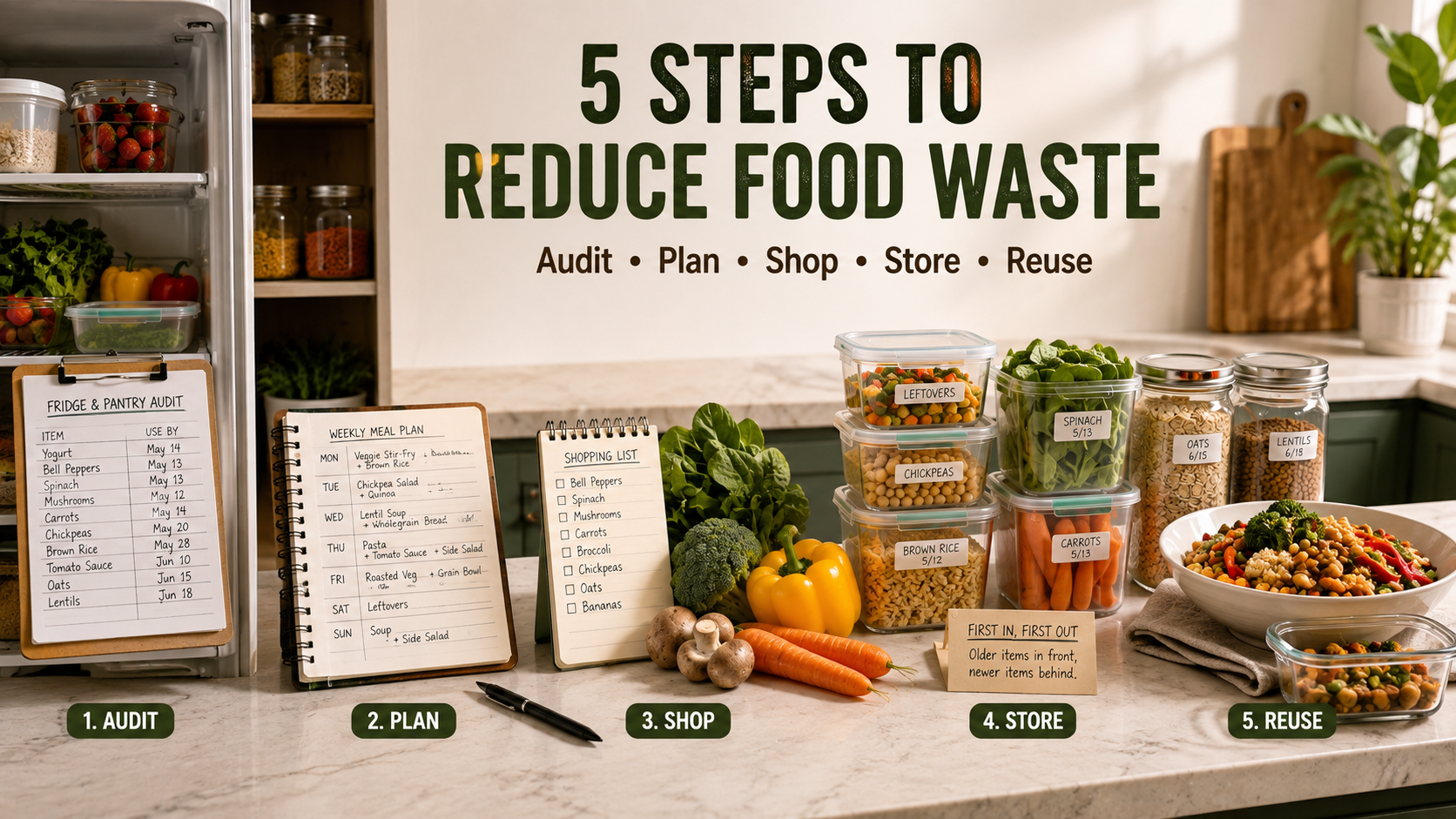
A simple five-step routine can make reducing food waste easier to maintain. First, audit your refrigerator, freezer, and pantry before every grocery trip. Look for ingredients that need to be used soon.
Second, plan meals around those foods. Choose recipes that use several ingredients you already have. Third, shop with a specific list and buy quantities that match your household’s needs. Avoid impulse purchases and be careful with bulk deals.
Fourth, store food correctly after shopping. Refrigerate or freeze items that require it, keep produce in suitable conditions, and organize older foods where you can see them. This helps prevent forgotten ingredients from spoiling.
Fifth, use leftovers creatively before preparing another meal. Keep flexible recipes available, such as soups, stir-fries, or grain bowls. This system addresses waste before, during, and after shopping.
Consistent food management also matters at a broader level because climate-related disruptions can affect food availability and prices. For more context, read Climate Change Food Security: Impacts and Solutions.
Consistency matters more than perfection. Repeating these steps each week can reduce unnecessary purchases and extend food freshness.

Following a Clear Sequential Kitchen Routine
A practical kitchen routine makes it easier to prevent food waste consistently. Start by checking your refrigerator, freezer, and pantry before making a grocery list. This shows you what you already have and which ingredients need attention.
Next, plan several meals around those ingredients. Choose simple recipes that use overlapping foods. Then create a focused shopping list based on your planned meals and household portions. Avoid buying items simply because they are discounted.
After shopping, store each ingredient correctly. Refrigerate or freeze foods that require it, and keep older products visible. Use a first-in, first-out approach where practical, so older ingredients get used before newer purchases.
Finally, plan for leftovers before cooking. Decide whether extra food will become tomorrow’s lunch, another dinner, or part of a different recipe. This routine reduces forgotten ingredients and unnecessary purchases.
You do not need to follow every step perfectly. Consistent habits matter more. A repeatable process can make food management easier while helping your household save money and reduce waste.
How to Recycle Food Waste at Home?
Food scraps will sometimes remain even with careful planning. Composting can keep suitable organic materials out of general waste and return nutrients to soil. Using edible food first should remain the priority.
Check which composting options are available in your area. Some communities provide organic-waste collection, while others support home composting. Follow local guidance because accepted materials and rules vary.
For a home compost system, suitable materials can include fruit and vegetable scraps, coffee grounds, and certain plant-based kitchen waste. Avoid materials your system does not accept. Manage moisture and airflow according to its design.
Finished compost can provide useful organic matter for a garden or balcony. Worm composting may suit some households with limited space.
Combine prevention, reuse, and composting. Use edible food first, reuse suitable leftovers, and compost unavoidable scraps. This approach makes better use of resources.
Composting Organic Scraps for Your Garden
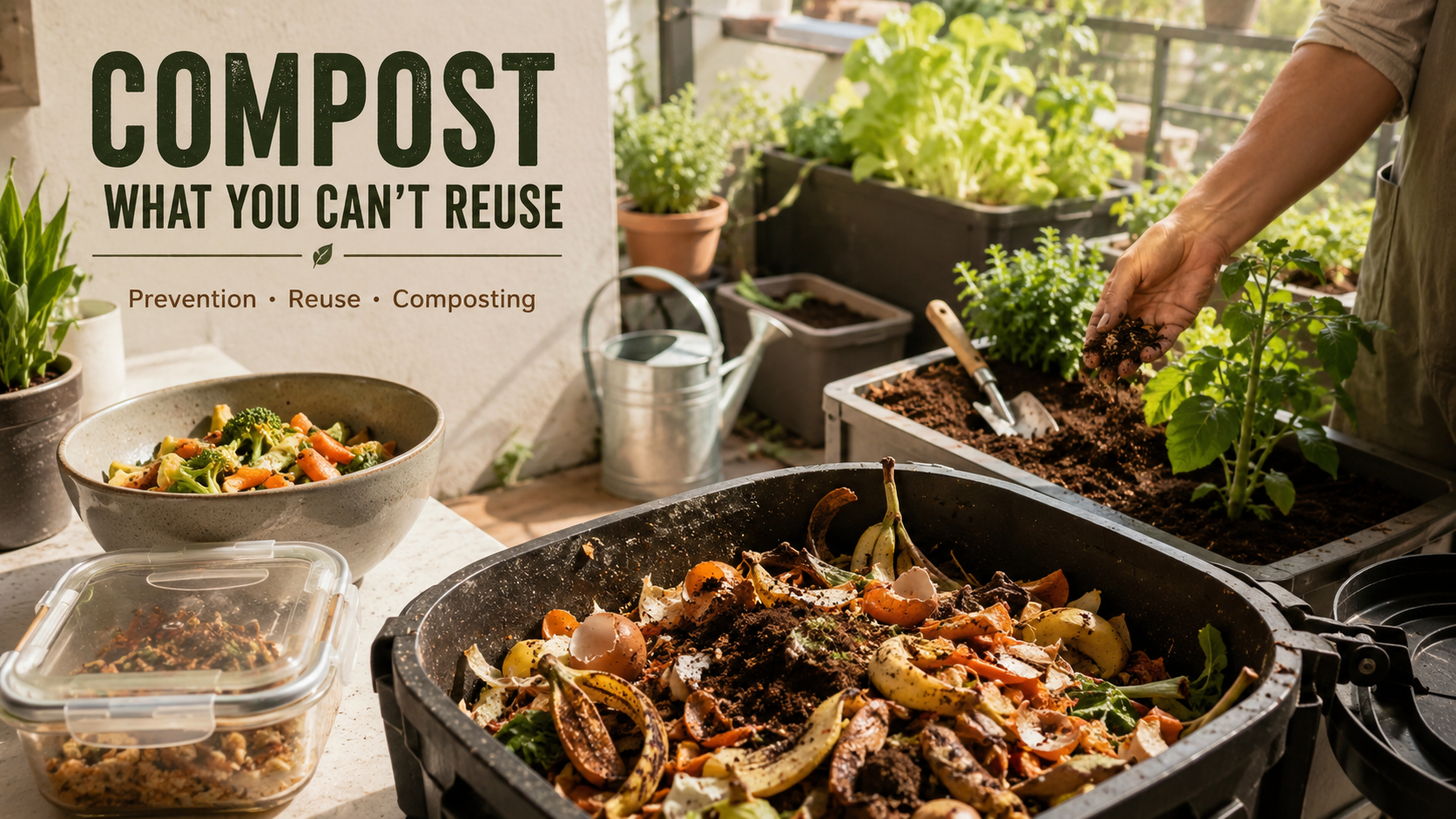
Composting turns suitable organic scraps into a useful soil amendment instead of sending them to general waste. Fruit and vegetable peels, coffee grounds, and plant trimmings are common examples for many home composting systems. Always check your system’s requirements before adding anything.
Choose a composting method that matches your available space and routine. A backyard bin can suit homes with outdoor space, while worm composting may work for some smaller homes. Community composting or municipal organic-waste collection can be another option where available.
Good composting requires basic maintenance. Follow guidance for moisture, airflow, and material balance. Keep unwanted items out of the compost stream, especially those your local program or home system does not accept. Proper management helps prevent odors, pests, and poor decomposition.
Finished compost can be used around suitable plants as a source of organic matter. It supports a circular approach by returning nutrients to soil. Still, composting should follow prevention and reuse. The best way to reduce food waste is to avoid creating it. Use edible food first, save suitable leftovers, and compost only unavoidable scraps.
If you want to take the next step toward a more sustainable garden, How to Make Your Garden Greener offers additional ideas for improving environmentally friendly gardening practices.
Water conservation is another important part of sustainable gardening. See How to Save More Water on a Daily Basis for practical ways to use less water around the home.
Reducing water pollution also helps protect the wider environment. You can learn more from How to Lessen Water Pollution.
For a broader overview of everyday environmental responsibility, How to Take Good Care of the Environment can complement the waste-reduction strategies discussed in this article.
FAQ SECTION
What is the main cause of food waste at home?
The primary cause of home food waste is poor meal planning combined with buying too many perishable groceries. Many households also confuse date labels like “best by” with safety expiration dates, leading to premature tossing of safe food.
Can I freeze cooked meals to prevent waste?
Yes, freezing cooked meals is one of the best ways to preserve extra food for later use. Portion out soups, casseroles, and baked dishes into airtight containers to safely extend their shelf life by several months.
How do I know if food is still safe to eat?
Rely primarily on your senses—sight and smell—rather than relying solely on printed date labels. If the food shows no mold, unusual textures, or foul odors, it is usually safe to consume or cook immediately.
What items should never go into a home compost?
You should avoid adding meat, dairy, oils, and pet waste to a standard home compost pile. These materials can attract unwanted pests, create foul odors, and disrupt the delicate chemical balance required for healthy decomposition.
Conclusion
Taking control of your kitchen habits allows you to successfully reduce food waste at home while saving money on your weekly grocery bill. By planning meals carefully, storing ingredients correctly, and recycling scraps through composting, you make a powerful positive impact on the environment. Every small change you adopt adds up to significant long-term benefits for your household and the planet. Start applying these practical strategies today and enjoy a more sustainable, mindful kitchen routine.