
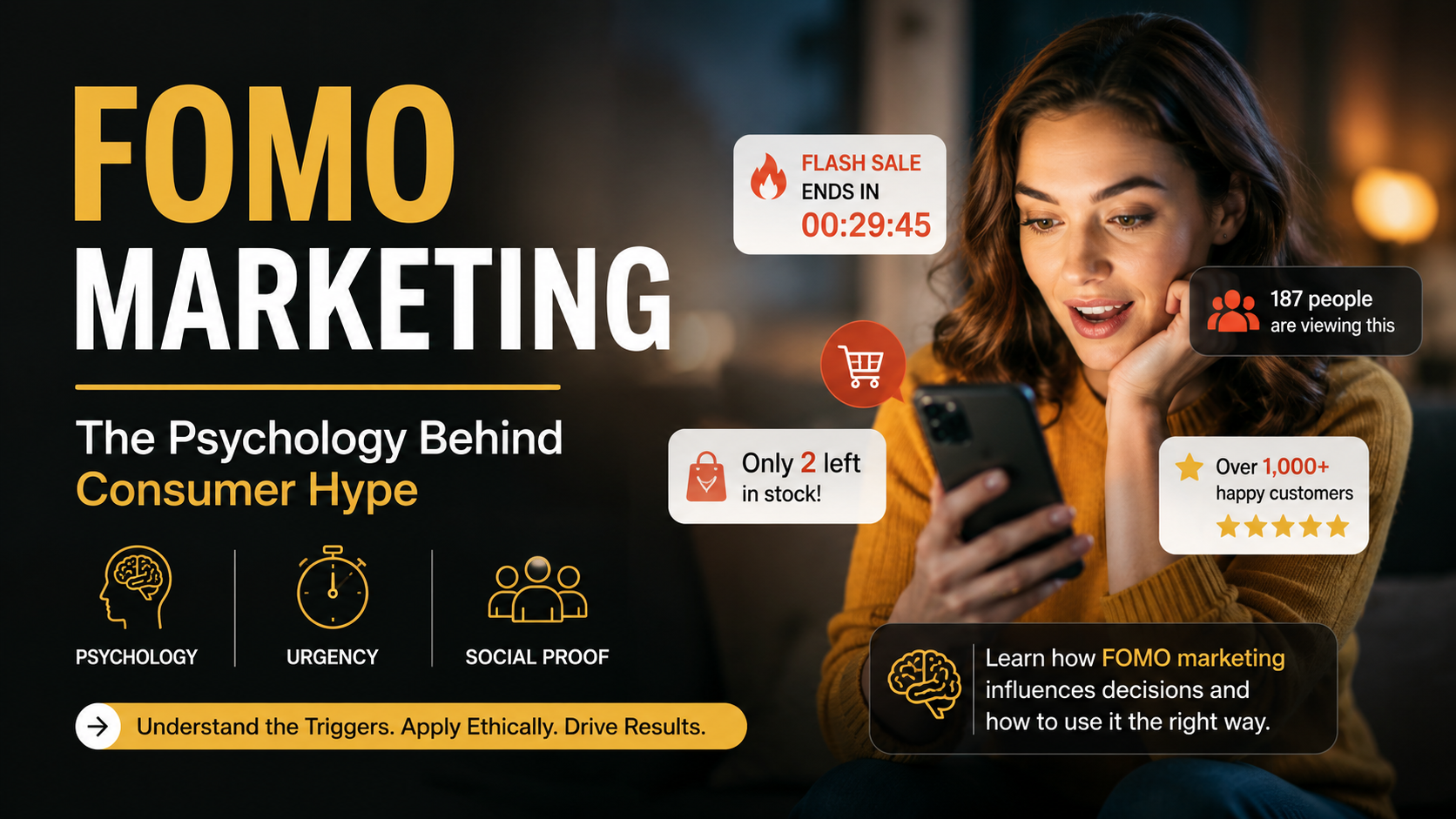
FOMO Marketing: The Psychology Behind Consumer Hype
Have you ever bought an item simply because a timer was ticking down? Or maybe you booked a room because a pop-up warned that only two spaces remained? If so, you have experienced FOMO marketing firsthand. This strategy relies on the fear of missing out. It is a deep psychological driver that urges people to take quick action before an opportunity vanishes. According to insights shared by the American Psychological Association, social connection and the anxiety of exclusion heavily influence daily decisions.
Marketing teams rely on these psychological triggers to turn casual browsers into active buyers. When consumers feel a loss risk, their choices shift rapidly. They move from logical evaluation to emotional action. Consequently, brands using FOMO marketing effectively can build high-converting campaigns without losing customer trust.
In this guide, we will examine the psychological drivers behind consumer hype. We will explore loss aversion, social proof, and practical urgency triggers. Furthermore, we will analyze ethical ways to implement FOMO marketing tactics. You will learn how to apply these persuasion strategies to grow your business while serving your audience well.

What Is an Example of FOMO Marketing?
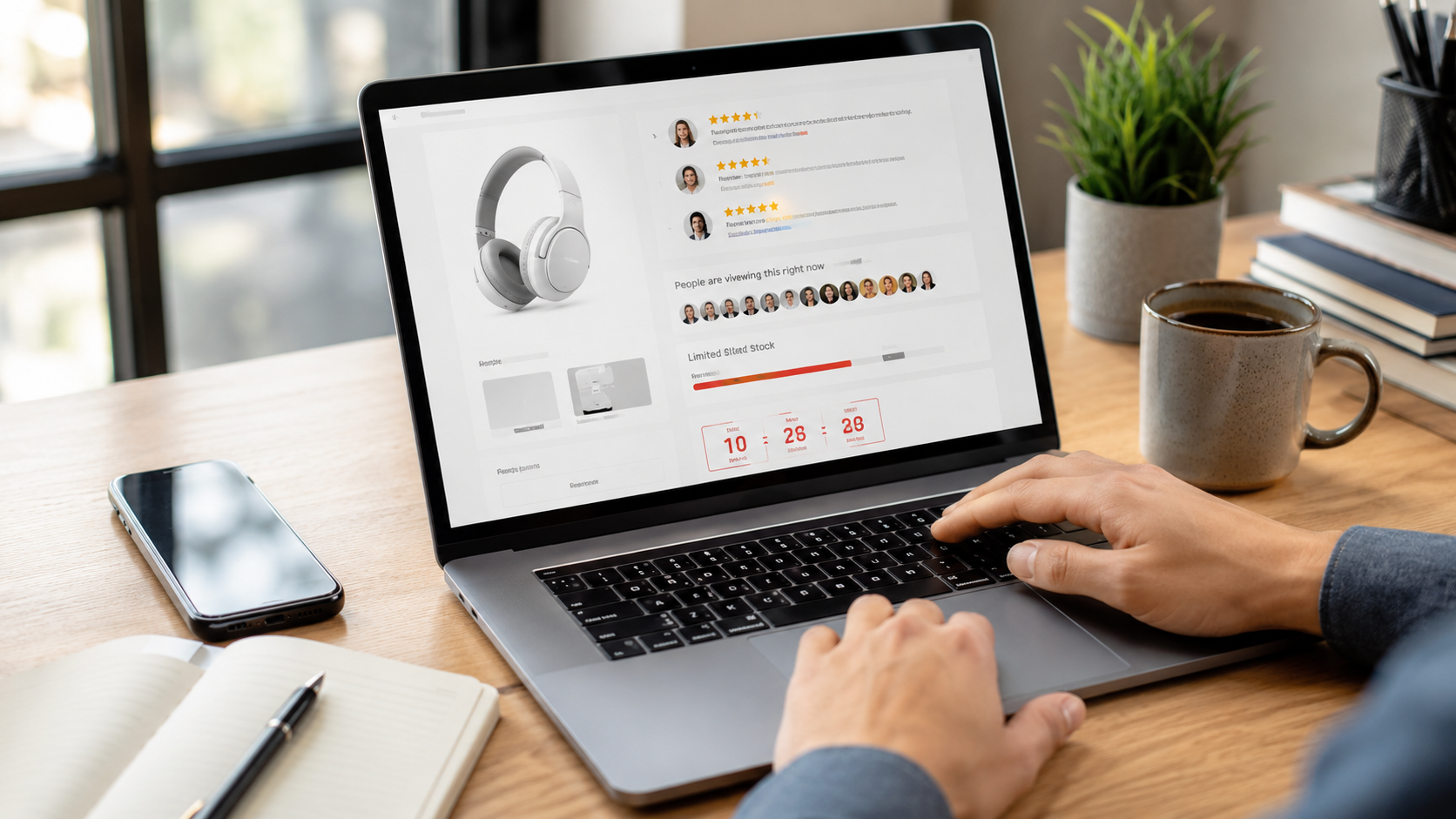
A classic example of FOMO marketing is a flash sale that features a prominent countdown timer on an e-commerce website. When shoppers see that a significant discount expires within two hours, they often shift from careful consideration to immediate action. The limited timeframe creates urgency and reduces the likelihood of delaying a purchase.
Travel booking websites also use this strategy effectively. They display real-time messages such as “Three other people are viewing this hotel right now” or “Only one room left at this price.” These notifications encourage users to act before the opportunity disappears. As a result, many consumers complete their purchases more quickly than they normally would. By combining scarcity, urgency, and social proof, brands increase conversions without reducing the perceived value of their products. When used honestly, these techniques create excitement while helping customers make timely decisions.
Live Inventory Alerts in Retail
Live inventory alerts display messages such as “Only two items left in stock” to highlight limited availability. This information creates a sense of urgency because shoppers know the product may soon sell out.
Instead of postponing the purchase, many customers decide to buy immediately to avoid disappointment. This tactic works because people naturally dislike losing opportunities. When inventory levels are genuine and accurately displayed, live stock alerts can increase conversions while maintaining customer trust. Retailers should avoid creating false scarcity, as transparency is essential for long-term credibility.
What Is the FOMO Marketing Technique?
The FOMO marketing technique is a strategy that combines scarcity, urgency, and social proof to encourage people to take immediate action. Brands use this approach across websites, email campaigns, social media, and digital advertising to shorten the buying journey. Limited-time offers, exclusive product launches, and members-only promotions make consumers feel that valuable opportunities may disappear if they wait too long.
This technique is based on a simple psychological principle. People often place greater value on products or experiences that appear difficult to obtain. Businesses reinforce this perception through countdown timers, limited stock messages, exclusive access, and real customer activity. When applied ethically, FOMO marketing increases engagement and sales while preserving customer trust. The key is ensuring that every urgency trigger reflects a genuine offer rather than artificial pressure.
Leveraging Exclusive Social Proof
Brands strengthen social proof by showcasing customer reviews, user-generated content, and influencer experiences. Seeing others enjoy a product increases confidence and creates a stronger desire to participate.
Live testimonials, trending purchases, and community engagement also encourage faster decisions. Consumers often want the same benefits or recognition that others receive. Authentic social proof builds credibility while naturally reinforcing the fear of missing out.
What Is FOMO vs. JOMO?
FOMO (Fear of Missing Out) describes the anxiety people experience when they believe others are enjoying opportunities that they are missing. It often leads to constant social media checking, impulse buying, and quick purchasing decisions. In contrast, JOMO (Joy of Missing Out) represents the conscious choice to disconnect, slow down, and appreciate the present moment without feeling pressured to participate.
For marketers, understanding this difference is increasingly important. Traditional FOMO marketing relies on urgency and scarcity to drive action. However, many consumers now prefer brands that respect their time and decision-making process. Successful businesses balance promotional urgency with transparency and authenticity. Rather than creating unnecessary pressure, they focus on genuine value, allowing customers to make confident purchasing decisions while still benefiting from limited-time opportunities.
The Shift Toward Mindful Consumption
Many consumers are moving away from anxiety-driven purchasing and embracing mindful consumption. They research products carefully and prioritize long-term value over impulsive decisions.
This shift encourages businesses to rethink aggressive marketing tactics. Brands that combine honest urgency with transparent communication build stronger customer relationships. Respecting consumer boundaries helps create trust, loyalty, and sustainable business growth.
Frequently Asked Questions
How does social media amplify consumer hype?
Social media amplifies consumer hype by giving people instant visibility into trending products, experiences, and recommendations. Users regularly see influencers, creators, and friends sharing purchases, reviews, and limited-time offers. This continuous exposure creates the impression that many people are participating, increasing the desire to join before the opportunity disappears.
Brands strengthen this effect through viral campaigns, influencer partnerships, live shopping events, and user-generated content. As conversations spread across digital platforms, demand appears stronger and more immediate. This combination of social proof and visibility makes social media one of the most effective channels for FOMO marketing.
Can small businesses successfully use scarcity tactics?
Yes. Small businesses can use scarcity marketing without large advertising budgets. Boutique stores, local retailers, and independent creators often offer limited product runs, seasonal collections, exclusive workshops, or weekend-only promotions. These genuine limitations naturally create exclusivity.
Customers often appreciate unique products that are unavailable everywhere. When businesses communicate honestly about limited availability, they create excitement while strengthening customer trust. Authentic scarcity can be just as effective for small businesses as it is for global brands.
What are the ethical risks of using urgency triggers?
Urgency triggers become unethical when businesses create fake countdown timers, false inventory shortages, or misleading claims about demand. These tactics may generate short-term sales, but they often reduce customer trust and increase buyer’s remorse.
Ethical FOMO marketing relies on accurate information. Brands should only promote genuine stock limitations, authentic deadlines, and real promotional periods. Transparent marketing protects brand reputation while encouraging long-term customer loyalty.
How do modern consumers resist psychological sales tactics?
Today’s consumers are becoming more aware of psychological marketing techniques. Many compare prices, read reviews, check product history, and delay purchases before making decisions. Digital literacy has made shoppers more cautious about artificial urgency.
As awareness grows, successful brands increasingly focus on providing real value instead of relying solely on pressure-based marketing. Honest communication, quality products, and strong customer relationships now play a greater role in influencing purchase decisions than manufactured scarcity alone.
CONCLUSION
Understanding the psychology behind FOMO marketing reveals why hype drives consumer behavior so effectively across modern digital marketplaces. By tapping into fundamental human motivations such as loss aversion, social validation, and time sensitivity, businesses can systematically eliminate buyer hesitation. This streamlines decision-making and accelerates conversion rates. When consumers encounter real-time inventory alerts, authentic customer testimonials, or visible countdown timers, their mental focus shifts instantly. They move from delaying a purchase to securing the item before the opportunity disappears.
However, achieving sustainable success requires maintaining a balance between persuasive tactics and true brand authenticity. Deceptive practices like fake stock warnings, endless timers, or fabricated social proof erode consumer trust over time. They degrade your brand reputation and lead to high churn rates. Smart marketers realize that true urgency must always be grounded in real value, transparent communication, and authentic limitations that respect consumer intelligence. When evaluating campaign strategies, striking the right balance of hype vs. value ensures that short-term conversions never come at the expense of brand integrity.
By aligning honest urgency with exceptional product quality and transparent messaging, you can create compelling campaigns. These campaigns generate immediate sales while cultivating deep, long-term customer loyalty. Implement these psychological principles thoughtfully within your broader marketing strategy. This will turn emerging buyer trends into predictable, sustainable business growth for years to come.