
Preserving Antique Textiles: The Ultimate Guide to Conserving Historic Fabrics
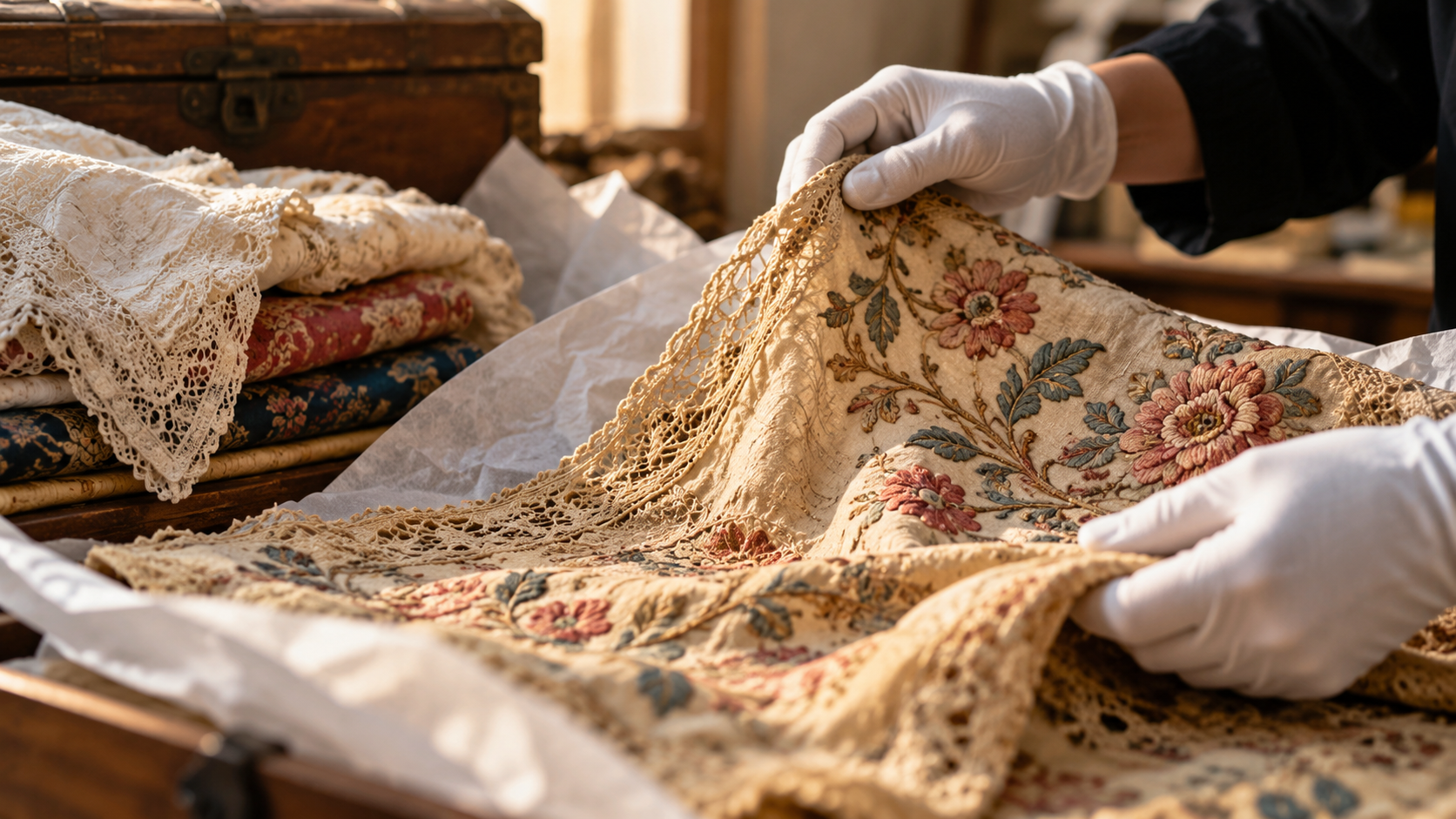
Preserving antique textiles helps protect cultural heritage, fashion history, and treasured family heirlooms. Historic fabrics can deteriorate when exposed to direct sunlight, fluctuating humidity, dust, pests, and unsuitable storage materials. Without proper care, delicate lace, vintage clothing, embroidered fabrics, and historic quilts may suffer irreversible damage.
Fortunately, careful handling and appropriate storage can slow this deterioration. Understanding the fabric’s composition also helps you choose suitable cleaning and conservation methods. For additional guidance, consult the Smithsonian Institution’s preservation resources and the Canadian Conservation Institute’s preventive conservation guidelines.
Successful preserving antique textiles starts with understanding the fabric, identifying potential risks, and choosing suitable conservation methods. Even simple changes to handling and storage can help reduce unnecessary damage. The National Park Service’s Museum Handbook also provides useful information about caring for museum collections and protecting historic objects.
This guide explains the main textile categories, conservation techniques, safe cleaning practices, and museum storage methods. Whether you care for inherited garments or historic decorative fabrics, these practical principles can help protect them for future generations.
What are the three types of textiles?
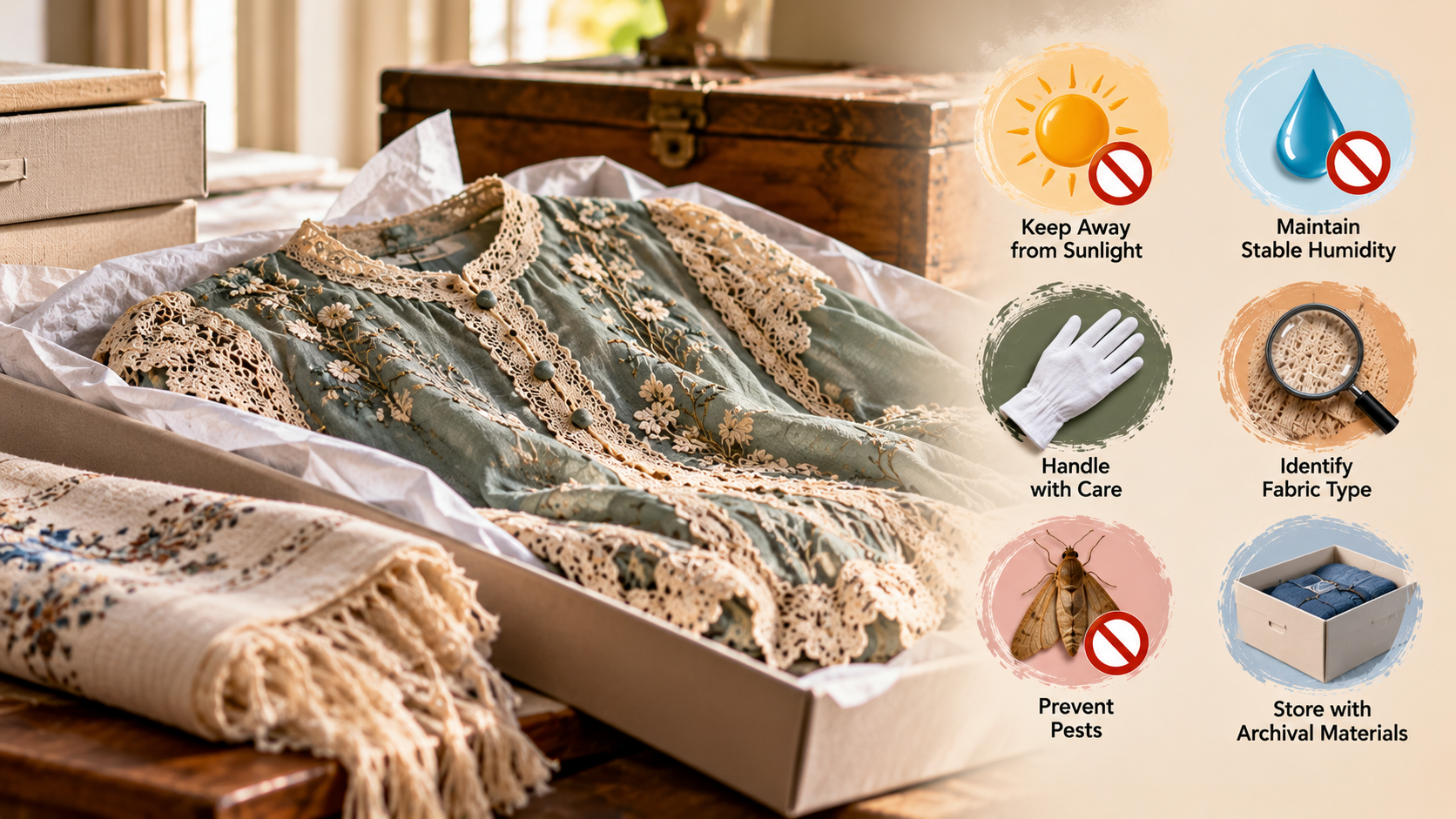
Understanding textile categories is an important first step in preserving antique textiles. Fabrics generally contain plant-based, animal-based, or synthetic fibers. Each category has different characteristics and conservation requirements. Identifying the material helps determine suitable handling, cleaning, display, and storage methods.
Plant-based textiles include cotton, linen, and hemp. These cellulose fibers can weaken when exposed to acidic materials, excessive moisture, and prolonged light exposure. High humidity can also encourage mold growth, while dust and pollutants may contribute to deterioration.
Animal-based textiles include wool, silk, and mohair. These protein fibers can be sensitive to heat, light, and unsuitable cleaning products. Wool and other animal fibers may also attract clothes moths and carpet beetles. Silk can become particularly fragile after years of light exposure.
Synthetic textiles include polyester, nylon, and acrylic. Although many synthetic fibers were developed during the twentieth century, their presence does not automatically indicate that an item is modern. Some older synthetic materials can deteriorate through chemical changes, discoloration, or physical damage.
Identifying the fiber is only part of the process. Dyes, finishes, embroidery, metal threads, and previous repairs also influence conservation decisions. When a textile’s composition is uncertain, consult a qualified textile conservator before attempting cleaning or restoration.
What are some common textile conservation techniques?
Textile conservation focuses on stabilizing fragile materials and preventing further deterioration. The objective is to preserve an item’s historical evidence rather than make it look new. Conservators examine the fabric’s condition, construction, dyes, and previous repairs before selecting appropriate treatments. Learn how to care for historical collections through How to collect historical items with a small budget.
Common conservation techniques include gentle surface cleaning, controlled humidification, supportive stitching, and protective mounting. Supportive stitching helps secure weakened areas without placing excessive tension on original threads. Conservators may attach fragile textiles to suitable support fabrics to distribute their weight more evenly.
Humidification can help relax creases in certain textiles, but specialists must assess the material and dyes first. Uncontrolled moisture may cause staining, shrinkage, dye bleeding, or mold growth. Similarly, wet and dry cleaning require careful evaluation because some historic fibers cannot withstand conventional treatments.
Protective mounting also plays an important role in textile preservation. Archival supports reduce strain during display and help prevent sagging or distortion. Conservators may use padded mounts, specially designed boards, or other appropriate supports.
The best technique depends on the individual object. A fragile silk dress requires different treatment from a sturdy cotton quilt. Before attempting repairs, document existing damage and seek professional advice when the textile has significant historical, financial, or sentimental value. When preserving antique textiles, conservators prioritize preventive care to protect original fibers and minimize the need for extensive restoration.
How to clean antique textiles?
Cleaning antique textiles requires caution because aging fibers may have lost much of their original strength. Ordinary washing, vigorous rubbing, and unsuitable detergents can cause permanent damage. Before cleaning, examine the fabric for tears, brittle areas, loose threads, fading, and previous repairs.
Start by identifying the fiber and checking whether the dyes appear stable. A simple colorfastness test cannot guarantee that an entire textile is safe to wash. Moisture may affect hidden dyes, finishes, embroidery, or backing materials differently. Therefore, avoid testing valuable or fragile pieces without professional guidance.
For suitable textiles, conservators may recommend controlled wet cleaning with an appropriate conservation detergent. The process depends on the fabric’s condition, construction, and dye stability. Distilled or deionized water may be appropriate in some treatments, but it does not make washing automatically safe.
Never wring, twist, scrub, or stretch an antique textile. These actions can break weakened threads and distort its original shape. Avoid bleach, stain removers, fabric softeners, and household cleaning products unless a qualified conservator specifically recommends a treatment.
For many delicate items, gentle surface cleaning is safer than washing. If the textile is brittle, heavily stained, embroidered, beaded, or historically significant, consult a textile conservator before proceeding. Professional assessment can help prevent irreversible damage.
Safe Surface Vacuuming Methods
Surface vacuuming can remove loose dust and dirt without introducing moisture to an antique textile. However, vacuuming is not suitable for every object. Fragile lace, shedding fibers, loose embroidery, and severely weakened fabrics may require specialist treatment instead.
Before starting, inspect the textile for loose threads, detached decorations, holes, and lifting surfaces. If the fabric is stable enough, place it on a clean, supportive surface. Use a low-suction vacuum setting and keep the nozzle away from the textile itself.
Cover the nozzle with a clean, fine protective mesh secured firmly in place. The mesh helps prevent loose threads and small textile fragments from entering the vacuum. Avoid pressing the nozzle against the fabric or pulling the mesh across delicate details.
Move the nozzle slowly above the surface without dragging it. Work in small sections and stop immediately if fibers begin lifting or moving. Never vacuum directly over fragile embroidery, beads, sequins, or loose embellishments.
For valuable or severely damaged pieces, professional cleaning is the safer option. Even gentle suction can worsen existing damage when historic fibers have become brittle. Regular inspection and appropriate storage can also reduce the amount of cleaning an antique textile needs.
How to Store Textiles in Museums?
Museums use preventive conservation practices to protect textiles from environmental damage, pollutants, pests, and unnecessary handling. Stable conditions are essential for preserving antique textiles, and different fibers and collections may require different environmental settings.
Many institutions maintain moderate temperatures and relative humidity around 45–55%, depending on the collection and building conditions. A temperature near 68°F (20°C) may suit some storage environments, but it is not a universal requirement. Avoid rapid fluctuations because repeated changes can stress fibers and encourage condensation or mold.
Light control is equally important. Ultraviolet radiation and visible light can fade dyes and weaken textile fibers. Museums therefore limit exposure, use suitable lighting, and keep textiles in darkness when they are not being displayed. LED lighting can reduce heat, but it does not eliminate all light-related damage.
Storage areas should also remain clean, dry, and protected from pollutants. Suitable cabinets, drawers, and enclosures help shield textiles from dust and pests. Powder-coated metal cabinets may be appropriate when their coatings are fully cured and their materials are suitable for collections.
Regular inspections help staff identify leaks, mold, insects, and other emerging problems. Environmental monitoring also reveals harmful fluctuations before they cause serious damage. These preventive measures support preserving antique textiles, including historic garments, quilts, tapestries, and other fabric artifacts.
Choosing Archival Storage Materials
Choosing suitable archival materials helps protect antique textiles from chemical damage and unnecessary physical stress. Using appropriate supplies is an important part of preserving antique textiles for future generations. Some ordinary paper products contain acids and other substances that can contribute to yellowing, staining, and fiber deterioration. Materials that appear clean are not always suitable for long-term preservation.
Use acid-free, lignin-free tissue paper when the material is appropriate for the textile. Unbuffered tissue is often preferred for protein fibers such as silk and wool, while some cellulose textiles may tolerate buffered materials. When uncertain, select materials recommended by a textile conservator.
Archival boxes should provide adequate space and support without crushing the fabric. Avoid overfilling containers, folding textiles tightly, or placing heavy objects on top. Each textile should have enough room to rest without unnecessary pressure or abrasion.
Untreated wood, ordinary cardboard, acidic tissue, and unsuitable adhesives can introduce damaging substances. Plastic materials also require careful selection because some products release harmful chemicals or trap moisture. Do not assume that every product labeled archival is appropriate for every collection.
Before purchasing storage supplies, consider the textile’s fiber composition, weight, condition, and decorative elements. High-quality materials help, but correct handling and suitable environmental conditions remain essential for preserving antique textiles. Inspect stored items periodically to check for discoloration, pests, moisture, and other signs of deterioration.
What Is the Best Way to Store Antique Clothing?
The best storage method depends on the garment’s weight, condition, construction, and available space. Whenever possible, store fragile antique clothing flat in a suitably sized archival box. Flat storage distributes weight and reduces the stress that hanging can place on shoulders, seams, and sleeves. This approach is particularly useful for preserving antique textiles that have weakened with age.
Before storing a garment, inspect it for tears, loose stitching, insect damage, and stains. Do not attempt to remove old stains without understanding their cause and the fabric’s condition. Clean, dry hands are suitable for many handling tasks, although clean gloves may be appropriate for particular materials.
Place acid-free tissue between folds to cushion the fabric and reduce sharp creases. Avoid tight folding, especially along weakened areas. If a garment is too large for a practical box, consider rolling suitable sections around a padded, archival-quality support.
Hanging may work for certain sturdy garments, but it can damage heavy or fragile clothing. If hanging is necessary, use a broad, padded hanger that supports the shoulders evenly. A breathable cotton muslin cover can protect the garment from dust while allowing air circulation.
Avoid airtight plastic bags and damp storage areas. Trapped moisture can encourage mold, while unsuitable plastics may release damaging chemicals. Keep clothing away from direct sunlight, heating equipment, exterior walls prone to condensation, and areas where pests may gather.
Check stored garments periodically without handling them more than necessary. Early signs of damage are easier to address than advanced deterioration. For particularly valuable or fragile clothing, consult a textile conservator for guidance on preserving antique textiles safely.
Padding and Rolled Storage Strategies
Rolling can protect suitable flat textiles from the sharp creases associated with repeated folding. This method works well for many quilts, tapestries, embroidered panels, and other large pieces. However, it is not appropriate for every textile, especially garments with rigid decorations or severely weakened sections.
Choose a wide, sturdy archival-quality tube that comfortably supports the textile’s weight. Cover the tube with an appropriate protective barrier and a layer of clean, unbleached cotton or other conservator-approved material. Avoid direct contact between the textile and potentially acidic cardboard.
Place the textile flat before rolling it slowly around the support. Add suitable tissue between layers when necessary to reduce friction and protect raised embroidery or decorative details. Keep the roll loose enough to avoid compression and distortion.
Store the roll horizontally on secure supports that distribute its weight evenly. Ensure that the textile does not hang over unsupported edges or press against nearby objects. Keep it in a clean, dry environment away from sunlight and pests.
Inspect rolled textiles periodically for creases, distortion, moisture, and insect activity. Some objects may need to be unrolled occasionally for condition checks. If a textile is brittle, heavily beaded, unusually heavy, or historically significant, seek professional advice before choosing rolled storage. Careful assessment and suitable storage techniques are essential for preserving antique textiles over the long term.
What are the best practices for preserving museum artifacts?
Preserving museum artifacts requires a preventive conservation strategy that combines environmental control, careful handling, documentation, and regular inspections. These practices help prevent damage before extensive restoration becomes necessary. They also support responsible care of historic textiles and other culturally significant objects. For another perspective on historical heritage, explore Publishing historical articles on Wikipedia with Simple Steps.
Condition reporting provides a record of an artifact’s physical state. Conservators document tears, fading, stains, loose threads, previous repairs, and other visible changes. Photographs and written notes make it easier to compare the object’s condition during future inspections.
Handling procedures should minimize contact and physical stress. Clean, dry hands are appropriate for many stable textiles, while nitrile gloves may be useful when handling certain contaminated materials or objects with sensitive surfaces. Gloves are not universally required, as they can reduce dexterity and increase the risk of accidental damage.
Museums also use integrated pest management to protect collections from insects and rodents. Staff inspect storage areas, monitor traps, maintain cleanliness, and investigate signs of infestation. Quarantine procedures can prevent pests from spreading when new or affected objects enter a collection.
Environmental monitoring helps staff identify changes in temperature, humidity, and light exposure. Appropriate enclosures and careful display practices further reduce deterioration. When damage occurs, trained conservators assess the object before recommending treatment.
These principles also apply to private collections and family heirlooms. Documenting an item’s condition, limiting unnecessary handling, and maintaining suitable storage can make a meaningful difference. When an artifact has exceptional historical or financial value, professional conservation advice is the most reliable way to protect its long-term condition. Understanding the wider context of historical objects can also be useful when exploring Most influential historical figures that you should know.
AQ SECTION
Can I iron antique textiles to remove wrinkles?
Ironing antique textiles directly is strongly discouraged because extreme heat can scorch, melt, or permanently fuse fragile historic fibers. Instead of traditional ironing, use controlled humidification in a specialized chamber to let wrinkles relax naturally. If slight pressing is absolutely necessary, place a clean cotton pressing cloth over the fabric and use a low, dry temperature setting without steam, testing a hidden spot first.
Is dry cleaning safe for historic garments?
Standard commercial dry cleaning is entirely unsafe for historic garments because harsh chemical solvents and mechanical tumbling can disintegrate fragile antique fibers. Commercial dry cleaners use aggressive perc-based solvents that strip natural oils from antique silk and wool, leaving them brittle and discolored. Always consult a professional textile conservator before considering any chemical cleaning treatment for valuable historic clothing.
Conclusion
Preserving antique textiles is a rewarding responsibility that bridges the gap between past generations and the future. By understanding material types, utilizing proper conservation techniques, and adhering to strict cleaning and storage guidelines, you can protect delicate historic fabrics from premature decay. Implementing museum-grade practices—such as controlling humidity, using archival materials, and avoiding harsh chemicals—ensures your treasured heirlooms remain intact. Exploring top historical occurrences you’ll never forget can provide additional context about the events and periods connected to historic objects. Start applying these expert preservation strategies today to safeguard your valuable antique textiles for decades to come.

