
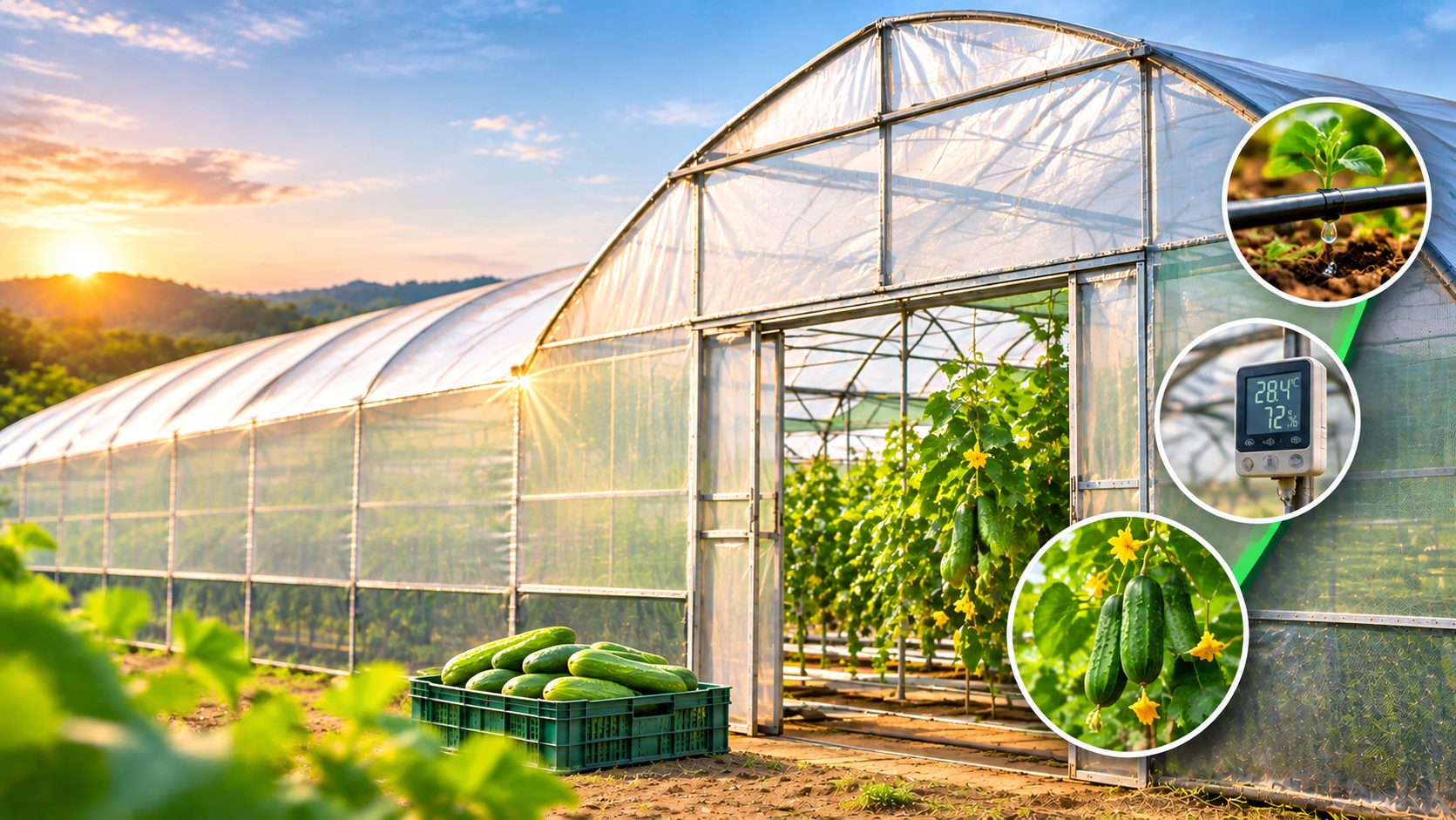
Complete Guide to Setting Up a Polyhouse Farm
Modern agriculture faces unpredictable weather, changing pest patterns, and declining soil quality. These challenges make consistent open-field crop production increasingly difficult. Setting up a polyhouse farm provides a controlled growing environment that protects crops from heavy rainfall, extreme heat, strong winds, and sudden temperature changes.
According to resources from the Food and Agriculture Organization (FAO), controlled cultivation can improve water management and crop production efficiency. Growers can regulate temperature, humidity, irrigation, and light exposure. This helps plants grow under more favorable conditions while reducing unnecessary resource consumption.
This comprehensive guide explains the essential aspects of polyhouse farming. You will learn how to construct a polyhouse, estimate the investment required for one acre, understand potential cucumber yields, and select suitable crops. We will also examine the disadvantages and operational challenges. Whether you want to expand an existing agricultural business or start a new venture, understanding these factors will help you make informed investment decisions.
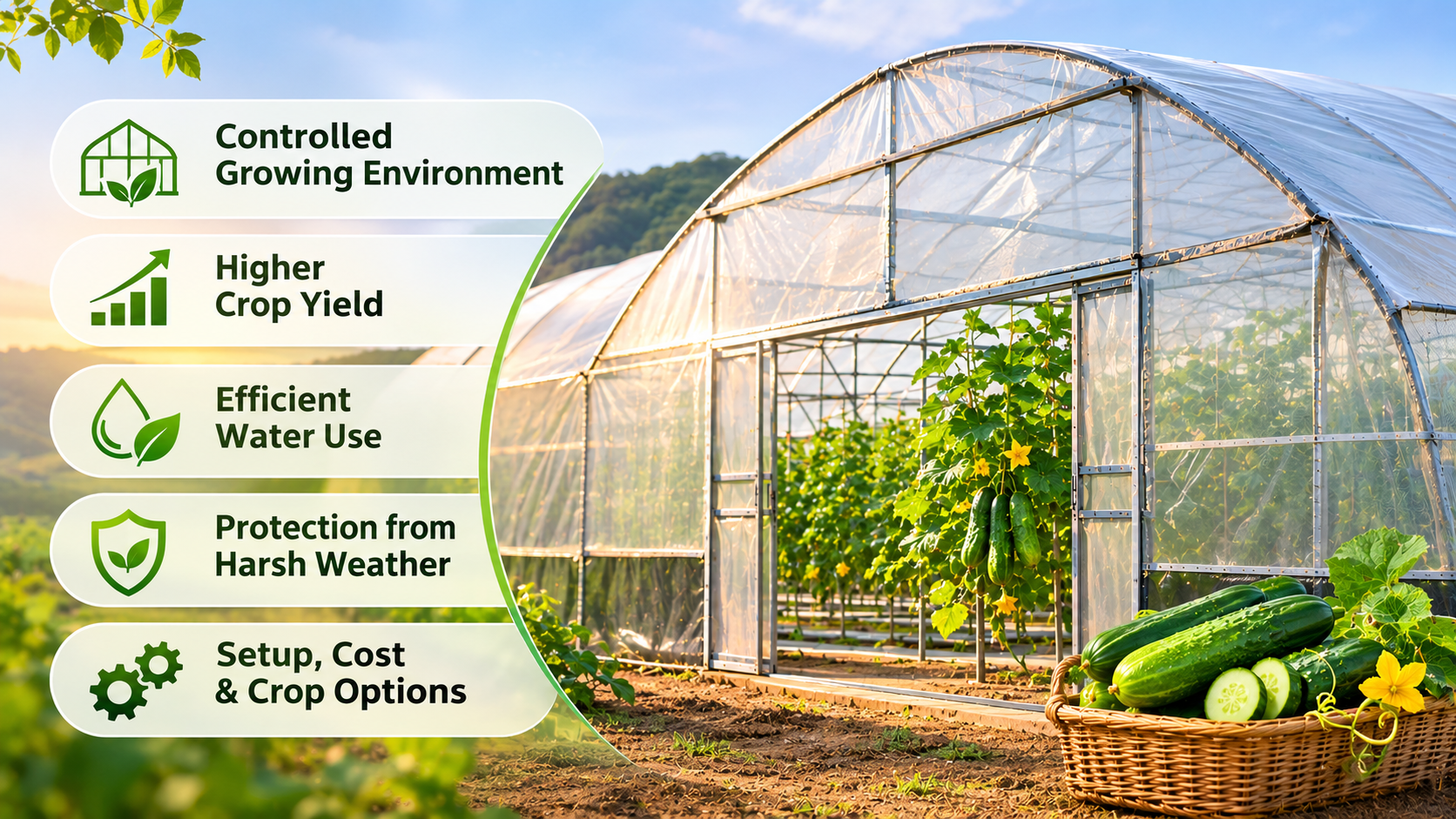

What is polyhouse farming?
Polyhouse farming is a form of protected cultivation where crops grow inside structures covered with transparent or translucent polyethylene sheets. These sheets are supported by metal frames, usually made from galvanized iron (GI). The structure protects plants from several external environmental conditions.
Unlike traditional open-field farming, a polyhouse allows growers to manage important growing conditions. These include temperature, relative humidity, light intensity, ventilation, and soil moisture. Farmers can adjust these factors according to individual crop requirements.
A properly managed polyhouse can improve crop quality, increase production efficiency, and extend growing seasons. It also provides some protection against heavy rainfall, strong winds, and certain insect pests. These practices also connect with climate-smart agriculture, which focuses on making farming more resilient to changing environmental conditions. However, it does not completely eliminate pest or disease problems.
This cultivation method is particularly useful for high-value vegetables, flowers, and selected fruit crops. Farmers can also produce crops during periods when outdoor conditions are less favorable.
The Science of Microclimate Regulation
A polyhouse creates a controlled microclimate by managing sunlight, temperature, humidity, and ventilation. Its polyethylene covering allows sunlight to enter while reducing heat loss. This helps maintain warmer conditions during cooler periods. However, excessive solar radiation can increase internal temperatures during summer.
To maintain suitable growing conditions, farmers use ventilation openings, shade nets, exhaust fans, and cooling systems. Some structures also include fogging or misting equipment to manage temperature and humidity.
These systems help reduce environmental stress and support healthy plant development. Proper temperature management also encourages flowering, fruit formation, and consistent crop growth.
However, the ideal conditions differ between crops. Cucumbers, tomatoes, bell peppers, and flowers have different environmental requirements. Therefore, growers should select appropriate equipment according to their chosen crops.
Regular monitoring is essential. Temperature and humidity sensors help farmers identify environmental changes and adjust ventilation or cooling systems before plants experience serious stress.
How to setup a polyhouse?
Setting up a polyhouse farm requires careful planning, suitable land, and appropriate construction materials. First, select a level site with sufficient sunlight, reliable irrigation water, and convenient road access. Avoid locations that experience frequent waterlogging or strong, uncontrolled wind exposure. If you are new to agriculture, this guide to starting a farm can help you understand the initial planning process.
Next, prepare the land and establish a suitable drainage system. Construct strong foundations to support the galvanized iron (GI) framework. The structural design should account for local wind conditions and other environmental loads.
After assembling the frame, install the polyethylene covering. Commercial polyhouses commonly use UV-stabilized polyethylene film. The appropriate thickness depends on the structure and manufacturer specifications.
Install insect-proof netting across designated ventilation openings. Then, arrange the irrigation network, including drip lines, filters, and fertigation equipment. Test water pressure and check every connection before planting.
Finally, prepare the growing beds and manage soil-borne pests through suitable treatment methods. Understanding which soil is best for agriculture can also help you select suitable growing conditions for your crops. Proper planning at every stage improves structural safety, irrigation efficiency, and crop performance.
Installing Automated Environmental Controls
Automated environmental controls help maintain suitable growing conditions inside a polyhouse. They also reduce the need for constant manual adjustments. However, automation should match the crop requirements and available investment.
Start by installing temperature and relative humidity sensors at appropriate locations. These sensors monitor environmental conditions and provide information for operating ventilation and cooling equipment.
Depending on the structure, automated systems can control:
- Motorized side curtains: Adjust ventilation openings to regulate airflow.
- Exhaust fans: Remove excess heat and improve air circulation.
- Fogging systems: Reduce temperatures through evaporative cooling.
- Shade screens: Limit excessive sunlight during hot weather.
- Irrigation controllers: Schedule watering according to crop requirements.
Some advanced systems connect these components to a central control unit. Farmers can monitor conditions and adjust settings automatically.
However, automated equipment requires regular maintenance and reliable electricity. Manual backup controls are also useful during power failures or equipment breakdowns.
What is the cost of 1 acre polyhouse?
The cost of constructing a one-acre polyhouse depends on its design, materials, automation level, and location. An indicative estimate for a standard naturally ventilated structure is $35,000–$45,000, approximately ₹30 lakh–₹40 lakh. These figures are broad estimates, not fixed market prices.
The initial investment generally covers the galvanized iron framework, foundations, UV-stabilized polyethylene covering, insect nets, and basic construction work. Additional expenses may include drip irrigation, fertigation equipment, water storage, and cooling systems.
For planning purposes, the original estimate also allows another $5,000–$8,000 for additional equipment. Recurring cultivation expenses may require $4,000–$6,000 per growing cycle. These costs depend heavily on crop selection, labor availability, and input prices.
Some government horticulture schemes provide financial assistance for protected cultivation. However, subsidy percentages, eligibility conditions, and approved construction costs vary by state and scheme. Farmers can also explore government subsidies for agribusiness to understand potential financial assistance. Always verify current guidelines before calculating your investment.
Managing Ongoing Operational Expenditures
Construction is only the beginning of a polyhouse investment. Farmers must also manage recurring expenses to maintain consistent production. These costs directly affect profitability and should be included in the financial plan.
Common operational expenses include hybrid seeds, fertilizers, bio-pesticides, irrigation electricity, labor, packaging, and transportation. Their costs vary according to the selected crop and growing cycle.
Regular maintenance is equally important. Polyethylene covering gradually loses its performance because of sunlight exposure and environmental conditions. Replacement may become necessary after several years, depending on film quality and maintenance.
Other maintenance requirements include:
- Repairing damaged drip irrigation pipes and emitters.
- Cleaning filters and fertigation equipment.
- Servicing pumps, fans, and cooling systems.
- Replacing damaged insect nets and structural components.
- Maintaining drainage channels and growing beds.
Farmers should also maintain an emergency maintenance reserve. Unexpected equipment failures, pest outbreaks, and changing market prices can affect cash flow. Careful expense tracking helps protect the business from avoidable financial pressure.
How much cucumber can be produced in an 1 acre polyhouse?
A well-managed one-acre polyhouse farm can potentially produce 70–100 metric tons of cucumbers annually under favorable growing conditions. However, actual production depends on the cucumber variety, planting density, climate, crop management, and harvesting period. This figure is an indicative production target rather than a guaranteed result.
Commercial growers commonly choose parthenocarpic cucumber varieties. These varieties produce fruit without requiring pollination. Farmers generally train plants vertically using overhead trellising systems. This arrangement improves space utilization and allows better sunlight exposure.
A planting density of approximately 9,000–10,000 plants per acre may be achievable. The actual number depends on spacing and the cultivation system. Drip irrigation and fertigation deliver water and nutrients directly to plant roots. Balanced nutrition supports healthy growth and fruit development.
Individual plants may produce approximately 4–6 kilograms during a suitable harvesting period. Consistent pruning, pest monitoring, and timely harvesting are essential. For better results, every polyhouse farm owner should calculate expected production using local trial results and realistic market demand.
Which crop is best in polyhouses?
Choosing the right crop is one of the most important decisions when starting a polyhouse farm. The best option depends on local climate, market demand, cultivation costs, and experienced labor availability. High-value crops can generate attractive returns, but higher selling prices do not automatically guarantee profitability.
Several vegetables and horticultural crops perform well under protected cultivation. Popular commercial options include. Farmers interested in flower production can also explore how to make money with flowers to understand potential opportunities in the commercial flower market.
- European cucumbers: Offer relatively quick harvesting cycles and consistent demand in selected markets.
- Colored bell peppers: Can achieve premium prices, particularly in organized retail and hospitality markets.
- Cherry tomatoes: Suitable for specialized buyers and premium vegetable markets.
- Strawberries: Can benefit from protected cultivation in suitable climatic conditions.
- Sweet basil and culinary herbs: Serve restaurants, retailers, and specialty food businesses.
- Gerberas, carnations, and Dutch roses: Popular commercial cut flowers with established buyer networks.
Before selecting a crop, investigate local wholesale prices and potential buyers. Consider storage, transportation, and seasonal competition. Farmers exploring other specialized agricultural businesses can also learn about pearl farming costs and profit opportunities. A successful polyhouse farm should prioritize crops with reliable demand and manageable production costs.
Farmers should also compare crop cycles and expected investment returns. Selecting suitable crops helps maintain production schedules and improve business stability.
What are the disadvantages of polyhouse farming?
Despite its advantages, polyhouse farming has several disadvantages that farmers should understand before investing. The biggest challenge is the high initial construction cost. Building a commercial structure requires significant capital for foundations, metal frames, covering materials, irrigation, and other equipment. Small farmers may struggle without suitable financing or government assistance.
Another challenge is the technical knowledge required to manage a protected cultivation system. Farmers must understand irrigation scheduling, fertigation, temperature control, plant nutrition, and disease prevention. Mistakes can quickly affect crop health and reduce production.
Pest management also requires continuous attention. Whiteflies, thrips, and spider mites can multiply rapidly under favorable conditions. Insect-proof nets reduce pest entry but cannot eliminate infestations.
Polyethylene coverings and structural components can also suffer damage from strong winds, hail, and flying debris. Repairs and replacement create additional expenses.
Furthermore, market prices fluctuate, and high production does not guarantee high profits. Anyone planning a polyhouse farm should evaluate construction costs, operating expenses, technical requirements, and buyer availability before investing.
Careful planning and regular monitoring can reduce these risks. However, farmers should maintain sufficient working capital to handle unexpected expenses and market fluctuations.
Frequently Asked Questions
What is the lifespan of a commercial polyhouse structure?
The structural framework of a commercial polyhouse, fabricated from heavy-gauge galvanized iron (GI) pipe, easily lasts 20 to 25 years with minimal structural degradation. In contrast, the UV-stabilized 200-micron polyethylene outer film degrades under constant ultraviolet radiation, requiring replacement every 3 to 5 years depending on regional sun exposure. Regularly checking tension cables, tightening loose truss bolts, and scrubbing accumulated dust off outer roof panels maximizes the longevity of your cladding material while maintaining clear light transmission for plant photosynthesis.
How much water does polyhouse farming save compared to open fields?
Polyhouse farming reduces agricultural water consumption by 50% to 70% compared to traditional open-field flood irrigation. Enclosed walls dramatically lower wind-driven evaporation losses from soil beds, while precision drip emitters supply measured water volumes directly to root zones. Additionally, shaded coverings reduce leaf transpiration rates during extreme heat waves. Many commercial growers also integrate rooftop rainwater collection channels along structural gutters, routing seasonal runoff into holding reservoirs to provide clean, mineral-free water for their irrigation systems.
Do polyhouse crops require manual pollination to set fruit?
Most commercial polyhouse crops do not require manual pollination because growers deliberately select self-fertile or parthenocarpic varieties that set fruit naturally without external pollen transfer. For example, greenhouse cucumbers produce fruit without fertilization, whereas standard tomatoes self-pollinate through gentle air currents generated by natural vent drafts or internal circulation fans. When cultivating specialty cross-pollinated crops, operators introduce managed commercial bumblebee hives into the enclosure; these bees pollinate blossoms efficiently without injuring delicate flower petals.
Conclusion
Establishing a commercial polyhouse farm bridges the critical gap between traditional agricultural limitations and modern food demands. By decoupling crop development from adverse meteorological shocks, protected cultivation empowers growers to deliver premium, residue-free harvest loads consistently throughout every season. While the initial capital requirements for structural framing, micro-irrigation lines, and environmental controls require careful financial planning, the substantial yield multipliers and reliable harvest schedules offer compelling commercial returns.
Success in protected agriculture requires combining diligent structural engineering with rigorous, data-driven crop husbandry. Carefully assess your local market demands, secure an uncompromised water source, choose suitable cultivars, and budget for ongoing operational expenses before beginning construction. By approaching this venture with sound technical planning and diligent daily monitoring, your farm can achieve predictable profitability and sustainable production for decades to come.