
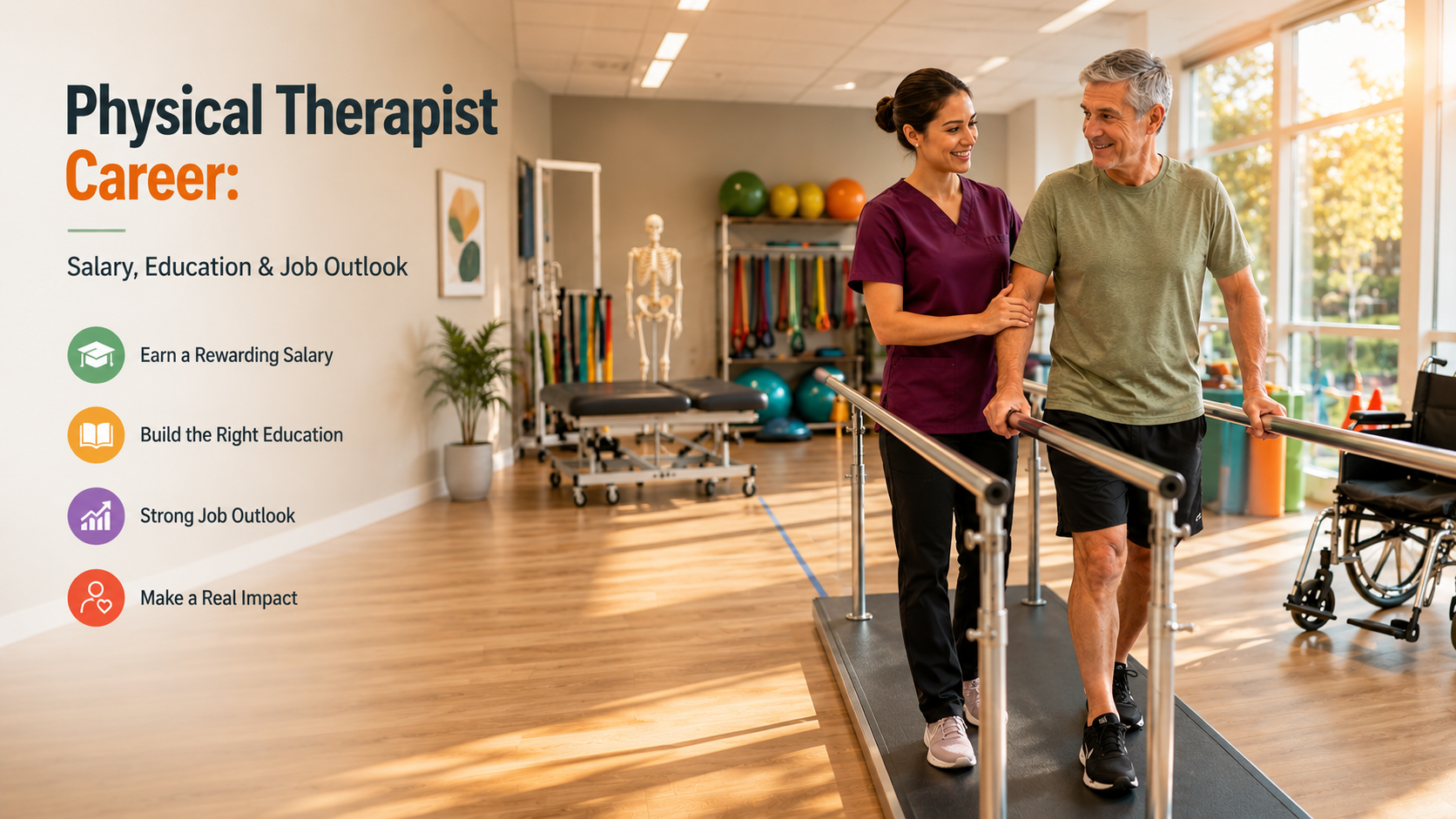
Is a Physical Therapist Career Right for You?
Choosing a fulfilling path in the healthcare industry requires a balance of passion, stability, and purpose. A physical therapist career offers a unique opportunity to directly improve patient lives while enjoying excellent job security. According to data from the U.S. Bureau of Labor Statistics, employment in this field is projected to grow much faster than the average for all occupations over the next decade. This robust demand makes it a premier choice for aspiring medical professionals who prefer hands-on clinical care over surgical environments.
This rewarding profession focuses on diagnosing and treating individuals with medical conditions or injuries that limit their ability to move and function. Why does this matter? Because movement is fundamental to human health, independence, and overall quality of life. If you’re exploring opportunities in the medical field, be sure to check out our complete guide to careers in healthcare to discover a wide range of rewarding career paths. This comprehensive guide will break down everything you need to know about navigating this occupational journey. We will explore the day-to-day realities, required educational milestones, average earnings, and specific specialization options. Whether you are a student mapping out your future or a professional considering a rewarding career pivot, this article provides the strategic insights you need to succeed.

Understanding the Physical Therapist Career Path
Entering the field of physical therapy requires dedication, clinical excellence, and a genuine desire to help others heal. Therapists work with diverse patient populations, ranging from newborn infants with developmental delays to elderly adults recovering from strokes. The primary objective is to restore mobility, alleviate pain, and prevent permanent physical disabilities. Consequently, professionals in this field must possess deep knowledge of human anatomy, biomechanics, and evidence-based therapeutic interventions.
This professional path demands incredible patience, analytical thinking, and powerful interpersonal skills. You act as a guide, cheerleader, and clinician all at once. Patients often arrive in pain, frustrated by their physical limitations, or fearful of the recovery process. By building structured, compassionate relationships, you help individuals overcome psychological barriers to physical rehabilitation. The long-term journey requires a commitment to continuous learning, as medical technology and rehabilitation methods evolve constantly.
What Does a Physical Therapist Do Daily?
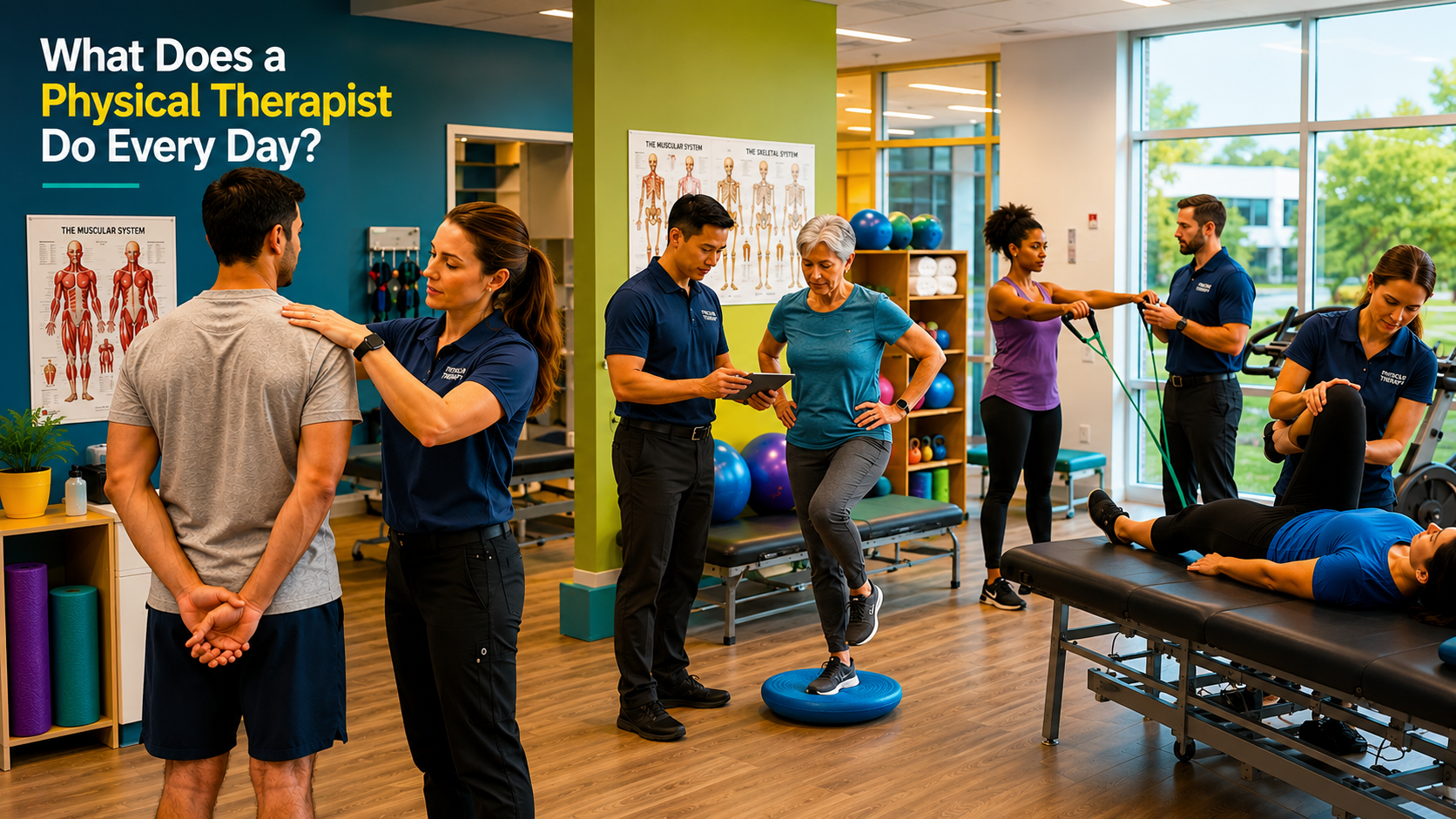
The daily routine of a mobility specialist is dynamic, highly interactive, and physically active. You rarely spend hours sitting behind a desk; instead, you move alongside your patients throughout the entire day. Clinicians perform detailed initial assessments to evaluate a patient’s posture, balance, flexibility, and muscle strength. Based on these unique findings, they design personalized care plans that target specific rehabilitation goals.
-
Conducting Initial Assessments: Evaluating a patient’s posture, balance, flexibility, and muscle strength.
-
Designing Personalized Care Plans: Creating targeted exercise regimens based on specific rehabilitation goals.
-
Providing Manual Therapy: Utilizing hands-on techniques like joint mobilization and soft tissue manipulation.
-
Tracking Patient Progress: Documenting clinical improvements and adjusting treatment protocols as needed.
-
Educating Families: Teaching patients and their caregivers how to safely perform home exercises.
Therapists also provide hands-on manual therapy, utilizing specialized techniques like joint mobilization and soft tissue manipulation. They meticulously track patient progress, documenting clinical improvements and adjusting treatment protocols as needed. Finally, education forms a massive cornerstone of daily practice. You spend significant time teaching patients and their families how to safely perform home exercises, prevent re-injury, and navigate their home environments with adaptive equipment.
Essential Education for a Rehabilitation Professional
You cannot practice physical therapy without obtaining the proper credentials and undergoing extensive formal training. The educational journey is rigorous but highly structured, ensuring that every practicing clinician meets strict safety and competency standards. Aspiring therapists must dedicate several years to higher education, mastering complex biological sciences, clinical pharmacology, and advanced research methodologies before stepping into a professional clinical environment.
This academic foundation ensures that you can make critical medical decisions independently. Physical therapists often function as direct-access providers, meaning patients can visit them without a doctor’s referral. Because of this high level of clinical responsibility, the education system ensures you can identify “red flags” that require a referral to a medical doctor or specialist.
Earning a Doctor of Physical Therapy (DPT) Degree
Today, the standard educational requirement for entry into this profession is a Doctor of Physical Therapy (DPT) degree. Prospective students usually earn a bachelor’s degree in a related field, such as kinesiology or exercise science, before applying to a DPT program. These graduate programs typically last three years and blend intensive classroom learning with mandatory clinical rotations.
During your graduate studies, you will dive deep into subjects like gross anatomy, neuroscience, cellular biology, and biomechanics. Programs emphasize evidence-based practice, training you to analyze medical research and apply the latest scientific findings directly to your patients. Clinical rotations provide the hands-on experience necessary to build confidence under the supervision of licensed, experienced clinical instructors in real medical facilities.
Licensing and Certification Requirements
After graduating from an accredited program, candidates must pass the National Physical Therapy Examination (NPTE). This comprehensive exam tests your clinical knowledge, safety judgment, and understanding of body systems. Additionally, individual states maintain specific licensing regulations, meaning you must secure a state license before legally treating patients.
Maintaining your license requires a commitment to lifelong learning through continuing education units (CEUs). These requirements ensure that your clinical skills remain sharp and up to date with modern healthcare advancements. Many therapists also pursue basic life support certifications and advanced compliance training to remain competitive and fully compliant with evolving healthcare laws and hospital regulations.
Job Market Outlook and Compensation Realities
Financial stability is a significant advantage of choosing a physical therapist career. As the global population ages and the emphasis on non-invasive healthcare increases, the demand for rehabilitative services continues to climb. Medical systems heavily favor physical therapy as a cost-effective, low-risk alternative to opioid pain prescriptions and invasive surgeries.
This structural shift ensures that the job market remains resilient, even during economic downturns. Hospitals, private practices, and corporate wellness programs constantly seek skilled therapists to manage expanding patient volumes. Furthermore, the expansion of healthcare access ensures a steady flow of individuals seeking preventative treatment, driving career longevity and opening new avenues for entrepreneurial therapists.
Average Earnings and Financial Potential
Salaries in this field are highly competitive within the healthcare sector. The median annual wage generally hovers around $95,000 to $105,000, depending significantly on geographic location, years of experience, and the specific employment setting. Experienced directors or practice owners can easily earn well into six figures.
| Setting Type | Average Salary Range | Flexibility Level |
| Home Health Care | $100,000 – $115,000 | High |
| Nursing Facilities | $95,000 – $105,000 | Medium |
| Outpatient Clinics | $85,000 – $95,000 | Fixed |
Your income potential increases as you gain experience and take on managerial responsibilities. Cultivating specialized skills, such as dry needling or aquatic therapy, allows clinicians to command higher rates. Geographically, metropolitan areas and regions with large retirement communities often offer the highest compensation packages to attract top-tier talent.
Top Employment Settings
Therapists enjoy the flexibility to work in a variety of environments. Outpatient clinics are the most common, where clinicians treat sports injuries and orthopedic conditions. Hospitals, rehabilitation centers, residential care facilities, and home health agencies also employ a massive percentage of these healthcare professionals.
Each setting offers a distinct pace of work and unique clinical challenges. Acute care in hospitals involves working with patients immediately after major surgeries or medical emergencies, focusing on early mobility. In contrast, home health settings allow you to treat patients in their own living spaces, offering high autonomy and flexible scheduling opportunities.
Clinical Specialties to Enhance Your Profession
Specialization is an excellent strategy to boost your earning potential, develop niche expertise, and avoid career burnout. The American Board of Physical Therapy Specialties offers official board certifications that recognize advanced clinical knowledge and skills in distinct areas of medicine.
By earning a board certification, you distinguish yourself as an expert in your chosen sub-field. This credential can lead to leadership roles, research opportunities, and higher consulting fees. It allows you to tailor your practice to the specific patient populations you find most rewarding to treat.
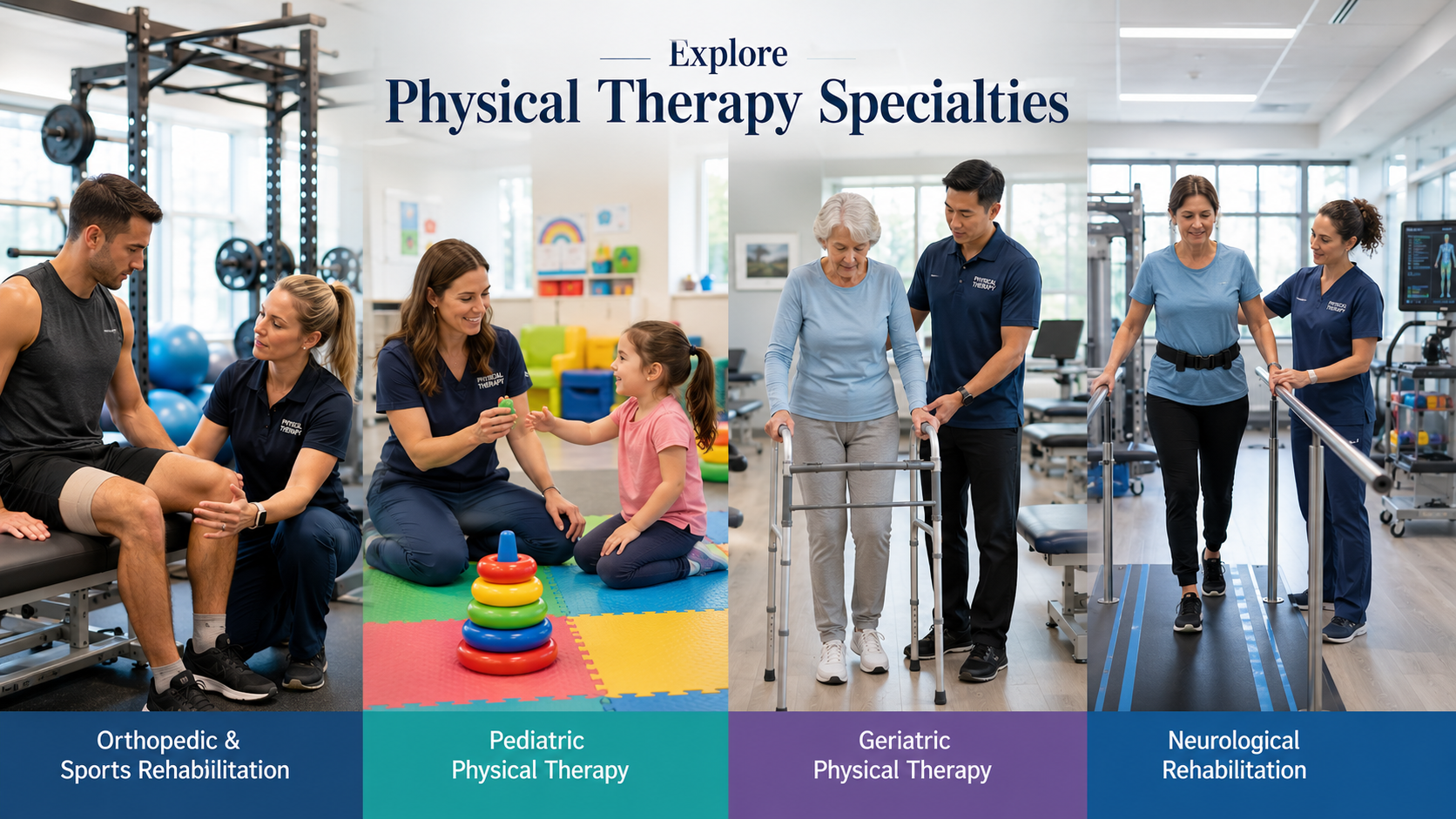
Orthopedics and Sports Medicine
Orthopedic specialists focus on treating conditions affecting the musculoskeletal system, such as bone fractures, ligament tears, and chronic back pain. To achieve this, they utilize advanced manual techniques and therapeutic exercises. As a result, they help everyday patients regain function and return to their daily activities safely. In addition, they develop personalized rehabilitation plans to support long-term recovery and reduce the risk of future injuries.
Similarly, sports specialists work closely with athletes of all levels to optimize performance, prevent athletic injuries, and manage fast-paced recovery timelines. Furthermore, these professionals frequently work in sports clinics, university athletic departments, or with professional sports teams. Consequently, they require deep knowledge of sports-specific mechanics, effective rehabilitation strategies, and rapid injury triage. Ultimately, their goal is to help athletes recover efficiently and return to competition at their highest level of performance.
Geriatrics and Neurology
Geriatric specialists address the unique mobility challenges faced by older adults, focusing on arthritis, osteoporosis, Alzheimer’s disease, and balance disorders. Their goal is to maintain independence, reduce fall risks, and enhance the overall quality of life for an aging population.
On the other hand, neurological specialists treat conditions originating from the nervous system, including Parkinson’s disease, multiple sclerosis, spinal cord injuries, and strokes. This specialization requires immense creativity and neuroplasticity expertise, helping patients rewire their brains and bodies to relearn essential movement patterns after neurological damage.
FAQ SECTION
What is the fastest way to start a physical therapist career?
The fastest route to starting this professional journey requires completing a structured “3+3” accelerated program. These unique tracks combine three years of undergraduate pre-physical therapy coursework with three years of professional DPT graduate school. This path shaves a full year off the traditional seven-year university timeline, allowing you to enter the workforce and earn a salary much sooner.
However, you must maintain excellent grades and complete heavy prerequisite science courses early to qualify for these highly competitive slots. Students must demonstrate strong academic discipline in biology, chemistry, and physics during high school to secure admission. While intensive, this accelerated path saves significantly on tuition costs and reduces overall student loan debt.
Is a physical therapist career physically demanding?
Yes, this occupation requires a high level of physical stamina and strength. Clinicians spend the majority of their workdays standing, bending, kneeling, and demonstrating complex exercises to patients. Furthermore, you will regularly need to lift, transfer, or stabilize patients who have limited mobility or severe physical weaknesses.
Maintaining your own physical fitness and utilizing proper body mechanics during patient interactions is crucial to preventing personal on-the-job injuries, particularly chronic back strain. Successful therapists treat themselves like athletes, focusing on core strength and flexibility to ensure career longevity. If you prefer a sedentary desk job, the physical reality of this active healthcare field might present a significant challenge over time.
What is the difference between a PT and an OT?
While both fields focus on rehabilitation, their core philosophies and clinical objectives differ. Physical therapists focus primarily on improving gross motor skills, joint mobility, strength, and overall physical movement patterns. They treat the underlying physical impairment to restore functional movement like walking, running, or climbing stairs.
Occupational therapists focus on helping patients perform specific activities of daily living (ADLs), such as dressing, bathing, writing, and using workplace tools. They adapt the patient’s environment or teach alternative methods to maximize daily independence. Essentially, a PT helps improve your physical movement, while an OT helps you live independently and master daily life skills.
Can I specialize in pediatric physical therapy?
Absolutely. Pediatric specialization is a popular and deeply rewarding branch of the profession. Pediatric specialists work with infants, toddlers, adolescents, and young adults who experience developmental delays, genetic disorders, cerebral palsy, or physical trauma. These clinicians often use play-based therapy techniques to make rigorous rehabilitation engaging, fun, and effective for young children.
They work inside specialized pediatric hospitals, public schools, or private clinics, collaborating closely with families and teachers. This specialty requires immense creativity, emotional resilience, and exceptional communication skills to manage both the young patients and their anxious parents through complex, long-term healing journeys.
Are travel physical therapy roles profitable?
Yes, travel roles are exceptionally lucrative and offer incredible lifestyle freedom. Travel therapists accept short-term contracts, typically lasting 13 weeks, to fill temporary staffing shortages at hospitals and clinics nationwide. Because these roles require quick adaptation and frequent relocation, staffing agencies compensate travelers with higher hourly rates, tax-free housing stipends, and comprehensive travel reimbursements.
This makes it an incredibly attractive option for recent graduates who want to pay off student loans quickly while exploring different parts of the country. It also exposes you to diverse clinical settings, accelerating your clinical growth and building a versatile professional network early in your career.
CONCLUSION
Embracing a physical therapist career is a highly rewarding decision for individuals who value human connection, scientific problem-solving, and active work environments. While the educational requirements demand a significant investment of time and financial resources, the long-term professional benefits are substantial. The profession provides an enviable combination of competitive salaries, diverse daily tasks, and the profound personal satisfaction of helping individuals reclaim their physical independence.
As healthcare continues to evolve toward preventative and holistic care models, movement specialists will remain indispensable cornerstones of patient wellness. If you possess a strong work ethic, physical stamina, and deep empathy, this occupational pathway offers a stable, well-compensated, and deeply meaningful future. Take the first step today by researching accredited DPT programs or shadowing local clinicians to witness the transformative power of physical rehabilitation firsthand.