
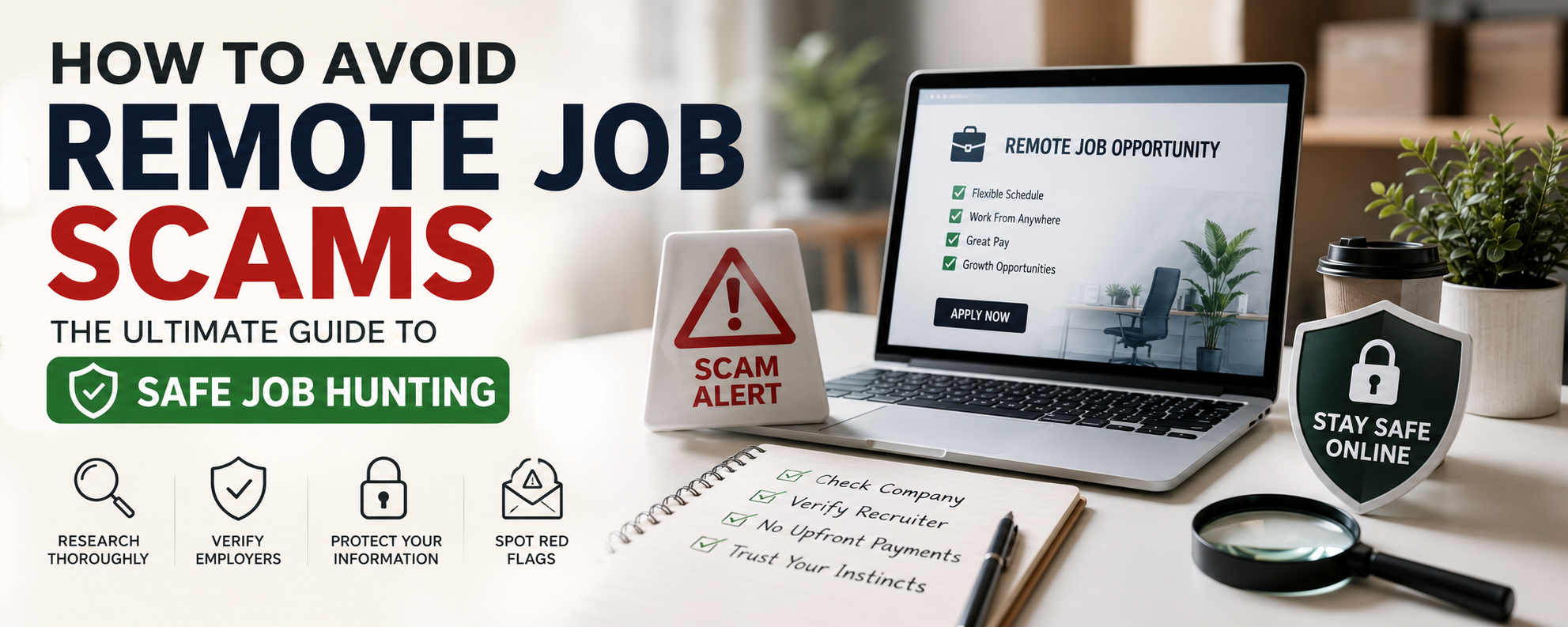
How to Avoid Remote Job Scams: The Ultimate Guide to Safe Job Hunting
The rise of flexible work has changed the modern career landscape for the better. It gives professionals more freedom than ever before. However, this global shift has also opened the door for cybercriminals. These criminals target eager job seekers daily. Learning how to avoid remote job scams is now an essential skill. Anyone looking to work from home needs this knowledge. Your financial security depends on it. According to recent consumer alerts by the Federal Trade Commission, employment scams have skyrocketed globally. They cost applicants millions of dollars. They also compromise sensitive personal data.
Understanding these fraudulent schemes protects both your wallet and your peace of mind. Scammers use highly sophisticated psychological tactics. They easily mimic legitimate employers. This makes it difficult for the average applicant to spot the difference. This comprehensive guide will equip you with deep insights. We provide clear red flags and practical verification steps. These tools help you navigate the remote job market safely. Take a proactive approach to your digital security. By doing so, you can filter out criminal operations. You can then focus entirely on genuine career advancement opportunities.
The Evolution of Work-from-Home Fraud
Remote employment scams have evolved far beyond old “envelope stuffing” schemes. Today, digital fraudsters set up elaborate corporate fronts. These fronts easily deceive experienced professionals. Scammers build realistic corporate websites and clone legitimate business logos. They create fake LinkedIn company pages. They even conduct multi-stage interviews via messaging apps. Furthermore, they often impersonate actual human resources executives. They pull names from public corporate directories. This makes their fake personas appear entirely authentic to unsuspecting applicants.
Consequently, many candidates believe they are participating in a legitimate hiring process. They only realize the truth when it is too late. The primary goal of these digital criminals is fast identity theft. They want to open fraudulent credit lines or extract cash. Knowing how to avoid remote job scams requires keeping up with these tactics. Technology changes, and scammers adapt alongside it. By understanding their methods, you can proactively defend your personal information. Recognizing that the threat landscape changes is the first major milestone. It allows you to secure a genuine, safe remote position.
Crucial Red Flags: Spotting Fake Job Offers
Recognizing warning signs early is the absolute best way to protect yourself. It stops identity theft and financial loss before they happen. Legitimate companies follow structured hiring procedures. These procedures respect corporate compliance and applicant privacy. In contrast, scammers rely on intense pressure tactics and unusual requests. When job hunting, keep your research strategies sharp. This helps you remember how to avoid remote job scams when a suspicious message arrives.
1. Requests for Upfront Financial Payments
A legitimate employer will never ask you to pay out of pocket. They cover background checks, training materials, and onboarding software. Sometimes a hiring manager sends you a digital check. They tell you to buy office equipment from a specific vendor. This is a classic fake check scam. The fraudulent check will eventually bounce after a few days. Your banking institution will then hold you financially responsible for the entire amount drawn.
2. Communication via Anonymous Messaging Apps
Pay close attention to how the recruiter contacts you. Check how they handle subsequent interview steps. Initial outreach on professional networks like LinkedIn is common. However, conducting an entire interview over Telegram, WhatsApp, or Signal is a massive red flag. Reputable organizations always utilize secure, enterprise-grade communication tools. They use official corporate email servers or traditional video platforms like Zoom and Microsoft Teams.
3. High Salary Offers for Minimal Experience
Some job descriptions promise thousands of dollars per week for basic data entry. They claim the role requires absolutely no prior experience. Exercise extreme caution here. If an employment offer sounds too good to be true, it is a trap. Scammers use inflated salaries and guaranteed instant hire promises as bait. They easily lure in targets who need quick income.
Practical Steps to Verify Remote Job Opportunities
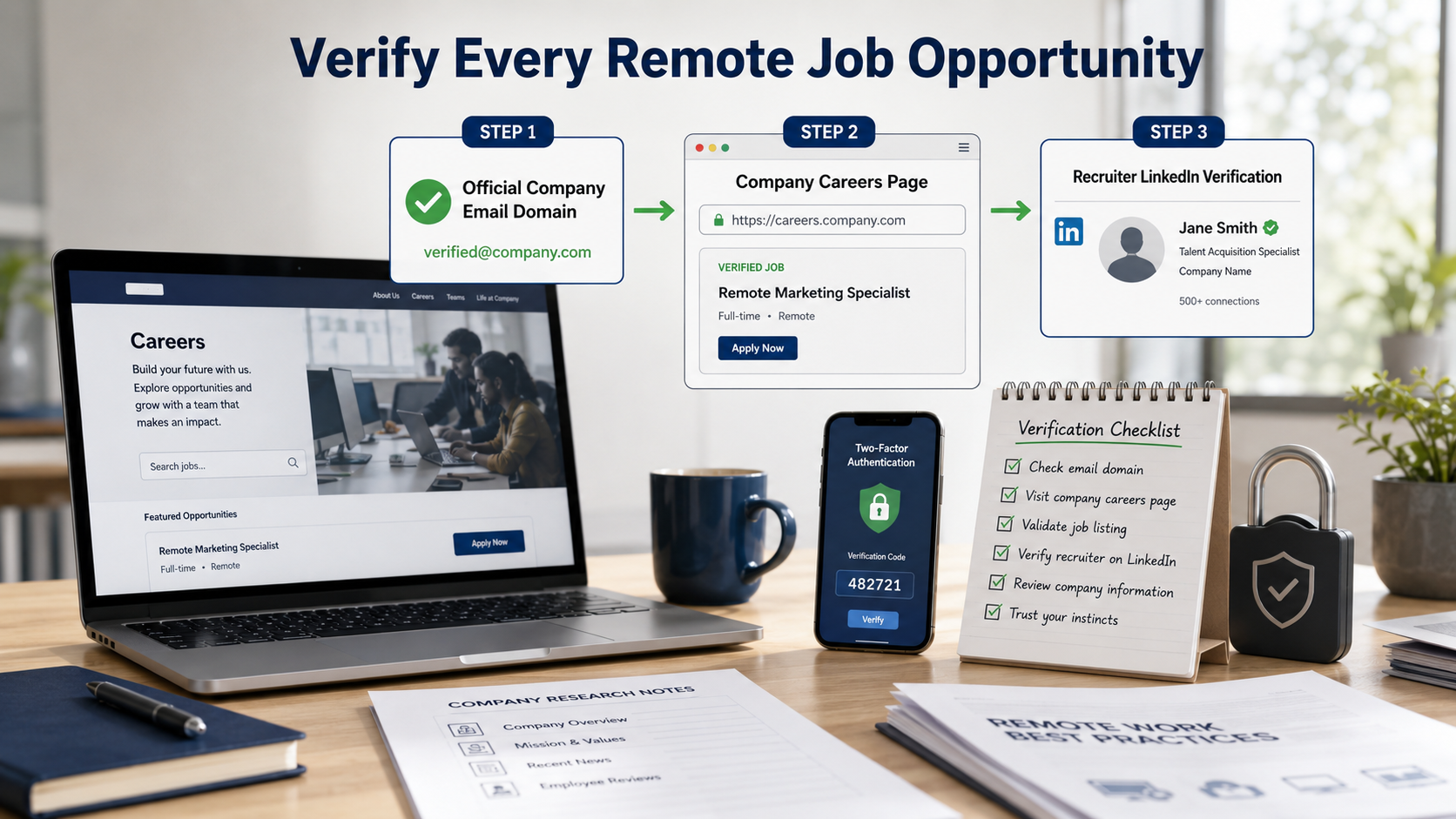
You can significantly reduce your risk of falling victim to fraud. Execute a few quick background checks before submitting a resume or accepting an offer. Incorporating these rapid checks into your routine is a foundational element of how to avoid remote job scams effectively. Taking ten minutes to investigate an employer saves you from months of stress. It prevents financial recovery headaches down the road.

-
Inspect the Email Domain Closely: Authentic corporate recruiters send emails exclusively from official company domains. Look for formats like name@company.com. Be incredibly wary of minor variations that misspell the company name. Watch out for public domains like Gmail, Yahoo, or Outlook.
-
Cross-Reference the Corporate Careers Page: Always visit the official website of the hiring organization independently. Type their URL directly into your browser. Search their official career portal. Confirm the specific job opening ID actually exists before sending data.
-
Research the Individual Recruiter: Look up the specific individual interviewing you on professional networking sites like LinkedIn. Verify that they actually work for the organization. Ensure they hold a legitimate talent acquisition role. Check mutual connections to establish credibility.
Safe Practices for Sharing Personal Data
Protecting your personally identifiable information (PII) is absolutely critical during your hunt. Never provide your Social Security number or banking details early. Do not send copies of your driver’s license during the initial application phase. Fraudulent operations often use early onboarding forms to gather this data. They hide under the guise of background screening. Then, they disappear once they compromise your identity.
Mastering the rules of how to avoid remote job scams means protecting your data fiercely. Hold it back until a formal contract is locked in. Legitimate employers only request tax documents and payroll information later. They ask for direct deposit details after a formal offer letter is signed. Secure your digital footprint by using a dedicated job-hunting email address. Enable two-factor authentication on all career platforms. By treating your data with high security, you cut off the primary profit path for online scammers.
Frequently Asked Questions
What are the most common remote job scams?
The most frequent scams include fake check schemes for home office equipment. Illegal reshipping scams disguised as quality control logistics roles are also common. Furthermore, watch out for phishing attempts designed to steal your Social Security number. Another common tactic involves fake data entry jobs. These require you to pay for proprietary software or training certificates before earning. Legitimate companies never operate this way. They cover their own operational tools. Always research the specific job title online alongside the word “scam.” See if other job seekers reported similar experiences recently. Trustworthy platforms like FlexJobs are always safer than unverified listings.
How do I report a fraudulent job posting?
If you encounter a fraudulent listing, report it immediately. Notify the specific platform where you found it, such as LinkedIn, Indeed, or ZipRecruiter. This action protects other job seekers from trouble. Next, file an official complaint with government consumer protection agencies. You can contact the Federal Trade Commission (FTC) or the FBI’s Internet Crime Complaint Center (IC3). Reporting these incidents helps federal authorities track down scam networks. They can map digital infrastructure and shut down rogue hosting servers. Document all communications carefully. Keep specific email headers, phone numbers, fake contracts, and wire transfer requests to help investigators.
Can a company interview you entirely via text message?
No, reputable companies do not conduct entire professional interviews via text message. They avoid anonymous messaging apps like WhatsApp for official hiring. A valid remote hiring process involves clear email communication. It includes introductory phone conversations and comprehensive video interviews. These steps allow you to see the actual corporate staff. Text-only interviews are a major indicator of an employment scam. They hide the true location, voice, and identity of the fraudster. If a recruiter claims they use chat because systems are down, it is a trap. If an interviewer explicitly refuses a live video call, break off communication immediately.
What should I do if I gave a scammer my information?
If you mistakenly shared sensitive information, act quickly to mitigate damage. Contact your banking institutions immediately to freeze compromised accounts. Change your account passwords and monitor credit reports for unauthorized activity. File an identity theft report with your local police department. Register your case on IdentityTheft.gov to establish an official federal recovery plan. You should also consider placing a credit freeze with the major credit bureaus. This freeze prevents scammers from opening new loans or credit cards in your name. Update your credentials across all digital platforms. This is especially vital if you reuse passwords elsewhere.
Why do scammers send checks to remote workers?
Scammers send fraudulent digital checks under a false pretense. They claim the funds cover your new home office setup or computer hardware. They instruct you to deposit the check into your personal account. Then, they tell you to quickly wire a portion to an “approved vendor.” The bank discovers the check is fake days later. By then, the wired money is long gone. You owe the bank the full amount. This trick relies on specific banking laws. These laws make funds available before a check fully clears the issuing institution. Scammers exploit this gap by creating intense artificial urgency.
Conclusion: Empowering Your Remote Job Hunt
Navigating the modern virtual job market requires a healthy balance. On the one hand, you need career optimism; on the other hand, you must maintain digital vigilance. By understanding how to avoid remote job scams, you can ensure your professional journey remains safe while keeping your efforts financially rewarding over the long term. For example, recognize clear red flags such as upfront payment requests, text-only interviews, and unrealistic starting salaries. As a result, you can filter out fraudulent listings effectively and avoid wasting your valuable time. In addition, always take the time to research employers independently, verify email domains, and protect your private data until a formal offer has been fully finalized.
Furthermore, trust your instincts throughout the application process. If a situation feels uncomfortable, step back and assess it carefully. Likewise, if a recruiter seems rushed or overly aggressive, investigate further before proceeding. After all, legitimate employers respect your desire to verify their identity and will never pressure you into making immediate financial decisions. Meanwhile, if you’re searching for legitimate opportunities, explore our guide to high-paying remote jobs in 2026 to find verified career options and reduce the risk of falling for fraudulent listings. Therefore, protect yourself by following strong verification practices and consistent security habits. Once these measures are in place, you can confidently navigate online job boards and secure a legitimate remote position that supports your career goals safely.