
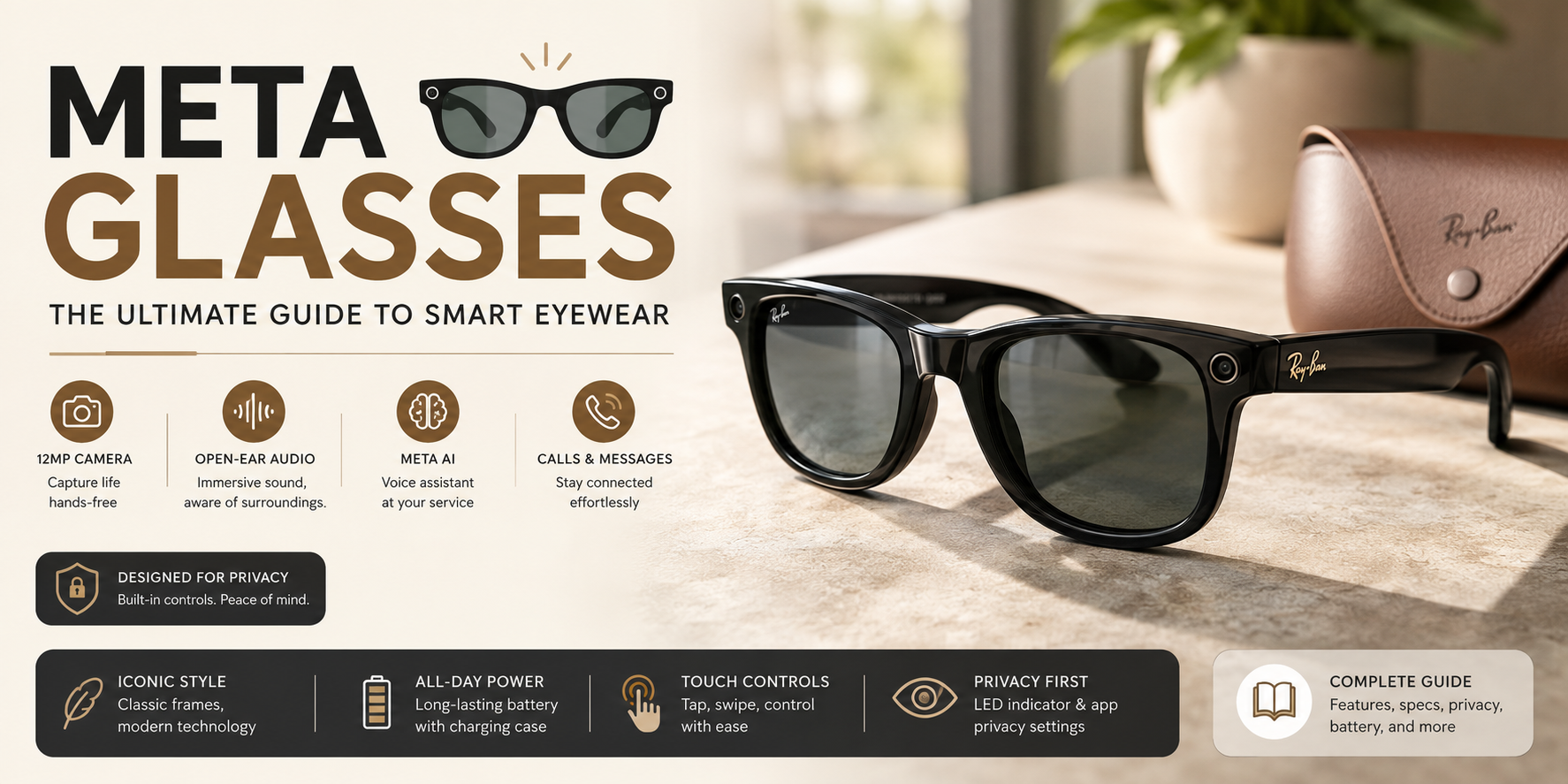
Meta Glasses: The Ultimate Guide to Smart Eyewear
Smart technology is moving beyond smartphones and smartwatches. It is now becoming part of the way we see and experience the world. Meta glasses represent this shift by combining classic eyewear design with advanced AI-powered features.
Developed through a partnership with Ray-Ban, these smart glasses offer a familiar style with built-in cameras, speakers, microphones, and artificial intelligence. Instead of reaching for your phone to capture a moment or answer a call, you can interact with technology directly through your eyewear.
This change matters because modern life is increasingly connected to screens. Many people spend hours looking down at smartphones for information, communication, and entertainment. Smart eyewear creates a more natural way to stay connected while keeping your attention on the world around you.
In this complete guide, we will explore everything you need to know about Meta smart glasses. We will cover their design, camera performance, AI features, audio quality, privacy controls, battery life, and overall value.
For official product details, frame options, and technical specifications, you can visit the official Meta website.

Are the Meta Glasses Worth It?
When reading a Meta glasses review, many buyers wonder whether these smart glasses offer enough everyday value to justify their price. Meta smart glasses combine stylish frames with advanced audio, camera, and AI features, making them more than just fashionable eyewear. They are designed for people who want hands-free access to photos, videos, calls, music, and voice assistance without constantly reaching for a smartphone.
For content creators and tech enthusiasts, the ability to capture first-person photos and videos instantly can be a major advantage. Features like voice commands, live streaming, and AI-powered assistance also add convenience throughout the day. However, casual users may see these glasses as an expensive accessory rather than an everyday necessity.
The overall value depends on how you plan to use them. If hands-free media capture, open-ear audio, and smart voice features fit naturally into your routine, the investment may be worthwhile. Before buying, consider your daily habits and whether these features will provide long-term value instead of becoming a short-lived novelty.
Evaluating Daily Utility and Long-Term Value
The true value of Meta smart glasses goes beyond their impressive technology. The key question is whether they become a useful part of your daily routine after the excitement of owning a new gadget fades. Many users discover that features such as open-ear audio, quick photo capture, and hands-free voice controls become second nature during commutes, walks, travel, or outdoor activities. Instead of reaching for a phone, they can complete everyday tasks more naturally and with fewer distractions.
Long-term value depends on how often you use these features. People who regularly listen to podcasts, make calls, capture spontaneous moments, or rely on voice assistants are more likely to benefit from the investment. Those who rarely use these capabilities may not experience the same return. Evaluating your lifestyle before purchasing is the best way to determine whether Meta glasses offer practical everyday value or simply serve as an interesting piece of technology.
What Do Meta Smart Glasses Actually Do?
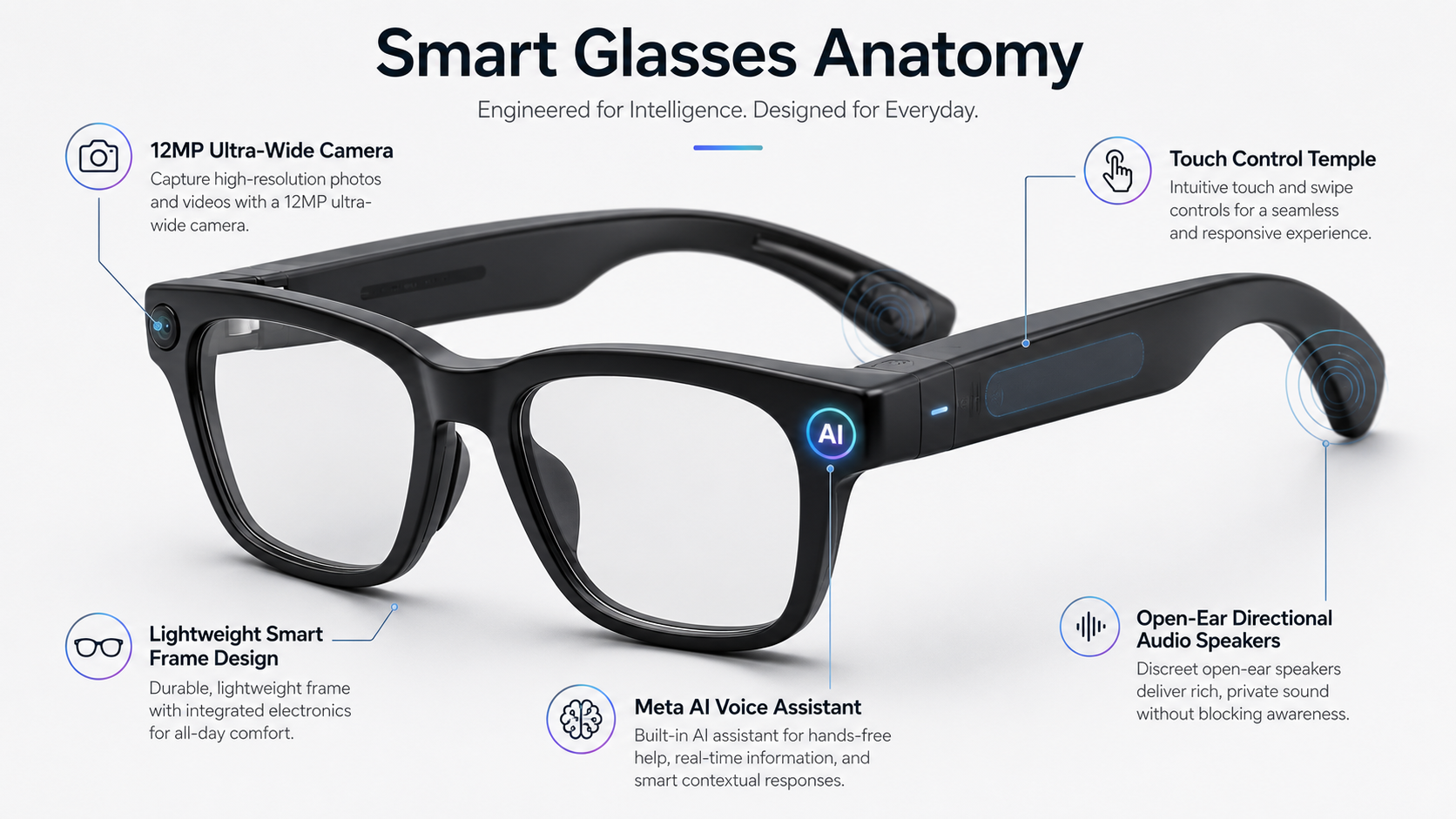
Modern Meta smart glasses pack an impressive amount of technology into a lightweight frame that closely resembles traditional eyewear. Integrated cameras, microphones, speakers, and processing hardware allow users to perform several tasks without handling a smartphone. You can capture high-quality photos, record first-person videos, answer phone calls, listen to music, and interact with voice commands while keeping your hands free.
According to Meta, the latest models also include advanced Meta AI capabilities. These features can identify objects, answer questions, provide real-time language translation, and respond to complex voice prompts. Users can even livestream directly to supported social media platforms without taking their phone out of their pocket. This combination of AI, media capture, and audio functionality makes Meta smart glasses a practical wearable for both everyday convenience and content creation.
Seamless Hands-Free Media Capture
One of the biggest advantages of Meta smart glasses is their ability to capture moments instantly. Instead of unlocking a phone and opening the camera, users can start recording with a simple voice command or a quick press of the frame button. This makes it easier to capture unexpected moments while staying fully engaged in the experience.
Hands-free recording is especially useful for travel, outdoor adventures, family events, and content creation. It provides a natural first-person perspective that traditional smartphones cannot always match. Because your hands remain free, you can continue walking, cycling, cooking, or participating in activities while recording. For creators and everyday users alike, this feature adds convenience and helps preserve authentic moments with minimal effort.
What Are the Downsides of Meta Glasses?
Although Meta smart glasses offer impressive features, they also have limitations that buyers should consider before making a purchase. Most Meta glasses reviews mention battery life as one of the biggest drawbacks. Recording videos, livestreaming, or using AI features for extended periods can drain the battery much faster than expected. As a result, many users need to carry the charging case throughout the day to keep the glasses powered.
Privacy is another common concern. Even though the glasses include a recording indicator light, some people may still feel uncomfortable around camera-equipped eyewear. Camera performance also declines in low-light environments, often producing grainy photos and videos with reduced detail. In addition, these glasses are more expensive than traditional eyewear, so buyers should consider whether the available features match their daily needs. Understanding these trade-offs helps determine whether the convenience outweighs the limitations.
Battery Constraints and Thermal Limits
Battery performance remains one of the biggest challenges for modern smart glasses. Their compact design leaves limited space for larger batteries, making power management a constant balancing act. Recording high-resolution video, streaming music, making calls, or using AI features continuously can significantly reduce battery life. During heavy use, the frame arms may also become slightly warm because of the built-in processors and wireless components.
To address these limitations, Meta includes a portable charging case that provides multiple recharges throughout the day. While this improves overall usability, it also means users need to keep the case nearby during longer outings. People who frequently create content or travel for extended periods may find this less convenient. For light daily use, however, the battery is generally sufficient, especially when recording and AI features are used only when needed.
Which Is Better, Google or Meta Glasses?
Comparing Google and Meta smart glasses depends largely on how you plan to use wearable technology. Meta focuses on everyday consumers by combining stylish eyewear with high-quality audio, hands-free photography, AI assistance, and seamless social media integration. These features make Meta glasses an attractive option for users who want convenience, entertainment, and quick content creation in a familiar form factor.
Google has historically taken a different approach by emphasizing augmented reality, contextual information, and enterprise applications. While Google’s wearable efforts introduced innovative display technology, its consumer hardware has not maintained the same widespread retail presence as Meta’s latest smart glasses. As a result, Meta currently offers a more accessible option for everyday users. The better choice ultimately depends on your priorities. If you value AI features, media capture, and lifestyle convenience, Meta is the stronger option. If advanced visual overlays and enterprise-focused functionality are more important, Google’s approach may better suit your needs.
Ecosystem Integration and Software Support
A strong software ecosystem greatly improves the overall smart glasses experience. Meta supports its wearable devices with a polished companion app that simplifies setup, media transfers, device management, and software updates. Regular updates continue to add new AI capabilities and improve overall performance, helping users get more value from their glasses over time.
Integration with Meta’s apps and services also makes sharing photos, videos, and livestreams quick and straightforward. This seamless experience appeals to creators and everyday users alike. Competing wearable platforms often place greater emphasis on enterprise development or specialized business solutions instead of consumer-friendly features. For most buyers, a mature software ecosystem, reliable updates, and easy smartphone integration are just as important as the hardware itself when choosing between wearable platforms.
What Are the Disadvantages of Smart Glasses?
While smart glasses continue to improve, they still come with several practical limitations that buyers should understand before investing. One common concern is prescription lens compatibility. Although many manufacturers offer prescription options, availability can vary depending on the model, retailer, or region. This may make it more difficult for users with specialized vision requirements to find a suitable solution.
Durability is another important consideration. Unlike traditional eyewear, smart glasses contain cameras, speakers, microphones, batteries, and other electronic components that require extra care. They are generally more sensitive to accidental drops, heavy impacts, excessive moisture, and extreme weather conditions. Their higher purchase price also means repairs or replacements can be costly if damage occurs. Before buying, it is worth considering whether the added technology and convenience justify these trade-offs for your everyday lifestyle.
Social Acceptance and Privacy Hurdles
Public perception remains one of the biggest challenges facing camera-equipped smart glasses. Even though Meta includes a visible recording indicator, some people may still feel uncomfortable around wearable cameras. This concern has led certain workplaces, entertainment venues, schools, and private events to restrict or prohibit their use. As a result, owners should always respect local policies and the privacy of those around them.
Social acceptance is gradually improving as smart glasses become more common, but privacy remains an important issue. Using recording features responsibly helps build trust and reduces misunderstandings in public settings. Before capturing photos or videos, it is often courteous to inform others when appropriate. By balancing convenience with respectful use, owners can enjoy the benefits of smart glasses while minimizing privacy concerns and creating a more positive experience for everyone involved.
Frequently Asked Questions About Meta Glasses
How long does the battery last on Meta glasses during daily use?
Meta glasses provide around 4 to 6 hours of active use on a single charge. However, actual battery performance depends on activities such as music playback, phone calls, video recording, and AI usage.
For everyday tasks, the battery can support several hours of smart features. Additionally, the included charging case provides extra power when you are away from a wall outlet.
Moreover, the charging case can store multiple additional charges. As a result, users can extend total usage time beyond the glasses’ built-in battery. This makes the device more practical for travel, outdoor activities, and busy schedules.
However, users who frequently record videos or use AI features may need to recharge more often. Therefore, managing camera and audio usage can help maximize battery performance throughout the day.
Can you fit prescription lenses inside Meta glasses frames?
Yes, Meta glasses support prescription lens options. In addition, users who need vision correction can customize their frames through authorized eyewear providers and optical professionals.
Available lens options may include:
- Single-vision lenses
- Progressive lenses
- Polarized lenses
- Transition lenses
Furthermore, prescription lenses are designed to fit the smart frame without affecting the internal technology. The camera, speakers, microphones, and electronics remain protected inside the frame structure.
When ordering prescription versions, users should work with qualified optical providers. This ensures proper fitting, comfort, and compatibility with the smart eyewear design.
Are Meta glasses water-resistant for outdoor exercise?
Meta glasses offer an IPX4 water-resistance rating, which helps protect them from light splashes, sweat, and occasional rain.
Therefore, they are suitable for many everyday outdoor situations. For example, users can wear them while walking, commuting, or completing light exercise activities.
However, they are not waterproof. As a result, users should avoid:
- Swimming while wearing them
- Submerging them in water
- Using them during heavy rain
After exposure to moisture, users should dry the frames with a soft microfiber cloth before placing them inside the charging case.
Additionally, proper care helps protect the internal electronics. Over time, this can extend the lifespan and reliability of the device.
How do people nearby know when you are taking a photo?
Meta glasses include a visible LED capture light near the camera. This light turns on whenever the camera takes a photo or records video.
As a result, nearby people can understand when recording is happening. This design supports more transparent and responsible camera use.
Furthermore, the glasses include built-in protections that prevent normal camera operation if the safety indicator is blocked or covered.
These privacy features are especially important because smart glasses are designed for public environments. Therefore, clear recording indicators help create trust between users and people around them.
Do Meta glasses require an active phone connection to work?
A smartphone connection is required to access the full range of Meta glasses features. Through Bluetooth pairing, the glasses connect with supported apps and services.
With a connected phone, users can access:
- AI-powered voice features
- Phone calls
- Messaging tools
- Media transfers
- Cloud synchronization
However, some basic functions, such as capturing photos and videos, can work without an active connection. Meanwhile, many advanced features depend on smartphone connectivity.
Therefore, keeping the glasses paired with a compatible phone provides the complete smart eyewear experience.
Conclusion: Are Meta Glasses Worth Buying?
Smart eyewear has moved beyond experimental technology. Today, Meta glasses combine modern AI features with a familiar eyewear design, creating a practical device for everyday use.
These smart frames successfully bring together several useful technologies. For example, they offer hands-free photography, open-ear audio, voice communication, and AI assistance in a stylish package.
Moreover, travelers, creators, professionals, and technology enthusiasts can use Meta glasses to interact with digital tools more naturally. As a result, they reduce dependence on smartphones while keeping users connected.
The experience is especially valuable for people who want to capture moments quickly, listen to audio while staying aware of their surroundings, or access AI assistance without using their hands.
However, battery life remains one limitation. Long days with heavy camera or AI usage may require additional charging. Nevertheless, the charging case makes daily use much easier.
Overall, Meta glasses represent an important step forward in wearable technology. They combine fashion, convenience, and artificial intelligence in a way that feels natural.
Ultimately, for anyone interested in a more hands-free digital experience, Meta glasses offer an exciting look at the future of smart eyewear.
As AI technology continues to evolve, understanding how artificial intelligence impacts digital content and everyday experiences is becoming increasingly important. You can also learn more about identifying AI-created content in our guide on clear signs a video is AI-generated.