
Safe Laboratory Waste Disposal: Protocols, Steps, and Best Practices
Maintaining high standards of laboratory waste disposal protects researchers, laboratory technicians, and public health. Every laboratory generates hazardous byproducts during routine testing and scientific experiments. Improper handling can cause toxic chemical reactions, environmental contamination, and exposure to infectious pathogens.
Consequently, regulatory agencies enforce strict waste management requirements. In the United States, the Occupational Safety and Health Administration (OSHA) provides laboratory safety standards and recommendations for handling hazardous chemicals. Facilities must also follow applicable environmental and biomedical waste regulations.
Managing laboratory waste safely requires structured procedures, from initial collection to final treatment. Staff must identify hazards, separate incompatible materials, use appropriate containment, and prevent accidental exposure.
But what procedures ensure safe and compliant laboratory waste disposal?
This practical guide answers essential questions about laboratory waste management. You will learn how to dispose of laboratory waste, understand the five steps of waste disposal, and identify seven common hazardous waste categories. We also explain the four main types of laboratory waste, the seven stages of biomedical waste management, and the correct approach to disposing of urine samples.

How should you dispose of waste in a lab?
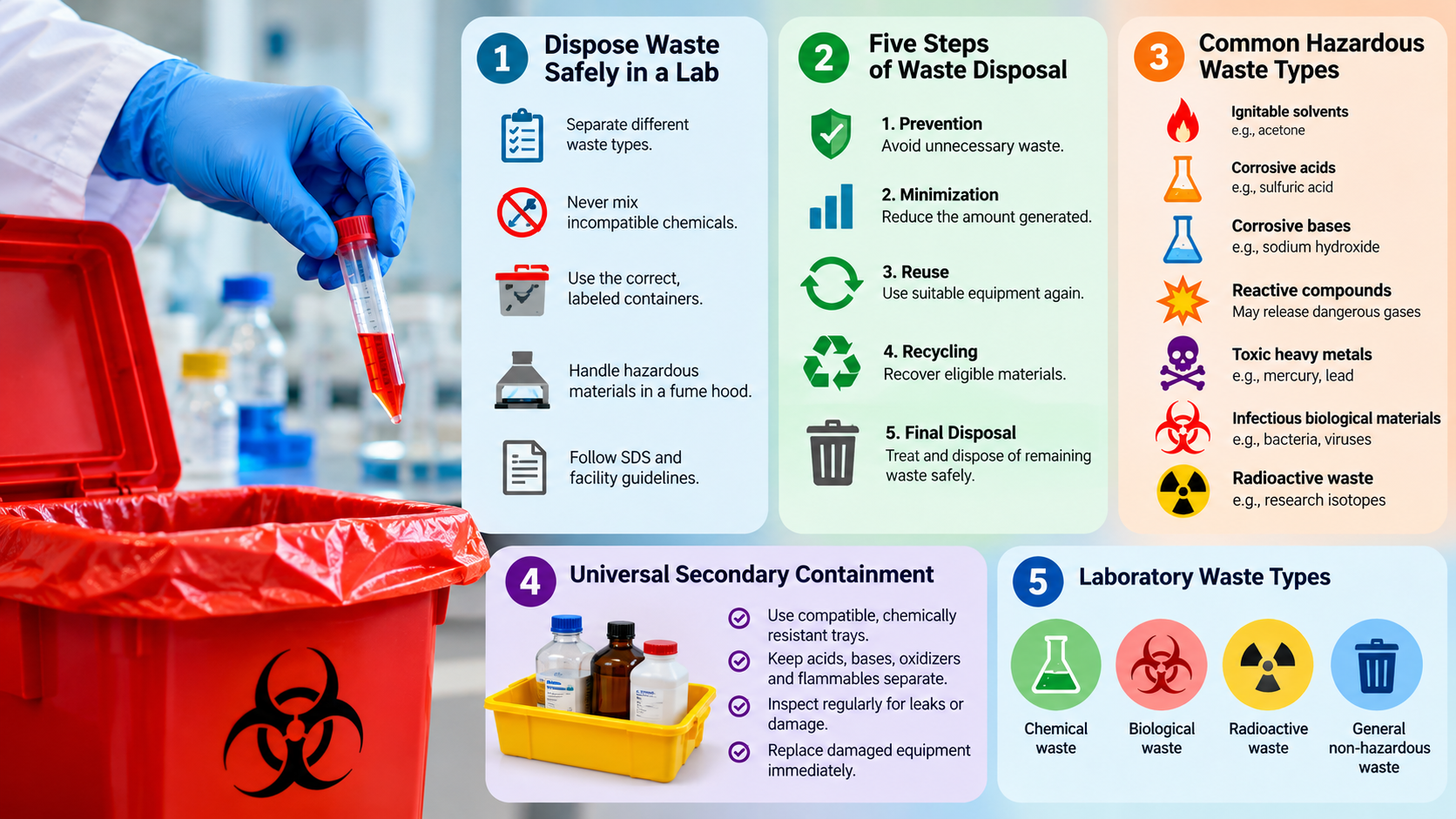
Proper laboratory waste disposal begins at the workstation. Staff must separate waste immediately after generating it. Never mix incompatible chemicals, pour hazardous solvents into ordinary sinks, or place contaminated glassware in regular trash.
Instead, identify each material’s properties and place it in a compatible, clearly labeled container. Follow the chemical’s Safety Data Sheet (SDS) and your facility’s waste management procedures. Use a chemical fume hood when handling substances that produce hazardous vapors.
Keep waste containers closed except when adding materials. Follow the approved fill limits and inspect containers regularly for leaks or damage. Store incompatible waste streams separately, using secondary containment when required. Finally, arrange collection through your facility’s Environmental Health and Safety (EHS) department or an authorized waste contractor. Maintain accurate records of waste contents, quantities, and collection dates. These procedures reduce exposure risks and support regulatory compliance.
Implementing Universal Secondary Containment
Secondary containment provides an additional layer of protection during laboratory waste storage and handling. Place compatible primary waste containers inside suitable, chemically resistant containment trays. These trays help capture spills, leaks, and accidental container failures before hazardous liquids reach laboratory surfaces.
However, secondary containment materials must be compatible with the chemicals being stored. A container suitable for one solvent may not withstand another chemical. Therefore, consult the relevant SDS and your facility’s chemical compatibility guidance before selecting containment equipment.
Keep acids, bases, oxidizers, and flammable materials separated according to their compatibility requirements. Never assume that placing chemicals in separate trays makes incompatible storage safe. Inspect containment trays regularly for cracks, accumulated liquids, and chemical damage. Replace damaged equipment immediately. Proper secondary containment helps prevent chemical exposure, equipment damage, and accidental reactions in busy laboratory environments.
What are the 5 steps of waste disposal?
The five main steps of laboratory waste management follow a practical hierarchy: prevention, minimization, reuse, recycling, and final disposal. Each step reduces unnecessary waste and limits environmental risks. First, waste prevention involves planning experiments carefully and ordering only the required quantities of chemicals. Researchers can also choose less hazardous materials when suitable alternatives exist.
Second, waste minimization reduces the volume of byproducts generated during experiments. Microscale testing and accurate reagent measurements help achieve this goal. Third, laboratories can reuse suitable equipment, including properly cleaned and sterilized glassware, following appropriate laboratory glassware guidelines. Fourth, recycling allows facilities to recover eligible materials, such as uncontaminated solvents.
Finally, laboratories must arrange appropriate treatment and disposal for unavoidable hazardous waste. Depending on its classification, this may involve authorized chemical treatment, incineration, autoclaving, or specialized disposal facilities. The correct method depends on the waste type and applicable regulations. These five steps support safer, more sustainable laboratory operations.
What are 7 hazardous wastes?
Laboratories generate several hazardous waste types that require specialized handling and disposal. Seven common categories include ignitable solvents, corrosive acids, corrosive bases, reactive compounds, toxic heavy metals, infectious biological materials, and radioactive waste.
Ignitable solvents, such as acetone, can catch fire near ignition sources. Corrosive substances, including concentrated sulfuric acid and sodium hydroxide, can cause severe skin and eye injuries. Reactive compounds may release dangerous gases, generate heat, or cause explosions when handled improperly.
Toxic heavy metals, such as mercury and lead, can contaminate water and soil. Infectious biological waste may contain bacteria, viruses, or other harmful microorganisms. Radioactive materials, including certain research isotopes, require specialized containment and disposal procedures.
Each category presents different safety risks. Therefore, laboratory personnel must identify hazards before collection. They should use appropriate protective equipment, compatible containers, clear labels, and approved disposal procedures. Following essential chemistry laboratory safety equipment and rules helps reduce exposure risks. Never combine hazardous materials without confirming their chemical compatibility.
What are the 7 steps of biomedical waste management?
Biomedical waste management involves seven essential stages: segregation, collection, pre-treatment, storage, transportation, final treatment, and disposal. Following these stages helps prevent infections and protects laboratory personnel, waste handlers, and the surrounding environment.
First, staff segregate biomedical waste at its point of generation. They use designated, labeled containers according to local color-coding requirements. Second, personnel collect waste carefully without compressing bags or handling contaminated materials unnecessarily. Third, laboratories pre-treat certain infectious materials when required by applicable procedures.
Fourth, segregated waste moves to an authorized temporary storage area. Fifth, trained personnel or licensed contractors transport it using approved procedures. Sixth, appropriate treatment methods, such as autoclaving or incineration, reduce biological hazards. Finally, treated waste undergoes disposal through authorized facilities.
Not every biomedical waste category follows the same treatment method. For example, sharps, anatomical waste, chemical waste, and infectious cultures require different handling procedures. Following appropriate medical waste disposal procedures helps ensure these materials receive proper treatment. Laboratories must follow applicable regulations and maintain proper documentation throughout the process.
What are the four types of laboratory waste?
Laboratory waste generally falls into four broad categories: chemical waste, biological waste, radioactive waste, and general non-hazardous waste. Understanding these categories helps staff select appropriate containers, storage arrangements, and disposal methods.
Chemical waste includes hazardous reagents, spent solvents, expired analytical chemicals, and heavy metal solutions. Biological waste includes blood products, microbial cultures, contaminated specimens, and laboratory materials exposed to infectious substances. Radioactive waste consists of research isotopes, radioactive tracers, and contaminated laboratory equipment.
The fourth category includes general non-hazardous waste. Examples include clean packaging, office paper, and uncontaminated laboratory supplies. However, an item’s appearance alone does not determine its classification. Staff must consider its previous use and potential contamination.
Correct segregation prevents hazardous materials from entering ordinary waste streams. It also reduces treatment costs and protects waste management personnel. Always use your facility’s waste classification guidelines because certain materials may require additional categories or specialized handling.
How to discard a urine sample in the lab?
Disposing of a urine sample requires appropriate biosafety precautions and compliance with laboratory procedures. Personnel should wear suitable personal protective equipment (PPE), including gloves and a laboratory coat. Eye protection may also be necessary, depending on the risk assessment.
Routine clinical urine specimens that do not contain added hazardous chemicals or require special infectious waste handling may be eligible for sanitary sewer disposal. However, this depends on local regulations, institutional policies, and the specimen’s risk classification. Never assume every urine sample can be poured directly into a sink.
If the laboratory authorizes drain disposal, transfer the specimen carefully to minimize splashing and aerosol formation. Follow the facility’s approved flushing and sink-cleaning procedures. Do not automatically apply concentrated bleach or other disinfectants to every specimen. These chemicals may create additional hazards or violate local procedures.
Dispose of the empty specimen container according to its contamination status and applicable biomedical waste requirements. Document special handling when required. These precautions support safe clinical laboratory waste management.
Managing Preserved and Inoculated Samples
Urine specimens require different disposal procedures when they contain chemical preservatives or infectious research materials. For example, samples containing hydrochloric acid or other hazardous preservatives must not automatically enter ordinary wastewater systems. Their chemical composition determines the appropriate waste classification and disposal route.
Similarly, urine samples used for microbial research may contain viable pathogens. Laboratories must assess the associated biological risks before selecting a treatment method. Depending on the organism and applicable procedures, approved treatment may include autoclaving or another validated disinfection process.
Never mix chemically preserved specimens with infectious waste without checking compatibility. Certain chemical combinations can release toxic gases or cause dangerous reactions. Always consult the relevant Safety Data Sheet, laboratory biosafety procedures, and Environmental Health and Safety personnel.
Proper classification protects laboratory workers, wastewater systems, and the surrounding community. Following approved procedures also ensures that preserved and inoculated samples receive appropriate treatment before final disposal.
Frequently Asked Questions
Can laboratory chemical waste be poured down the drain?
No, the vast majority of laboratory chemicals cannot enter municipal sewer drains. Sinks are designed strictly for domestic sewage and handwashing. Discharging solvents, strong acids, toxic heavy metals, or volatile organic reagents corrodes structural plumbing, creates toxic sewer gas mixtures, and contaminates public water sources. Laboratories must collect all chemical waste in compatible carboys for certified third-party off-site disposal.
How often should biohazard waste containers be emptied?
Biohazard containers must be emptied as soon as they reach their designated three-quarters fill capacity line, or immediately whenever foul odors develop. Under standard clinical laboratory operating guidelines, active biohazard bags should be tied off and moved to secure storage rooms at least weekly to prevent insect vectors, bacterial proliferation, and accidental bag punctures.
How should contaminated sharps be packaged for disposal?
Contaminated sharps must enter rigid, leak-proof, puncture-resistant biohazard sharps containers immediately after use. Personnel must never recap, deliberately bend, or hand-shear contaminated hypodermic needles. Once the sharps level reaches the marked fill line—never overfilled—seal the tamper-evident lid firmly and transfer the entire locked plastic container for high-temperature autoclaving and incineration.
Who is legally responsible for laboratory waste management?
Under environmental protection laws, the facility generating the waste maintains cradle-to-grave legal liability for its safe management. This responsibility extends from the exact moment of benchtop generation through storage, vehicular transport, and ultimate destruction. Even after third-party hazardous waste handlers collect the barrels, the generating institution remains accountable for any environmental contamination or safety violations.
Conclusion
Mastering every phase of laboratory waste disposal is fundamental to running an ethical, compliant, and hazard-free scientific research environment. From setting up secondary catch containment trays to applying color-coded segregation protocols for biological materials, each operational stage acts as a protective shield for bench workers and our natural ecosystems. Discarding common diagnostic fluids correctly and categorizing toxic chemical streams precisely eliminates regulatory violations while minimizing catastrophic spill liabilities. Remember that laboratory safety rests upon continuous operational vigilance rather than passive compliance. Train all incoming lab personnel thoroughly on standardized segregation, respect designated fill limits on all sharps boxes, and maintain active logs for certified hazardous collections. By establishing consistent, meticulous waste handling routines today, research teams ensure a safer, healthier workplace for tomorrow.