
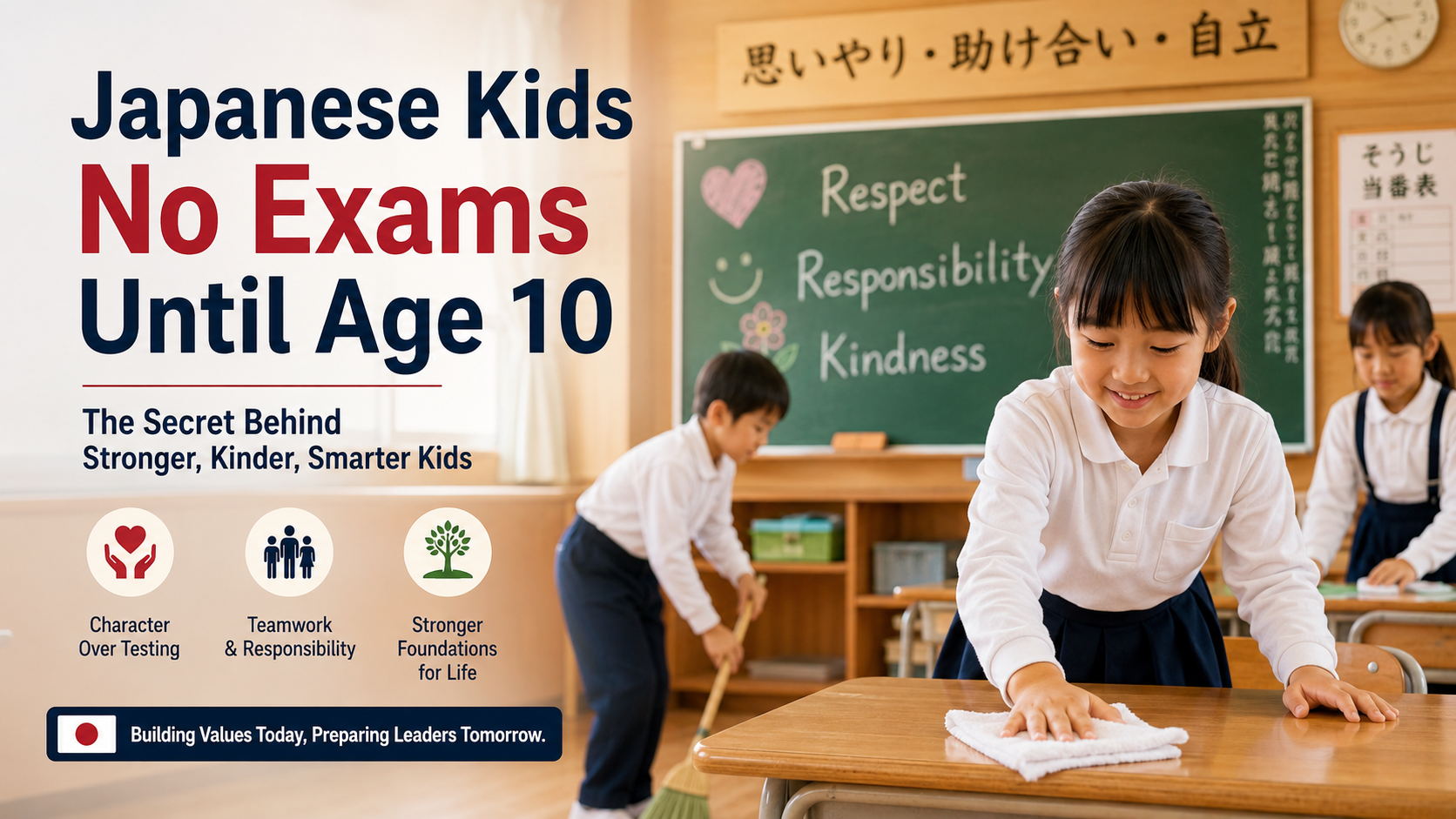
Japanese Kids No Exams Until Age 10: Here Is Why
Why does Japan’s school system perform so well globally? A key policy concerning japanese kids no exams dictates that primary students do not sit for formal tests until they enter the fourth grade around age 10. Instead of pushing early testing, Japanese primary schools focus on character development, empathy, and social responsibility. Standardized testing is delayed to protect young children from unnecessary academic pressure. According to official guidelines from the Ministry of Education, Culture, Sports, Science and Technology (MEXT), early primary school years prioritize moral growth and personal discipline over numerical marks.
This educational philosophy often surprises Western parents who are accustomed to letter grades during early childhood. However, delaying formal tests builds strong emotional stability in young children while creating lasting classroom harmony. In this guide, we explore the policy of japanese kids no exams and examine how primary schools teach core values through practical daily routines. Finally, we will highlight what parents and educators worldwide can learn from this balanced educational framework.
Understanding the Policy of Japanese Kids No Exams Until Fourth Grade
Japanese elementary schools value personal growth over early written marks. The first three school years build fundamental moral character and self-regulation. Educators believe young children need emotional safety before facing academic pressure. During these early years, teachers observe daily effort instead of giving formal examinations.
This supportive approach creates a positive learning environment. Children learn without any fear of bad marks or rankings. They feel safe to try new things and learn from mistakes. This builds confidence, creativity, and natural curiosity. When young children experience school without tests, they develop a passion for learning. That healthy mindset prepares them for challenging academic subjects later in life.
| Key Goals of Early Japanese Primary School |
|---|
| Emotional security and self-confidence |
| Moral values and respect for community members |
| Independence and personal responsibility |
Character Over Testing: Why Japanese Primary Schools Delay Exams
In Japan, teaching proper manners comes before teaching academic subjects like math or reading. Intellect means very little without core human values like respect, patience, and self-discipline.
-
Respect for Others: Children learn to listen carefully to peers. They speak politely to teachers every single day.
-
Self-Reliance and Autonomy: Students manage their own belongings. They keep study spaces neat and organized without adult intervention.
-
Emotional Regulation: Classroom activities help children control feelings. They resolve peer conflicts through calm, peaceful communication.
Focusing on these human traits creates a kind learning environment. Children build strong character before facing heavy academic stress.
How Primary Schools Teach Values Without Standardized Testing
Young primary students do not spend hours studying for written tests. Instead, they complete practical daily activities that build civic duty, personal accountability, and social skills. The school building acts as a living laboratory for practical life lessons.
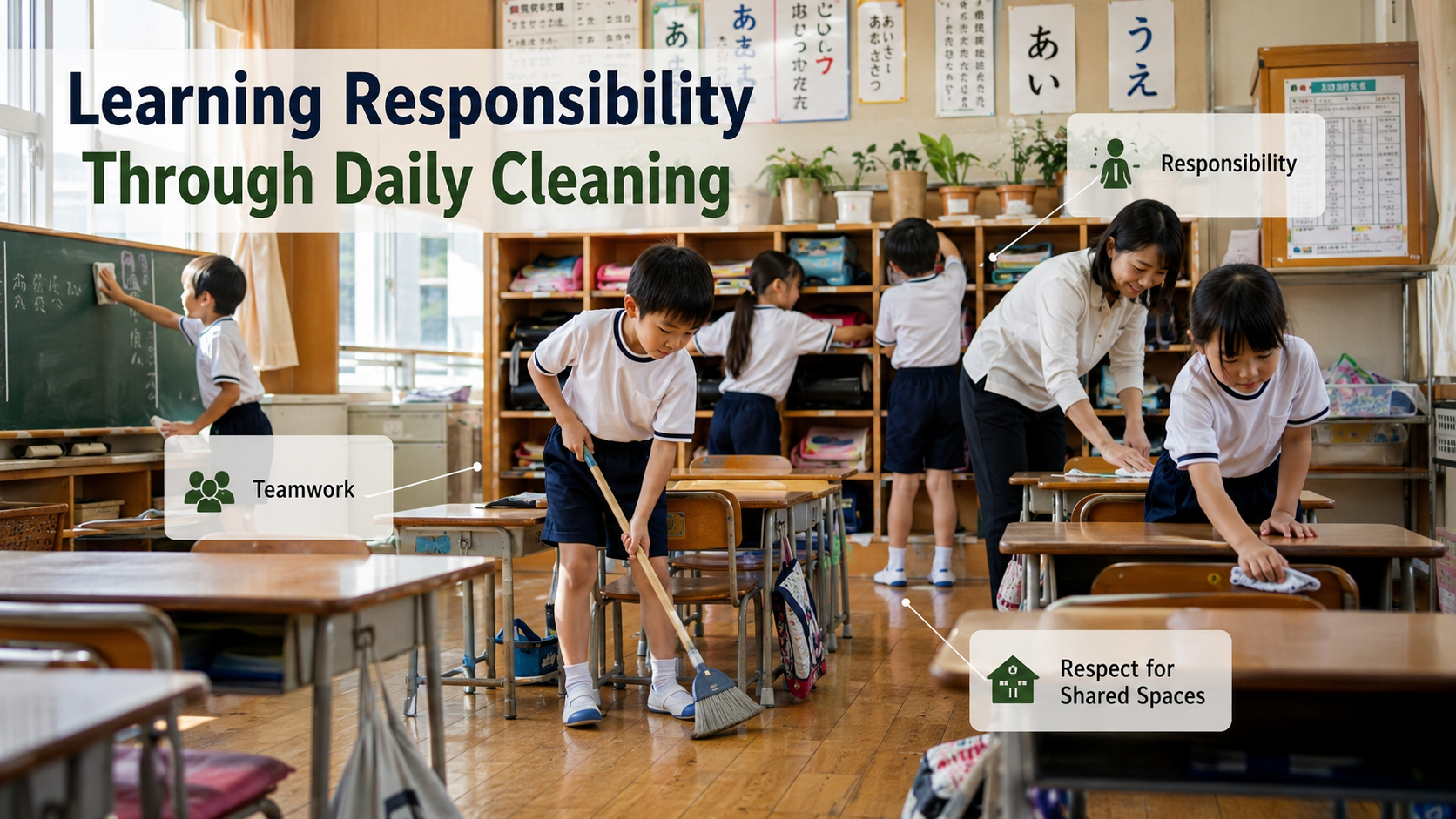

Daily Cleaning Duties (O-soji) as an Alternative to Testing
Japanese primary schools do not hire janitors to clean classrooms. Instead, all students join in a daily routine called O-soji. They sweep floors, wipe chalkboards, and pick up trash together.
This shared work teaches children that manual labor is valuable. It shows them that keeping shared spaces clean helps the whole community. Working together removes social hierarchies among students. It builds deep respect for physical surroundings and public property.
Shared Lunch Duty (Kyoshoku) to Build Responsibility
Lunchtime offers another vital lesson in teamwork and gratitude. Students wear matching aprons and serve balanced meals to classmates. Teachers sit and eat the exact same food in the classroom every day.
This structured routine encourages healthy eating habits. It reduces food waste across the whole school. Most importantly, it reinforces the idea that every student belongs to one unified team.
Benefits of the Japanese Kids No Exams Approach
Delaying written assessments offers huge developmental benefits for young learners during early primary school.
Lower Academic Anxiety and Greater Curiosity
Early testing often creates unnecessary anxiety in young minds. By removing formal exams in lower grades, schools protect children from the fear of failure. Students explore new ideas through play, curiosity, and group projects. Learning becomes a fun journey rather than a stressful task.
Stronger Teamwork Without Early Test Rankings
Ranking young children with test scores creates harmful peer competition. Japanese primary education avoids this by emphasizing group effort over individual recognition. Children work in small groups called han. They help each other complete tasks and solve problems together.
Equal Development Opportunities for Late Bloomers
Children develop mental and social skills at different speeds. Delaying letter grades gives late bloomers time to grow naturally. They do not carry an early label of academic failure. This builds long-term self-esteem in every child.
What Happens When Japanese Students Reach Age 10?
In fourth grade, the learning style slowly shifts toward formal grades and structured written tests. Because of the japanese kids no exams foundation during early years, children spend their first three grades building strong self-discipline. They step into formal testing with great focus and emotional maturity.
Teachers introduce regular written tests in mathematics, science, language, and social studies. Students do not fear these assessments. They see them as opportunities to show personal effort and growth. The focus remains on personal progress rather than beating classmates. This balanced approach creates responsible citizens with strong academic skills.
FAQ SECTION
Why do Japanese primary schools delay formal testing until fourth grade?
Japanese primary schools delay formal testing until fourth grade because educators prioritize character development and emotional growth over academic marks. During early childhood, brain growth thrives on cooperative play, habit formation, and social skills rather than memorizing facts for tests. By teaching manners, empathy, self-reliance, and community responsibility during early grades, schools build a safe environment for every child. Educators know that a child who feels safe and valued will naturally perform better academically when formal tests start later in fourth grade.
How do teachers evaluate young students without using written examinations?
Even though young students do not take formal written exams, teachers evaluate progress using daily observational methods. Educators assess children through classroom participation, effort, homework completion, group projects, and practical activities. Teachers keep detailed records of how well a child understands math and reading concepts. They also track emotional growth and peer interactions. Parents receive detailed progress reports about strengths, behavior, and social growth. This system ensures every child gets help without feeling early test pressure.
Do young primary students receive daily homework in early grades?
Yes, young students receive daily homework in early elementary school, but tasks build good study habits rather than test skills. Lower-grade students get light tasks like reading aloud to parents, writing characters, or doing simple math worksheets. Homework stays brief so children have time for outdoor play and family bonding. Teachers use homework to reinforce classroom learning and build personal responsibility. This daily routine helps young children develop time management skills smoothly without causing stress or burnout.
How do schools teach cleanliness and responsibility without test scores?
Japanese schools make daily cleaning duties (O-soji) a core part of the school day to teach responsibility and humility. Every afternoon, time is set aside for students to clean classrooms, hallways, stairwells, and grounds together. Janitors are not hired to clean these student spaces. By sweeping and wiping down areas alongside peers and teachers, children learn that keeping spaces clean is a shared duty. This daily practice builds respect for public property and self-reliance better than any written test could.
What are the main benefits of the japanese kids no exams policy?
The main benefit of the japanese kids no exams policy is that children build high emotional resilience, lower anxiety, and a genuine love for learning. By avoiding early academic rankings, schools prevent early childhood stress and academic burnout. Students learn to value teamwork over selfish competition through group tasks and shared duties. When formal testing finally starts in fourth grade, students possess the emotional maturity, focus, and self-discipline needed to handle academic challenges successfully.
CONCLUSION
The system of japanese kids no exams until age 10 highlights a human-centered approach to education. Building character and emotional health matters just as much as academic success. By focusing on respect, duty, and self-reliance early on, Japanese schools prepare children for real life long before testing them on paper. This delay protects children from burnout and builds a lasting passion for learning.
When students finally start taking tests at age 10, they show strong self-discipline and focus. Modern school systems around the world can learn a lot from this model. Investing in a child’s character and happiness early on is the best way to secure long-term success. Parents and educators can also benefit from using behavior remarks for kids to encourage positive habits, reinforce good conduct, and support a child’s overall personality development from an early age.