

The Importance of Learning Different Languages: A Comprehensive Guide
In today’s interconnected world, understanding the importance of learning different languages goes beyond basic communication. Language helps people connect across cultures, share ideas, and understand different perspectives. According to UNESCO, linguistic diversity plays an important role in preserving cultural heritage and encouraging global cooperation.
Learning another language can improve your career prospects, strengthen cognitive skills, and help you explore new cultures. It also makes traveling easier and allows you to communicate with people from different backgrounds. Whether you want to learn a language for personal growth, education, or professional development, multilingualism offers several practical advantages.
This comprehensive guide explores the benefits of learning another language, the importance of lifelong learning, and 20 reasons to study a foreign language. It also explains how to approach an essay about language learning and whether people with high IQs learn languages faster. By understanding these benefits, you can make informed decisions about your learning goals and discover how a new language can broaden your opportunities.
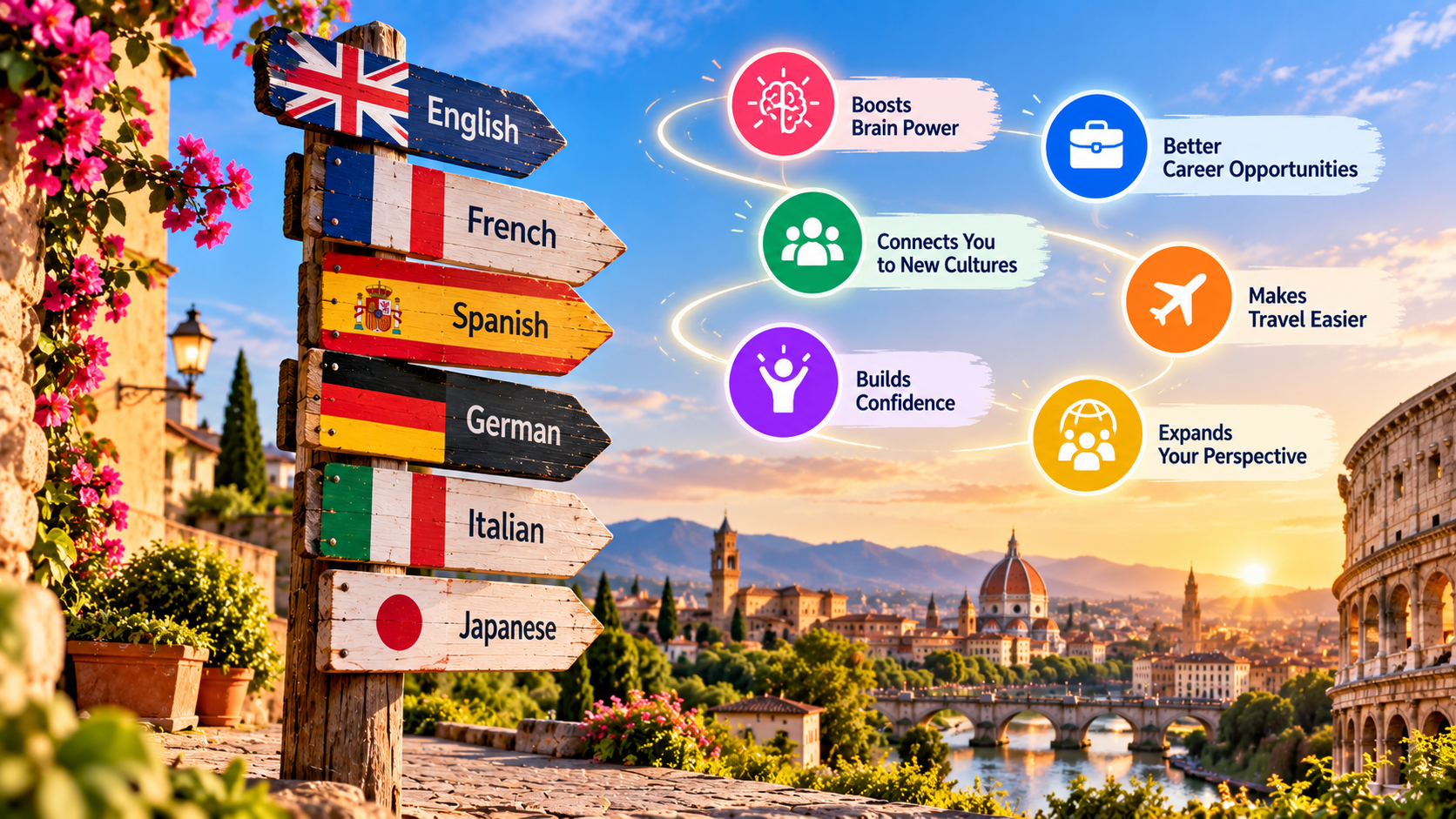

What are 10 benefits of knowing another language?
Knowing another language offers several personal, professional, and cognitive benefits. It helps you communicate with more people, understand different cultures, and develop useful skills. The benefits of learning a second language can also extend to education, travel, and career development. These advantages connect closely with the idea of lifelong learning and its benefits, which encourages people to keep developing their knowledge and skills throughout life.
Here are ten important benefits of knowing another language:
- Improved memory: Learning vocabulary and grammar exercises your memory and recall abilities.
- Better problem-solving: Language learning encourages you to recognize patterns and approach challenges differently.
- Career opportunities: Speaking another language can help you qualify for jobs involving international clients or markets.
- Cultural understanding: You gain direct access to different traditions, perspectives, and ways of life.
- Easier travel: Knowing the local language helps you ask questions, understand directions, and communicate more confidently.
- Greater confidence: Practicing conversations helps you become more comfortable communicating with unfamiliar people.
- Stronger listening skills: Language learning trains you to notice pronunciation, tone, and context.
- Improved understanding of your native language: Comparing grammatical structures can reveal how your own language works.
- Expanded social connections: You can build friendships and professional relationships across language barriers.
- Lifelong mental engagement: Studying a language provides an ongoing intellectual challenge and may support cognitive health.
These benefits vary between individuals. However, regular practice can make language learning a valuable part of personal and professional development.
What are the 5 importances of learning?
Learning is essential for personal development, social interaction, and professional growth. It helps people understand the world, adapt to change, and make informed decisions. The importance of learning becomes particularly clear when we consider how knowledge influences everyday life and why education is important in our lives.
Five major reasons explain why learning matters.
- Cognitive development: Learning introduces new concepts and challenges your thinking. Studying a language, for example, requires you to remember vocabulary, recognize patterns, and understand meaning.
- Personal growth: Education helps you discover your strengths, develop interests, and become more independent. It can also improve your ability to understand different perspectives.
- Career advancement: Developing new skills can improve your qualifications and prepare you for changing workplace requirements.
- Social connection: Learning about other people, cultures, and experiences encourages communication and mutual understanding.
- Adaptability and resilience: New knowledge helps you respond to unfamiliar situations and solve problems more effectively.
These five areas demonstrate why learning should continue throughout life. You do not need to study in a formal classroom to benefit. Reading, practicing a skill, exploring another culture, or learning a foreign language can all contribute to personal development.
Ultimately, lifelong learning helps people remain curious, capable, and better prepared for new opportunities.
What are 20 reasons why it’s beneficial to learn a foreign language?
Learning a foreign language can improve communication, broaden cultural awareness, and create new opportunities. The importance of learning different languages becomes clearer when you consider how language skills benefit everyday life, education, and professional development.
Here are 20 reasons to consider learning another language, grouped into four categories for easier reading.
Cognitive and Personal Benefits
- Strengthens memory: Remembering new words and expressions provides regular memory practice.
- Develops problem-solving skills: Understanding unfamiliar sentence structures encourages analytical thinking.
- Improves listening: You learn to recognize sounds, accents, and meaning in context.
- Increases confidence: Holding conversations in another language can strengthen your self-belief.
- Encourages creativity: Finding different ways to express ideas develops flexible thinking.
- Improves concentration: Listening and speaking require attention to words and context.
Career and Educational Opportunities
- Expands career options: Language skills can help you pursue jobs involving international communication. Combining language proficiency with technical and soft skills can further prepare you for roles that require collaboration, problem-solving, and communication.
- Supports professional networking: You can communicate with colleagues and clients from different countries.
- Provides educational opportunities: Another language may help you access international study programs.
- Creates business opportunities: Some industries value employees who can communicate with international markets.
- Supports lifelong learning: Language study provides a skill you can continue developing throughout your life.
Cultural and Social Advantages
- Builds cultural awareness: Language reveals the customs, values, and traditions of different communities.
- Encourages empathy: Communicating across cultures can help you appreciate different perspectives.
- Creates new friendships: You can connect with people who speak another language.
- Expands entertainment choices: You can enjoy books, films, music, and other media in their original language.
Travel and Everyday Benefits
- Improves travel experiences: Understanding local expressions makes exploring new destinations easier.
- Makes everyday tasks easier abroad: Reading signs and asking questions can reduce communication difficulties.
- Develops adaptability: You learn to manage unfamiliar situations and adjust your communication.
- Improves native-language awareness: Studying grammar can help you understand your own language’s structure. Learning Greek and Latin roots to build academic vocabulary can also help you recognize word meanings and understand unfamiliar terms across different subjects.
- Provides personal satisfaction: Reaching a language milestone can be rewarding and motivating.
The benefits depend on your goals, practice habits, and opportunities to use the language. You do not need perfect fluency to experience meaningful progress. Even basic conversational skills can improve communication and make cultural experiences more rewarding.
Can you write an essay about the importance of learning another language?
An essay about the importance of learning different languages should explain how language connects people, supports personal development, and creates new opportunities. A clear structure helps readers understand the main argument and follow the supporting points.
Introduction: Begin by explaining how communication connects people in today’s global society. Introduce the importance of learning different languages as a practical way to understand cultures and build relationships across borders.
Body paragraph 1 — Cultural understanding: Explain how learning another language provides insight into traditions, values, and everyday experiences. Understanding the importance of learning different languages also helps people communicate respectfully with individuals from different backgrounds.
Body paragraph 2 — Personal and cognitive development: Discuss how learning vocabulary, grammar, and pronunciation encourages memory practice, concentration, and problem-solving. These activities can support mental engagement, although their effects vary between individuals.
Body paragraph 3 — Career and educational opportunities: Describe how language skills can support international business, tourism, education, and communication with global clients. Their professional value depends on the industry and specific job requirements.
Conclusion: Summarize the cultural, personal, and professional advantages of multilingualism. Emphasize that learning another language requires patience and consistent practice but can offer lasting benefits.
A strong essay should include relevant examples and connect each paragraph to the central argument. It should explain the importance of learning different languages through practical situations rather than repeating the same benefits. This approach creates a clear, informative discussion of why language learning matters in modern life.
Do high IQ people learn languages faster?
A high intelligence quotient (IQ) may help with certain aspects of language learning, but it does not guarantee faster progress or fluency. Some learners find it easier to recognize grammatical patterns, remember vocabulary, or analyze sentence structures. However, learning a foreign language involves more than intelligence.
Motivation, consistent practice, listening exposure, and opportunities to speak all influence progress. Previous experience with other languages can also help learners recognize familiar patterns and understand new grammatical structures. Someone who practices regularly may progress further than a highly analytical learner who studies only occasionally.
Language learning also involves practical communication skills. Understanding grammar is useful, but learners must apply that knowledge when speaking, listening, reading, and writing. Mistakes are a normal part of this process and can help identify areas that need improvement.
There is no single learning method that works equally well for everyone. Some people benefit from structured lessons, while others learn effectively through conversations, reading, or language apps. The most useful approach is one that fits your goals and encourages regular practice. Understanding educational psychology theories every teacher should know can also provide useful insights into how people learn and which teaching approaches may support their progress.
Ultimately, people with different intellectual abilities can learn another language. Patience, effective strategies, and sustained effort are important factors in developing proficiency.
The Crucial Role of Motivation and Consistency
Motivation and consistency play important roles in successful language learning. Even learners who understand grammar quickly can struggle to make progress without regular practice. Developing a sustainable routine helps you build vocabulary, improve pronunciation, and become more comfortable using the language.
You do not need to spend several hours studying every day. Short, focused sessions can help you maintain momentum when practiced consistently. For example, you might learn five new words, listen to a short conversation, or practice speaking for ten minutes each day.
Motivation also becomes easier to maintain when you connect language learning with personal interests. Watching films, reading stories, exploring music, or speaking with native speakers can make practice more engaging. These activities expose you to natural expressions and help you understand how people use language in everyday situations.
To build a consistent learning habit:
- Set realistic weekly goals and track your progress.
- Review previously learned vocabulary regularly.
- Practice listening and speaking alongside reading and writing.
- Accept mistakes as opportunities to improve.
- Choose activities that match your interests and proficiency level.
Consistency matters more than occasional bursts of effort. Understanding the importance of learning different languages can help you stay focused on your goals. With useful learning materials, regular exposure, and a practical routine, you can gradually develop stronger communication skills and greater confidence.
FAQ
Q: What is the best age to start learning a new language?
There is no single best age to begin. Children often develop pronunciation naturally, while adults can use structured learning and consistent practice to achieve fluency at any stage of life.
Q: How many hours of practice are needed to become fluent in a foreign language?
The time required depends on the language, learning methods, and practice routine. Hundreds of hours of focused study, regular conversations, and daily immersion can gradually build fluency.
Q: Can you teach yourself a foreign language without formal classes?
Yes, you can learn a foreign language independently using language-learning apps, podcasts, books, and online videos. Consistent speaking, listening, reading, and writing practice helps improve proficiency.
Conclusion
Embracing the importance of learning different languages is one of the most impactful choices you can make for your personal and professional development. Throughout this guide, we explored ten incredible benefits, five core educational principles, twenty practical reasons, essay insights, distinct advantages, and the true role of intelligence in language acquisition. Mastering a new tongue transforms your cognitive abilities, enhances your career prospects, and deepens your appreciation for global cultures. Remember that consistency and passion matter far more than innate talent or age. We encourage you to take that first step today—download an app, book a conversation class, or pick up a foreign book. By committing to daily practice, you will unlock a vibrant world of opportunities, broaden your mental horizons, and connect with humanity on a much deeper, more meaningful level.