
Connection of Mother’s Womb with Children: The Lifelong Biological and Emotional Bond
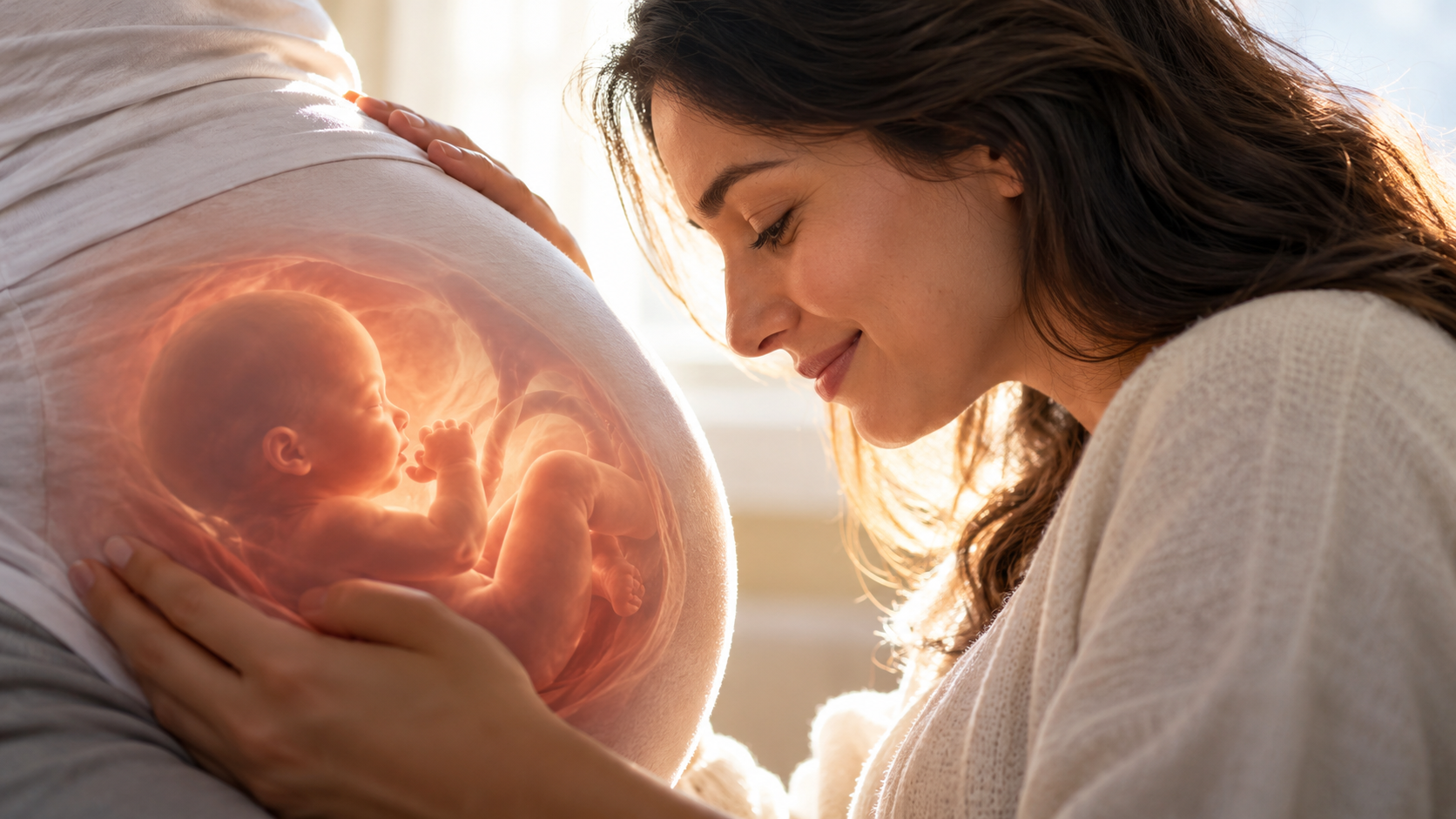
Pregnancy creates a unique connection between a mother and her child long before birth. The connection of mother’s womb with children begins during pregnancy through biological processes that support fetal growth and development. A mother’s body adapts to nourish the developing baby, provide oxygen, and create an environment for healthy growth. Prenatal care also plays an essential role in supporting maternal and fetal health. According to the Mayo Clinic, regular prenatal care helps monitor pregnancy and identify potential health concerns.
This relationship extends beyond physical development. The womb provides an environment where the baby experiences movement, sounds, and changes in the mother’s physiological state. These early sensory experiences contribute to the baby’s development and familiarity with the mother’s voice.
Many parents wonder how this connection develops. Can children sense when their mother is pregnant? Does a baby’s DNA remain inside the mother’s body? What connects a mother and baby physically? This article explores the biological connection, prenatal development, and emotional attachment between mothers and children.

What is the connection between mother and baby in the womb?
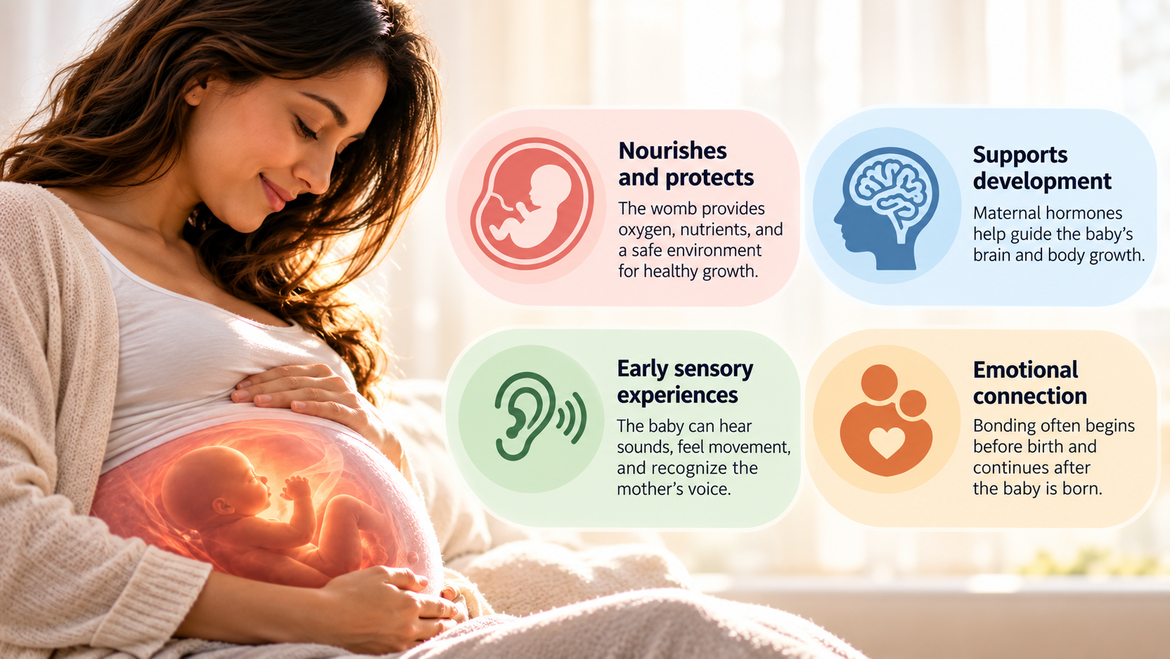
The connection between a mother and baby in the womb involves physical, biological, and sensory processes. During pregnancy, the placenta transfers oxygen and nutrients from the mother’s blood to the developing fetus. It also helps remove fetal waste products. Although maternal and fetal blood usually remain separate, substances can cross the placental barrier through different mechanisms.
The baby also experiences sounds, movement, and rhythmic sensations inside the womb. As pregnancy progresses, the developing auditory system begins responding to sounds, including the mother’s voice. These experiences may help newborns recognize familiar voices after birth.
Maternal health can influence fetal development. Conditions such as severe stress, poorly controlled thyroid disease, and inadequate nutrition may affect pregnancy outcomes. However, ordinary emotional changes do not automatically harm the baby.
The connection between mother and baby during pregnancy therefore involves more than physical closeness. It includes the biological support needed for growth and the sensory experiences that begin before birth. Emotional bonding develops differently for every mother and does not need to happen immediately.
How Maternal Hormones Guide Fetal Brain Growth
Maternal hormones play an important role in pregnancy and fetal development. Hormones such as thyroid hormones help support normal brain development, while cortisol participates in regulating the body’s response to stress. These substances interact with the placenta and the developing fetus in complex ways.
The placenta helps regulate the movement of certain hormones and other substances between maternal and fetal systems. Some maternal hormones cross the placental barrier, while others are produced or modified within the placenta. Their effects depend on the hormone, its concentration, and the stage of pregnancy.
Prolonged or severe maternal stress may influence pregnancy outcomes, but occasional worry or sadness does not mean a mother has harmed her baby. Similarly, feeling relaxed does not guarantee a particular developmental outcome.
Healthy prenatal care, balanced nutrition, adequate rest, and appropriate medical support help create favorable conditions for fetal growth. The relationship between maternal hormones and fetal brain development is complex, so it is inaccurate to suggest that every emotional change directly determines a child’s future temperament.
Can children sense when mom is pregnant?
Young children sometimes seem to recognize a pregnancy before their parents explain it. However, there is no strong evidence that toddlers can reliably detect pregnancy itself through an intuitive or supernatural ability. They may instead notice changes in their mother’s behavior, appearance, or daily routine.
For example, a pregnant mother might experience fatigue, nausea, or changes in her usual activities. She may carry her toddler less often or spend more time resting. Children who depend on familiar routines can respond to these changes by seeking extra attention or becoming more clingy.
Older siblings may also notice conversations between adults or observe changes in the household. Their reactions vary according to age, temperament, and understanding of pregnancy.
Some children show curiosity about a growing belly, while others appear uninterested. These responses are normal and do not necessarily indicate that a child understands a pregnancy is taking place.
Parents can help by explaining the upcoming change in simple, age-appropriate language. Reassurance, familiar routines, and opportunities to ask questions can help children adjust to the idea of having a new sibling. Parents can also explore these tips for first-time mothers to prepare for the practical and emotional changes that come with welcoming a baby.
Recognizing Subtle Clues in Daily Household Energy
Young children often understand changes in their environment through observation rather than detailed explanations. They notice familiar patterns, facial expressions, physical contact, and differences in daily activities. When a mother becomes pregnant, these changes may affect how a child behaves around her.
For instance, a toddler may ask for more cuddles when the mother feels tired or cannot play as actively. Another child may become curious about the mother’s growing abdomen or want to sit beside her more frequently. Some children show no noticeable behavioral changes at all.
These reactions should not be treated as proof that a child has sensed pregnancy before anyone else. Children may respond to ordinary changes in routine, stress, or attention for many reasons.
Parents can support their children by maintaining familiar routines where possible and explaining changes calmly. Offering affection, answering questions, and including children in simple preparations can help them feel secure.
A child’s behavior is best understood as a response to their environment rather than evidence of a special ability to detect pregnancy.
Is there baby’s DNA in the mother’s body?
Yes. During pregnancy, some fetal cells can cross the placenta and enter the mother’s bloodstream. A small number of these cells may remain in maternal tissues for years or even decades after pregnancy. Scientists call this phenomenon fetal microchimerism.
These fetal cells have been detected in several maternal tissues, including the liver, lungs, heart, and other organs. Their long-term effects remain an active area of scientific research. Some studies suggest that fetal cells may participate in tissue repair or influence immune activity. However, their role is complex, and researchers have not established that they consistently repair maternal organs or provide health benefits.
Microchimerism can also occur in other ways, including the transfer of maternal cells to a fetus. It is therefore part of a broader biological exchange between mother and child.
The presence of fetal cells does not mean that a baby’s entire genetic identity becomes part of the mother’s body. Instead, a small population of cells carrying fetal genetic material may persist within maternal tissues.
This discovery offers an interesting example of how pregnancy can leave lasting biological traces. However, claims about specific health benefits or effects should be interpreted cautiously until further research provides clearer answers.
What connects mother and child in the womb?
The connection of mother’s womb with children develops through several structures that support the baby during pregnancy. The placenta attaches to the uterine wall and acts as an exchange organ. It transfers oxygen and nutrients to the fetus while helping remove waste products. It also produces hormones that support pregnancy.
The umbilical cord connects the fetus to the placenta. It normally contains two arteries and one vein, surrounded by a protective substance called Wharton’s jelly. The umbilical vein carries oxygen-rich blood toward the fetus, while the two arteries carry blood away from the fetus toward the placenta.
The amniotic sac surrounds the baby and contains amniotic fluid. This fluid cushions the fetus, allows movement, and helps maintain a suitable environment for development.
Although these structures work together, maternal and fetal blood do not normally mix directly in the placenta. Instead, oxygen, nutrients, and waste products move across specialized placental tissues.
Together, the uterus, placenta, umbilical cord, and amniotic sac create the physical foundation of the connection of mother’s womb with children. Their coordinated functions support fetal growth and help protect the developing baby.
How to know if baby is attached to mother?
A baby’s attachment to their mother develops through repeated experiences of care, comfort, and responsiveness. The connection of mother’s womb with children begins biologically during pregnancy, while emotional attachment continues to develop after birth. During the first months of life, babies gradually become familiar with their mother’s voice, scent, touch, and ways of soothing them.
A baby may show signs of familiarity by calming when held, looking toward the mother’s face, responding to her voice, or relaxing during feeding. As development progresses, some babies smile, reach toward familiar caregivers, or seek comfort from them when distressed.
However, no single behavior proves that a baby has a secure attachment. Babies differ in temperament, developmental stage, and how they express their needs. Crying when separated, for example, can be a normal developmental response rather than evidence of a problem.
Secure attachment develops over time when caregivers respond consistently and sensitively to a baby’s needs. Parents do not need to respond perfectly every time. What matters is the overall pattern of care, comfort, and reconnection.
If a baby appears unusually unresponsive, has difficulty feeding, or shows other developmental concerns, parents should discuss these observations with a pediatrician rather than relying on attachment signs alone.
The Power of Postpartum Skin-to-Skin Contact
Skin-to-skin contact after birth can help mothers and babies strengthen their relationship outside the womb. This practice supports the emotional side of the connection of mother’s womb with children by providing warmth, comfort, and opportunities for early feeding. When a newborn is placed directly against the mother’s bare chest, the contact can help the baby feel calm and secure.
Skin-to-skin contact can help newborns maintain their body temperature and may reduce crying. It also encourages breastfeeding and close physical interaction. This practice supports the release of hormones involved in maternal behavior and lactation, including oxytocin.
When medically appropriate, uninterrupted skin-to-skin contact during the first hour after birth is encouraged. However, the timing and duration may depend on the mother’s condition, the baby’s health, and the circumstances of delivery.
Safe positioning and observation are important, particularly when the newborn is sleepy or the mother is recovering from medication or surgery. Healthcare professionals can help ensure that the baby’s airway remains clear.
If immediate skin-to-skin contact is not possible, the bonding process is not lost. Parents can establish closeness later through holding, feeding, talking, and responding to their baby’s needs.
Do babies act differently when mom is pregnant?
Babies and toddlers may behave differently when their mother becomes pregnant with another child. These changes can reflect adjustments in the family environment rather than a direct awareness of pregnancy. The connection of mother’s womb with children can also be understood in the context of how children respond to changes in maternal behavior and household routines.
Some toddlers become clingier, ask to be carried more often, or seek additional reassurance. Others may experience temporary changes in sleep, feeding, or toilet-training habits. These behaviors can occur during many family transitions and are not specific signs of pregnancy.
A growing abdomen may also change how a mother holds or plays with her child. Toddlers can notice these physical differences even when they do not understand their cause.
Parents can make the transition easier by keeping familiar routines, spending individual time with the older child, and explaining the new baby’s arrival in simple terms. Picture books, gentle conversations, and age-appropriate involvement in preparations may help children understand what to expect.
Avoid telling a child that they must feel excited about becoming an older sibling. Mixed emotions are normal, and adjustment may take time. Consistent affection and reassurance can help the child feel valued as the family changes.
Ultimately, the connection of mother’s womb with children begins with biological support during pregnancy and continues to develop through everyday care, comfort, and interaction after birth. Each family’s experience is different, and a strong emotional bond can grow gradually over time.
Conclusion
The connection of mother’s womb with children is a marvel of human biology that links two lives across physiological, emotional, and cellular dimensions. From the protective architecture of the placenta and umbilical cord to the lifelong presence of fetal microchimeric cells, nature creates a bond that endures well beyond nine months of gestation.
Older siblings and developing infants intuitively register these reproductive changes through sensory awareness and behavioral adjustments. As mothers respond with consistent comfort, secure attachment takes root naturally. By understanding how the womb functions as both a nourishing sanctuary and a communication highway, parents can appreciate the depth of early maternal bonds. Embrace this transformational season with confidence, knowing that every calm breath, gentle voice, and caring touch actively shapes your child’s developing mind and secure future.