
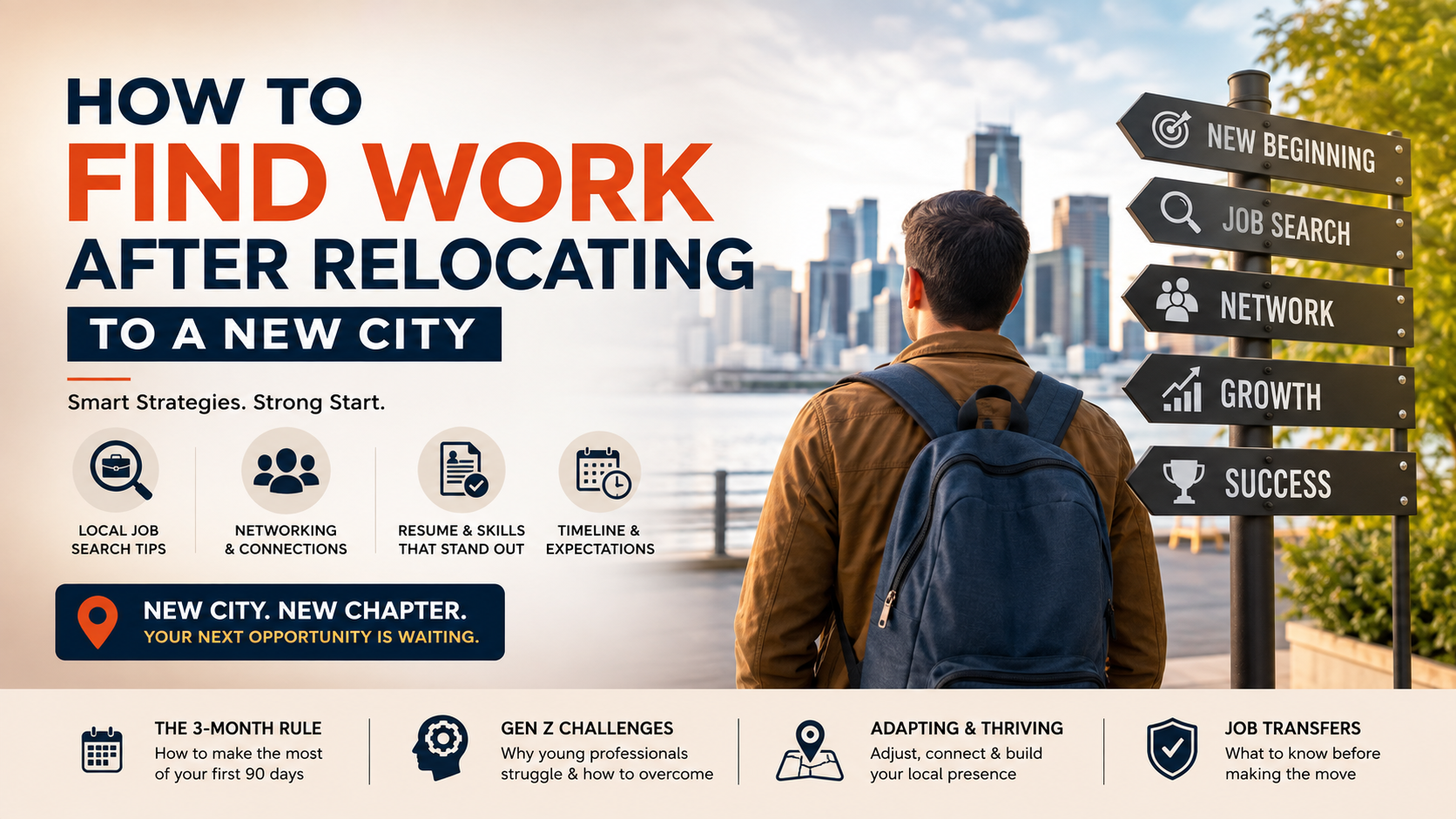
How to Find Work After Relocating to a New City
Moving to a fresh location brings excitement, but figuring out how to find work after relocating to a new city can quickly feel overwhelming. You leave behind your established professional network, local employer reputation, and daily routine. Whether you moved for family, adventure, or personal growth, securing a paycheck in an unfamiliar place requires a structured game plan. According to the U.S. Bureau of Labor Statistics, job searches involving geographic changes often demand targeted local networking and tailored resume updates. This guide answers your most pressing career transition questions, from understanding generational hiring hurdles to navigating job transfers and mastering the timeline of landing a new role.
Why Are Gen Z Struggling to Find Jobs?
Younger professionals often face unique challenges when entering the workforce or moving to another city. Many employers now emphasize proven experience, practical skills, and measurable results instead of degrees alone. This can create a difficult barrier for early-career applicants.
The problem becomes more noticeable after relocation. Candidates who move to a new city may lack local references, professional contacts, and knowledge of nearby employers. They may also compete against applicants who already have established relationships within the local job market. Avoiding common relocation problems can make this transition easier, so reviewing common relocation mistakes to avoid when moving can help job seekers prepare more effectively.
Automated applicant tracking systems can create another challenge. These systems may screen resumes for relevant skills and keywords before recruiters review them. A poorly tailored resume can therefore disappear before reaching a hiring manager.
Remote hiring has also changed how companies evaluate candidates. Employers may expect applicants to demonstrate independence, communication skills, and relevant digital experience. Gen Z job seekers can respond by building portfolios, networking directly, and tailoring applications to specific roles.
The Shift Toward Skills-Based Hiring
Recruiters increasingly look beyond academic credentials when evaluating candidates. Practical experience can demonstrate whether someone can apply knowledge in real workplace situations. This is particularly important for younger professionals who may not have several years of employment history.
A strong portfolio can help close that experience gap. Include relevant projects, internships, freelance work, certifications, or volunteer experience. Focus on outcomes rather than simply listing responsibilities. For example, explain what you built, improved, analyzed, or achieved.
Your professional online presence also matters. Keep your LinkedIn profile current and use a clear headline that reflects your target role. Share useful industry content when appropriate, but avoid posting simply for visibility.
Networking can provide another advantage. Informational interviews can help you understand local employers and discover opportunities before they become widely advertised. Local professional groups can also introduce you to people who understand the city’s hiring market.
For anyone learning how to find work after relocating to a new city, skills-based positioning makes the transition easier. Employers need evidence that you can contribute, regardless of where you previously worked.
What Is the 3-Month Rule in a Job?
The three-month rule commonly refers to the first 90 days of employment. Many companies use this period as a practical benchmark for evaluating a new employee’s performance, although probation policies vary by employer and location.
During the first three months, employers may assess your productivity, communication, reliability, teamwork, and ability to learn the role. You also evaluate whether the position matches your expectations and career goals.
However, the three-month mark does not guarantee permanent job security. Some companies use longer probation periods, while others have different performance review schedules. Always check your employment contract instead of assuming that every employer follows the same timeline.
If you recently relocated for work, the first 90 days can be especially important. You are adjusting to a new workplace while potentially adapting to an unfamiliar city. Building relationships early can help you understand workplace expectations faster.
Set clear priorities during your first few weeks. Learn your responsibilities, ask questions, document important processes, and request feedback. These actions can help you establish credibility while avoiding preventable mistakes.
Making It Through Your First Ninety Days
Your first 90 days should focus on learning, delivering results, and building professional relationships. Start by understanding what your manager considers successful performance. Clear expectations make it easier to prioritize your time and measure progress.
Regular communication is also important. Ask your supervisor for feedback instead of waiting until a formal review. If you identify a skill gap, create a practical plan to improve it.
Building relationships with teammates can make workplace integration easier. You do not need to become close friends with everyone. Instead, focus on being dependable, respectful, and willing to collaborate.
Keep track of your accomplishments throughout the probation period. Record completed projects, positive feedback, measurable improvements, and new responsibilities. This information can support future performance discussions.
If you moved specifically for the position, give yourself time to adjust. A new commute, neighborhood, workplace, and social environment can create additional pressure. Establishing routines can make the transition easier.
Ultimately, your goal is not simply to survive the first three months. You should use this period to demonstrate that hiring you was a sound decision.
What Is the Hardest Month to Find a Job?
The difficulty of finding a job can change throughout the year. December is often slower because many companies focus on year-end budgets, holidays, financial planning, and existing priorities. Hiring activity can therefore become less predictable during this period.
However, calling December universally the hardest month would be misleading. Hiring patterns vary by industry, location, company size, and job type. Some sectors continue recruiting throughout December because their business needs do not follow traditional corporate calendars.
Job seekers should therefore avoid stopping their search completely. A slower hiring period can still produce opportunities. Companies sometimes advertise positions when they have urgent vacancies or need to prepare for upcoming growth.
Relocation adds another consideration. If you are moving to a new city, begin researching employers before your move. This gives you time to understand which companies are actively hiring and what qualifications they require. You should also prepare for the practical side of the move by following tips to consider when moving to your new house.
Instead of focusing only on application volume, improve the quality of your search. Tailor your resume, strengthen your professional profiles, and contact relevant people in your target industry.
Understanding seasonal hiring patterns can help you plan how to find work after relocating to a new city without depending entirely on one month’s job market.
Navigating Slow Hiring Seasons
A slow hiring season should be treated as preparation time rather than wasted time. Start by reviewing your resume and removing information that does not support your target role. Replace generic descriptions with measurable achievements wherever possible.
Update your professional profiles as well. Make your new city visible if you have already relocated or include your relocation timeline when appropriate. This can prevent recruiters from assuming you are unavailable locally. Planning the practical details of your move alongside your job search can also help you avoid common relocation mistakes to avoid when moving.
Use slower periods to research companies you want to target. Identify their current openings, hiring requirements, locations, and business areas. Create a shortlist instead of applying randomly to dozens of unrelated positions.
Networking can also become more valuable during slower periods. Contact former colleagues, classmates, recruiters, and professional groups. Keep conversations focused on learning and building relationships rather than immediately asking for a job.
You can also prepare applications before hiring activity increases. Save customized resume versions and maintain a list of suitable employers. When recruitment accelerates, you can respond quickly.
The goal is to enter a busy hiring season prepared. Better preparation can reduce the pressure of finding employment while adjusting to a new city.
How Do I Transfer Jobs to Another City?
Moving to another city does not always require leaving your current employer. An internal transfer may allow you to relocate while keeping your existing role, experience, and benefits. However, approval depends on company policy, available positions, and business requirements. If an internal move is not possible, exploring careers that let you travel may also help you consider roles with greater geographic flexibility.
Start by reviewing your employer’s relocation and internal mobility policies. Check whether your company operates in the destination city and whether your role can be performed from another location.
Next, speak with your manager before making firm assumptions about the move. Explain your situation clearly and provide enough notice. Avoid presenting the request as an ultimatum unless you have no alternative.
Prepare a practical transition plan. Explain how you will maintain productivity, attend meetings, handle responsibilities, and collaborate with your existing team. If an office transfer is possible, identify a suitable position or department.
You should also explain the value of retaining you. Highlight recent achievements, specialized knowledge, and responsibilities that would be difficult to replace quickly.
If an internal transfer is unavailable, ask whether remote work, a hybrid arrangement, or a different position could provide another solution. These alternatives may help you relocate without immediately starting a completely new job search.
Building Your Internal Case for Relocation
A successful internal relocation request should focus on business continuity as much as your personal needs. Your employer needs confidence that moving will not reduce your performance or create unnecessary disruption.
Start by documenting recent achievements. Include completed projects, measurable improvements, important responsibilities, and positive performance feedback. This evidence strengthens your case more than general statements about your value.
Then create a clear transition proposal. Explain where you will work, how you will communicate with colleagues, and how you will maintain existing deadlines. Address potential concerns before management raises them.
If your current position cannot transfer directly, research comparable roles within the company. A different department or branch may offer a practical alternative.
You can also offer reasonable support during the transition. For example, you might document processes or help train someone who takes over location-specific responsibilities. Do not promise unrealistic workloads simply to secure approval.
Timing matters as well. A request made during a major project or staffing shortage may face more resistance. Whenever possible, give management enough time to plan.
The stronger your operational plan, the easier it becomes for decision-makers to view relocation as manageable rather than disruptive.
What Is a Good Reason to Ask for a Transfer?
A good reason for requesting an internal transfer is one that is genuine, professional, and easy for your employer to understand. Common circumstances can include a spouse’s career relocation, family responsibilities, or significant personal changes.
You do not necessarily need to disclose private details. Give enough information to explain why relocation is important while maintaining appropriate personal boundaries.
Your explanation should also show that you want to remain with the company. Employers may respond more positively when they understand that the transfer is an effort to continue your employment rather than an attempt to leave your current team.
Avoid framing the request around temporary frustration. Complaints about coworkers, boredom, commuting inconvenience, or dissatisfaction with a manager may weaken your case. If these issues are the real reason, consider whether another solution could address them.
The location itself may also matter. Explain why transferring to another branch, team, or remote arrangement would allow you to continue performing effectively.
A strong request combines a legitimate reason with a workable business plan. The goal is to show that relocation can solve your personal need without creating an unnecessary problem for your employer.
Presenting Your Request Professionally
When requesting a transfer, keep the discussion clear and focused. Start by explaining that you would like to explore an opportunity to relocate while continuing with the company.
Briefly explain the reason for your request. You can mention family responsibilities, a partner’s relocation, or another significant personal circumstance. Avoid providing more personal information than necessary.
Next, explain how you plan to maintain your responsibilities. Discuss remote work, another office location, adjusted reporting arrangements, or an internal position that matches your skills.
Give reasonable notice whenever possible. Early communication allows your manager and HR team to assess staffing needs and identify potential solutions. It also demonstrates that you are considering the company’s operational requirements.
Be prepared for questions or alternatives. Your employer may offer a different location, role, timeline, or working arrangement. Evaluate these options carefully instead of assuming the first proposal will be approved.
If the transfer cannot be accommodated, begin exploring external opportunities before your relocation becomes urgent. Update your resume, research employers, and start networking in the destination city.
Knowing how to find work after relocating to a new city is ultimately about preparation. Build connections early, tailor your applications, and use every available professional resource to make the transition easier.
Frequently Asked Questions
How Long Does a Typical City-to-City Job Search Take?
A typical city-to-city job search can take three to six months, although the timeline varies by industry, experience, location, and job type. Relocating can make the process longer because you may need to build local connections and understand the regional employment market. If you are learning how to find work after relocating to a new city, start applying before your move whenever possible. Research employers, update your resume, and begin networking early. Starting ahead of time can help you secure interviews before you arrive and reduce the pressure of finding work immediately after relocating.
Should I Update My Resume Address Before Moving?
You can update your resume with your destination city if you are genuinely relocating there soon. However, avoid suggesting that you already live there if you have not moved yet. Instead, clearly mention your relocation plans, such as “Relocating to Mumbai in October 2026.” This gives recruiters useful information about your availability. Your location alone does not determine whether an application passes an applicant tracking system. Relevant skills, experience, and job-specific keywords usually matter more. If you are figuring out how to find work after relocating to a new city, keeping your relocation timeline transparent can make your application easier for recruiters to understand.
How Do I Network for a Job in a New City?
Networking should begin before you relocate rather than after you arrive. Use professional platforms such as LinkedIn to connect with alumni, former colleagues, recruiters, and industry professionals in your destination city. Personalize your messages and explain your relocation plans briefly. Avoid immediately asking for a job. Instead, ask about the local industry, hiring trends, and useful professional groups. After moving, attend relevant meetups, conferences, alumni events, and business networking sessions. Building genuine relationships can help you discover opportunities that are not widely advertised. For anyone researching how to find work after relocating to a new city, local networking can provide valuable connections and market knowledge.
Can I Negotiate Relocation Assistance With a New Employer?
Yes, relocation assistance can sometimes be negotiated, particularly for specialized positions, senior roles, or competitive industries. However, not every employer provides financial support for moving expenses. The best time to discuss relocation assistance is generally after receiving a formal job offer. At that point, the employer has already shown strong interest in hiring you. Research typical relocation benefits for your position before making a request. Depending on the company, support may include moving costs, temporary accommodation, travel expenses, or other transition benefits. If you are planning how to find work after relocating to a new city, include potential relocation costs when evaluating the overall value of a job offer.
Conclusion
Finding work after relocating to a new city requires planning, patience, and consistent effort. Starting your search only after moving can create unnecessary financial and professional pressure. Instead, research employers, identify suitable positions, and begin networking before your relocation whenever possible. Preparing your new home in advance can also reduce moving-day stress, so consider these tips to consider when moving to your new house.
Understanding local hiring patterns can also help you time your applications more effectively. If you already have a job, investigate internal transfer or remote-work options before resigning. Tailor your resume to each relevant position and make your relocation timeline clear to employers. Most importantly, remember that how to find work after relocating to a new city is not about applying everywhere. It is about targeting suitable employers, building local connections, and presenting your skills clearly. A focused strategy can make your career transition more manageable and improve your chances of finding the right opportunity.