
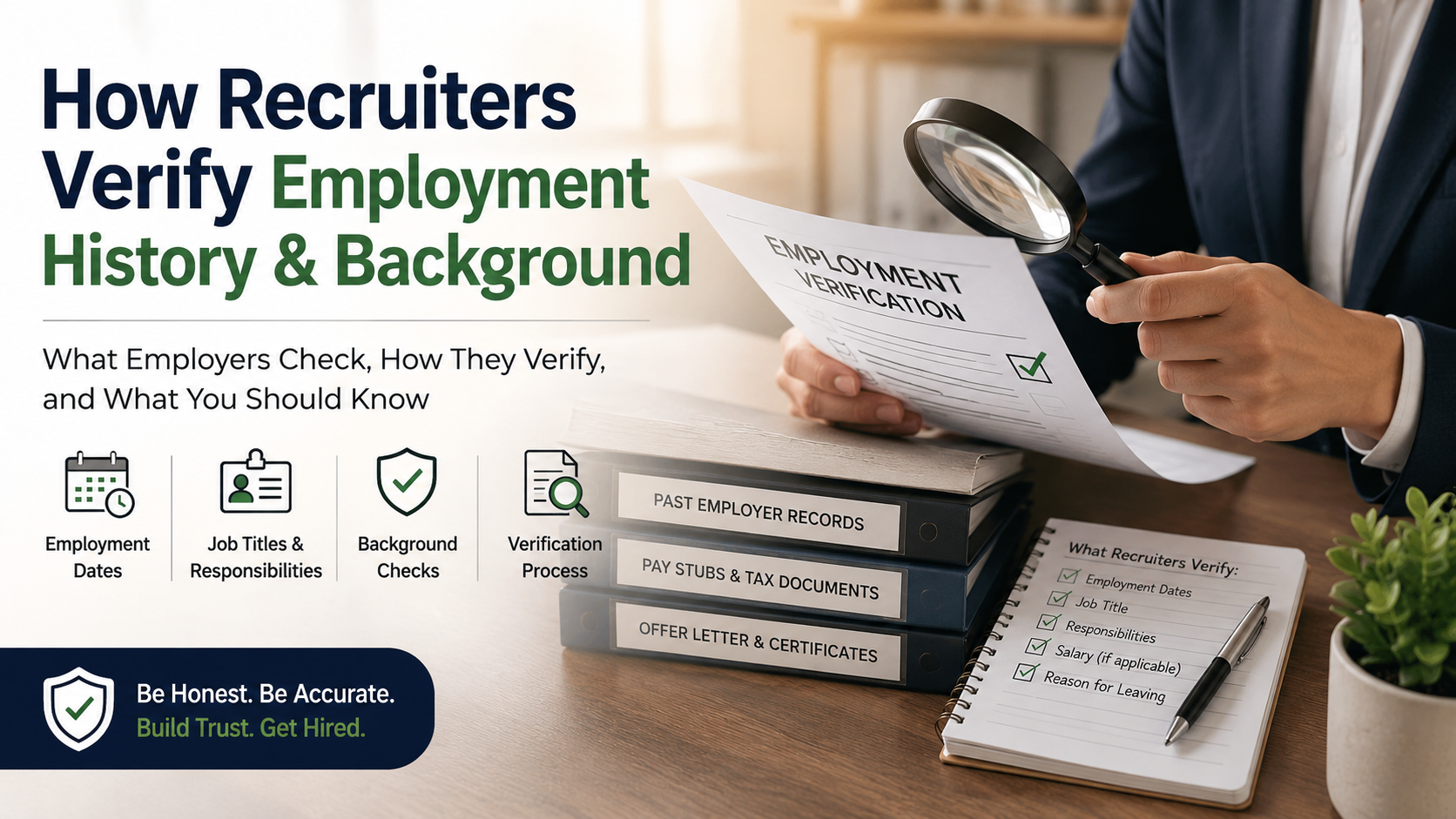
How Recruiters Verify Employment History and Background
Navigating the hiring process can feel stressful, especially when background checks are involved. Understanding how recruiters verify employment history can help job seekers prepare accurate resumes and avoid unnecessary surprises. Employers may review your work history to confirm that your experience matches what you reported during the application process. A strong, accurate resume is especially important, so reviewing common resume mistakes recruiters notice can help you correct potential issues before applying.
During screening, recruiters may verify employment dates, job titles, responsibilities, and other relevant details. They may contact previous employers or use third-party background screening providers. Some employers may also request supporting documents when records are unavailable.
This guide explains how recruiters verify employment history, how employers check past jobs, what can happen after a failed background verification, and which industries often use stricter screening. It also covers common background-check red flags and ways to handle discrepancies.
In the United States, employers must follow applicable employment and background-check laws. The U.S. Equal Employment Opportunity Commission (EEOC) explains that background information must be used consistently and without unlawful discrimination.
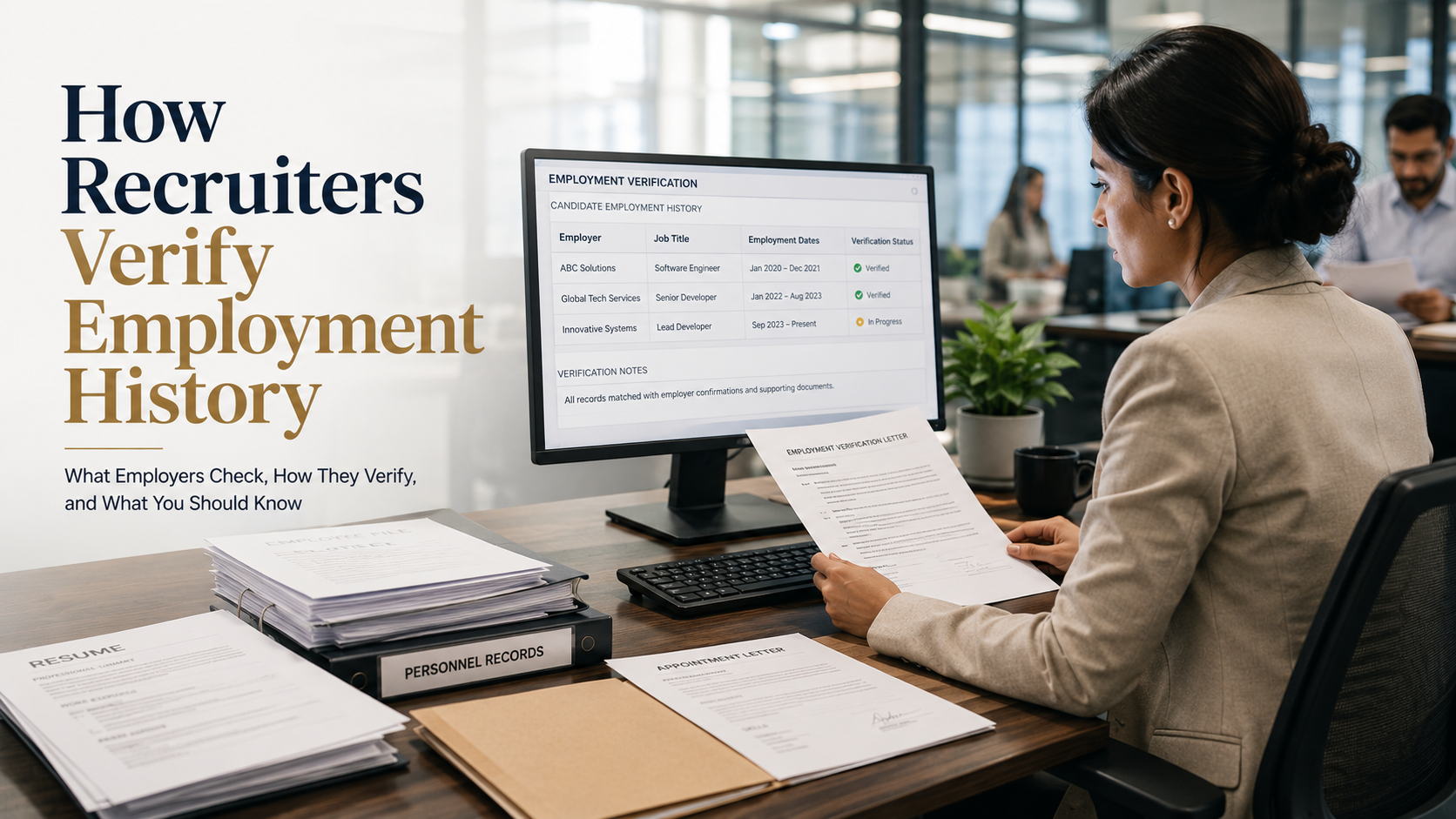
How Do Employers Check Employment History?
Employers usually verify employment history by comparing information from your resume or application with records provided by previous employers. Recruiters may confirm your job title, employment dates, department, and other basic details. The exact process varies by company, industry, location, and screening provider.
Some employers contact a former company’s human resources department directly. Others use a third-party background screening company to collect and verify employment information. The screening process may begin after you provide written authorization.
If a former employer has closed, merged, or cannot respond, the recruiter may request alternative documentation. This could include employment letters, pay records, tax documents, or other official proof.
Accuracy matters because even small differences can create questions during screening. A one-month date difference may have a simple explanation. However, deliberately changing employment dates or job titles can create a much more serious concern. This is also why candidates should understand how to explain employment gaps in an interview when legitimate breaks appear in their work history.
Keeping copies of employment documents can make the verification process faster. It also gives you evidence if an employer’s records contain an error.
Utilizing Third-Party Background Screening Vendors
Many organizations use specialized background screening vendors to handle employment verification. These companies collect information from available databases and contact previous employers when necessary. Their role is to provide verified information to the hiring organization rather than make the final hiring decision.
Before a third-party screening company performs certain background checks, employers may need your written permission. In the United States, the Fair Credit Reporting Act can impose additional requirements when employers obtain background reports from consumer reporting companies.
The screening vendor may compare the information you submitted with records from previous employers. If the information matches, the employment entry can generally be marked as verified. If the records do not match, the vendor may seek clarification or supporting documents.
As a candidate, review every employment detail before submitting your application. Use consistent dates, accurate titles, and correct employer names. This reduces unnecessary questions and helps the screening process move forward without avoidable delays. You can also improve your chances of making a strong first impression by learning how to answer “Tell Me About Yourself” in an interview.
Will I Get My Salary If BGV Fails?
A failed background verification does not automatically mean you will lose money you have already earned. What happens depends on your employment contract, company policies, local employment laws, and the reason for the failed verification.
If you have already started working, the outcome can differ based on the circumstances. A minor administrative discrepancy may be resolved after you provide clarification or supporting documents. An intentional misrepresentation, such as a fabricated job or qualification, can lead to termination or withdrawal of the offer.
Your employer may also have specific rules covering probation, termination, notice periods, and other employment conditions. These rules can vary significantly between countries and jurisdictions.
The safest approach is to avoid assuming that every background-check failure has the same result. If the problem comes from incorrect information supplied by a former employer, respond quickly. Provide documents that support your actual employment history and ask the relevant HR team or screening provider to review the discrepancy.
If the issue involves wages, termination, or contractual rights, local employment law matters. Consider obtaining qualified legal advice rather than relying on general assumptions about background verification.
Navigating Disputed Background Check Results
Background-check information can sometimes contain errors. A screening report may include incorrect employment dates, records belonging to another person, or outdated information. If you believe the result is inaccurate, you should raise the issue promptly with the screening company and employer.
When disputing an employment verification result, provide clear documentation. Useful records may include employment letters, pay statements, tax documents, appointment letters, or other official records showing your actual employment history.
In the United States, the FCRA provides specific rights when an employer uses a background report from a consumer reporting company. Candidates can dispute inaccurate or incomplete information and may receive an additional free report after certain adverse employment decisions.
Keep your explanation factual and concise. Explain exactly what information is incorrect and provide evidence supporting the correction. Avoid emotional arguments or unnecessary details.
The sooner you respond, the easier it may be to resolve the issue before it affects your hiring decision. Always check the laws that apply to your location because employment-screening requirements vary by jurisdiction.
Which Companies Have Strict BGV Processes?
Companies in highly regulated industries often conduct more extensive background verification. These can include organizations in finance, healthcare, aviation, defense, government contracting, and certain technology sectors. The exact screening requirements depend on the role and the information the employee will access.
Financial institutions may perform detailed checks because employees can handle sensitive financial information and regulated transactions. Healthcare organizations may conduct additional screening because workers can interact with patients and confidential medical information.
Defense contractors and certain government-related roles may involve security-clearance procedures. These checks can examine employment history and other areas more deeply than a standard corporate background check.
Large multinational companies may also use structured screening programs. However, it is inaccurate to assume that every major company uses the same process. Screening depth depends on the position, country, industry regulations, and internal risk policies.
For job seekers, the practical lesson is simple: expect more documentation when applying for regulated or security-sensitive positions. Keep employment records organized and ensure your resume matches the information you provide during the background-check process.
Understanding Financial and Regulatory Compliance Standards
Strict background screening usually exists because employers need to manage specific legal, financial, security, or operational risks. Companies handling sensitive information or regulated activities may have stronger verification requirements than ordinary businesses.
Financial institutions, healthcare providers, aviation organizations, and defense contractors can face significant consequences when employees fail to meet required standards. As a result, these employers may verify employment, education, professional credentials, identity, or other information relevant to the position.
However, strict screening does not mean employers can ignore employment laws. In the United States, employers must apply background-screening practices consistently and avoid unlawful discrimination.
Some background reports also trigger additional legal requirements. For example, employers using third-party consumer reports may need to obtain authorization and follow specific procedures when taking adverse action.
Candidates should therefore focus on accuracy rather than trying to predict every screening method. Provide truthful information, keep supporting documents, and address genuine discrepancies before they become larger problems.
How Do They Check Employment Verification?
Employment verification commonly starts with the information you provide in your application. A recruiter or screening provider may compare your employer names, job titles, and employment dates against available records.
The verifier may then contact the previous employer’s human resources department. Some organizations use automated employment-verification systems instead of manual phone calls. The information requested can vary, but basic employment details are commonly the focus.
If the employer cannot confirm your records, the screening company may contact you for additional information. You could be asked for another HR contact, an employment letter, or documents supporting your work history.
Former employers may also have policies limiting the information they disclose. Some organizations provide only basic details, such as dates of employment and last position held.
This means a recruiter may not always receive a detailed description of your previous performance. The verification process is primarily designed to confirm whether the information you provided can be supported.
To make verification easier, double-check employer names, dates, and contact details before submitting your application. Consistency between your resume, application, and supporting documents can prevent avoidable delays. Before applying, it is also useful to learn how to write a cover letter step by step so your application materials remain accurate and professional.
Leveraging Tax Documents and Pay Stubs
When a previous employer cannot verify your employment, recruiters may ask for alternative documentation. The exact documents accepted depend on the employer and screening provider.
Possible evidence can include employment letters, appointment letters, pay statements, tax records, or other official documents showing that you worked for the company. These records can help establish your employment dates and relationship with the employer.
Pay records can be especially useful when a company has closed or no longer maintains accessible employee records. However, you should only provide documents that the employer or screening provider specifically requests.
Protect sensitive financial information when submitting documents. If a document contains unrelated personal or financial details, ask whether you can redact information that is not necessary for verification.
Do not create or alter documents to make your employment history appear stronger. Fabricated evidence can create a much more serious problem than an ordinary verification delay.
The best approach is to maintain organized employment records throughout your career. Keep copies of appointment letters, relieving letters, experience certificates, and relevant pay documentation. These records can become valuable when a future employer needs to verify your professional history.
What Is a Red Flag in a Background Check?
A background-check red flag is information that creates a significant concern about the accuracy, suitability, or credibility of a candidate’s application. Common examples include fabricated employment, false job titles, major date discrepancies, fake qualifications, or undisclosed information that directly conflicts with the application.
Not every discrepancy is automatically serious. A small difference in an employment date can result from a memory error or an employer’s recordkeeping system. The candidate’s explanation and supporting evidence often matter.
Intentional deception is more concerning. Claiming experience at a company where you never worked can damage your credibility. Similarly, changing an entry-level role into a management position can raise questions about the accuracy of other claims.
Background checks may cover more than employment. Depending on the role and applicable laws, employers may review education, criminal records, professional credentials, or other relevant information.
The best strategy is transparency. Review your resume before applying and correct errors before a screening company finds them. If a legitimate issue exists, prepare a short, honest explanation and provide documentation when appropriate. You should also understand how to prepare for HR interview success so you can discuss potential concerns clearly and confidently.
Handling Unexplained Gaps and Minor Discrepancies
Employment gaps and minor discrepancies do not automatically mean that you will fail a background check. People change careers, take breaks, become unemployed, return to education, or experience periods between jobs. The important issue is whether your application accurately represents your history.
If your employment dates differ slightly from a former employer’s records, explain the difference clearly. Do not invent dates simply to make your career history appear continuous.
For longer gaps, prepare a straightforward explanation. You can describe the period as a career break, education period, job search, personal project, or another truthful circumstance. If you are preparing for an interview, review how to explain employment gaps in an interview to present your situation clearly and honestly.
It is also useful to review your resume against your official records before submitting applications. Check employer names, job titles, joining dates, leaving dates, and qualifications carefully.
If a screening report contains inaccurate information, raise the issue quickly. In the United States, candidates may have rights to dispute inaccurate information in certain background reports.
Ultimately, how recruiters verify employment history matters less than whether your information is truthful and consistent. Accurate records make screening easier and help protect your credibility throughout the hiring process.
FAQ SECTION
Can an Employer Check My Employment History Without My Consent?
Whether an employer can check your employment history without consent depends on your location and the type of information being requested. In many situations, formal third-party background checks require authorization before they begin. Employers may ask you to sign a disclosure and consent form during the hiring process. However, the rules differ by jurisdiction and screening method. How recruiters verify employment history also depends on whether they contact a former employer directly or use a screening provider. Your current employer may also have separate privacy considerations. Before submitting an application, read the background-check authorization carefully. It should explain what information may be collected and how it will be used. If you are concerned about your current employer being contacted, ask the recruiter about their process before giving authorization.
How Many Years of Employment History Do Background Checks Cover?
There is no universal number of years that every employment background check covers. Many employers request several years of recent employment history, but the period can vary based on the company, position, industry, and local laws. Some applications may ask for five or seven years, while certain regulated or security-sensitive positions may require more extensive employment information. How recruiters verify employment history also varies because screening providers use different databases and verification procedures. Senior positions may involve broader checks because employers want to understand a candidate’s professional background in greater detail. The safest approach is to provide complete and accurate information for the period requested by the employer. Do not assume that an older job will never be reviewed. If the application specifically requests your entire career history, provide every relevant position and explain legitimate employment gaps clearly.
What Happens If My Former Employer Refuses to Respond to Verification Requests?
A former employer’s failure to respond does not necessarily mean you will fail the background check. Companies may refuse to provide detailed information because of internal policies, privacy concerns, or limited record availability. When direct verification fails, the screening provider may contact you and request alternative documentation. Depending on the employer’s requirements, acceptable evidence could include employment letters, appointment letters, pay statements, tax records, or other official documents. Avoid assuming that bank statements or tax documents will always be accepted because requirements differ between screening companies. How recruiters verify employment history can change when a former employer is unavailable. Keep copies of important employment documents so you can respond quickly. If your previous company closed, merged, or changed ownership, explain the situation and provide whatever legitimate records you have available.
Does a Background Check Reveal My Exact Salary From Previous Jobs?
A standard employment verification does not necessarily include your previous salary. Many verification processes focus on basic employment information, such as job title, employment dates, and employer name. Salary-history rules also vary by location, and some jurisdictions restrict employers from asking candidates about previous compensation. Therefore, you should not assume that every background check will reveal your exact earnings. How recruiters verify employment history depends on the screening provider, employer policies, applicable laws, and the information being requested. If salary information is relevant to the hiring process, the employer may ask about compensation separately where legally permitted. Always answer such questions truthfully and understand the requirements that apply in your location. If you are unsure whether salary information can be requested, check the relevant employment laws before sharing sensitive compensation details.
Conclusion
Mastering how recruiters verify employment history ensures you approach job applications with confidence and complete honesty. Throughout this article, we examined the mechanics of background screening, salary protections during failed verifications, the strictest industry protocols, verification methods, and critical red flags to avoid. Maintaining transparency on your resume protects your career trajectory and builds instant trust with prospective employers. As you move forward in your professional journey, keep your records organized, communicate openly about employment gaps, and present your achievements accurately. Applying these insights will streamline your hiring experience and help you secure your next career milestone. For additional preparation, explore how to interview like a pro to strengthen your overall interview approach.