
How Noise Pollution Impacts Sleep: Complete Guide to Nighttime Rest
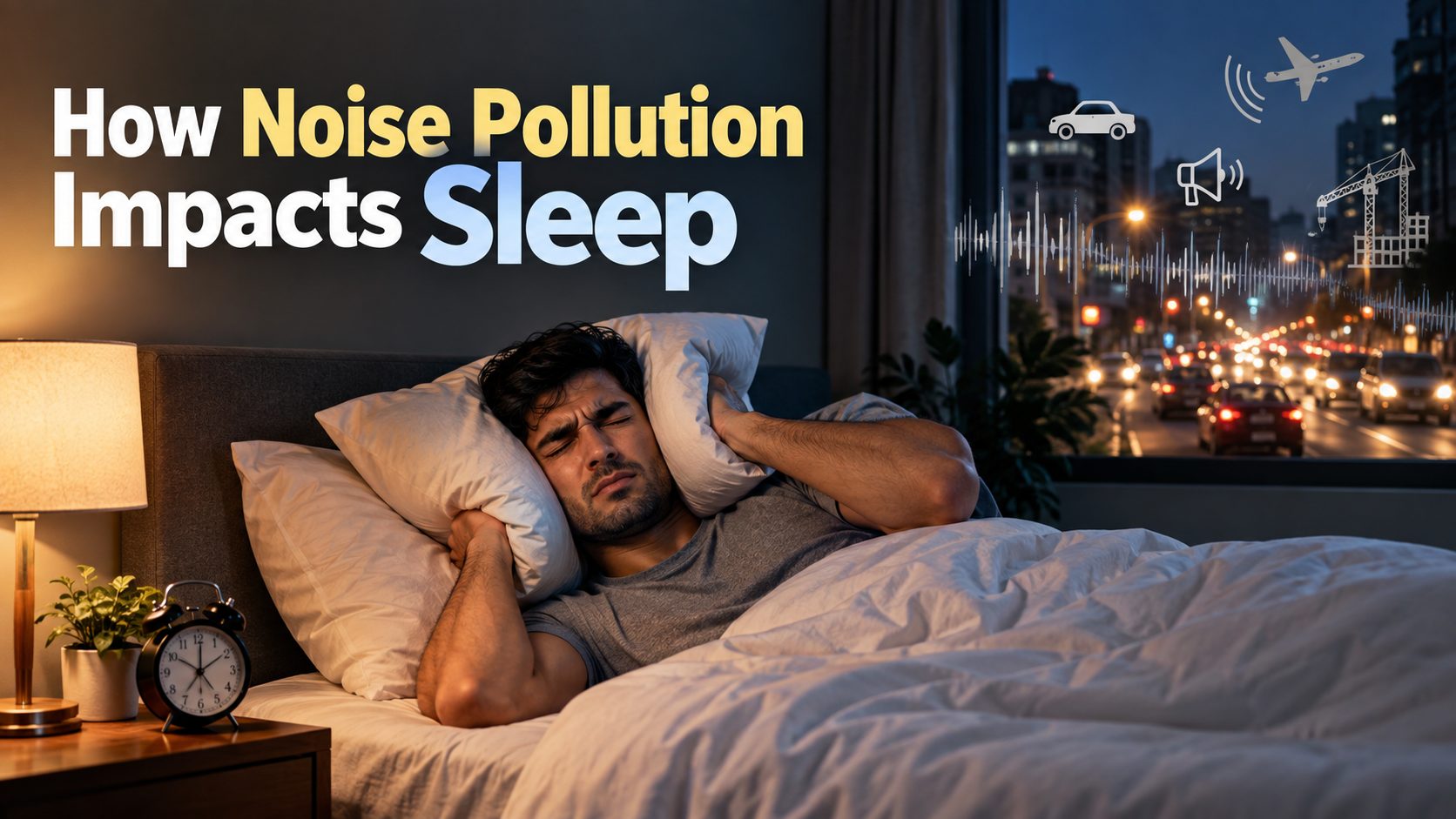
Falling asleep in a quiet room should feel effortless. Yet modern life rarely stays silent. Traffic, sirens, construction, and neighborhood noise can enter your bedroom throughout the night. Understanding how noise pollution impacts sleep can help you protect your nighttime rest.
The World Health Organization (WHO) links nighttime environmental noise with sleep disturbance and related health effects. Repeated exposure can increase nighttime awakenings, reduce sleep quality, and contribute to daytime tiredness.
Your brain can continue responding to sounds even when you remain asleep. Sudden noises may trigger brief arousals that you do not remember the next morning. These interruptions can make your sleep less restorative.
Poor sleep can affect concentration, mood, energy, and physical recovery. When noise repeatedly fragments your rest, these effects can become more noticeable over time.
This guide explains how environmental noise affects sleep and the body. It also covers common effects, nighttime pollution, calming techniques, and suitable sounds for sleeping.

How does noise affect sleep?
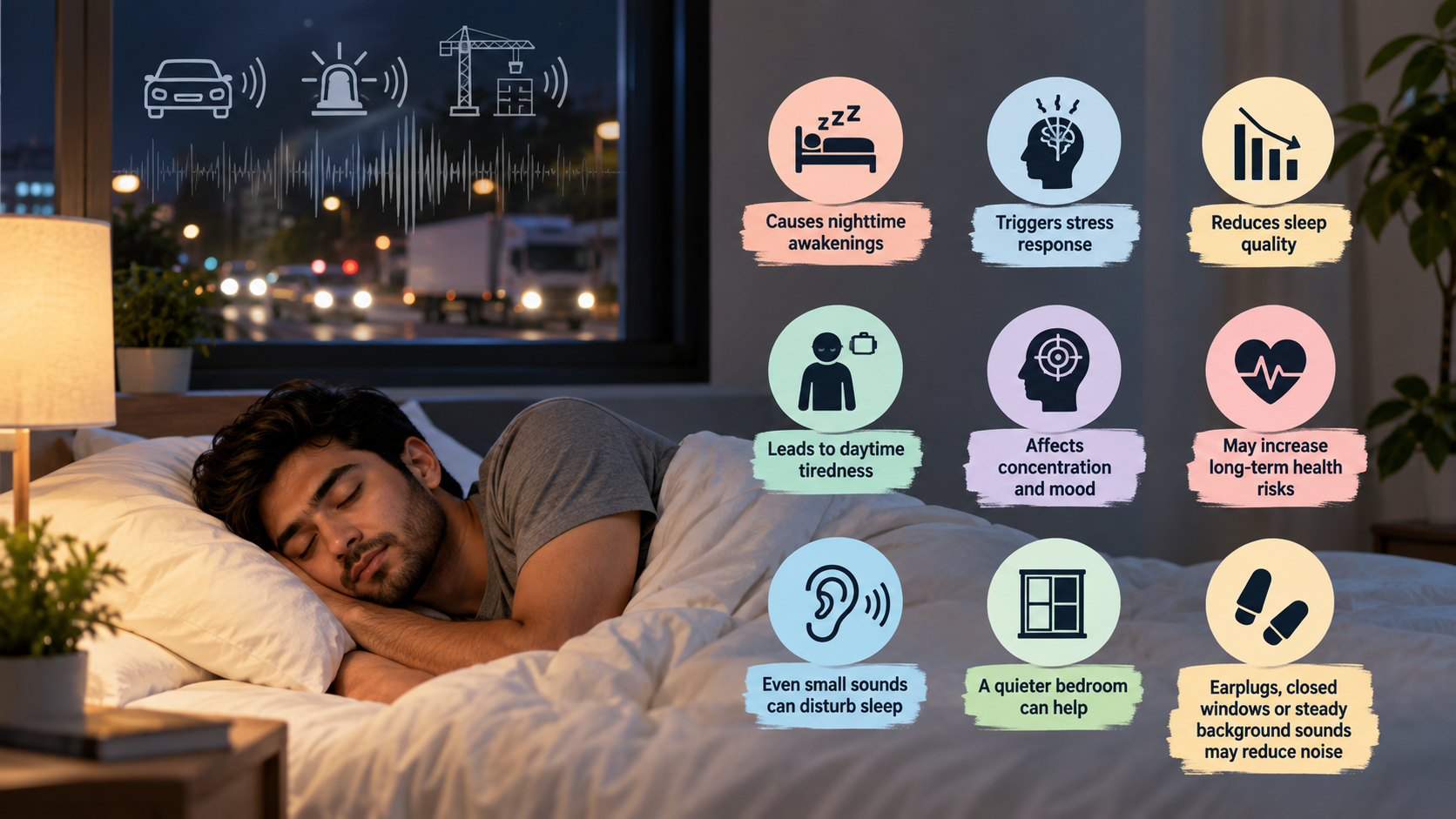
Noise can disrupt sleep by activating the body’s stress response. Your brain continues monitoring sounds while you sleep, especially when noises are sudden or unfamiliar. These sounds can trigger brief arousals, even when you do not fully wake up. Repeated arousals can interrupt normal sleep cycles and reduce restorative sleep. As a result, you may spend less time in deeper stages of sleep.
Noise can also increase heart rate and other signs of physiological arousal. These responses may occur without you remembering them the next morning. Consequently, you may wake feeling tired despite spending enough time in bed.
The effect depends on several factors. These include noise intensity, timing, frequency, duration, and personal sensitivity. Continuous sounds may become easier to ignore than unpredictable sounds.
Reducing sudden nighttime noise can therefore improve the bedroom environment. Earplugs, closed windows, soundproofing, and steady background sounds may help reduce disruptive changes.
Fragmented Rest and Sleep Architecture Changes
Sudden acoustic peaks can interrupt normal transitions between different sleep stages. A loud vehicle, barking dog, door closing, or siren may cause a brief arousal. These interruptions can reduce the continuity of your sleep, even when you do not remember waking.
Deep sleep plays an important role in physical recovery and memory-related processes. REM sleep also supports learning, emotional processing, and other important brain functions. Frequent disturbances can therefore affect how restorative your sleep feels.
Noise does not need to wake you completely to influence sleep quality. Repeated brief arousals can fragment your nighttime rest without producing obvious memories of waking.
The effect also varies between people. Some sleepers are more sensitive to environmental sounds than others. Children, older adults, and people with certain sleep problems may respond differently to nighttime noise.
Creating a quieter bedroom can help protect sleep continuity. Consistent background sound may also reduce the contrast between silence and sudden external noises.
What are the 10 effects of noise pollution?
Noise pollution can affect both physical and psychological well-being, particularly when exposure continues for long periods. Sleep disturbance is one of its most established effects. Repeated nighttime noise can contribute to tiredness, reduced concentration, and poorer daytime functioning.
Long-term environmental noise exposure has also been associated with cardiovascular effects. Research has linked chronic transportation noise with increased risks of hypertension and cardiovascular disease. However, these associations involve multiple factors and do not mean noise alone causes every health outcome.
Noise can also affect communication, learning, and concentration. Children may experience difficulties when persistent environmental noise interferes with classroom activities or sleep. If concentration is a concern, learning how to improve concentration while studying can provide additional practical strategies.
Common effects associated with excessive environmental noise include:
- Sleep disturbance and nighttime awakenings
- Daytime tiredness and reduced alertness
- Difficulty concentrating
- Increased annoyance and irritability
- Stress and physiological arousal
- Higher blood pressure associated with chronic exposure
- Increased cardiovascular health risks
- Reduced learning performance in some settings
- Hearing damage from sufficiently loud sounds
- Environmental disruption affecting wildlife
The severity depends on exposure level, duration, and individual circumstances.
Does pollution affect sleep?
Yes. Different forms of environmental pollution can interfere with sleep through different pathways. Noise pollution can trigger nighttime arousals and make sleep less continuous. Air pollution can also affect respiratory health and has been associated with poorer sleep outcomes. Learn more about how noise cancellation works to understand how sound-reduction technologies manage unwanted noise.
Fine particulate matter can irritate the respiratory system. People with existing respiratory conditions may experience greater discomfort when air quality is poor. However, it is inaccurate to assume that air pollution automatically causes sleep apnea in everyone.
Light pollution can affect the body’s circadian system. Excessive artificial light at night can suppress melatonin and make it harder for some people to fall asleep. Bright screens and outdoor lighting can contribute to this problem. Using a suitable blue light screen protector may also be worth considering when reducing nighttime screen exposure.
Urban bedrooms may face several environmental stressors at once. Traffic can create noise, vehicle emissions can reduce air quality, and streetlights can increase nighttime brightness.
Improving the bedroom environment can therefore involve several simple changes. Reduce unnecessary light, limit external noise, and maintain good indoor air quality whenever possible.
Combined Environmental Hazards in Urban Bedrooms
Urban bedrooms can expose sleepers to several environmental disturbances at the same time. Traffic noise may enter through windows, while streetlights can brighten the room. Poor outdoor air quality can also affect indoor conditions when windows remain open. These combined urban conditions are also connected to the heat island effect and its impact on cities.
These factors can interfere with comfortable sleep in different ways. Noise may trigger brief arousals, while excessive light can interfere with normal circadian signals. Air pollution can irritate the respiratory system and worsen symptoms for some people.
You can reduce several of these problems with simple environmental changes. Use curtains or blinds to block unwanted outdoor light. Keep windows closed when outdoor air quality is poor.
For persistent traffic noise, consider earplugs, white or pink noise, or better window insulation. A quieter sleeping location within the home may also help.
The goal is not to create a perfectly silent bedroom. Instead, reduce unpredictable and disruptive environmental changes. A comfortable, dark, and relatively quiet bedroom generally provides better conditions for consistent sleep.
Is it bad to sleep in a noisy environment?
Regularly sleeping in a noisy environment can reduce sleep quality, especially when sounds are loud, sudden, or unpredictable. Your brain can respond to environmental sounds without fully waking you. These brief arousals can interrupt normal sleep continuity.
Repeated nighttime disturbance may leave you feeling tired or less alert during the day. Poor sleep can also affect concentration, mood, memory, and daily performance.
Long-term environmental noise exposure has been associated with cardiovascular health risks. However, these effects depend on exposure patterns and other health factors. Noise should therefore be viewed as one potential contributor rather than the sole cause of these conditions.
Some people become accustomed to familiar background sounds. However, habituation does not necessarily mean that every physiological response disappears. Sudden changes in sound can remain disruptive even in familiar environments.
If nighttime noise regularly affects your sleep, practical changes can help. Close windows, use suitable earplugs, improve bedroom insulation, or introduce steady background sound.
Persistent sleep problems deserve attention even after environmental changes. If you regularly struggle with sleep, consider discussing the problem with a qualified healthcare professional.
Silent Health Risks of Subconscious Stress Responses
You may sleep through a passing siren without remembering it the next morning. However, sudden environmental sounds can still produce brief physiological arousals. These responses may occur without a complete awakening.
Research on nighttime noise has found associations with changes in heart rate, blood pressure, and stress-related physiological activity. Repeated disturbances may therefore affect the body even when you do not consciously remember waking.
However, the phrase “silent health risks” should not imply that every noisy night causes lasting cardiovascular damage. Health outcomes depend on exposure duration, sound characteristics, personal factors, and overall health.
The more immediate concern for most sleepers is sleep fragmentation. Repeated interruptions can reduce sleep continuity and contribute to daytime tiredness.
Reducing unpredictable sounds can help limit these disturbances. Consider moving your bed away from windows or exterior walls. You can also use earplugs or consistent background sound.
If you experience persistent fatigue despite adequate time in bed, consider other possible causes. Sleep disorders, medications, stress, and irregular schedules can also affect sleep quality.
What is the 3-3-3 rule for sleep?
The 3-3-3 rule for sleep is a simple grounding technique sometimes used to calm racing thoughts before bedtime. Unlike established sleep recommendations, it is not a universally recognized clinical sleep treatment. Its value mainly comes from creating a short, calming routine.
One version involves focusing on three sensory details, taking three slow breaths, and identifying three things you appreciate. The exact steps can vary because the 3-3-3 method does not have one standardized definition.
The technique may help shift attention away from stressful thoughts. Slow breathing can also encourage relaxation before bed. However, it cannot physically block traffic, sirens, or other external sounds.
If noise keeps interrupting your sleep, combine relaxation techniques with environmental changes. Try reducing outside noise, using earplugs, or playing consistent background sound.
A predictable bedtime routine can also support healthy sleep habits. Keep your bedroom dark, comfortable, and relatively quiet. Lifelong learning and its benefits can also reinforce the broader importance of developing healthy routines and habits over time. Avoid using the 3-3-3 technique as a replacement for addressing persistent environmental noise.
If racing thoughts or sleep problems continue for weeks, consider speaking with a healthcare professional. Persistent insomnia may require approaches such as cognitive behavioral therapy for insomnia.
What is the healthiest noise to sleep to?
There is no single healthiest noise to sleep to for everyone. Some people sleep better with silence, while others prefer steady background sounds. The most useful option is usually comfortable, predictable, and quiet enough to avoid becoming a disturbance itself.
White noise contains a broad range of frequencies. Pink noise places relatively more energy in lower frequencies, while brown noise emphasizes even deeper frequencies. People often describe these sounds as similar to rainfall, wind, or distant thunder.
Steady sounds may help mask sudden environmental noises. This can reduce the contrast between a quiet bedroom and unexpected sounds from traffic or neighbors.
Some studies have investigated whether pink noise can influence slow-wave sleep. However, evidence remains limited, and results do not establish that pink noise universally produces deeper sleep.
Choose a sound that feels comfortable rather than assuming one frequency is medically superior. Keep the volume low and position speakers away from your head.
If a sound keeps you alert, change it or return to silence. Your personal response matters more than choosing a specific “perfect” noise.
FREQUENTLY ASKED QUESTIONS
What decibel level is safe for sleeping at night?
For comfortable sleep, keeping bedroom noise below 30–35 decibels is generally advisable. Lower nighttime noise can reduce awakenings and help limit the noise pollution impacts sleep can have on sleep quality and recovery.
Can your brain eventually get used to sleeping with noise?
You may become accustomed to constant noise, but sudden or loud sounds can still cause brief awakenings and disturb sleep. These noise pollution impacts sleep even when you do not consciously remember waking.
Do earplugs effectively protect your heart health while sleeping?
Earplugs can reduce exposure to nighttime noise and may improve sleep when environmental sounds are disruptive. However, they should not be described as directly preventing heart disease or cardiovascular damage.
Conclusion
Protecting sleep from modern noise is essential for overall health and daily performance. Noise pollution impacts sleep by triggering stress responses, disrupting restorative sleep stages, and potentially increasing long-term health risks. Fortunately, simple steps can reduce nighttime disturbances. Using earplugs, steady pink noise, heavy curtains, and relaxing bedtime routines can create a quieter sleep environment. Managing nighttime noise helps support deeper, more restorative sleep.