
How Much Gold Can You Get Out of a CPU?
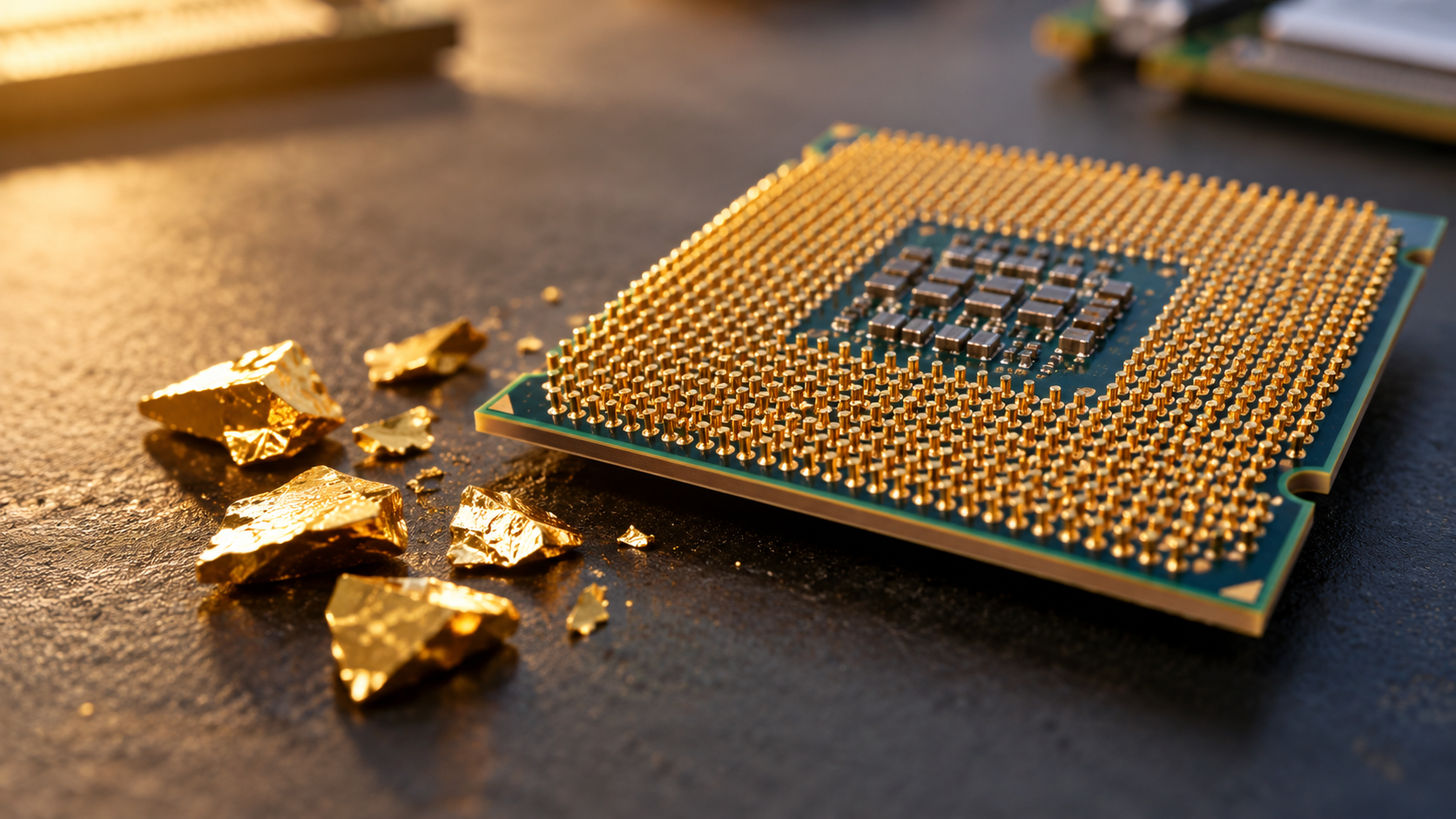
Have you ever wondered how much gold in a CPU you can actually recover from an old computer processor? CPUs contain small amounts of precious metals used in electrical contacts and internal connections. The amount of gold varies depending on the processor’s age, design, and manufacturing materials.
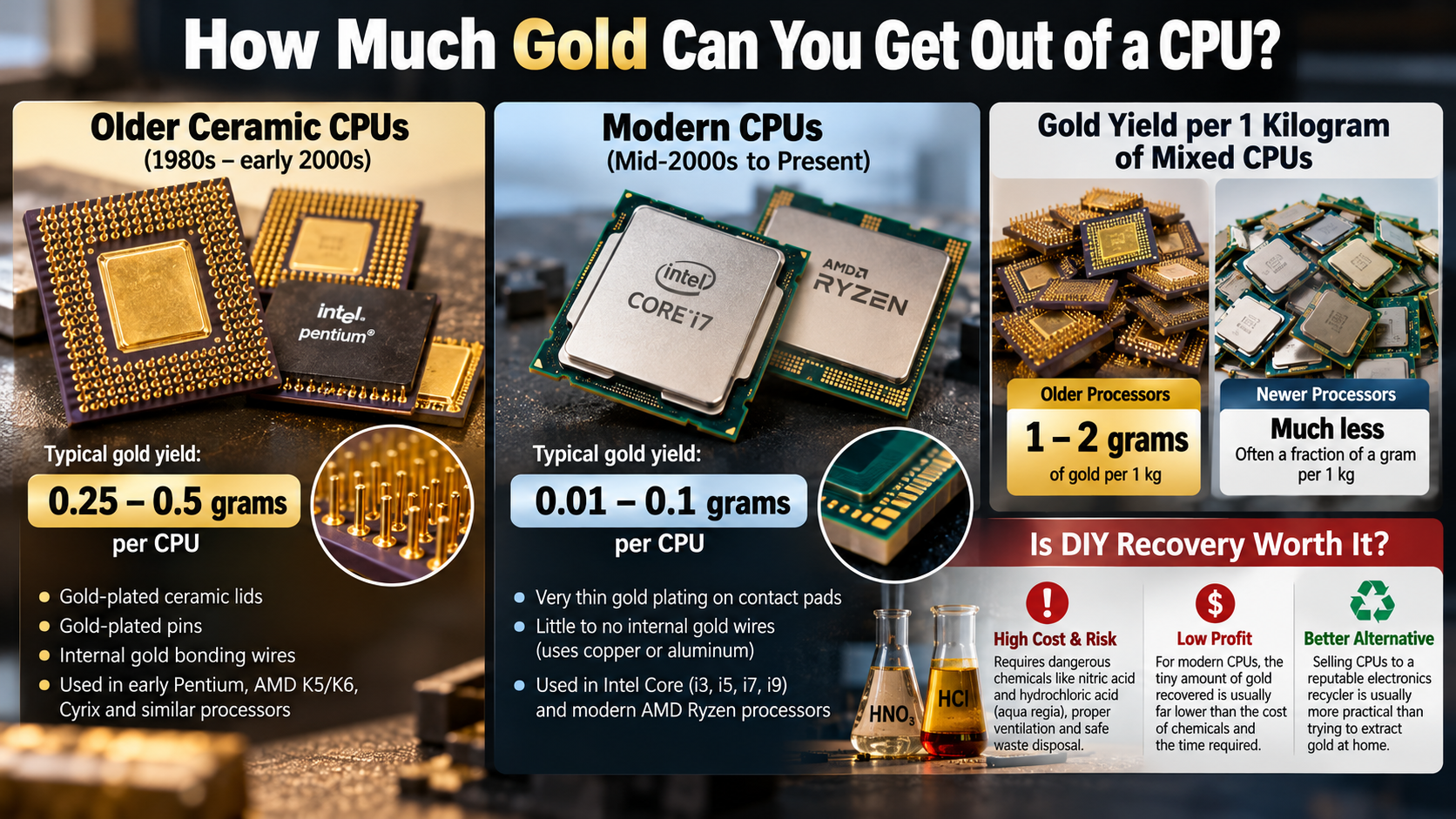
However, the amount of gold varies significantly between processor models. Older ceramic CPUs often contain more gold than modern processors. Newer chips use thinner plating and more cost-efficient materials to reduce manufacturing expenses.
Recovering gold also involves more than collecting metal from a processor. Equipment costs, processing losses, and hazardous waste can make small-scale recovery uneconomical. The U.S. Environmental Protection Agency provides useful information about electronics recycling and responsible e-waste management.
This guide explains how much gold a CPU may contain, where manufacturers use it, and how processor values compare with RAM. You will also learn why selling intact processors can be more practical than extracting their gold.
How Much Gold Can You Get Off a CPU?
The amount of gold you can recover from a CPU depends on its age, design, and construction. There is no single average that accurately represents every processor. Some older ceramic processors contain relatively substantial amounts of gold plating. Modern consumer CPUs generally use much smaller quantities of precious metals.
Gold can appear in several parts of a processor. These include plated pins, contact surfaces, and microscopic internal connections. However, not every CPU contains all these features. Different manufacturers and processor generations use different packaging methods.
Before estimating a processor’s gold yield, consider these factors:
- Processor age: Older models may use thicker gold plating.
- Package design: Ceramic and plastic packages can have different metal content.
- Connection type: Pins, contact pads, and internal bonding methods affect gold distribution.
- Processor category: Some older server and industrial components contain more precious metals than ordinary consumer chips.
Remember that gold content is not the same as recoverable gold. Processing losses and refining costs can reduce the amount and value ultimately obtained.

The Impact of Processor Age and Size
Processor age and package design can strongly influence gold content. Many older ceramic CPUs feature gold-plated pins and other metal components. Certain models also have distinctive gold-colored lids or caps. These features can make vintage processors attractive to specialist recyclers.
However, a gold-colored surface does not reveal how much actual gold a processor contains. Some components have only thin plating over a less valuable base metal. Others may contain gold in internal connections that cannot be assessed visually.
Modern CPUs generally use more efficient packaging designs. Many feature plastic or organic substrates, small contact pads, and reduced precious-metal plating. Their appearance can differ considerably from older ceramic processors.
When evaluating an old CPU, check its manufacturer, model number, package material, and production era. These details help identify the processor and estimate its potential recycling value.
Do not assume that a larger processor contains more gold. Physical size alone is an unreliable indicator. A small vintage component may contain more gold than a much larger modern chip. Reliable model-specific information or a specialist recycler’s assessment provides a better estimate than appearance alone.
How Much Gold From 1 CPU?
The gold content of one CPU varies considerably, so a universal yield figure can be misleading. Some processors contain only small amounts of gold, while selected older models may contain considerably more. Without identifying the exact processor, it is difficult to estimate its recoverable gold accurately.
The financial value also depends on the current gold price and the amount that a recycler can actually recover. For example, even when a processor contains gold worth several dollars, that does not mean you will receive the same amount in cash. Refining fees, processing losses, and buyer margins affect the final payment.
Internal bonding wires and plated contacts contribute to the processor’s precious-metal content. However, their quantities and designs differ between models.
If you want to evaluate a single CPU, consider these points:
- Identify the exact processor model.
- Check whether reliable gold-content estimates are available.
- Compare the processor’s intact resale price with scrap offers.
- Account for refining charges and recovery losses.
For most individual processors, selling to a suitable electronics recycler is more practical than attempting chemical recovery at home.
Internal Wire Bonds and Pin Plating
Gold serves several useful purposes in electronic components. It conducts electricity effectively and resists corrosion, making it suitable for certain electrical connections. Manufacturers have used it in processor contacts and internal connections where reliability matters.
Some CPUs contain gold-plated pins or contact surfaces. These components connect the processor to its socket or circuit board. The plating helps maintain dependable electrical contact over repeated use. However, the gold layer is typically thin, so its appearance does not indicate its actual weight.
Gold wire bonds have also been used to connect silicon dies with package contacts. These microscopic wires can contribute to the precious-metal content of certain processors. However, packaging technologies vary, and not every processor uses the same bonding method.
Modern chip packaging may use different combinations of wire bonding, solder bumps, and other interconnection technologies. Therefore, you should not assume that every CPU contains the same internal gold components.
These differences explain why processor model and manufacturing era matter more than appearance alone. A reliable estimate requires information about the specific package rather than a general assumption about all CPUs.
How Much Gold Is in 1 RAM?
Computer RAM also contains small amounts of gold, mainly around its electrical contacts. These contacts are commonly called gold fingers because of their gold-colored appearance. They connect the memory module to the motherboard or server memory slot.
However, the amount of gold in a RAM stick varies by design, generation, and plating thickness. Standard desktop memory, laptop memory, and server-grade modules can have different contact layouts. Older modules may also differ from modern DDR4 and DDR5 memory.
A RAM stick’s gold-colored contacts do not reveal its precise gold content. The plating is generally thin and designed for reliable electrical connections rather than precious-metal recovery.
When comparing RAM with CPUs, consider both gold content and resale value. Working memory modules may be worth more as usable computer components than as scrap. Older or unusual modules may also attract specialist buyers.
For a practical assessment, identify the module’s type, capacity, manufacturer, and condition. Then compare its second-hand selling price with offers from electronics recyclers. If the memory no longer works, responsible e-waste recycling can help recover valuable materials while reducing environmental harm.
Edge Finger Plating Thickness
RAM edge fingers use a thin gold coating to provide reliable electrical contact. Gold resists corrosion and helps maintain consistent connections when memory modules are installed or removed. However, the coating is not solid gold, and its thickness can vary across products.
The amount of gold depends on several factors, including the contact area, plating thickness, module design, and manufacturing specifications. A longer row of contacts does not automatically mean a proportionally higher gold yield. The plating itself remains only one part of the module’s overall construction.
Older RAM may have different contact designs from modern memory. Server modules can also differ in capacity, layout, and construction. These differences affect recycling estimates, but they do not guarantee a higher return from every server-grade stick.
Recyclers sometimes separate memory components into material categories before processing them. This helps them manage electronic waste more efficiently. However, cutting or chemically treating components at home introduces avoidable risks and can destroy their resale value.
If you have several old RAM sticks, compare bulk recycling offers before deciding what to do. Keep working modules intact whenever possible, since selling usable hardware may provide a better return than recovering its plated metals.
How Much Is a CPU Worth in Gold?
A CPU’s gold value depends on its actual precious-metal content and the current gold price. Modern desktop processors generally contain limited amounts of gold, so their recoverable gold value may be relatively low. Certain older ceramic processors can contain more precious metals, but their value depends on the specific model.
It is important to distinguish gold value from resale value. An intact processor may sell for more than the estimated value of its gold because buyers may want it for repairs, restoration, collecting, or continued use. Rare vintage models can attract particular interest from collectors.
Before selling a processor, identify its manufacturer and model number. Compare offers from second-hand hardware sellers, specialist CPU buyers, and electronic scrap recyclers. Check whether the processor works, whether its pins are damaged, and whether it is a sought-after model.
For processors sold as scrap, buyers may consider the material composition, quantity, and expected refining costs. Their offers can differ considerably. Obtain multiple quotes where practical, and avoid relying on generic online estimates that promise a fixed cash value for every CPU.
Whole Chip Sales Versus Home Refining
Selling an intact processor can be more practical than attempting to recover its gold yourself. Chemical refining requires suitable equipment, technical expertise, appropriate protective measures, and compliant hazardous-waste handling. These requirements make small-scale recovery difficult to justify financially.
Processing costs can also exceed the value of the recovered metal. Chemicals, equipment, waste disposal, and incomplete recovery all affect the final result. Even when a processor contains recoverable gold, the amount collected may be lower than expected.
Home refining also presents serious safety and environmental risks. Some processes use corrosive chemicals and can release dangerous fumes. Improper disposal can contaminate soil and water. Avoid experimenting with hazardous chemical extraction, particularly without professional facilities and appropriate waste-management systems.
Consider these alternatives before selling your old CPUs:
- Second-hand hardware buyers: Suitable for working processors and usable components.
- Vintage hardware collectors: Potentially interested in rare or discontinued models.
- Specialist e-waste recyclers: Appropriate for damaged or obsolete processors.
- Certified recycling facilities: Useful when you want responsible material recovery.
Compare the offers available for your specific processor. In many cases, preserving and selling the complete component provides a better balance of value, convenience, and safety than extracting gold at home.
Conclusion
Understanding how much gold in a CPU you can recover depends on the processor’s age, design, and materials. Older ceramic CPUs may contain more gold than modern processors, while RAM modules also contain small amounts in their gold-plated contacts. However, the actual recoverable amount varies by model, so avoid relying on a single estimate for every component.
Before selling your old computer hardware, compare its potential gold value with its resale price. Working processors and rare vintage models may be worth more when sold intact. For damaged or obsolete components, choose a reputable e-waste recycler that handles electronic waste responsibly. In most cases, selling your CPU intact is safer and more practical than extracting gold at home.
If you’re interested in improving your computer’s hardware performance, explore our guide to Which AMD CPU Is Best For Gaming In 2026? to compare processors for gaming and everyday use.