
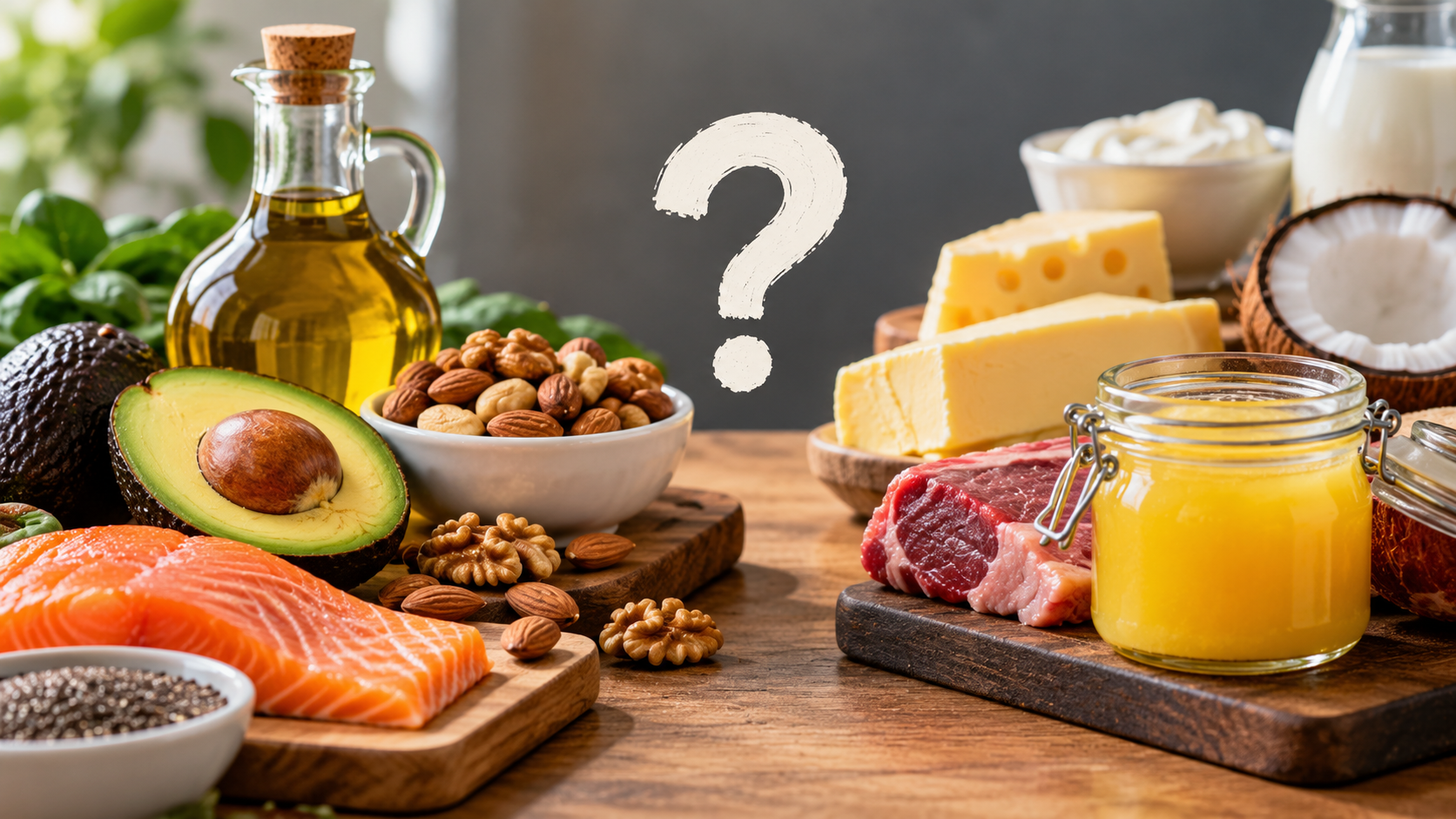
Healthy Fats vs. Saturated Fats: Everything You Need to Know
Understanding healthy vs saturated fats is essential for making informed dietary choices. Dietary fats support hormone production, brain function, nutrient absorption, and energy storage. However, not all fats affect your health in the same way. According to the American Heart Association, choosing healthier fats can support cardiovascular health and help manage cholesterol levels.
Many people struggle to distinguish beneficial fats from those that may increase their risk of heart disease. The key is understanding the different types of dietary fats and how they fit into your overall eating pattern. This guide explains the differences between saturated and unsaturated fats, including their health effects and common food sources.
You will also learn whether ghee contains saturated fat, which fats are considered healthiest, and how much fat eggs and bananas provide. These practical insights will help you make balanced food choices without unnecessarily eliminating foods you enjoy.

Which fat is better, saturated or unsaturated?
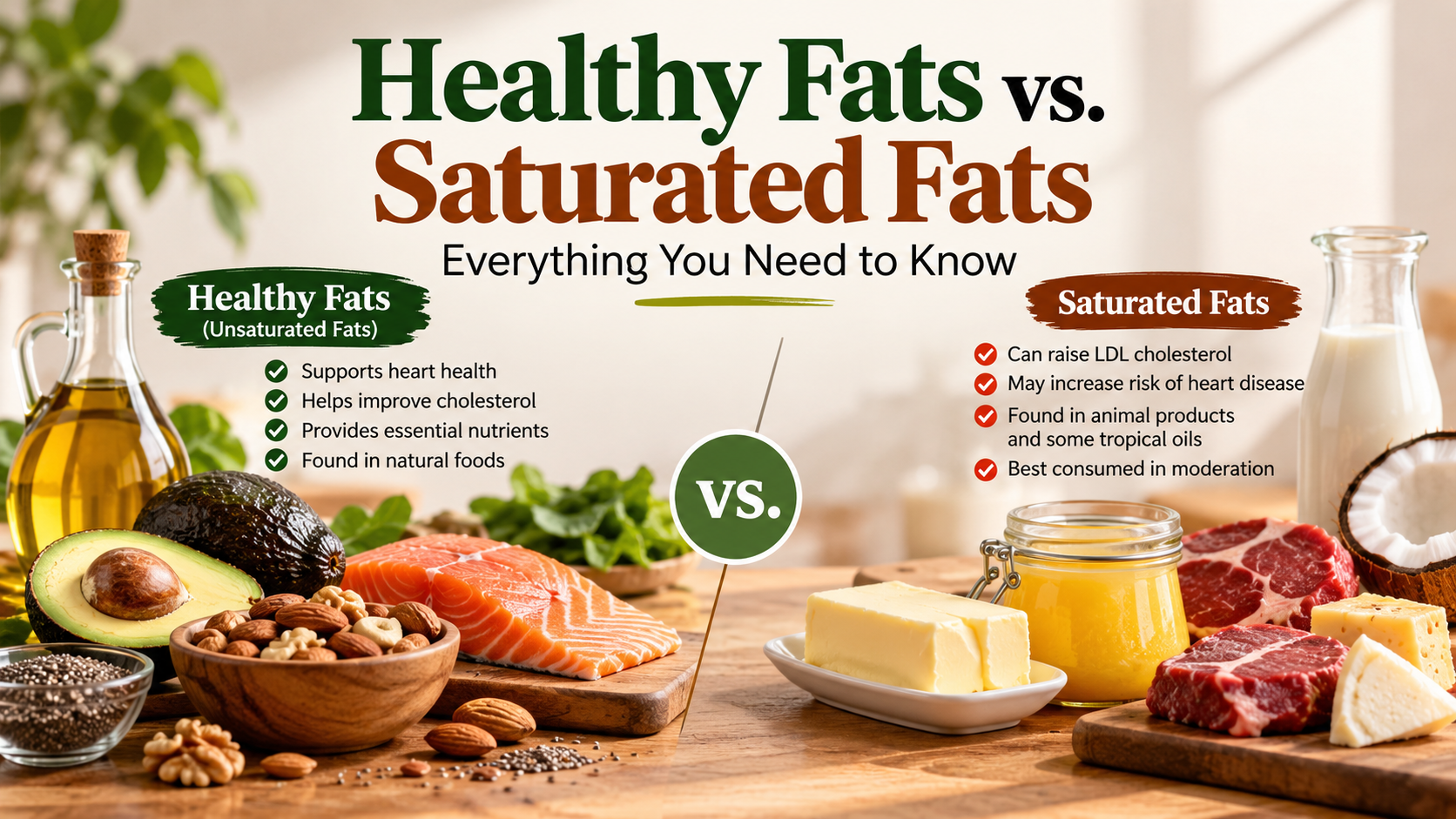
When comparing healthy vs saturated fats, unsaturated fats are generally the better choice for cardiovascular health. Saturated fats can raise LDL cholesterol, often called bad cholesterol, particularly when consumed in excess. Higher LDL cholesterol levels are associated with an increased risk of heart disease.
Unsaturated fats, by contrast, can help improve cholesterol levels when they replace saturated fats in your diet. They are found in foods such as olive oil, avocados, nuts, seeds, and oily fish. These fats also provide energy and support normal cell function.
Understanding healthy vs saturated fats starts with recognizing their different effects on cholesterol. There are two main types of unsaturated fats: monounsaturated and polyunsaturated fats. Both can form part of a balanced, heart-conscious diet.
However, saturated fat does not need to be eliminated entirely. Instead, replace some foods high in saturated fat with options rich in unsaturated fats. Your overall eating pattern matters more than any single ingredient.
Understanding the Role of Monounsaturated Fats
Monounsaturated fats are a type of unsaturated fat commonly found in olive oil, avocados, almonds, peanuts, and cashews. They provide energy and help your body absorb fat-soluble vitamins, including vitamins A, D, E, and K.
Replacing some saturated fats with monounsaturated fats can help lower LDL cholesterol. This change may support better cardiovascular health over time. However, the benefits depend on what you eat and which foods these fats replace.
Adding olive oil to salads, choosing nuts for snacks, or including avocado in sandwiches are simple ways to increase your intake. These foods also provide other valuable nutrients, such as vitamin E, fiber, and minerals. For more information about choosing cooking oils, explore the nutritional benefits of vegetable oil.
Monounsaturated fats are calorie-dense, so portion sizes still matter if you are managing your weight. You do not need to avoid them because of their calorie content. Instead, include reasonable portions as part of balanced meals. Choosing minimally processed sources makes it easier to obtain beneficial fats alongside other essential nutrients.
Is saturated fat healthy or not healthy?
Saturated fat is not automatically harmful in every amount, but eating too much can affect your cholesterol levels and cardiovascular health. Foods containing saturated fat include butter, ghee, fatty meats, cheese, cream, and coconut oil. Many baked goods and processed foods also contain substantial amounts.
The main concern is that saturated fat can raise LDL cholesterol. Higher LDL levels increase the risk of cardiovascular disease. For this reason, many health organizations recommend limiting saturated fat rather than removing all dietary fat.
The health effects also depend on what replaces saturated fat in your diet. Replacing it with unsaturated fats is generally more beneficial than replacing it with refined carbohydrates, such as sugary snacks and white bread. This distinction is central to understanding healthy vs saturated fats and making better everyday food choices.
Your overall dietary pattern matters, too. Vegetables, fruits, whole grains, legumes, nuts, and other nutrient-rich foods can support heart health. You can still enjoy foods containing saturated fat occasionally. The goal is to keep your overall intake moderate and prioritize healthier fat sources most of the time.
Examining the Nuances of Dietary Saturated Fat Sources
Saturated fat appears in many foods, but their overall nutritional value can differ considerably. For example, full-fat dairy products provide calcium and protein alongside saturated fat. Fatty cuts of meat supply protein and certain vitamins, while processed meats may also contain considerable sodium.
Coconut oil and ghee are sometimes promoted as healthier alternatives to conventional fats. However, both contain substantial amounts of saturated fat. Coconut oil can raise LDL cholesterol, even though some studies have found that it also raises HDL cholesterol, commonly called good cholesterol.
The important distinction is between a food’s overall nutritional value and the effects of its fat composition. A food containing saturated fat is not necessarily unhealthy in every context. However, its presence does not automatically make the food beneficial either.
When planning meals, consider the entire nutritional profile. Choose more unsaturated fats from nuts, seeds, olive oil, and fish. Keep foods rich in saturated fat to moderate portions, particularly if you need to manage elevated LDL cholesterol. Developing healthy food habits can help you make these choices consistently.
Is ghee a saturated fat?
Yes, ghee is rich in saturated fat. Ghee is clarified butter made by heating butter and separating its water and milk solids. The remaining fat contains a mixture of saturated and unsaturated fatty acids, with saturated fat making up a substantial proportion.
Ghee is widely used in Indian cooking because of its distinctive flavor and suitability for various cooking methods. It also provides energy and small amounts of fat-soluble vitamins. However, its nutritional benefits should not overshadow its saturated fat content.
Consuming large amounts of ghee can increase your saturated fat intake and may raise LDL cholesterol. This is particularly relevant if you already have elevated cholesterol or have been advised to limit saturated fat.
You do not necessarily need to remove ghee from your diet. Instead, use modest portions and consider replacing some of it with oils rich in unsaturated fats, such as olive or canola oil. The best choice depends on your overall diet, cooking needs, and health goals.
Exploring the Distinct Properties of Clarified Butter
Ghee has a relatively high smoke point, generally around 450°F (232°C), although the exact temperature can vary. This makes it suitable for sautéing, roasting, and certain high-temperature cooking methods. Its rich flavor also makes it popular in traditional Indian recipes.
Unlike regular butter, ghee contains very little water and has most of its milk solids removed. This gives it different cooking properties and can make it suitable for people who tolerate only small amounts of lactose. However, ghee is not guaranteed to be completely lactose-free or suitable for everyone with a milk allergy.
A high smoke point does not mean a cooking fat cannot degrade. Repeated heating, excessive temperatures, and prolonged cooking can affect fat quality. Avoid overheating ghee or repeatedly reusing it for frying.
Most importantly, its cooking properties do not make ghee low in saturated fat. You can enjoy its flavor while keeping portions moderate. For everyday cooking, alternating ghee with unsaturated vegetable oils can help create a more balanced dietary fat profile.
What are the healthiest fats?
The healthiest fats generally come from foods rich in unsaturated fatty acids. These include extra virgin olive oil, avocados, nuts, seeds, and oily fish such as salmon, sardines, and mackerel. These foods provide nutrients that support normal body functions and can benefit cardiovascular health.
Monounsaturated fats are found in olive oil, avocados, and many nuts. Polyunsaturated fats include omega-3 and omega-6 fatty acids, which your body needs for essential functions. Some of these fatty acids must come from your diet because your body cannot produce them in sufficient amounts.
You can increase your intake of healthier fats through simple dietary changes:
- Use olive or canola oil instead of butter for suitable cooking methods.
- Add walnuts, chia seeds, or flaxseeds to meals.
- Eat oily fish regularly, following your dietary preferences.
- Choose nuts or seeds for snacks instead of heavily processed alternatives.
- Replace some fatty or processed meats with beans, lentils, or fish.
These changes can help reduce saturated fat intake without sacrificing flavor or nutritional balance. Remember that even healthy fats contain calories, so appropriate portions remain important. If weight management is one of your goals, these changes can complement healthy weight-loss tips.
Are eggs saturated or unsaturated fat?
Eggs contain both saturated and unsaturated fats, with unsaturated fats making up the larger share. One large whole egg typically provides around five grams of total fat, including approximately 1.5–1.6 grams of saturated fat. The exact amount varies slightly with egg size.
Most of an egg’s remaining fat consists of monounsaturated and polyunsaturated fatty acids. Eggs also provide high-quality protein, vitamin B12, selenium, and choline, which supports normal brain and nervous system function. You can explore additional ways to support cognitive well-being in these tips for keeping your brain healthy.
Eggs have attracted attention because their yolks contain dietary cholesterol. However, dietary cholesterol does not affect everyone in the same way, and its impact can differ from that of saturated fat. For many healthy adults, eggs can fit into a balanced diet.
How you prepare eggs also matters. Boiling or poaching them generally avoids adding extra cooking fat. Frying eggs in large amounts of butter can increase the meal’s saturated fat content. If you enjoy eggs, consider the overall meal and your personal cholesterol levels rather than judging them by one nutrient alone.
Are bananas high in saturated fats?
No, bananas are not high in saturated fat. A medium-sized banana contains approximately 0.3 grams of total fat, with only a negligible amount coming from saturated fat. Bananas are therefore naturally very low-fat foods and can fit easily into a balanced diet.
Most of a banana’s energy comes from carbohydrates. It also provides dietary fiber, potassium, and vitamin B6. These nutrients support normal digestion, muscle function, and several important metabolic processes.
Bananas can be a convenient snack before exercise or a simple addition to breakfast. You can eat them whole, slice them over oatmeal, or blend them into a smoothie. Pairing a banana with nuts, seeds, or plain yogurt can provide additional protein and healthy fats. For more nutritious morning meal options, explore these easy and healthy breakfast ideas.
Although bananas contain natural sugars, their fiber contributes to a more balanced nutritional profile than many sugary snacks. There is no need to avoid bananas because you are trying to reduce saturated fat. Instead, focus on your overall dietary pattern and include a variety of fruits, vegetables, whole grains, and healthy fat sources throughout the day.
FAQ SECTION
How much fat should I eat daily?
Most health guidelines recommend that total fat intake should account for about twenty to thirty-five percent of your total daily calories. The vast majority of these fats ought to come from unsaturated sources like olive oil, nuts, and fish, while limiting saturated fats to less than ten percent of your daily caloric intake. Balancing these proportions ensures you maintain steady energy levels and long-term cardiovascular health without unnecessary dietary restriction.
What are trans fats and why are they dangerous?
Trans fats are artificially created or naturally occurring hydrogenated oils that severely impact heart health. Artificial trans fats raise bad cholesterol levels while simultaneously lowering good cholesterol, creating a double threat to cardiovascular wellness. Health organizations strongly advise eliminating trans fats entirely from your diet because they increase inflammation and heighten the risk of heart disease. Opting for fresh, unprocessed ingredients provides a foolproof way to avoid these harmful substances completely.
Does cooking oil choice matter for heart health?
Yes, the type of cooking oil you select plays a massive role in protecting your long-term heart health. Oils high in monounsaturated fats, such as extra virgin olive oil and avocado oil, remain stable and beneficial during cooking. Conversely, highly refined vegetable oils rich in omega-6 fats can promote inflammation when consumed in massive excess. Choosing stable, heart-friendly oils for your daily culinary preparations safeguards your cardiovascular system effectively over time.
How can I easily reduce bad fats in my diet?
Reducing unhealthy fats in your daily routine is simple when you focus on making small, sustainable dietary swaps. Replace deep-fried snacks with raw nuts or seeds, use extra virgin olive oil instead of butter for cooking, and choose lean protein sources like fish or poultry. Reading nutrition labels closely helps you spot hidden saturated fats in packaged goods. Implementing these gradual changes transforms your eating habits without leaving you feeling deprived or overwhelmed.
Conclusion
Understanding healthy fats vs saturated fats helps you make better dietary choices. Fats support hormone production, brain function, and nutrient absorption, but their effects on heart health differ.
Prioritize unsaturated fats from olive oil, avocados, nuts, seeds, and fish. Limit excessive saturated fat intake to help manage LDL cholesterol and support cardiovascular health.
As discussed in this guide, choosing healthier fats does not mean eliminating every food containing saturated fat. Instead, focus on balanced meals and nutrient-rich ingredients.
Start with small changes, such as replacing some butter with unsaturated oils or choosing nuts instead of processed snacks. Consistent habits can support long-term heart health and overall well-being. Incorporating these choices into a healthy lifestyle can help you maintain balanced eating habits over time.