

A Complete Guide to Simple Living
Modern life often feels like an endless marathon with a finish line that keeps moving. Between packed schedules, constant digital notifications, and pressure to acquire more, burnout has become increasingly common. Following a guide to simple living offers a more intentional alternative. Instead of rushing to meet external expectations, simplicity encourages you to focus on what genuinely enriches your life. Research on human motivation and well-being from the University of Rochester highlights the importance of autonomy, meaningful relationships, and intrinsic goals for personal satisfaction.
Choosing a simpler lifestyle does not mean depriving yourself or abandoning modern society. It means aligning your time, resources, and energy with your priorities. This approach helps you make room for meaningful experiences without constantly chasing more.
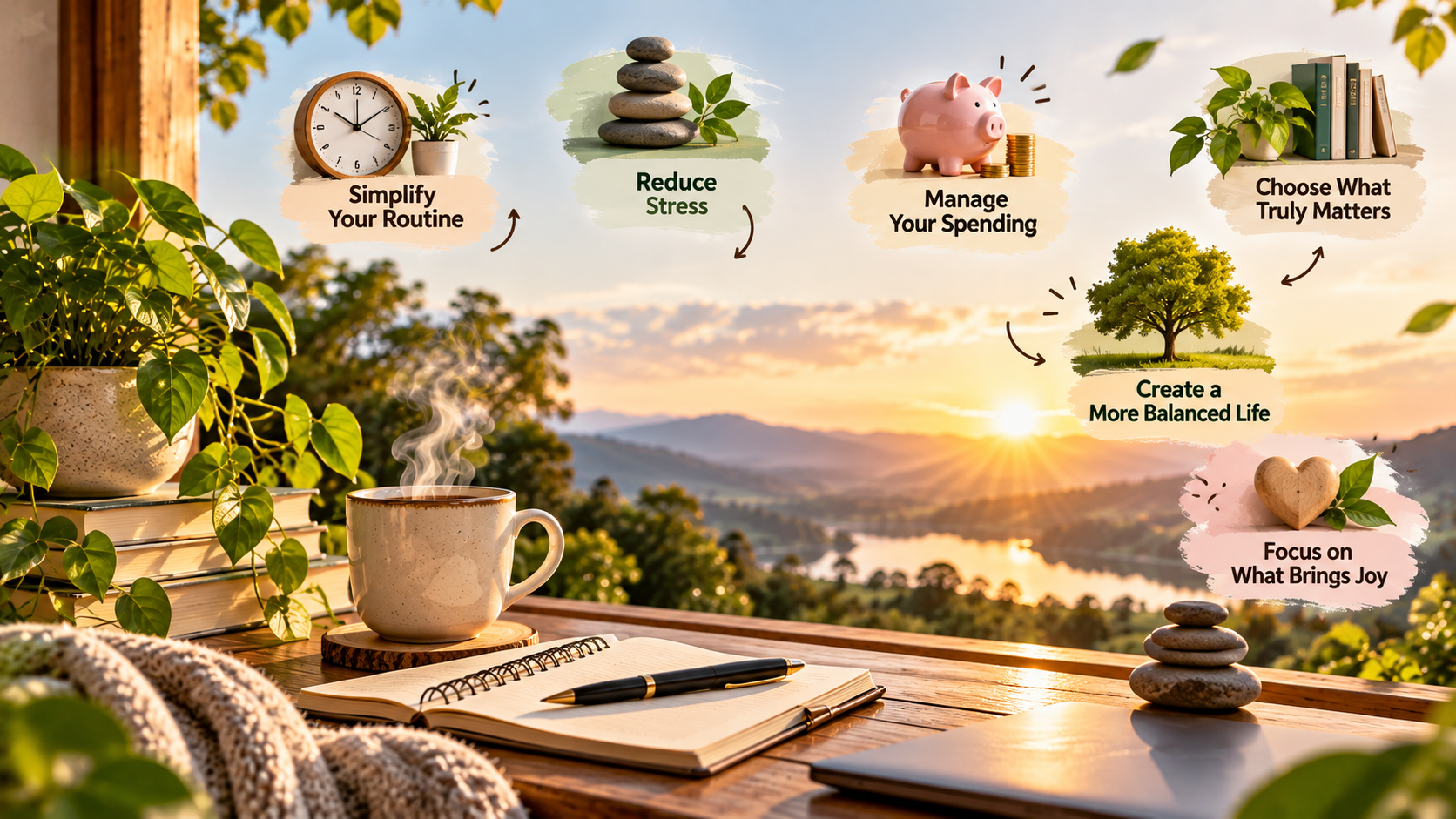
Throughout this guide to simple living, you will explore practical ways to reduce unnecessary stress, simplify your daily routine, and create a more balanced lifestyle. You will also discover how to protect your priorities, find inspiration in books, and move beyond simply going through the motions. These ideas can help you build a life that feels calmer, more purposeful, and easier to manage.

How to leave a simple life?
Losing a simple lifestyle often happens gradually as external demands begin controlling your time and personal boundaries. Professional responsibilities increase, social obligations multiply, and consumer habits become harder to manage. Before long, complicated routines replace the quiet satisfaction you once enjoyed. You might start measuring your worth through productivity or sacrificing free time to afford unnecessary upgrades.
Over time, this imbalance can leave you overcommitted, financially stretched, and mentally exhausted. You may find yourself constantly busy without feeling genuinely fulfilled. Returning to a simpler life requires recognizing these patterns and understanding what caused them. Instead of accepting every demand, evaluate which activities deserve your attention. Simple living begins with conscious choices, not dramatic lifestyle changes. By identifying unnecessary commitments and reducing external pressures, you can gradually regain control over your schedule, spending habits, and personal well-being.
Guarding Your Core Priorities
Protecting a simple lifestyle requires clear boundaries around your time, money, and energy. Without them, unnecessary commitments can quickly take over your daily routine. Start by reviewing your calendar and identifying obligations that no longer support your goals. Cancel activities that create stress without offering meaningful benefits.
Apply the same principle to your finances. Avoid increasing your spending every time your income grows, and think carefully before making purchases influenced by social pressure. Creating a personal financial plan for wealth can help you prioritize essential expenses and make more intentional spending decisions. Learning to decline invitations respectfully can also protect your personal time.
Consider these practical habits:
-
Review commitments: Evaluate your schedule regularly and remove unnecessary obligations.
-
Protect your budget: Prioritize essential expenses over lifestyle upgrades.
-
Set boundaries: Make room for rest, relationships, and personal interests.
-
Choose intentionally: Before agreeing to something, consider whether it supports your priorities.
These small decisions help you maintain a simpler routine without withdrawing from responsibilities. The goal is not to eliminate every demand but to create a lifestyle that reflects your values.
Is it okay to want a simple life?
Yes, wanting a simple life is a valid personal choice. Society often associates success with constant ambition, professional status, expensive possessions, and visible achievements. These expectations can make a quieter lifestyle seem unproductive or unconventional. However, personal fulfillment does not have to follow a universal definition of success.
You may find greater satisfaction in spending time with loved ones, enjoying peaceful mornings, maintaining financial stability, or having enough time to pursue your interests. Choosing these priorities does not mean you lack ambition. It means you recognize that success can include emotional balance, meaningful relationships, and personal freedom.
A simple lifestyle can also help you question habits driven by comparison. Instead of buying things to impress others, you can focus on what genuinely improves your everyday life. You can pursue career growth without sacrificing every evening or enjoy comfortable possessions without constantly seeking upgrades.
Wanting less is not the same as achieving less. A meaningful life depends on how well your choices reflect your priorities, not how closely they match other people’s expectations. You can build a fulfilling future while keeping your daily routine manageable and your values at the center of your decisions.
What is the best book on living simply?
The best book for exploring simple living depends on whether you prefer philosophical insights or practical advice. Walden by Henry David Thoreau remains a classic recommendation in any guide to simple living. Based on his experience living near Walden Pond, the book explores material possessions, independence, and personal fulfillment. Thoreau encourages readers to distinguish genuine necessities from unnecessary complications. His ideas remain relevant for anyone questioning consumer culture or seeking a more intentional lifestyle.
For a contemporary perspective, Goodbye, Things by Fumio Sasaki offers a practical introduction to minimalism. Sasaki explains how reducing physical possessions can change your relationship with belongings and everyday distractions. His approach encourages readers to question whether the things they own genuinely improve their lives.
Both books offer valuable perspectives on living with less. Walden emphasizes thoughtful living and personal independence, while Goodbye, Things focuses on decluttering and minimalism. This guide to simple living draws on the same principle: make deliberate decisions about your surroundings and priorities.
If you are just beginning, choose the book that addresses your biggest challenge. Read slowly, reflect on its ideas, and apply one practical lesson at a time.
How to get back to a simpler life?
Returning to a simpler lifestyle starts with examining how you spend your time, energy, and money. This guide to simple living recommends identifying routines that create unnecessary pressure and deciding which ones you can change. You do not need to redesign your entire life immediately. A few targeted adjustments can make everyday responsibilities more manageable.
Begin by decluttering your living space. Remove unused belongings and organize essential items so your home becomes easier to maintain. Follow these simple tips for cleaning out your clutter to make the process more manageable. Next, review your schedule and reduce commitments that provide little value. You can also simplify your digital habits by limiting notifications and avoiding constant phone checking.
Pay attention to your mornings and evenings, too. Starting the day without immediately checking social media creates space for reflection. Ending the evening with reading, light stretching, or quiet conversation can help you disconnect from daily demands.
The goal is to subtract unnecessary complexity rather than add more self-improvement tasks. A guide to simple living should help you make practical changes that support your well-being. Focus on your actual needs and give yourself time to build sustainable routines.
Implementing Gradual Subtraction
Trying to change every habit in one weekend can create more stress than it removes. A practical guide to simple living emphasizes small adjustments that fit comfortably into your existing routine. Choose one source of daily frustration and work on reducing it before moving to another.
For example, turn off unnecessary smartphone notifications, clear your dining table, or stop checking work messages during personal time. These changes may seem minor, but they can reduce distractions and make everyday activities less demanding.
Use this simple process to build momentum:
- Identify one problem: Choose a habit or responsibility that creates unnecessary stress.
- Make a small change: Select an adjustment you can maintain without significant effort.
- Observe the results: Notice whether the change saves time, improves focus, or reduces frustration.
- Build gradually: Introduce another adjustment once the first becomes part of your routine.
Avoid judging your progress by how quickly you transform your lifestyle. Some changes will work immediately, while others may require experimentation. If a new habit feels unnecessarily restrictive, adjust it rather than abandoning your entire plan.
The purpose of this guide to simple living is to help you create lasting improvements without overwhelming yourself. Gradual subtraction makes simplicity more realistic because it allows you to adapt your habits to your circumstances. Focus on progress rather than perfection, and build a lifestyle that feels manageable over time.
What are five ways to live a simple life?
Living simply involves developing habits that protect your attention, reduce unnecessary responsibilities, and help you focus on what matters. You do not need to follow a strict minimalist lifestyle to experience these benefits. Start with practical changes that fit your circumstances and gradually build a routine around your personal values.
Here are five ways to make simple living part of your everyday life:
1. Declutter your surroundings: Remove unused belongings and keep frequently used items organized. A manageable living space can reduce cleaning time and make daily tasks easier. You can also explore practical ways to create a more self-sufficient lifestyle through homesteading.
2. Practice single-tasking: Focus on one activity at a time instead of switching constantly between messages, work, and entertainment. This can improve concentration and reduce mental fatigue.
3. Spend intentionally: Before buying non-essential items, pause and consider whether you need them. A 48-hour waiting period can help prevent impulse purchases.
4. Create a peaceful morning routine: Begin your day with water, quiet reflection, stretching, or a short walk. Avoid immediately filling your attention with notifications and headlines. If environmental noise disrupts your peace, learn practical ways to reduce noise pollution and create a quieter environment.
5. Nurture meaningful relationships: Spend more time with people who offer mutual support and understanding. Reduce social commitments that leave you consistently exhausted or distracted.
These practices work best when they address real problems in your daily routine. You do not need to adopt all five immediately. Choose one or two that offer the greatest benefit, then build from there. Over time, these habits can help you create a calmer environment, manage your resources more thoughtfully, and enjoy greater control over your everyday life.
How to stop just existing and start living?
Moving beyond simply existing begins with becoming more intentional about how you spend your days. When every day revolves around work, chores, and scrolling through social media, life can start feeling repetitive. You may complete your responsibilities without experiencing much satisfaction or connection. Breaking this pattern requires more than filling your schedule with additional activities. It means choosing experiences that make your time feel meaningful.
Start by identifying the values that matter most to you. These might include family, learning, creativity, health, independence, or personal growth. Then, make room for activities that reflect those values. If learning matters to you, dedicate time to reading or developing a useful skill. If connection matters, arrange regular conversations with friends or family.
You can also reconnect with simple, offline activities such as gardening, creative writing, cooking, or walking outdoors. If you enjoy growing your own food and becoming less dependent on store-bought products, explore homesteading as a journey toward self-sufficiency. These experiences offer opportunities to pay attention to your surroundings instead of constantly seeking digital stimulation.
Living intentionally does not mean feeling happy every moment. Ordinary days will still include responsibilities, uncertainty, and frustration. The difference is that your routine begins reflecting your priorities instead of running entirely on autopilot. By making space for meaningful experiences and noticing small moments, you can build a life that feels more engaged, purposeful, and personally rewarding.
Conclusion
Embracing simplicity is a lifelong commitment to choosing clarity over chaos. Throughout this practical guide to simple living, we examined the validity of wanting less, explored actionable steps to declutter busy routines, and highlighted timeless wisdom that counters modern consumerist conditioning. Stepping off the treadmill of relentless accumulation does not mean shrinking your world; it means expanding your capacity for genuine peace, restful sleep, and authentic relationships.
True richness is rarely measured by the volume of stuff in your home or the density of your work schedule. Instead, fulfillment emerges when your daily actions mirror your deepest internal values. Start your journey today by selecting one small area to simplify. You might clear a cluttered desk, cancel a draining subscription, or enjoy an evening walk without headphones. As you strip away superficial distractions, you create the necessary margin to thrive rather than merely survive. Reclaim your personal agency, protect your peace, and welcome the enduring freedom that intentional simplicity brings.