
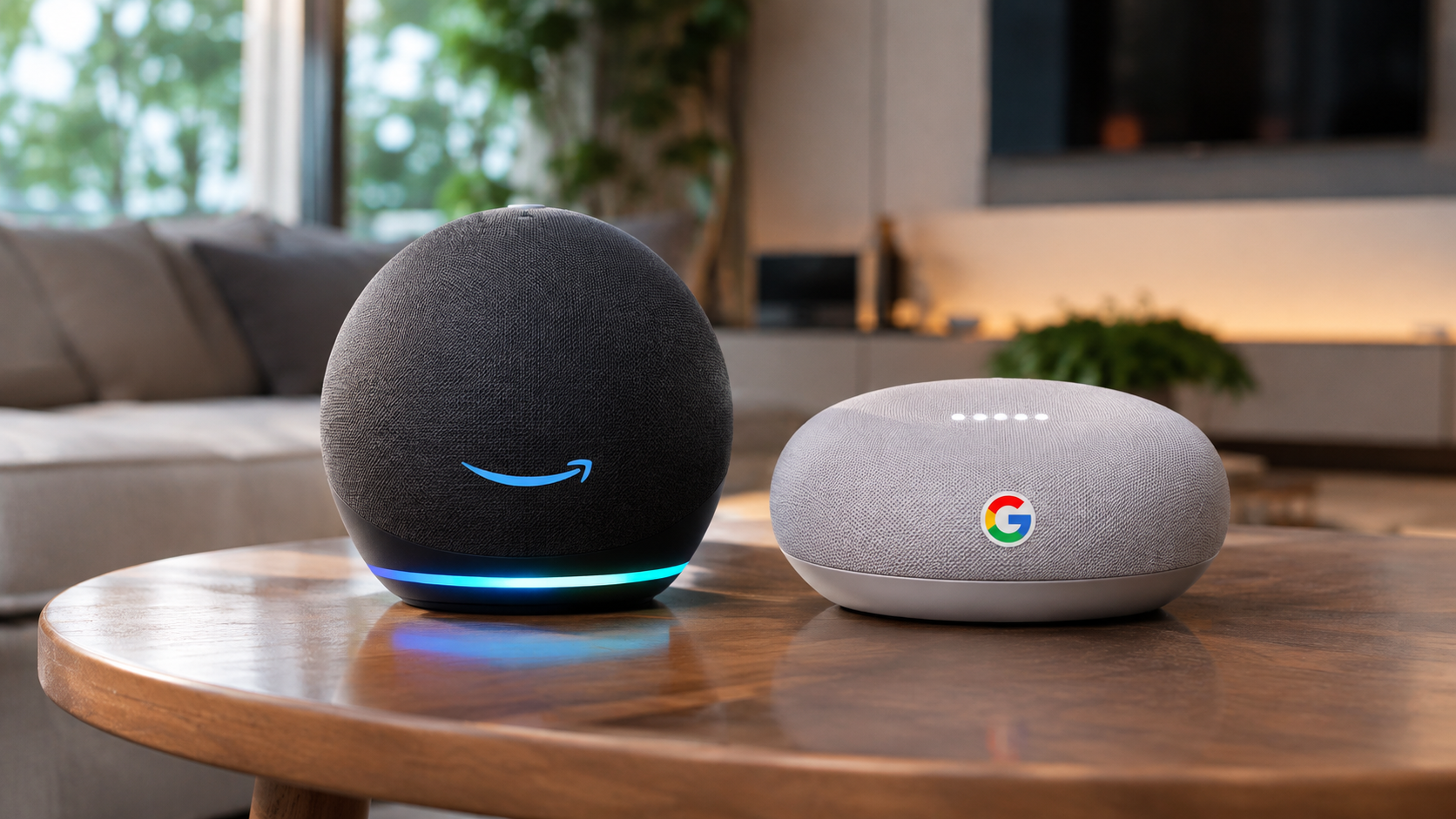
Google Gemini vs Alexa Plus: Which Home Assistant Is Actually Worth Using?
Smart homes are moving beyond simple voice commands. Artificial intelligence is making digital assistants more conversational, responsive, and capable of handling complex tasks. The comparison between Google Gemini vs Alexa Plus highlights how quickly this technology is changing everyday household experiences.
For years, users relied on traditional assistants for basic tasks. These included setting timers, checking the weather, playing music, and controlling smart lights. However, newer AI-powered assistants promise much more. They can understand follow-up questions, manage household routines, and respond to requests through natural conversations.
Both Google and Amazon are taking different approaches to this transition. Google is bringing Gemini into its Google Home ecosystem, while Amazon is upgrading Alexa with generative AI through Alexa+. But does better conversational intelligence automatically mean better smart home control?
This guide compares their features, smart home capabilities, ecosystem integration, and practical advantages. It also examines why some users are moving away from traditional Alexa devices. By the end, you will have a clearer idea of which assistant deserves a place in your home.
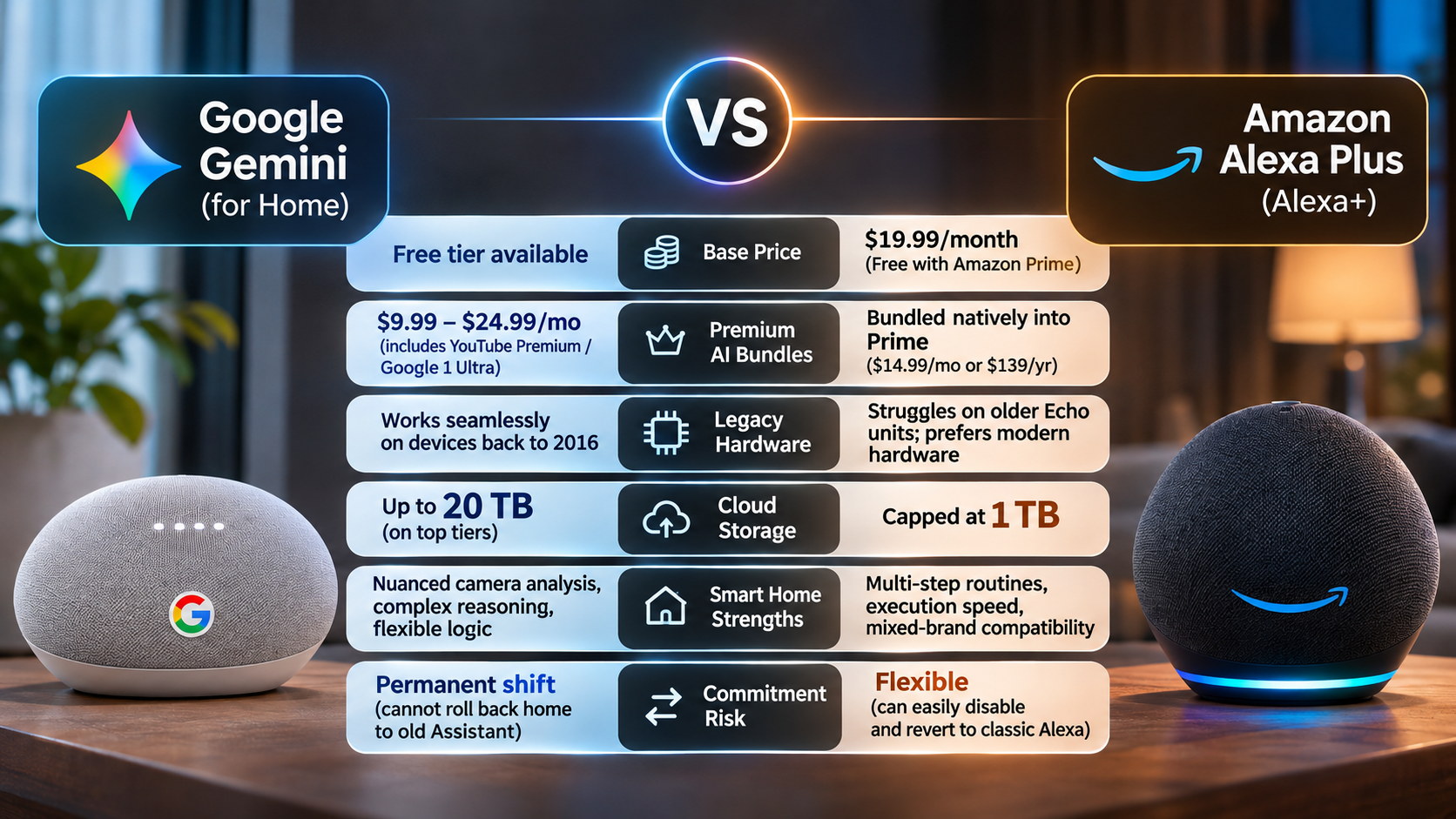
Is Gemini Better Than Alexa Plus Assistant?
Choosing between Google Gemini vs Alexa Plus depends on what you expect from a smart home assistant. Both platforms use generative AI to understand natural language and handle more complicated requests. However, their strengths are not identical. Gemini for Home focuses on improving household conversations, information retrieval, and smart home management. You can explore the best features of Google Home to understand what Google’s smart home ecosystem offers.
Alexa+ takes a more action-oriented approach. It combines conversational intelligence with household routines, shopping, entertainment, and connected devices. Amazon also supports integrations with several popular smart home services.
For everyday users, the difference comes down to priorities. Gemini may suit households that already use Google services and Nest devices. Alexa+ may appeal more to people invested in Echo products, Ring security, and Amazon services.
Neither assistant wins every category. Your existing devices, preferred services, and local feature availability matter more than general AI performance.
Conversational Intelligence vs Smart Home Hardware Control
Conversational intelligence is becoming an important feature of modern voice assistants. Users no longer want to repeat commands whenever they change their minds. They expect assistants to understand context and respond naturally. These developments are part of how AI assistants are changing daily productivity tools, making everyday tasks easier through more natural interactions.
Google’s Gemini models support more natural conversations and complex requests. Gemini for Home brings these capabilities into compatible Google Home devices. Users can ask follow-up questions, discover media, and manage household information through voice interactions.
Alexa+ also supports contextual conversations and more complicated household tasks. It can create routines, help with shopping, and coordinate compatible smart devices. Its integrations with Amazon’s services add another practical advantage.
However, conversational intelligence does not guarantee reliable hardware control. Device compatibility, internet connectivity, and response speed still matter.
- Choose Gemini: If you prioritize natural conversations and Google services.
- Choose Alexa+: If you prefer household automation and Amazon integrations.
Ultimately, test both with your actual devices before switching platforms.
Which Assistant Is Better, Alexa or Google?
When comparing Google Gemini vs Alexa Plus, ecosystem integration is an important factor. Google offers strong integration with Android, Google Maps, Gmail, YouTube, and other services. This makes it convenient for people who regularly use Google’s applications. Its search and information services also provide a familiar experience for everyday questions.
Amazon approaches the market differently. Alexa+ connects household automation with shopping, entertainment, and Amazon services. Its Echo devices also support communication between compatible household devices. This can make it useful for families managing several rooms and shared routines.
However, neither ecosystem automatically works better with every smart appliance. Compatibility depends on the device, supported integrations, and available features. If you are also considering Apple’s smart home ecosystem, comparing Apple HomeKit and Google Home can help you understand which platform better suits your connected devices. Some products work with both platforms, while others require additional configuration.
Your decision should reflect your existing technology rather than general brand popularity. Android users may prefer Google’s ecosystem, while households with extensive Echo installations may find Alexa+ more convenient.
Ecosystem Integration Determines the Better Choice
Smart home integration involves more than switching lights on and off. A useful assistant should connect different devices and services without creating complicated workflows. Google and Amazon approach this challenge through their existing ecosystems.
Google benefits from its established services and Android integration. Gemini for Home extends Google’s household experience through compatible speakers, displays, cameras, and connected devices. Users can also explore household information and create automations through supported Google Home features.
Amazon offers a different collection of integrations. Alexa+ connects with Echo devices, compatible smart appliances, Ring products, and Amazon services. It also supports shopping-related activities and household organization through conversational commands.
Consider these differences before choosing:
- Google ecosystem: Android, Google Maps, YouTube, Nest, and Google Home.
- Amazon ecosystem: Echo, Ring, Amazon Shopping, Prime services, and compatible smart home products.
There is no universal winner here. Check compatibility with your existing lights, cameras, thermostats, and other appliances. For example, understanding the advantages and disadvantages of smart home heaters can help you evaluate connected heating options before choosing a smart home ecosystem. A platform that supports your current equipment will usually provide a smoother experience than switching everything unnecessarily.
Why Are People Getting Rid of Alexa?
Alexa devices became popular because they made everyday household tasks easier. Users could play music, check the weather, set reminders, and control connected appliances without touching their phones. However, expectations have changed as smart home technology has developed.
Some Echo owners have become frustrated with unwanted suggestions, promotional content, and occasional software problems. Others have raised concerns about voice recordings and how companies handle personal information. These concerns are not limited to Amazon, as privacy remains an important issue across connected home devices.
Subscription costs and changing product features also influence purchasing decisions. Users who expected every assistant feature to remain free may feel disappointed by premium AI offerings. However, Alexa+ is included with Amazon Prime in supported markets, and India has an Early Access arrangement.
Not every Alexa owner is abandoning the platform. Many continue using their devices because of existing integrations and familiar controls. The decision often reflects individual expectations rather than a complete failure of Alexa technology.
Unwanted Promotions, Privacy Concerns, and Subscription Fatigue
Advertising and privacy concerns can influence how people feel about smart home assistants. Some Echo owners dislike promotional suggestions that interrupt otherwise simple interactions. Others prefer devices that respond only when needed, without unnecessary recommendations or follow-up conversations.
Privacy is another important consideration. Smart speakers use microphones to detect wake words and process voice requests. Users may worry about stored recordings, account information, and the handling of personal conversations. Amazon provides privacy controls that allow users to review and manage certain recordings and settings.
Subscription models can also create frustration. However, the cost of Alexa+ depends on location and membership status. In India, Alexa+ launched in September 2026 with free Early Access. Amazon announced continued inclusion with eligible Prime memberships after Early Access, while other eligible customers may face separate charges.
Before replacing your Echo devices, consider these factors:
- Review voice recording and privacy settings.
- Check promotional and notification preferences.
- Compare subscription costs with the features you actually use.
- Check whether alternative assistants support your existing appliances.
These considerations can help determine whether switching platforms is worthwhile.
Who Is Winning, Alexa or Google?
The competition between Google Gemini vs Alexa Plus is no longer just about selling smart speakers. Both companies want their assistants to become more useful household companions. They are investing in artificial intelligence, connected devices, and services that can complete everyday tasks.
Amazon has an established position in the smart speaker market through its Echo product range. Alexa also benefits from a broad collection of compatible smart home products and household integrations. These advantages make it difficult for competitors to replace Amazon’s existing ecosystem.
Google has a different advantage. Its Gemini technology connects with a wide collection of digital services and devices. The company is also bringing generative AI directly into its Google Home ecosystem.
However, declaring Google the overall winner would overlook Amazon’s established hardware presence. Likewise, Alexa’s existing popularity does not guarantee leadership in conversational AI.
The competition remains open because both platforms are developing rapidly. Their long-term success will depend on practical performance, device compatibility, pricing, privacy, and user experience.
The Shift From Smart Speakers to AI-Powered Home Assistants
The future of smart home technology depends on more than voice recognition. Traditional assistants followed specific commands, while modern AI systems aim to understand context and complete more complicated requests. This change could make household automation easier for everyday users.
Google is bringing Gemini’s capabilities into its Home ecosystem. Features such as natural conversations, household information retrieval, and automation assistance demonstrate this direction. Its existing Android and Google services also provide additional opportunities for integration.
Amazon is pursuing a similar transition through Alexa+. Its conversational capabilities combine with smart home routines, shopping, entertainment, and compatible connected devices. This approach focuses on completing practical household tasks through natural interactions.
However, both companies still face challenges. AI responses must remain accurate, device commands must work reliably, and personal information must receive proper protection. Hardware compatibility and subscription costs will also influence adoption.
Ultimately, the winner will be the assistant that delivers dependable results without making everyday activities more complicated. Better AI matters, but reliability and convenience matter just as much.
Conclusion
Choosing between Google Gemini and Alexa+ ultimately depends on your smart home setup and everyday needs. Google Gemini stands out for conversational intelligence, information access, and integration with Google’s services. You can explore its capabilities through the official Google Gemini website. Alexa+ remains a strong option for households that rely on Echo devices, Ring products, and Amazon’s smart home ecosystem. Visit the official Amazon Alexa website to learn more about its features.
Neither assistant is the clear winner in every category. Gemini may be a better fit for Google users, while Alexa+ offers practical advantages for Amazon-focused households. Before upgrading, consider device compatibility, privacy features, subscription costs, and availability in your region.
The real winner in the Google Gemini vs Alexa Plus comparison is the assistant that makes your daily routine easier, responds reliably, and works seamlessly with your existing devices. After all, a smarter home should simplify life, not make it more complicated.