

Giving Students Feedback That Helps Them Grow
Every teacher knows the exhausting routine of grading papers late into the night. You spend hours writing detailed notes, only to watch your students glance at the letter grade and slide the paper into their backpacks. If you want to break this cycle, understanding the art of giving students feedback is the ultimate game-changer. True feedback is not a post-mortem on what went wrong; it is a dynamic roadmap that guides learners forward. By shifting our approach, we can turn critiques into powerful catalysts for student achievement.
The psychology of learning heavily relies on this supportive loop. According to foundational research on modern education practices highlighted by the U.S. Department of Education, structured guidance directly influences how well a learner retains and applies new skills. When we master this process, we do more than just correct errors. We actively foster a growth mindset, helping learners see that intelligence and ability can expand through focused effort and strategic guidance.
When done correctly, this practice completely rewrites the classroom dynamic. Students stop viewing evaluation as a final judgment on their worth or intelligence. Instead, they begin to view your insights as vital tools for self-improvement and future academic success.
Why Traditional Grading Often Falls Short
For decades, traditional red-ink corrections have dominated the classroom. While well-intentioned, this evaluation method frequently misses the mark because it focuses entirely on final assessment rather than continuous development. When a student receives a final letter grade with no actionable guidance, the learning process stops right there. They often feel that the grade defines their capability permanently, which shuts down their desire to try harder next time.
Furthermore, heavy criticism without clear next steps can trigger a defensive emotional response. Instead of feeling motivated, learners often feel entirely defeated and disconnected from the subject matter. To build a stronger educational foundation, we must move away from simply marking what is wrong and move toward explaining how to make it right. This requires changing our language from evaluative statements to descriptive guidance that illuminates the path forward. By shifting our focus from checking boxes to cultivating understanding, we open the door for genuine academic transformation and long-term retention.
Core Principles of Giving Students Feedback Effectively
Mastering this instructional practice requires a foundational understanding of what makes a comment meaningful. It is not enough to simply write observations on a page; the guidance must be carefully structured to meet the learner’s current developmental needs. Effective instructional support acts as a bridge between a student’s current understanding and the intended learning target. Without clear underlying principles, even the most detailed comments can become overwhelming or irrelevant to a student’s progress.
When we approach this intentionally, we create an environment where instruction and assessment blend seamlessly. Educators must analyze not only what the student produced, but also how the student will interpret the commentary provided. By adhering to proven pedagogical standards, we ensure our insights serve as an engine for progress rather than a source of confusion. Let us explore the primary pillars that support this vital educational framework.
Make Giving Students Feedback Timely and Actionable
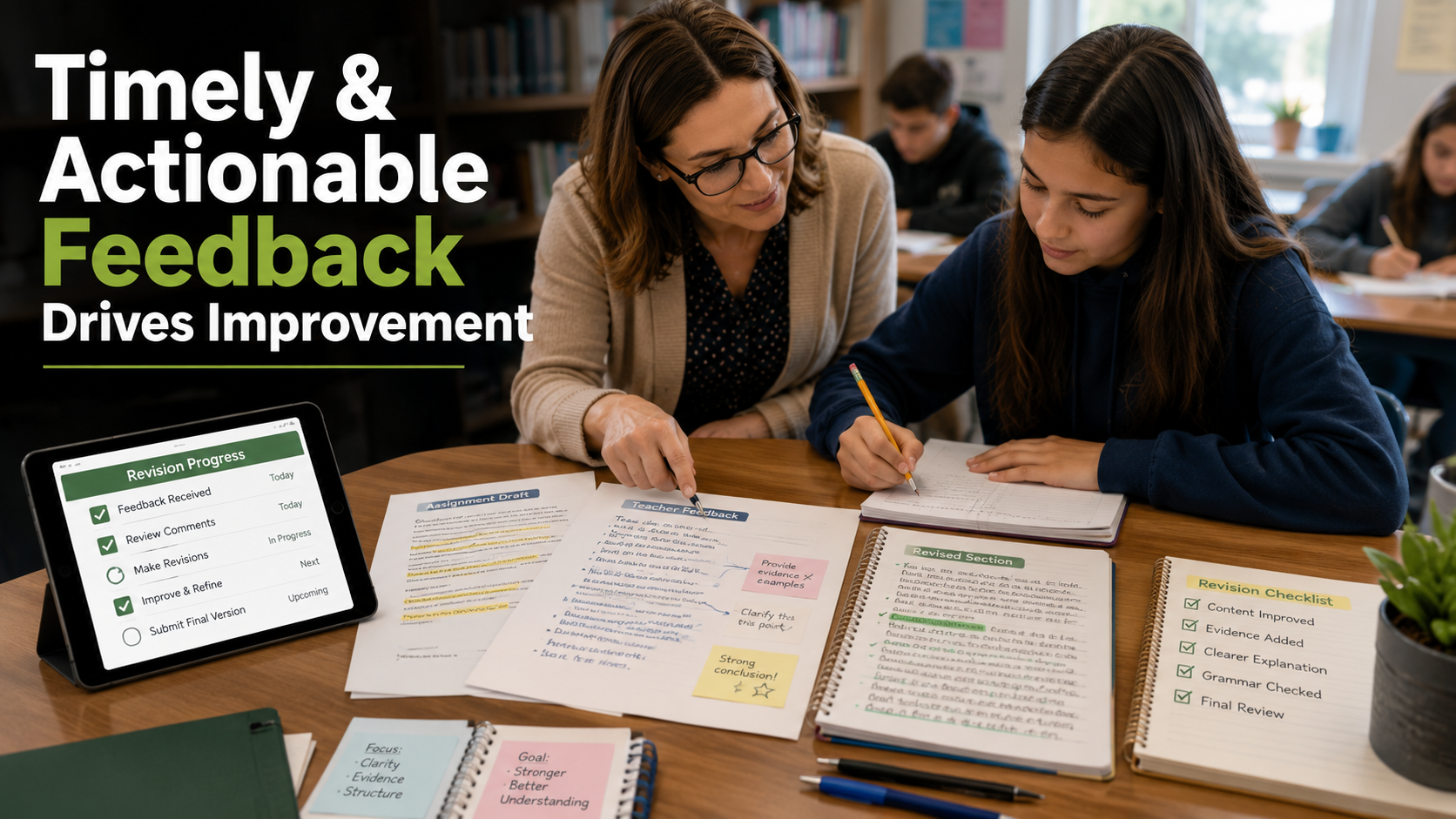

Feedback loses its power if it arrives too late in the learning cycle. When you return an essay three weeks after submission, the student has already checked out mentally and moved on to new topics. Providing insights while the task is still fresh ensures that the advice hits home and resonates deeply. This immediate connection allows learners to apply the advice to their current thought processes before those patterns become permanent habits.
Moreover, ensure your notes are completely actionable. Instead of writing vague phrases like “Fix this paragraph,” try writing, “Add two specific examples here to support your main argument.” This tells the student exactly what steps to take next. When guidance provides a concrete direction, it eliminates guesswork and reduces the frustration that often causes struggling learners to give up entirely. Actionable direction empowers students by turning abstract academic standards into clear, manageable tasks they can confidently execute.
Balance Praise and Constructive Critique in Pupil Evaluations
The “sandwich method”—compliment, correction, compliment—is a popular tool for a reason. However, modern pedagogy suggests making your instructional support much more transparent and direct. Highlight exactly what the student did well so they can replicate that success in future assignments. When a learner understands their strengths, they gain the psychological safety needed to confront their weaknesses without feeling inadequate or defensive.
Then, isolate one or two key areas for improvement rather than pointing out every single flaw on the page. Overwhelming a learner with twenty different corrections will only cause confusion, anxiety, and a complete loss of motivation. By narrowing your focus to the most critical learning targets, you give the student a realistic goal to work toward. This balanced approach protects the student’s confidence while providing a clear framework for steady, measurable improvement over time.
Actionable Strategies for Giving Students Feedback
Transforming these theoretical principles into daily classroom routines requires intentional planning and the right structural tools. Educators must design activities that deliberately leave room for revision, reflection, and dialogue. If your curriculum only assesses finished products, students will never have the opportunity to truly implement the guidance you provide. Therefore, we must weave milestones into our lesson plans that prioritize the revision process over immediate perfection.
| WHAT TO AVOID | WHAT TO DO INSTEAD |
| Vague phrases like “Good job!” | Specific praise: “Great use of transition words in paragraph two.” |
| Grading everything with red ink | Focus on one or two core learning targets at a time. |
| Monologues where the teacher talks at the student | Two-way dialogues where the student reflects on their work. |
By utilizing structured frameworks, we can make the delivery of commentary more efficient for teachers and more digestible for learners. The goal is to establish a predictable rhythm where students actively anticipate and utilize critique to improve their outcomes. Let us examine two highly effective strategies for implementing this approach in your daily routine.
Implement Formative Assessment Checks and Classroom Guidance
Do not wait for the final exam or a major project deadline to offer guidance to your class. Use exit tickets, quick peer reviews, and verbal check-ins during the initial drafting phase of an assignment. These micro-feedback moments allow learners to course-correct before high-stakes grading takes place. This approach saves them from embedding incorrect concepts into their minds. Consequently, the quality of their final submissions will naturally improve because errors were caught early.
Integrating these small checkpoints changes the way students view the entire learning process. They begin to see that work is an evolving draft rather than a single, stressful performance. This ongoing adjustment loop takes the pressure off the final grade and places the focus squarely on daily growth. It also allows you to spot widespread class misconceptions quickly and adjust your core instruction in real-time.
Teach Peer Review Skills and Learner Critique
Students can learn an immense amount by evaluating the work of their peers, but they need guidance to do it well. To make this strategy successful, provide clear rubrics, checklists, and sentence starters before the activity begins. For instance, instruct them to look specifically for strong thesis statements or accurate math steps rather than general neatness. This targeted approach ensures the exercise remains constructive and academically rigorous.
This practice not only saves you valuable grading time but also builds essential critical thinking skills in your student evaluators. When students analyze someone else’s work against an objective standard, they internalize those standards more deeply. They can then apply that same critical eye to their own assignments, fostering greater independence and self-regulation. Peer review transforms the classroom from a teacher-centered monologue into a collaborative community of active learners.
Fostering a Growth Mindset Through Giving Students Feedback
Ultimately, giving students feedback should feel like a collaborative conversation, not a top-down lecture. Encourage your class to actively respond to your comments rather than passively reading them. You might ask them to write a quick reflection sentence explaining exactly how they plan to implement your suggestions in their next draft. This shifts the responsibility of learning back onto the student, encouraging true cognitive engagement.
When students realize that mistakes are merely data points on the path to mastery, their academic resilience skyrockets. They stop fearing constructive criticism and start seeking it out as a valuable tool for their personal and academic growth. This dialogue builds a trust-filled relationship between teacher and learner, making the classroom a safe space for intellectual risk-taking. Over time, this collaborative loop instills a lifelong love of learning that extends far beyond school walls.
FAQs
How do you give constructive feedback to a struggling student?
Start by highlighting a specific strength to build their confidence immediately. Struggling students often feel defeated, so validating their effort or pointing out a correct step is crucial. Keep your language focused entirely on the task rather than the individual’s inherent intelligence or ability. Break down the necessary improvements into small, manageable steps instead of listing every single error on the page. For example, focus purely on basic sentence structure before worrying about advanced vocabulary or stylistic choices. This targeted approach prevents overwhelming the learner and provides a clear, achievable path forward. Additionally, ensure you offer direct support or resources, such as a graphic organizer or a specific reference guide, so they know exactly how to execute the requested changes. By treating the issue as a solvable mechanical problem rather than a personal failure, you help the student maintain dignity and motivation.
What is the difference between feedback and evaluation?
Evaluation measures what a student has learned at the end of an instructional unit, usually resulting in a definitive grade, percentage, or ranking. It is a summative judgment that looks backward at past performance to document achievement for report cards or administrative records. Feedback, however, is an ongoing developmental process designed to guide future learning. It describes a student’s current performance level relative to a goal and provides actionable advice on how to bridge the remaining gap. While evaluation determines success or failure at a fixed point in time, feedback looks forward toward future growth, adjustments, and skill mastery. Think of evaluation as a medical diagnosis, whereas feedback is the ongoing treatment plan that helps the patient heal and grow stronger over time. Both have a place in education, but only feedback actively drives the daily learning process forward.
How can teachers save time when giving students feedback?
Teachers can save significant time by utilizing digital comment banks, audio recordings, or targeted rubric codes. Instead of writing the exact same paragraph on ten different papers, you can use a keyboard shortcut to insert common advice. You can also record a quick sixty-second voice note that feels personal yet takes minimal effort to produce. Additionally, focus your grading on one or two specific learning objectives per assignment rather than correcting every grammatical mistake on the page. If the assignment’s goal is persuasive argument, ignore minor spelling errors and critique the logic instead. You can also implement group feedback sessions where you address common misconceptions with the entire class at once. This avoids writing the same correction thirty times individually. These methods streamline your workflow while ensuring students still receive high-quality guidance.
Why is peer feedback important in the classroom?
Peer evaluation encourages collaboration and forces students to look at assignments through an analytical, objective lens. When a student evaluates a classmate’s work against a specific rubric, they gain a much deeper understanding of the assignment’s core expectations and success criteria. This dynamic also creates a supportive classroom community where learning becomes a shared journey rather than a solitary competition against peers. Furthermore, hearing critique from a classmate can sometimes feel less threatening to a student than receiving a correction from an authority figure. It democratizes the learning environment and encourages students to articulate academic concepts using their own vocabulary. Ultimately, practicing peer review equips students with essential workplace skills, teaching them how to give and receive constructive criticism professionally and respectfully.
How often should students receive feedback?
Ideally, students should receive some form of guidance daily through informal verbal check-ins, peer interactions, or quick self-assessments. It does not always need to be a formal written note from the teacher to be effective. Micro-moments of guidance during a lesson keep students on the right track and prevent them from falling behind. Formal written commentary should occur at pivotal points throughout a project or unit, specifically during the formative stages when students still have ample time to make revisions before their final grade is locked in. If you only provide insights at the very end of a unit, you have missed the window of opportunity to influence their learning. Regular, predictable intervals of review ensure that growth remains continuous, manageable, and deeply integrated into the daily fabric of the classroom.
Conclusion
Mastering the art of giving students feedback is one of the most impactful investments an educator can make. When we move away from traditional, punitive grading and embrace meaningful, formative dialogue, we transform our classrooms into thriving hubs of discovery. This supportive approach is highly effective for building positive student relationships because it establishes a baseline of mutual trust and care in the classroom. Powerful feedback shows students that their current performance is not a fixed destination, but rather a temporary stepping stone toward greater potential. It replaces the anxiety of final judgment with the excitement of continuous personal evolution. By keeping your guidance timely, actionable, balanced, and encouraging, you give your students the exact tools they need to take complete ownership of their education.
This shift ultimately redefines the relationship between teaching and learning, making it a shared partnership built on mutual respect and measurable progress. As educators, our ultimate goal is to build independent, self-reflective thinkers who can evaluate their own work critically. By modeling high-quality evaluation practices daily, we instill habits of mind that serve our students long after they leave our classrooms. Start small by adjusting your commentary on the next stack of papers, and watch your students rise to meet the challenge.