
Understanding the Energy and Frequency of Clothes
When choosing what to wear, most people consider style, comfort, and weather. However, some alternative wellness discussions also explore the frequency of clothes and how different fabrics may influence personal energy. These ideas often connect textiles with vibration, molecular structure, and the body’s natural energy field.
In physics, all materials have molecular and atomic properties. However, there is no established scientific evidence that clothing fabrics have specific vibrational frequencies that determine human vitality or emotional balance. Fabric choice can still influence comfort, temperature regulation, moisture management, and skin sensitivity.
This article explores common questions about clothing frequencies, including what frequencies in clothing mean, what the 3-3-3 rule is, which fabrics are considered high-frequency in alternative wellness, and which fibers work best for everyday wear. Understanding the difference between wellness beliefs and measurable textile properties can help you make informed wardrobe choices. For reliable information about materials and textile testing, visit the National Institute of Standards and Technology.

What are frequencies in clothing?
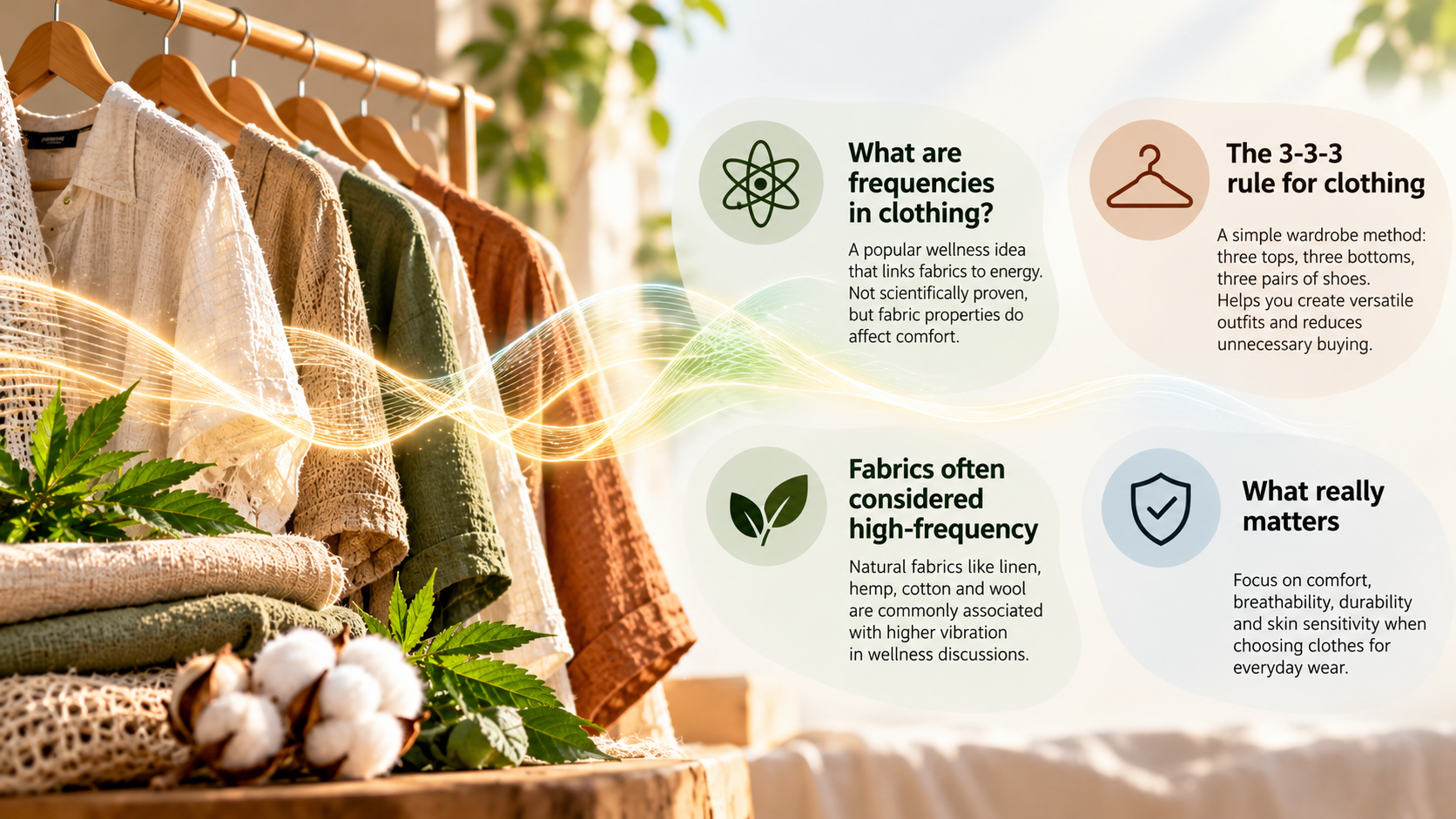
The term frequency of clothes is often used in alternative wellness discussions to describe the supposed energetic properties of different fabrics. Some proponents believe natural fibers have higher vibrations than synthetic materials. However, these claims are not supported by established scientific evidence.
In physics, frequency describes how often a repeating event occurs within a specific period. Materials can exhibit measurable molecular vibrations, but these depend on their chemical composition and physical conditions. There is no single, universally accepted frequency rating that determines whether a fabric is energetically beneficial.
Different textiles also have practical properties that affect how they feel against the skin. Cotton absorbs moisture, linen allows airflow, and polyester often dries quickly. These characteristics can influence comfort throughout the day.
Understanding these differences helps you choose suitable clothing without relying on unverified energy claims. Fabric quality, breathability, durability, and skin sensitivity are more useful factors when comparing materials for everyday wear.
The Science Behind Energetic Signatures
Every textile consists of fibers with specific chemical structures and physical properties. These materials can exhibit molecular vibrations, electrical behavior, and other measurable characteristics. However, these properties do not establish that a fabric has a particular healing frequency or directly improves the body’s energy field.
In alternative wellness, the term energetic signature describes a proposed quality associated with a material. This concept may be meaningful within certain personal or spiritual practices, but it should not be confused with a scientifically validated textile measurement.
Researchers can examine fabrics through methods such as spectroscopy, electrical testing, and thermal analysis. These techniques help identify material composition and performance. They do not demonstrate that natural fibers harmonize with human tissue while synthetic fibers disrupt the body’s electromagnetic field.
When choosing clothing, consider evidence-based factors such as breathability, moisture management, softness, and potential skin irritation. These characteristics have practical effects on comfort and can help you identify fabrics that suit your needs.
What is the 3-3-3 rule for clothing?
The 3-3-3 rule for clothing is a minimalist wardrobe approach that helps simplify outfit planning and reduce unnecessary purchases. One popular version involves choosing three tops, three bottoms, and three pairs of shoes. However, the rule has variations, and there is no single official definition.
The idea is to build a small collection of versatile pieces that work well together. For example, three neutral tops can be paired with different trousers or jeans to create several outfits. Choosing compatible colors and comfortable fabrics makes mixing and matching easier. You can also simplify your wardrobe with these closet organization tips.
This approach can reduce decision fatigue, save time in the morning, and help you identify which clothes you actually wear. It may also encourage more mindful shopping by reducing impulse purchases and focusing on items that serve multiple purposes. Learning about decision paralysis and its impact on creativity can offer additional insight into simplifying everyday choices.
The 3-3-3 rule does not measure the frequency of clothes or their energetic properties. Instead, it offers a practical way to organize your wardrobe. Adapt the number of items to your climate, work requirements, laundry routine, and personal style rather than following the rule rigidly.
Which clothes have the highest frequency?
In alternative wellness communities, natural fabrics such as linen, hemp, organic cotton, and wool are sometimes described as having a high vibrational frequency. Supporters often associate these materials with natural origins, comfort, and a closer connection to the environment. However, there is no scientifically accepted ranking that identifies which clothes have the highest frequency.
Natural fibers do offer different practical advantages. Linen is breathable and well suited to warm weather, while cotton is soft and versatile. Hemp is valued for its strength, and wool can provide insulation in colder conditions.
The performance of a garment also depends on its construction, weave, finishing treatments, and fiber quality. Natural materials are not automatically safer or more comfortable for everyone. Some people, for example, find certain wool fabrics irritating.
If you prefer natural textiles, choose garments based on comfort, durability, and the conditions in which you will wear them. Organic certification may help you evaluate certain production practices, but it does not establish a fabric’s vibrational frequency.
Which fabric has the highest vibrational frequency?
Linen is often described in alternative wellness discussions as a fabric with a particularly high vibrational frequency. This belief is sometimes linked to linen’s long history, natural origins, and reputation for comfort. However, scientific research has not established that linen has the highest vibrational frequency among clothing fabrics.
Scientists have not established an accepted measurement standard to support claims that linen vibrates at approximately 5,000 megahertz or matches the frequency of a healthy human body. In physics, frequency depends on the phenomenon researchers measure. No single universal frequency allows scientists to rank materials by their effects on human health.
Linen nevertheless offers several practical benefits. Made from flax fibers, it is breathable, absorbs moisture, and can feel comfortable in hot weather. Its texture and durability also make it a popular choice for shirts, trousers, dresses, and summer clothing.
If you enjoy linen, wearing it for comfort and personal preference is a reasonable choice. There is no need to rely on unverified frequency claims to appreciate its useful textile properties.
The Unique Power of Flax Linen
Flax linen is known for its strength, breathability, and ability to absorb moisture. The fibers come from the flax plant and are processed into yarn before being woven or knitted into fabric. Linen’s structure allows air to circulate, making it a popular option for warm climates and summer clothing.
The fabric can also become softer with repeated washing and use. Its natural texture gives garments a distinctive appearance, while its durability can make well-constructed linen pieces useful for years. However, linen wrinkles easily, and its comfort depends on fabric weight, garment design, and personal preference. For additional guidance on protecting delicate fabrics, see this essential guide to preserving antique textiles.
Some alternative wellness traditions associate linen with energetic purity or elevated vibrations. These descriptions reflect beliefs rather than established scientific findings. There is no reliable evidence that linen creates a protective energy shield or raises the body’s vibrational state.
For everyday use, choose linen based on its breathability, feel, durability, and suitability for your climate. These measurable qualities provide practical reasons to include it in your wardrobe.
What is the frequency of cotton cloth?
The frequency of cotton cloth is a common topic in alternative wellness discussions. Some sources assign cotton a specific vibrational rating or place it below linen on an energetic scale. However, there is no standardized scientific frequency value for cotton fabric that determines its effect on human vitality.
Cotton is a natural plant-based fiber known for its softness, absorbency, and versatility. Manufacturers use it to make T-shirts, underwear, shirts, bedding, and many other everyday products. Its comfort depends on fiber quality, yarn construction, weave, and finishing treatments.
Farmers who grow organic cotton follow specific agricultural standards that may restrict certain synthetic pesticides and fertilizers. However, organic certification does not automatically mean a finished garment contains no chemicals or has a higher vibrational frequency. Dyeing, finishing, and manufacturing processes also influence the final product.
When shopping for cotton clothing, consider fabric softness, breathability, durability, and any skin sensitivities you may have. Look for reliable certification when environmental or production standards matter to you. These factors offer a more practical basis for choosing cotton than unverified frequency ratings.
Which fiber is best for clothes?
The best fiber for clothes depends on your priorities, including comfort, durability, climate, maintenance, and environmental impact. Linen, hemp, cotton, wool, and synthetic fibers each have different strengths. No single material is ideal for every garment or situation, and scientific evidence does not establish one fiber as energetically superior to all others. For practical ways to stay active and healthy, explore exercises to stay fit.
Linen works well in warm weather because it allows airflow and absorbs moisture. Cotton is versatile, comfortable, and widely available. Hemp offers durability and can be a useful option for everyday garments. Wool provides insulation in cooler conditions, while polyester can be useful for sportswear because it dries quickly.
The environmental impact of a fabric depends on more than whether it is natural or synthetic. Farming methods, processing, water and energy use, garment lifespan, and disposal all matter. Some natural fibers require substantial resources, while durable synthetic garments may serve specific purposes effectively.
Choose clothing that suits your daily activities and feels comfortable against your skin. Consider fabric quality, care requirements, and sustainability claims before purchasing. These practical factors are more reliable than choosing a fiber based on an unverified frequency ranking.
Balancing Comfort, Durability, and Sustainability
Choosing suitable clothing materials involves balancing comfort, durability, care requirements, and environmental impact. Natural fibers such as linen and cotton can offer breathability and comfort, while wool provides insulation and some synthetic fabrics perform well during exercise. The best option depends on the garment’s intended use and your personal needs.
Durability is another important consideration. A well-made garment that lasts for years may reduce the need for frequent replacements. However, longevity varies with fiber quality, construction, washing habits, and how often the garment is worn. Natural fibers are not always more durable than synthetic alternatives.
Sustainability also requires a broader perspective. Growing, processing, dyeing, transporting, and disposing of textiles all affect their environmental footprint. Buying fewer, versatile garments and caring for them properly can help extend their useful life. Proper care also includes following practical laundry tips for beginners to keep clothes in good condition.
Ultimately, select fabrics that provide the comfort and performance you need. If natural fibers align with your preferences, linen, cotton, and hemp are worth considering. Focus on their practical benefits and verified production standards rather than assuming that a particular fabric has a scientifically proven energetic advantage.
FAQ SECTION
Does washing clothes change their frequency?
Washing clothes with harsh chemical detergents and synthetic softeners can leave chemical residues that lower the overall energetic vibration of the fabric. Using eco-friendly, plant-based laundry soaps and natural drying methods helps preserve the original frequency of your garments. Taking gentle care of your clothes ensures they remain fresh, clean, and energetically supportive for a long time.
How can I test the frequency of my clothes?
While specialized scientific equipment measures precise electromagnetic fields, most people evaluate clothing frequency through kinesiology, or muscle testing, and intuitive bodily awareness. You can notice how your body feels physically and mentally when wearing 100 percent synthetic shirts compared to pure linen or cotton. Paying attention to skin irritation and daily fatigue levels offers practical clues about fabric quality.
Is wool a high-frequency winter fabric?
Untreated natural wool possesses a strong, positive vibrational frequency, making it an excellent choice for cold weather clothing. Unlike synthetic fleece, which traps static electricity and drains energy, pure wool maintains natural warmth and breathability. Selecting high-quality, ethically sourced wool ensures you stay warm during winter without compromising your daily comfort and energetic vitality.
Conclusion
Exploring the frequency of clothes opens up a fascinating perspective on how our daily wardrobe choices impact our overall well-being. By understanding what are frequencies in clothing and learning which materials offer the highest vibrational energy, you can curate a wardrobe that actively supports your health. From embracing the minimalist 3-3-3 rule to prioritizing high-frequency fabrics like linen, hemp, and organic cotton, every intentional choice enhances your physical comfort and personal energy. Synthetic materials may dominate fast fashion, but returning to pure natural fibers reconnects us with time-tested qualities of health and balance. Start evaluating your closet today, transition toward natural textiles, and experience the refreshing difference that high-frequency clothing can bring to your daily life.