
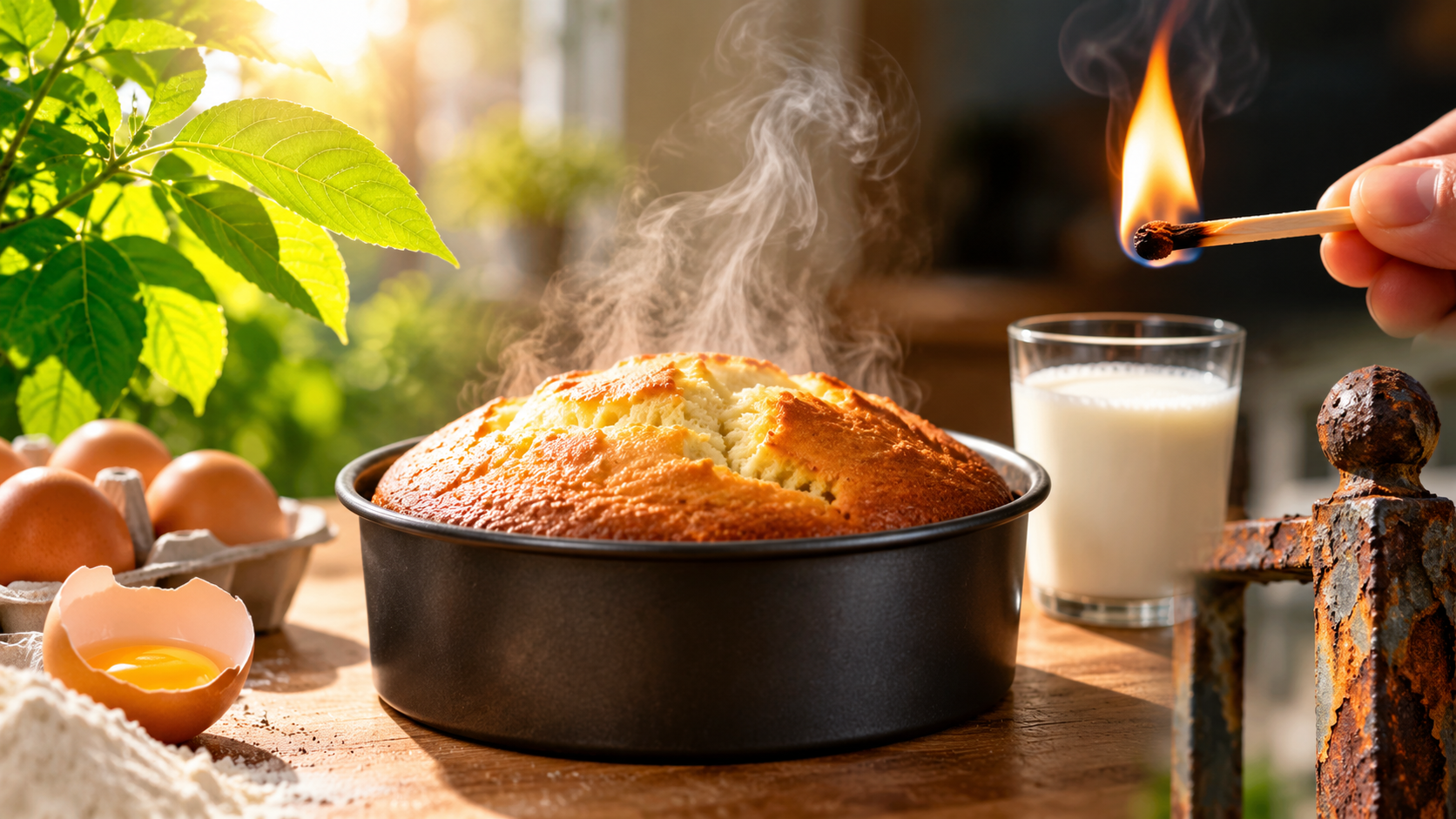
Chemical Reactions in Daily Life: 10 Examples You Never Noticed
Have you ever wondered how much science happens around you every day? From striking a match to digesting breakfast, chemical reactions in daily life shape countless everyday experiences. These transformations affect everything from cooking food to powering vehicles.
Understanding everyday chemistry helps explain how materials change and why new substances form. It also connects scientific concepts to familiar activities at home, in nature, and inside the human body. For students and curious readers, the American Chemical Society offers educational resources that explain chemistry and its role in everyday life.
This guide explores ten common chemical reactions, ten chemicals used in daily life, and five examples of chemical changes. It also covers important Class 10 chemistry reactions and a fun chemistry-themed way to express affection. Let’s discover the science behind these everyday phenomena.

What are 10 examples of chemical reactions that occur in everyday life?
Chemical reactions happen throughout our daily routines, often without us noticing. They occur when substances interact and form new substances with different chemical properties. Recognizing chemical reactions in daily life makes it easier to connect textbook science with familiar experiences.
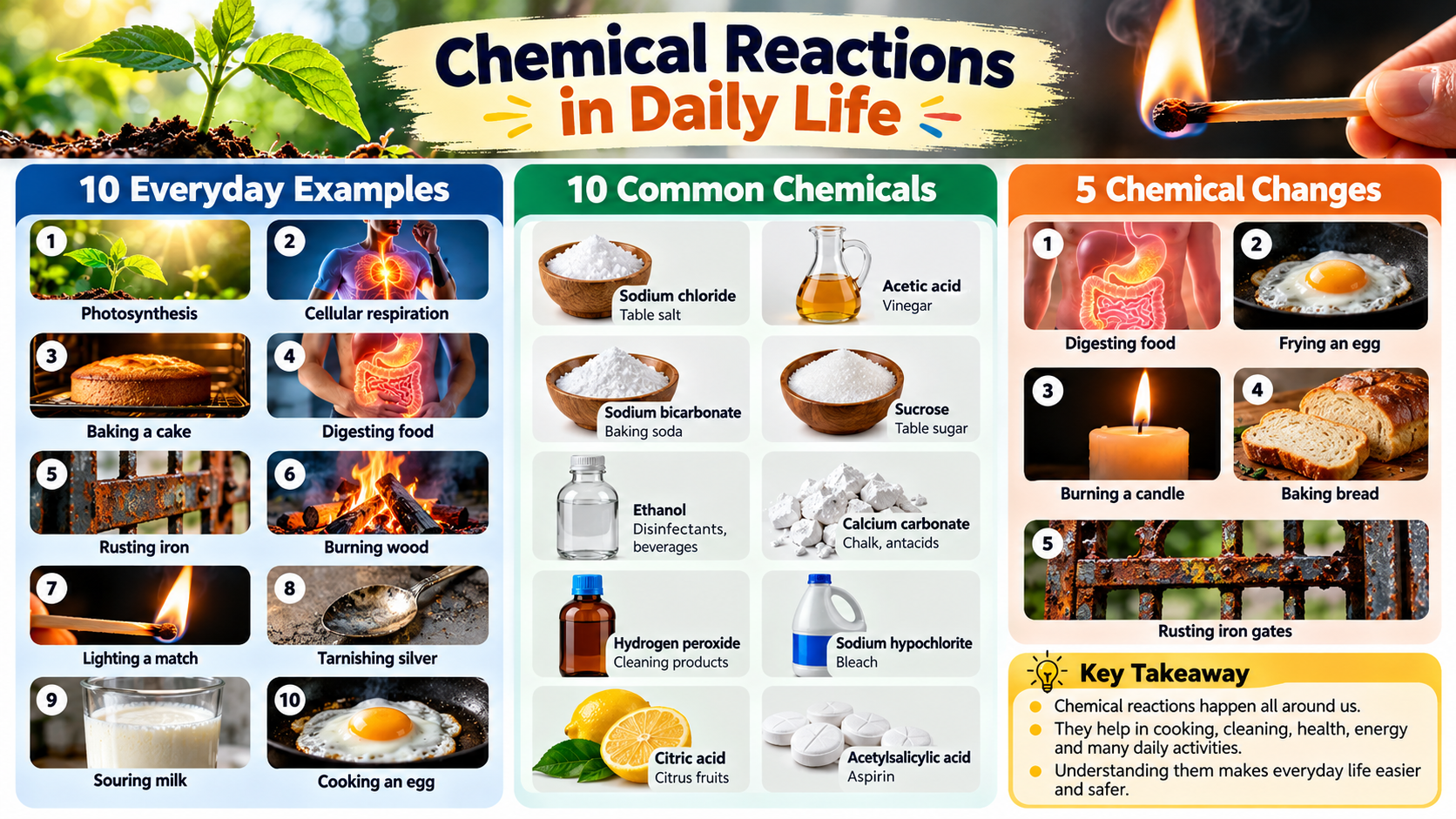
Here are ten common examples:
- Photosynthesis: Plants use sunlight, carbon dioxide, and water to produce glucose and oxygen.
- Cellular respiration: Cells break down glucose to release energy for essential activities.
- Baking a cake: Heat triggers reactions that help the batter rise and develop its texture.
- Digesting food: Enzymes and acids break complex food molecules into simpler substances.
- Rusting iron: Iron reacts with oxygen and moisture to form rust.
- Burning wood: Combustion produces heat, light, gases, and ash.
- Lighting a match: Friction initiates a chemical reaction that releases heat and light.
- Tarnishing silver: Silver reacts with sulfur-containing compounds to form a dark surface layer.
- Souring milk: Bacteria convert lactose into lactic acid, changing the milk’s taste and texture.
- Cooking an egg: Heat changes proteins through denaturation and related chemical processes.
These examples show how chemical reactions influence food, health, energy, and the environment. Although some changes are easier to observe than others, they all demonstrate chemistry beyond the laboratory. To explore another aspect of energy, see how energy travels and the mechanisms behind it.
What are 10 common chemicals used in daily life?
Chemical compounds are essential to household cleaning, cooking, personal care, and healthcare. Many familiar products contain chemicals that perform specific functions. Understanding their properties helps us use them correctly and avoid unsafe combinations.
Here are ten common chemicals used in daily life:
- Sodium chloride: Common table salt, used for seasoning and food preservation.
- Acetic acid: The acid in vinegar, used in cooking and household cleaning.
- Sodium bicarbonate: Baking soda, used in baking and some cleaning applications.
- Sucrose: Table sugar, commonly used to sweeten food and drinks.
- Ethanol: An alcohol used in certain disinfectants, beverages, and other products.
- Calcium carbonate: Found in chalk, some antacids, and various building materials.
- Hydrogen peroxide: Used in certain disinfectants, cleaning products, and bleaching applications.
- Sodium hypochlorite: The active ingredient in many household chlorine bleaches.
- Citric acid: Naturally present in citrus fruits and used as a flavoring and preservative.
- Acetylsalicylic acid: The active ingredient in aspirin, a medicine used for pain relief and other approved purposes.
These chemicals serve different purposes depending on their concentration and formulation. Always follow product labels and safety instructions. For laboratory work, learn about essential chemistry lab safety equipment and rules. Never mix household bleach with vinegar, acids, or ammonia, as dangerous gases may form.
What are 5 examples of chemical changes that occur in everyday life?
A chemical change occurs when substances react and form new substances. Unlike many physical changes, chemical changes alter the chemical composition of the original material. They may involve changes in color, odor, temperature, or gas production, although no single sign proves that a chemical reaction has occurred. One important concept behind many reactions is activation energy and how it works.
Here are five examples of chemical changes in daily life:
- Digesting food: Enzymes and digestive acids help break food molecules into simpler substances.
- Frying an egg: Heat denatures proteins and causes structural changes that are not easily reversed.
- Burning a candle: Candle wax melts physically, while its vapor reacts with oxygen during combustion.
- Baking bread: Yeast fermentation produces carbon dioxide, while heat causes additional reactions that develop the crust and flavor.
- Rusting iron gates: Iron reacts with oxygen and moisture, gradually producing rust.
These examples demonstrate how chemical changes occur during cooking, digestion, and everyday exposure to the environment. Remember that a process can involve both physical and chemical changes. For example, melting candle wax is a physical change, while burning the wax is a chemical reaction.
What are 20 examples of chemical reactions class 10?
Class 10 science introduces chemical reactions to explain how substances interact and form new products. Students also learn to identify reaction types, write chemical equations, and balance them. Students can reinforce these concepts through science projects for students. The following examples cover common reactions studied in school chemistry.
Combination and Decomposition Reactions
- Burning magnesium ribbon: Magnesium reacts with oxygen to form magnesium oxide.
- Heating ferrous sulfate: Ferrous sulfate decomposes into iron oxide, sulfur dioxide, and sulfur trioxide.
- Heating calcium carbonate: Calcium carbonate decomposes into calcium oxide and carbon dioxide.
- Electrolysis of water: Water decomposes into hydrogen and oxygen.
- Silver chloride in sunlight: Silver chloride decomposes into silver and chlorine.
Displacement and Double Displacement Reactions
- Lead nitrate and potassium iodide: Mixing these solutions produces a yellow precipitate of lead iodide.
- Zinc and dilute hydrochloric acid: Zinc chloride and hydrogen gas are produced.
- Barium chloride and sodium sulfate: These compounds react to form a white precipitate of barium sulfate.
- Iron and copper sulfate: Iron displaces copper from copper sulfate solution.
- Acid-base neutralization: An acid reacts with a base to form salt and water.
Oxidation, Combustion, and Other Reactions
- Burning magnesium: Magnesium combines with oxygen and releases bright light and heat.
- Corrosion of iron: Iron reacts with oxygen and moisture to form rust.
- Combustion of methane: Methane burns in sufficient oxygen to produce carbon dioxide and water.
- Oxidation of copper: Copper develops surface compounds that can change its color.
- Rancidity of fats: Oxidation can cause fats and oils to develop unpleasant odors and flavors.
- Bleaching: Oxidizing agents can alter colored substances.
- Photosynthesis: Plants use light energy to produce glucose and oxygen from carbon dioxide and water.
- Cellular respiration: Cells release energy by breaking down glucose, usually using oxygen.
- Fermentation of sugar: Yeast converts sugars into ethanol and carbon dioxide under suitable conditions.
- Saponification: Fats or oils react with a strong alkali to produce soap and glycerol.
Finally, practise balancing the chemical equations and identifying the reactants and products. These skills help you understand reaction types and prepare for Class 10 science examinations.
How do you say “I love you” in chemistry?
Chemistry can also inspire playful ways to express affection. Science enthusiasts sometimes use element symbols, molecular structures, and chemical bonds to create romantic messages. These expressions combine scientific curiosity with a little humor, making them suitable for chemistry-themed cards, classroom activities, or conversations.
One simple idea uses the chemical symbols for iodine (I) and uranium (U) to create the message “I U,” which can be interpreted as “I love you.” This is a wordplay rather than a formal chemical expression.
Another option is to compare a relationship to a strong chemical bond. For example, you could say, “Our bond is stronger than ever.” You could also describe two people as having chemistry when they share a strong connection.
These phrases are fun ways to bring chemistry into everyday communication. However, chemical bonds differ in strength and structure, so romantic comparisons are metaphors rather than scientific measurements. Whether you prefer element symbols or a clever science joke, chemistry offers creative ways to make an affectionate message more memorable.
FAQ SECTION
What is the main difference between a physical change and a chemical change?
Initially, a physical change alters only the form or appearance of a substance without modifying its chemical composition, meaning no new matter is created. For instance, melting ice and tearing paper are classic examples of physical changes. In contrast, a chemical change rearranges atoms to form entirely new substances with different properties. Therefore, cooking an egg or burning wood represent chemical changes because you cannot easily reverse the process to retrieve the original materials.
Why do iron objects rust when left outside?
Generally, iron objects rust through a chemical reaction called oxidation when exposed to both oxygen and moisture over an extended period. Specifically, water acts as a catalyst that accelerates the electrochemical reaction between iron and atmospheric oxygen. Consequently, this process forms hydrated iron(III) oxide, commonly known as rust. Over time, rust weakens the structural integrity of the metal, causing it to flake and degrade if protective coatings are not applied regularly.
How does yeast make bread dough rise?
Essentially, yeast makes bread dough rise through a biological and chemical process known as alcoholic fermentation. Single-celled yeast organisms consume sugars present in the flour and subsequently convert them into carbon dioxide gas and ethanol. Furthermore, the trapped carbon dioxide gas forms tiny pockets within the stretchy gluten network of the dough. When baked in the oven, these gas pockets expand significantly, giving the bread its light, airy, and fluffy texture.
Is digestion considered a chemical or physical change?
Actually, digestion involves a combination of both physical and chemical changes working together seamlessly. Chewing food with teeth and the muscular churning of the stomach represent physical changes that break food into smaller pieces. However, the actual breakdown of food molecules by stomach acids and digestive enzymes constitutes a chemical change. Ultimately, these biochemical reactions transform complex nutrients into simpler compounds that the human body can absorb for daily energy.
Conclusion
In conclusion, exploring the science hidden all around us reveals that chemical reactions in daily life constantly shape our environment and experiences. For example, chemistry plays a vital role in everything from digesting food and using medicines to burning fuel in vehicles and supporting plant growth. Moreover, these everyday processes demonstrate how chemistry helps drive the world forward. By understanding chemical reactions in daily life, we can improve our scientific literacy and develop a deeper appreciation for the world around us. As a result, understanding these fundamental concepts enables us to navigate modern life more effectively and make informed, science-based decisions. Finally, take a moment today to observe the fascinating chemical transformations happening in your own home and discover how this valuable knowledge can help you make better decisions in your daily routine.