
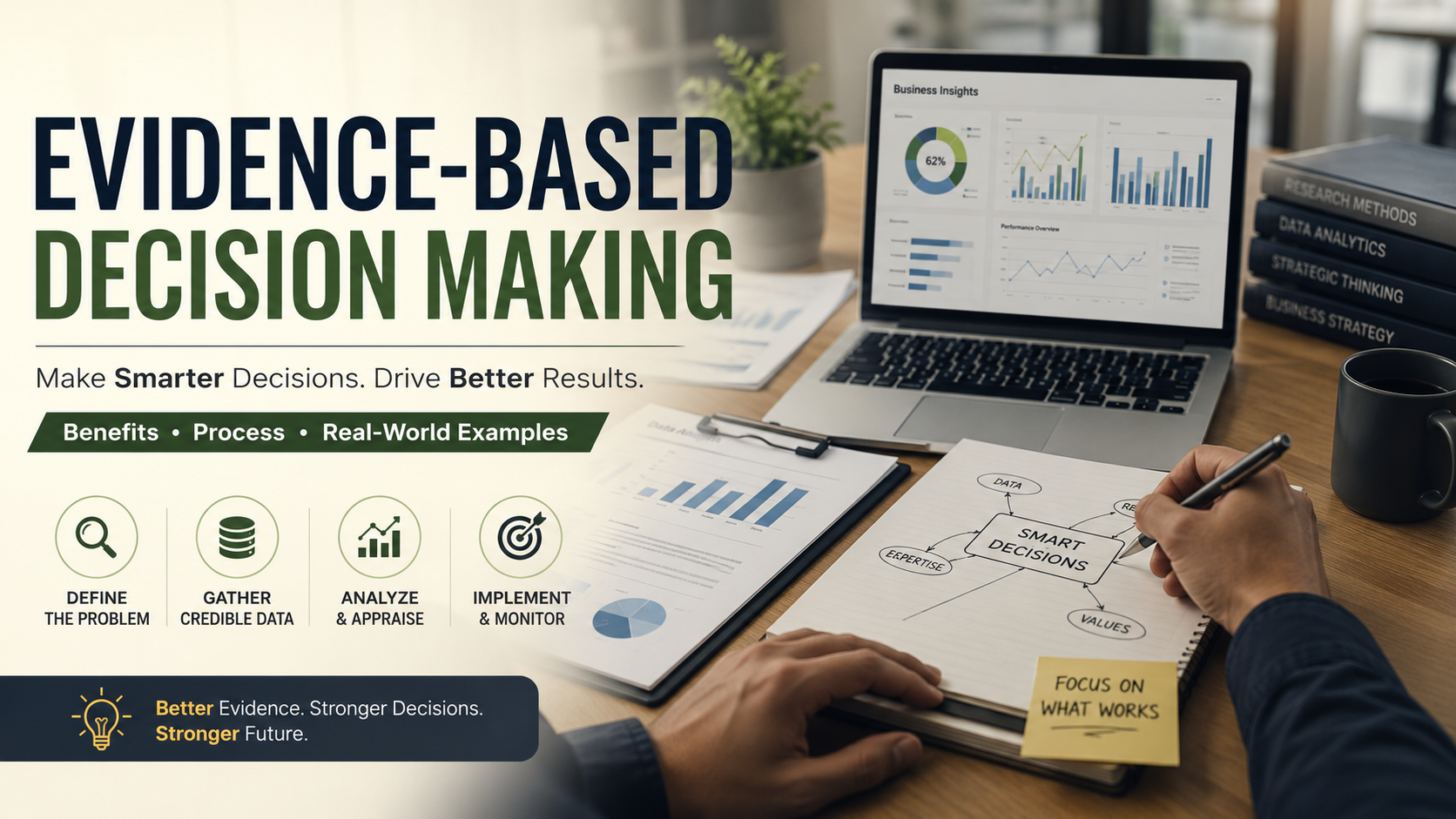
Evidence-Based Decision Making: Benefits, Process, and Real-World Examples
In today’s fast-paced business world, leaders frequently face complex choices that dictate corporate success. However, relying on intuition alone no longer guarantees positive outcomes. Instead, high-performing teams turn to Harvard Business Review research and structured frameworks to guide their strategies. Therefore, this approach, known as evidence-based decision making, fundamentally transforms how teams solve problems by combining critical thinking with empirical data. Consequently, by minimizing cognitive biases and emotional guesswork, professionals navigate uncertainty with precision.
Furthermore, understanding the core mechanics of data-driven choices matters because modern markets punish operational guesswork. When leaders build strategies on verified facts rather than assumptions, they reduce costly errors and improve performance. This guide explores what this methodology entails, walks through its framework, and examines practical industry applications. Ultimately, navigating contemporary business challenges requires an unwavering commitment to objective facts, ensuring every initiative rests on empirical evidence.
What Is Evidence-Based Decision Making?
Evidence-based decision making is a systematic process that integrates critical thinking with the best available market data. Rather than letting personal preferences dictate strategy, practitioners evaluate multiple information streams. These streams include organizational metrics, academic research, and stakeholder feedback. Consequently, decisions become objective, repeatable, and transparent across the enterprise. Furthermore, synthesizing these diverse inputs eliminates blind spots and ensures strategic choices address actual operational realities. Therefore, adopting this framework fosters a culture where questioning assumptions and seeking validation through hard data becomes second nature.
Core Components of Evidence-Based Decision Making
Every reliable framework rests on four primary information pillars that guide analytical thinking. First, internal organizational data reveals historical performance, operational bottlenecks, and financial trends. Second, external research provides industry benchmarks and academic insights that contextualize market position. Third, professional expertise ensures leaders interpret raw numbers within the correct contextual framework. Fourth, stakeholder values dictate that solutions align with organizational culture and customer expectations. Consequently, balancing these four elements prevents tunnel vision and ensures holistic problem-solving for long-term operational success.
The Step-by-Step Evidence-Based Decision Making Process


Implementing a structured analytical framework requires discipline and absolute clarity from all team members. Organizations cannot simply look at a spreadsheet and hope for the best outcomes. Instead, they must follow a deliberate workflow that transforms raw data into actionable insights. This journey begins by pinpointing the exact challenge and concludes with rigorous post-implementation monitoring. Each distinct phase acts as a quality checkpoint, filtering out noise to ensure the final strategy is viable. By adhering strictly to this methodology, teams minimize risks and increase the probability of achieving their strategic objectives.
1. Define the Core Problem
Clarity at the outset prevents wasted effort and resource depletion later in the project lifecycle. Teams must articulate the specific challenge they need to solve rather than treating superficial symptoms. A well-defined problem statement narrows the required data scope and aligns team members around a single objective. When stakeholders share an identical understanding of the core issue, cross-functional collaboration improves exponentially. This foundational step eliminates ambiguity, ensuring subsequent data collection efforts remain laser-focused on addressing true root causes.
2. Gather Relevant and Credible Data
Once the objective is clear, the search for empirical evidence begins in earnest. Practitioners collect quantitative metrics, user feedback, and expert analyses from trusted, verifiable sources. Crucially, teams must evaluate source credibility to avoid confirmation bias, ensuring they collect both supportive and contradictory information. Furthermore, gathering diverse data points prevents echo chambers and forces decision-makers to confront uncomfortable truths about current operations. This comprehensive information-gathering phase builds a solid bedrock of facts, preparing the organization for deep analytical scrutiny.
3. Analyze and Critically Appraise Findings
Raw information requires careful scrutiny and rigorous testing before it can drive actionable business strategies. Analysts examine statistical significance, identify operational variables, and test assumptions against real-world constraints. This phase separates reliable market signals from temporary statistical noise, ensuring leaders do not overreact to anomalies. By critically appraising the data through peer reviews, teams uncover hidden trends and potential risks. Consequently, this rigorous evaluation guarantees that final strategic choices are built upon unshakeable logical foundations rather than flawed interpretations.
4. Implement and Monitor Outcomes
The process does not end when a choice is finalized and approved by leadership. Organizations must execute the strategy through controlled rollouts and measure real-world results continuously. Continuous monitoring allows teams to adapt quickly if initial projections miss the mark or if market dynamics emerge. By establishing feedback loops and regular review intervals, organizations create an agile environment where strategies can be fine-tuned. This active management phase transforms static decisions into dynamic, responsive operational processes that evolve alongside customer needs.
Benefits of Evidence-Based Strategies
Adopting a systematic, fact-based approach yields profound advantages for businesses of all sizes and industries. Leaders who embrace this methodology experience fewer operational disruptions and sustained competitive advantage. By systematically replacing guesswork with empirical data, organizations foster an environment of continuous improvement and strategic clarity. Furthermore, evidence-based management empowers employees at all levels to contribute meaningful ideas backed by facts. This democratization of problem-solving enhances morale, accelerates innovation, and builds a resilient corporate culture capable of weathering economic uncertainty.
-
Reduced Cognitive Bias: Relying on metrics neutralizes personal opinions, office politics, and emotional reactions, ensuring choices serve organizational goals.
-
Improved Resource Allocation: Budgets, time, and human resources flow toward initiatives backed by proven demand, high success probability, and measurable ROI.
-
Greater Accountability: Clear performance metrics make it easy to evaluate project success and hold teams accountable without finger-pointing.
-
Enhanced Adaptability: Organizations grounded in empirical feedback pivot faster when market conditions shift unexpectedly, maintaining operational continuity.
Real-World Examples of Evidence-Based Decision Making
Theory becomes truly powerful when observed in active practice across diverse corporate landscapes. Industry leaders across healthcare, finance, and technology utilize empirical frameworks to drive major operational breakthroughs. These real-world applications demonstrate that structured, data-driven methodologies are essential survival tools in competitive modern markets. By examining how top-tier organizations successfully integrate empirical evidence into daily workflows, businesses of any scale can extract valuable lessons and adapt proven strategies to overcome unique operational hurdles.

Healthcare Operations
Modern hospitals use clinical data analytics to optimize emergency room staffing levels and patient care workflows. By reviewing historical admission rates and seasonal illness trends, medical administrators schedule staff efficiently. Consequently, this data-backed scheduling reduces patient wait times, lowers operational overhead, and prevents physician burnout during peak seasons. Furthermore, empirical tracking of treatment outcomes helps medical facilities refine clinical protocols, minimizing complications and improving recovery rates. This rigorous application of data science demonstrates how evidence-based frameworks can save lives while maximizing organizational efficiency.
Software Development
Tech companies rely heavily on empirical testing, such as A/B user testing and performance benchmarking. When launching a new interface or feature, engineering teams release changes to a small user percentage first. They track engagement metrics, error rates, and conversion feedback, ensuring updates improve the user experience before global rollout. This iterative, data-driven approach eliminates risks associated with massive, unverified product redesigns. By listening to how users actually interact with software through hard metrics, developers build intuitive, reliable applications that consistently exceed customer expectations.
FAQs
What is evidence-based decision making?
Evidence-based decision making is a comprehensive, systematic approach that combines critical thinking with the best available empirical data. Rather than relying on gut feelings, executive intuition, or office politics, leaders use internal metrics, academic research, and expert insights to guide strategic choices. This methodology minimizes cognitive bias, reduces operational risk, and ensures organizational strategies align with verifiable market facts and daily realities. By demanding empirical backing for major initiatives, companies eliminate wasteful spending, streamline internal workflows, and foster an organizational culture rooted in objective inquiry.
Why is empirical evidence important in business?
Empirical evidence is vital because it systematically replaces costly assumptions and emotional guesswork with verifiable facts. When companies base their choices on hard data rather than wishful thinking, they allocate budgets more efficiently and avoid repeating past strategic mistakes. This disciplined approach fosters long-term financial stability, enhances customer satisfaction, and drives predictable, sustainable growth across competitive global markets. Furthermore, relying on proven evidence protects businesses from sudden market shocks, giving leaders the empirical foundation needed to pivot effectively and maintain operational resilience during downturns.
How do I start making data-driven choices?
Start your journey by clearly defining the specific business problem or operational bottleneck you need to solve. Next, conduct a thorough audit of your current internal data repositories and gather relevant external market research from credible sources. Critically evaluate all findings for potential cognitive biases, select the most viable solution, and establish clear key performance indicators. Finally, execute your chosen strategy through controlled rollouts while continuously monitoring real-world outcomes, allowing you to adapt, refine, and optimize your approach based on actual performance feedback.
What are the main challenges of this approach?
Common challenges organizations face when adopting this methodology include analysis paralysis, poor data quality, and deep-seated organizational resistance to cultural change. Teams often struggle with information overload or misinterpret complex statistical metrics without proper analytical training. Overcoming these hurdles requires investing heavily in comprehensive data literacy programs, establishing clear evaluation frameworks, and fostering a supportive workplace culture that actively values objective inquiry. Addressing these barriers ensures smooth adoption and maximizes the long-term return on your analytical investments.
How does this methodology reduce cognitive bias?
This approach actively neutralizes bias by forcing decision-makers to justify strategic choices using external facts and rigorous metrics rather than personal opinions. By requiring diverse data streams, cross-functional peer reviews, and the collection of contradictory evidence, the framework challenges preconceived notions and groupthink. Consequently, teams confront uncomfortable market realities, enabling them to make rational, objective choices that directly serve overarching organizational goals rather than individual preferences or department-specific politics.
Can small businesses use evidence-based strategies?
Small businesses can easily implement these powerful strategies by leveraging accessible analytics tools, customer feedback surveys, and modern financial management software. You do not need a massive enterprise data science department to practice evidence-based management effectively. Simple, consistent tracking of daily sales figures, customer retention rates, website traffic metrics, and inventory turnover provides actionable insight for smarter choices. By starting small and scaling analytical practices over time, growing enterprises can build a strong data culture from day one.
Conclusion
Mastering evidence-based decision making helps organizations navigate uncertainty with greater clarity and confidence. By replacing intuition with reliable data, leaders can reduce risk, allocate resources more effectively, and build a culture of accountability. This structured approach supports better business outcomes and long-term competitive growth.
To strengthen your decision-making process, it’s also important to understand the quality of the information you rely on. Read our guide on levels of scientific evidence to learn how to evaluate research and make more informed business decisions.
Start applying evidence-based decision making to your next business initiative. Over time, consistent, data-driven choices can improve operational efficiency, support sustainable growth, and help your organization achieve lasting success.